Four Dead in Ohio: The Kent State Shootings Investigation
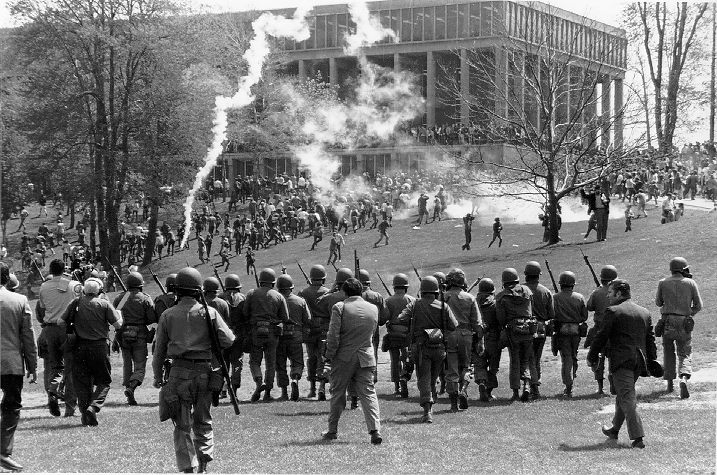
May 4th, 1970. Seventy-seven National Guardsmen marched onto the Kent State University campus to break up a protest. Thirteen seconds later, four students were dead and nine were wounded. For forty years, the official story was that no one ordered them to fire. Then a forensic audio expert got his hands on a tape recording made by a student who'd left his microphone running in a dorm window. What he found would challenge everything the government had been saying since 1970.
The Kent State Massacre: How 13 Seconds Changed America Forever
So I want to talk about Kent State, and I know you've heard about this one. Four dead in Ohio. The famous photo of the girl screaming over Jeffrey Miller's body. But there's this whole other layer to the story that most people don't know about, and it involves a piece of audio evidence that sat in someone's closet for forty years.
Nixon's Cambodia Announcement Ignites Campus Protests Across the Nation
On April 30th, 1970, President Richard Nixon announces on national television that the United States is expanding the Vietnam War into Cambodia. For everyone who thought the war was winding down, this feels like complete betrayal. The next day, Nixon visits the Pentagon and calls the college students protesting his decision "bums" compared to brave soldiers overseas. The President is telling the nation that student protesters are enemies.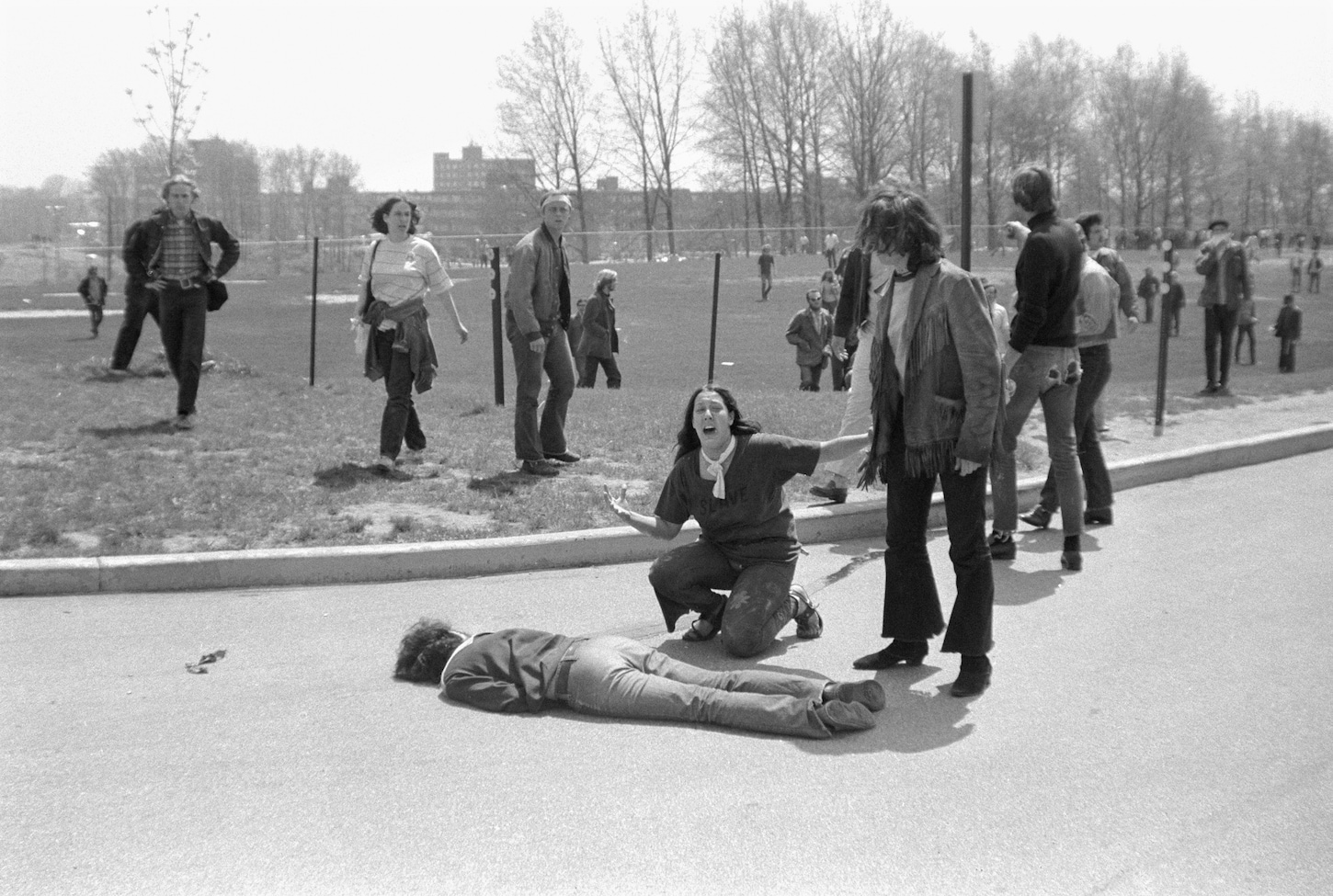
May 1-3, 1970: Four Days of Escalating Tension at Kent State University
At Kent State University in Ohio, about 500 students gather on the Commons on May 1st. History students bury a copy of the Constitution in the grass because there's been no congressional declaration of war. It's symbolic, peaceful, and they plan another rally for Monday. That Friday night though, everything shifts. Students are downtown drinking, and what starts as a typical bar night becomes chaos with people smashing windows. Someone breaks a bank window, and Mayor LeRoy Satrom becomes convinced there's a radical plot to burn down the city. He declares a state of emergency and calls the governor.
The ROTC Building Fire: Arson That Was Never Solved Despite FBI Investigation
Saturday night, over a thousand people surround the ROTC building and arsonists set it on fire. When firefighters arrive, protesters slice through their hoses. The National Guard arrives while the building burns, and by midnight they're marching students back to dorms at bayonet point. Despite massive FBI investigation, they never figured out who started that fire. There were FBI informants on campus that night, including a student named Terry Norman photographing protesters. But somehow nobody could identify a single arsonist. The burning became the justification for keeping troops on campus, but there was never an arrest.
Governor Rhodes Calls Student Protesters "Worse Than Nazis"
Sunday, Governor James Rhodes holds a press conference calling protesters "the worst group that we harbor in America." He compares them to Nazis and uses the word terrorists. These National Guardsmen are the same age as the students they're policing, and their governor has labeled them terrorists. That night at the Victory Bell, the Ohio Riot Act gets read and tear gas gets fired. Later, students sit in an intersection thinking officials will talk to them. Nobody shows. At eleven p.m., the Guard uses tear gas and bayonets to clear everyone out.
May 4, 1970: National Guard Opens Fire on Kent State Students
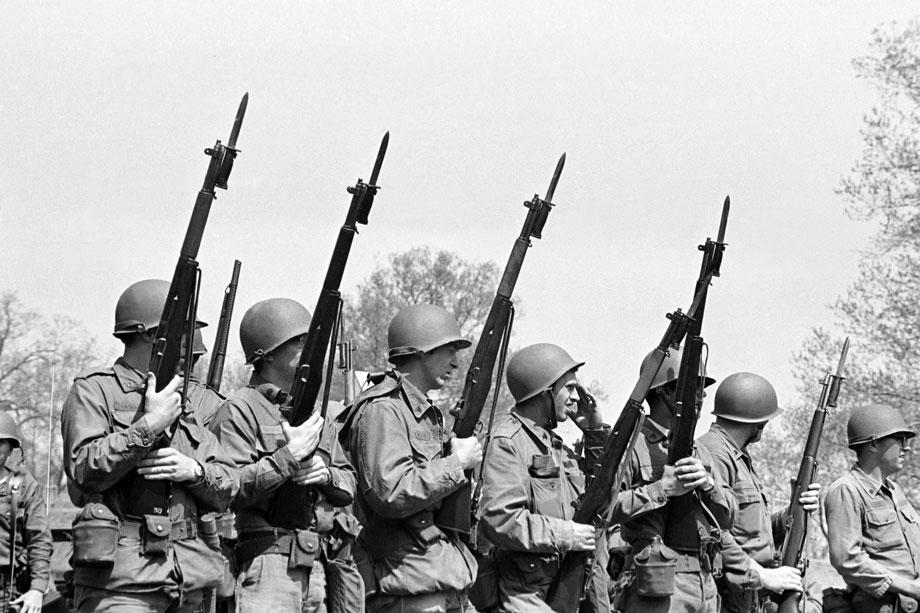
Monday, May 4th. Classes are happening, but the noon rally is still scheduled. About two thousand people show up despite leaflets saying it's banned. Brigadier General Robert Canterbury orders the Guard to disperse the crowd. Seventy-seven guardsmen march across the Commons firing tear gas. Wind blows it back toward them, making it useless. Students retreat over Blanket Hill toward Prentice Hall parking lot. The Guard follows to a practice football field with a chain-link fence. For ten minutes, everyone faces off. Students throw rocks and yell. Guardsmen stand with bayonets fixed. Then the Guard retreats back up Blanket Hill toward Taylor Hall.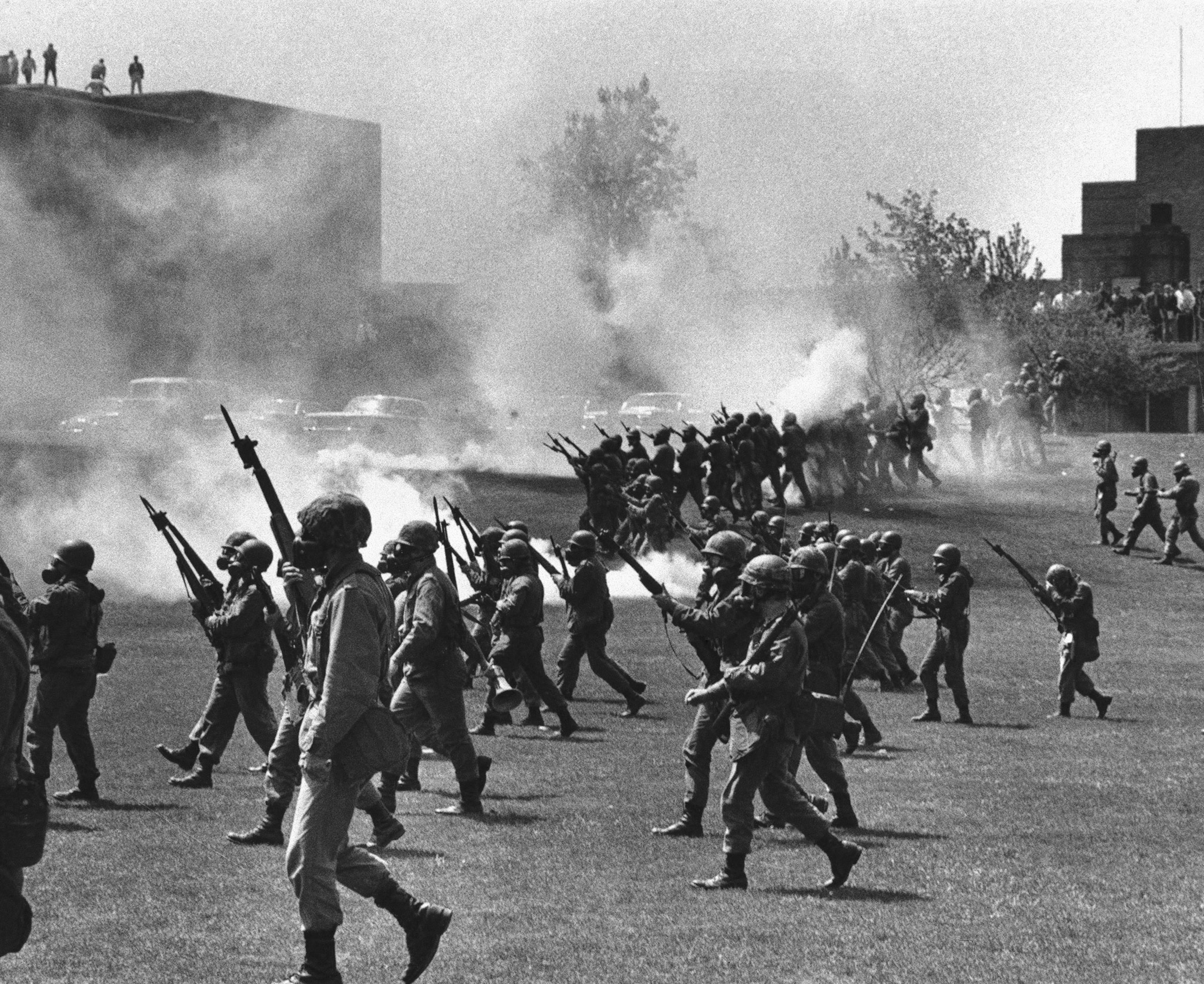
The Victims: Four Dead Students and Nine Wounded in 13 Seconds
At 12:24 p.m., twenty-eight guardsmen reach the hilltop and suddenly spin around 180 degrees. They lift their rifles and pistols and open fire into the parking lot. Thirteen seconds. Sixty-seven rounds of armor-piercing ammunition into a crowd that includes students walking between classes.
Allison Krause, Jeffrey Miller, Sandra Scheuer, and William Schroeder: Remembering the Lives Lost
Allison Krause is nineteen, an Honors student who'd put a flower in a guardsman's rifle the day before saying "Flowers are better than bullets." Shot through the arm and chest from 330 feet. Jeffrey Miller is twenty. Bullet through his head from 265 feet. Sandra Scheuer is a speech therapy major walking to class. Bullet in her neck from 400 feet. William Schroeder is in ROTC studying psychology. Shot in the back while lying down, 382 feet away. Nine others wounded. Joseph Lewis Jr. takes two bullets at 71 feet. Dean Kahler shot in the back at 300 feet, paralyzed for life. Donald MacKenzie is 750 feet away when hit in the neck.
After the shooting, hundreds of students gather, furious and ready to charge the Guard. Geology professor Glenn Frank throws himself between them, crying and begging students to leave, saying it'll be a slaughter. His intervention saves dozens of lives.
The 40-Year Cover-Up: Did Someone Order the National Guard to Shoot?
The central question: why did they fire? For forty years, the official answer is no order was given. Guardsmen testify they felt threatened by a charging mob. Some say they heard a sniper shot. The government says this was spontaneous reaction by frightened soldiers. In 1974, eight guardsmen get indicted for violating civil rights. The case gets dismissed. In 1979, a civil lawsuit ends with Ohio paying $675,000 and signing a "Statement of Regret." That's the closest to an apology. But nobody answered whether there was an order.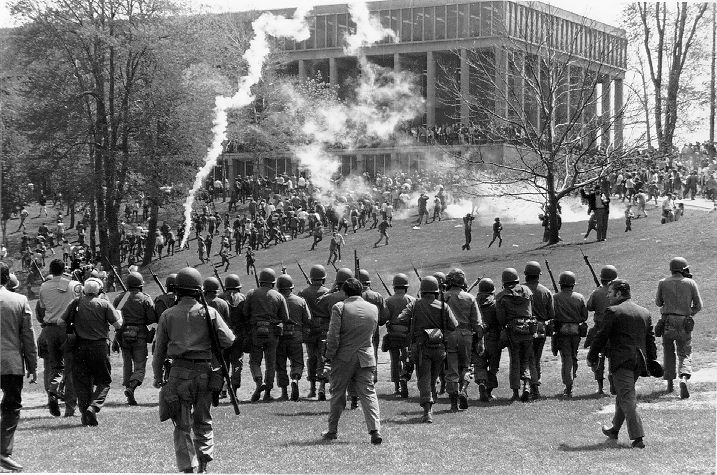
The Strubbe Tape: Forensic Audio Analysis Reveals Hidden Command to Fire
In 2010, journalist John Mangels learns about an audio recording sitting in storage for four decades. Student Terry Strubbe had a reel-to-reel recorder running in his dorm window on May 4th. His microphone captured everything. Mangels brings in forensic audio experts Stuart Allen and Tom Owen. They use digital algorithms originally developed for the KGB to clean up forty years of deterioration, strip wind noise, isolate frequencies. When they finish, they hear something nobody was supposed to hear.
Seventy seconds before gunfire, four pistol shots. Then a male voice shouting "Guard!" followed by "All right, prepare to fire!" Seconds pass. Another shout of "Guard!" Then the thirteen-second volley. Both experts conclude someone gave an order to fire. This contradicts everything the government said since 1970. This is coordinated military action against unarmed civilians. The Department of Justice reviews it in 2012 and declines to reopen investigation. They say tape quality isn't sufficient to identify the speaker and statutes of limitation prevent prosecution.
Terry Norman: The FBI Informant Whose Gun May Have Triggered the Massacre
Those four pistol shots seventy seconds before connect to Terry Norman, the FBI informant. Norman is the only person on campus, aside from the Guard, carrying a firearm. A loaded .38-caliber Smith & Wesson revolver under his coat. Witnesses see Norman in a confrontation with students. They see him pull his weapon. After the shooting, Norman gets filmed sprinting across the Commons, handing his pistol to a campus detective who reportedly says, "My God, he fires his gun four times." The FBI claims Norman's gun was never fired. Then internal lab reports surface suggesting it had been discharged since its last cleaning.
Kent State Shooting Forensic Evidence: What the 2010 Investigation Uncovered
The theory: Norman fires his gun to scare off students confronting him. The National Guard hears pistol shots and mistakes them for sniper fire from protesters. That perceived threat, combined with the order on the Strubbe Tape, triggers the massacre. Joseph Lewis Jr., shot twice at 71 feet, said his own parents thought the Guard must have had good reason based on media coverage. Robert Stamps is in a hospital bed with a bullet wound when his roommate asks if he's Christian. When Stamps says no, the roommate says that's why he got shot.
Justice Denied: Why the Department of Justice Refused to Reopen the Kent State Case
The guardsmen's rifles shipped to Europe for NATO forces immediately after, preventing independent ballistics testing. The FBI investigation into the ROTC fire never identified anyone despite multiple informants on campus. Physical evidence disappeared. Chrissie Hynde, future Pretenders singer, was there and thought the gunfire was fireworks. Gerald Casale, who founded Devo, saw Jeffrey Miller and Allison Krause after they'd been shot. He said that moment ended his hippie phase and started his theory of "devolution," that humanity was moving backward.
The Legacy of May 4th: How Kent State Changed America's View of Protest and State Power
Today Kent State maintains the May 4 Collection, over 750 cubic feet of documents about the shooting. The site is a National Historic Landmark. Some guardsmen have given oral history interviews in their seventies and eighties, talking about the "one bad day" that defined the university forever. Four students dead. Nine wounded. Thirteen seconds. Sixty-seven rounds. Forty years before audio evidence revealed what happened on Blanket Hill. The question of who gave that order has never been answered.

Host | Creator
Joe runs 10 Minute Murder because he's been trying to figure out since the '90s why humans are such spectacular disasters, when the Menendez Brothers and O.J. Simpson turned murder trials into must-see TV. While his classmates were watching Saturday morning cartoons, little Joe was watching Court TV and thinking, "What is wrong with people?" Thirty years later, he still doesn't have a good answer, but he's got a podcast about it.
When he's not studying the worst decisions ever made by our species, Joe screams supportive threats at the Buffalo Bills, reads everything he can get his hands on, and goes to stand-up comedy shows to remember that humans can be funny on purpose instead of by accident. Most nights you'll find him on his couch, yelling "You IDIOT" at a murder documentary like the killer can hear him through the screen. He calls it research. His therapist calls it "an interesting coping mechanism."
The Zombie Hunter Murders: Phoenix's Most Haunting Cold Case Finally Solved

 Spotify
 Apple Podcasts
 Pandora
 Amazon Music
 Podchaser
 Spreaker
 RSS Feed
 Audible
 Castbox
 iHeartRadio
 Castro
 Deezer
 YouTube