
From Best Friend to Murder: The Missy Avila Story

October 1985. Seventeen-year-old Missy Avila goes for a walk in the Angeles National Forest with two of her closest friends. Three days later, hikers find her body face down in a creek, weighted down by a massive log. What makes this case absolutely unforgettable is what happened next. One of the girls who killed her moved into Missy's family home. Lived there for a time. Comforted Missy's mom. Helped search for the killer. All while knowing exactly what happened. This is the story of Michele Avila.

The Best Friend Who Came to Comfort: The Murder of Michele Avila
October 1985 in the San Fernando Valley. Missy Avila is seventeen years old, a junior at San Fernando High School. She's tiny, four foot ten, ninety-seven pounds. She's got this long brown hair that goes down to her waist. She's got two childhood friends named Karen Severson and Laura Doyle. These girls have known each other since they were eight years old. That's almost a decade of friendship, sleepovers, secrets, all of it.
Somewhere along the way, things started to change. High school happened. With high school came all the complicated stuff that can turn friendship into something different.
Karen Severson started to resent Missy. The reasons sound almost trivial when you say them out loud, and they were very real to a teenage girl. Missy was popular. Missy was pretty. Missy was getting attention from boys. As Missy got older, she started spending less time with Karen and more time dating, going to parties, doing normal high school stuff.
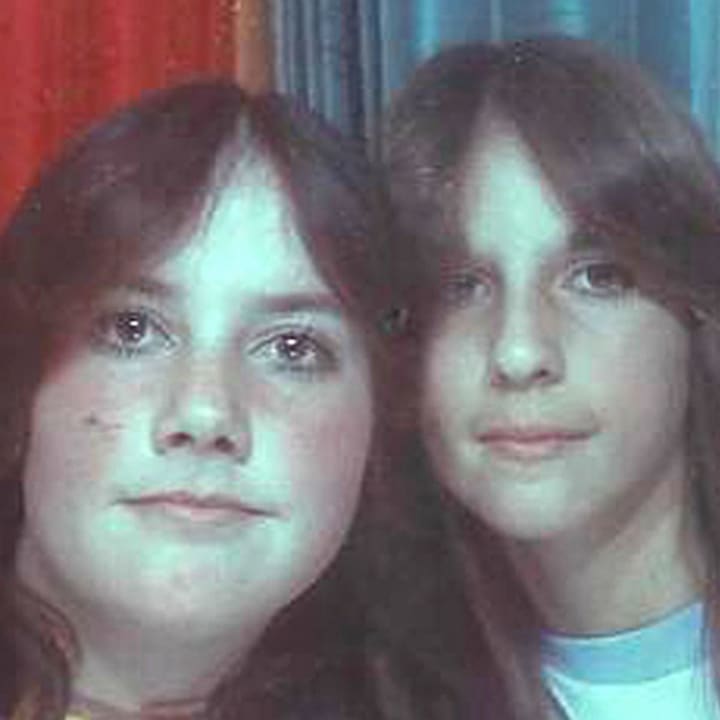
Karen did not handle this well. She started spreading rumors about Missy. Vicious rumors that Missy was sleeping around with different guys. Karen's rumors got so bad that at one point, a group of girls physically attacked Missy because they believed Karen's stories about Missy being with their boyfriends.
Then there was this guy named Randy. Missy dated him briefly during her junior year, maybe a month, and then broke it off because he partied too much. Pretty standard breakup stuff. Karen started dating Randy after that. They even moved in together. When Randy tried to get back together with Missy and she turned him down, when Missy told Karen she should probably break up with this guy, that made Karen furious.
Laura Doyle

Laura Doyle had her own issues with Missy. In July of 1985, Laura saw Missy with her ex-boyfriend Victor Amaya, and she threatened to kill Missy over it. The threat was specific, and it was serious.
The aggression kept escalating. That same month, Karen convinced Randy to throw lit firecrackers at Missy to prove his loyalty. In September, Karen confronted Missy in a park, screaming at her and slapping her in the face. Karen even went to Missy's house and told her mother, Irene, that her daughter was a tramp.
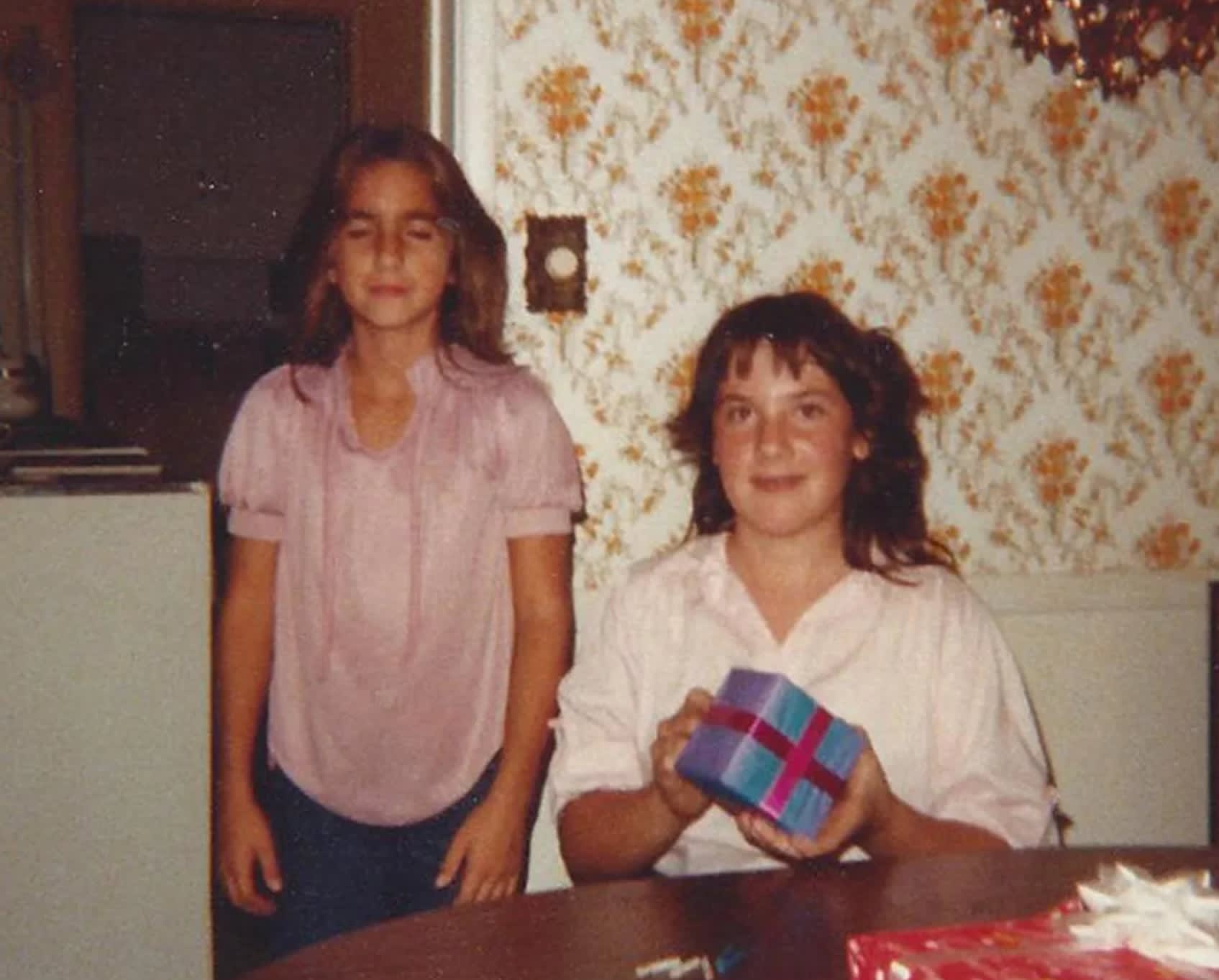
This is important to understand because what happened next had been building for months. The violence was planned and calculated over time.
The Murder
October 1, 1985. Karen and Laura convince Missy to go for a walk with them in the Angeles National Forest, up in the Colby Ranch area. They bring along a third friend, a girl named Eva Chirumbolo. Eva's presence in this story becomes crucial later. At the time, she was there as another friend.
The four girls walk maybe a hundred, two hundred yards down a path to Big Tujunga Creek. The second they get to that creek, Karen and Laura turn on Missy. They start accusing her of sleeping around. Missy starts crying. Laura keeps verbally attacking her. Then the physical assault begins.
They tear off her earrings. The force of it rips her ear. Karen pulls out a knife, and she starts hacking off Missy's hair. That long brown hair that went down to her waist. Karen is cutting it off in chunks. This is violence with symbolism attached. This is about destroying what they were jealous of. This is about taking away the thing they thought made Missy special.
They beat her. They torture her. Karen shoves Missy into the freezing water of that creek and holds her down until she drowns. When Missy stops moving, they find a log. A massive log that weighs about a hundred pounds and stretches five feet long. They place it directly on top of Missy's body to keep her submerged, to keep her from floating up.
Three days later, on October 4th, hikers find her body.
The Deception
The investigation starts. Detectives are trying to figure out who killed this teenage girl. Karen Severson immediately shows up at the Avila house. She's crying. She's devastated. She tells Missy's mom, Irene, how sorry she is, how much she loved Missy, how she can't believe this happened. She offers to help find the killer. She visits on Thanksgiving.
Then Karen Severson moves into the Avila family home.
So the woman who drowned Missy Avila in a creek, who cut off her hair, who placed a log on top of her body, moves into the house of the girl she murdered. She brings her two-year-old daughter with her. She lives there for several years.
Karen is eating breakfast with Missy's mom. She's sleeping in their home. She's playing with her own child in the same rooms where Missy grew up. The entire time, she's actively working to throw suspicion off herself and Laura. She's participating in the investigation, offering theories about who might have done it, leading what investigators later called a campaign of misdirection.
The emotional detachment required to do something like that is staggering. Think about what that means. Karen Severson positioned herself at the absolute center of the grief she created while maintaining this elaborate performance of innocence. Every single day. Breakfast. Dinner. Bedtime stories with her own kid in the house of the girl she killed.
For three years, Irene Avila had no idea. The woman comforting her, the woman helping her search for answers, was the person who killed her daughter.
Justice and Conviction
In 1988, Eva Chirumbolo, the friend who was there that day at the creek, finally comes forward. She goes to police and tells them the truth. Karen Severson and Laura Doyle murdered Missy Avila.
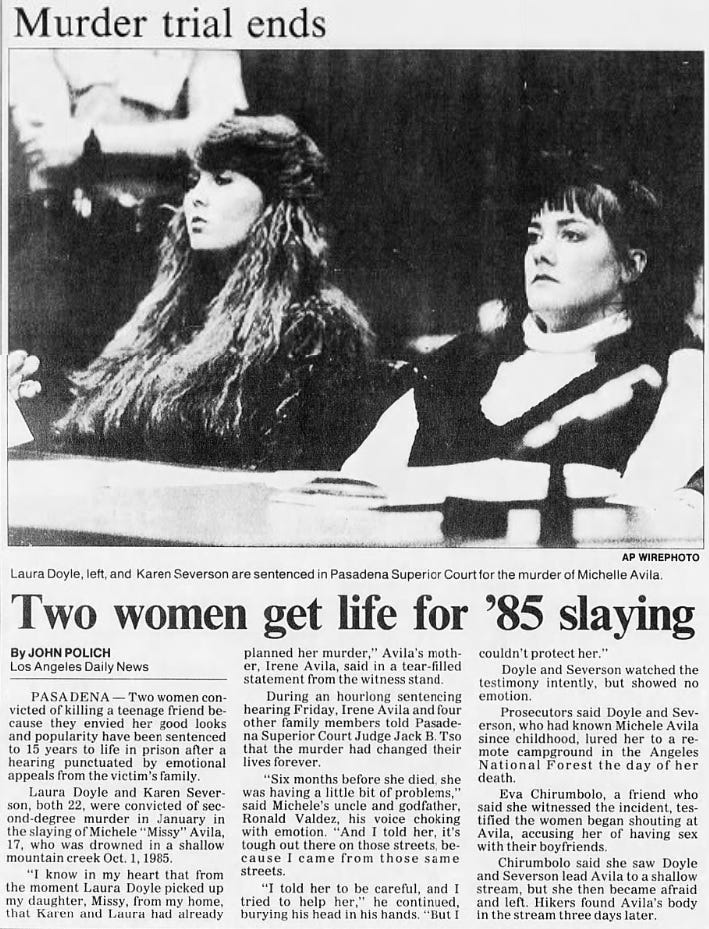
In 1990, both women are convicted of second-degree murder. They each get fifteen years to life. Karen serves twenty-one and a half years. She's released in December 2011. Laura serves twenty-two years and gets out in December 2012.
So after more than two decades in prison, after destroying the Avila family, after living with the consequences of what they did, Karen Severson gets out and chooses a path that's going to reopen every wound.
The Aftermath and Missy's Law
She starts shopping around a memoir. She's got a film deal in the works. She publishes two books under the pen name Kay Crayne. The first one comes out in June 2013. The second one drops on September 30, 2014. That date matters because September 30th is right around the anniversary of Missy's murder. The Avila family sees this as deliberate. Another assault on their daughter's memory.
According to the Avilas, these books are full of lies. Defamatory information about their family. Karen is trying to control the narrative, trying to rewrite what happened, trying to make herself into something she's absolutely not.
In March 2015, the Avila family files a civil lawsuit. They're going after Karen Severson, her publishers, everybody involved. They want to stop her from profiting off Missy's death. They're suing for wrongful death, emotional distress, defamation, libel, slander, all of it. They want burial expenses reimbursed. They want punitive damages. They want their daughter's memory protected from this woman.
The family does something bigger though. They go to Sacramento. They push for legislation. In October 2015, California passes something called Missy's Law.
Missy's Law requires that any publisher putting out a book written by a convicted felon has to notify the victim's family. It closes a loophole in the existing Son of Sam laws. Families can't be blindsided anymore by their loved one's killer suddenly releasing a book or getting a film deal without them knowing about it first. They get notification. They get a chance to take action.
So this becomes Missy Avila's legacy. A law that protects other families from experiencing what the Avilas went through.
Understanding the Psychology
The psychological profile of someone like Karen Severson is genuinely fascinating in the worst possible way. She didn't kill out of jealousy alone. She created this elaborate, years-long performance. She fooled investigators. She fooled a grieving mother. She lived inside that grief while simultaneously causing it. That level of compartmentalization, that ability to separate what you've done from how you present yourself, that goes way beyond normal criminal behavior. That's something else.
Missy Avila was seventeen years old. She was four foot ten and ninety-seven pounds. She never had a chance against two girls who were significantly larger than her, who had been planning this for months, who hated her enough to kill her and to ritually destroy her. To cut off her hair. To drown her. To hide her body under a log.
Then one of those girls came to her funeral. Hugged her mother. Moved into her house. Slept there every night for three years.
The violence ended that day at the creek. The betrayal though, the manipulation, the performance of grief while causing it, that continued for years afterward. Justice came eventually through Eva Chirumbolo's testimony that broke the case open. Karen and Laura went to prison. Missy's Law now protects other families. None of that brings Missy back. None of that erases what Irene Avila went through, living with her daughter's killer and never knowing it.
The aftermath of a true crime case can be as devastating as the crime itself. Everything that comes after, all the ways the trauma continues, all the ways the family has to keep fighting, that's what defines cases like this one.

Host | Creator
Joe runs 10 Minute Murder because he's been trying to figure out since the '90s why humans are such spectacular disasters, when the Menendez Brothers and O.J. Simpson turned murder trials into must-see TV. While his classmates were watching Saturday morning cartoons, little Joe was watching Court TV and thinking, "What is wrong with people?" Thirty years later, he still doesn't have a good answer, but he's got a podcast about it.
When he's not studying the worst decisions ever made by our species, Joe screams supportive threats at the Buffalo Bills, reads everything he can get his hands on, and goes to stand-up comedy shows to remember that humans can be funny on purpose instead of by accident. Most nights you'll find him on his couch, yelling "You IDIOT" at a murder documentary like the killer can hear him through the screen. He calls it research. His therapist calls it "an interesting coping mechanism."
The Zombie Hunter Murders: Phoenix's Most Haunting Cold Case Finally Solved

 Spotify
 Apple Podcasts
 Pandora
 Amazon Music
 Podchaser
 Spreaker
 RSS Feed
 Audible
 Castbox
 iHeartRadio
 Castro
 Deezer
 YouTube