Herbert Mullin: The Santa Cruz Killer Who Believed Murder Prevented Earthquakes
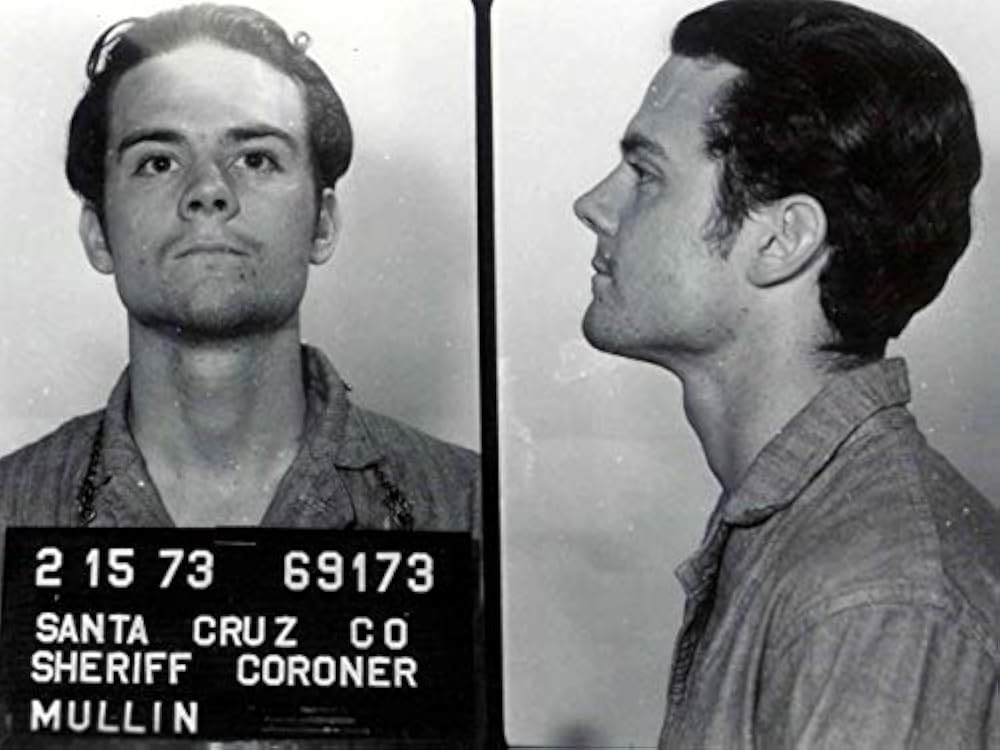
Santa Cruz, 1973. A city already drowning in serial murder violence gets hit with something nobody saw coming. A clean-cut former Boy Scout starts killing strangers because he thinks their deaths will stop California from falling into the ocean. Thirteen victims. Six months. And a delusion so complete that even after his arrest, Herbert Mullin still believed he'd saved the world.
When Serial Killers Judge Each Other
In 1973, two of California's most notorious serial killers ended up in prison cells right next to each other. Edmund Kemper, the Co-ed Killer, in one cell. Herbert Mullin in the other. Kemper murdered his own mother, decapitated college students, kept their heads as trophies. And this guy looks at Mullin with absolute disgust and says Herb killed people for no good reason. When someone who did what Kemper did thinks you're pointless and irritating, that tells you something about how disturbing this case really is.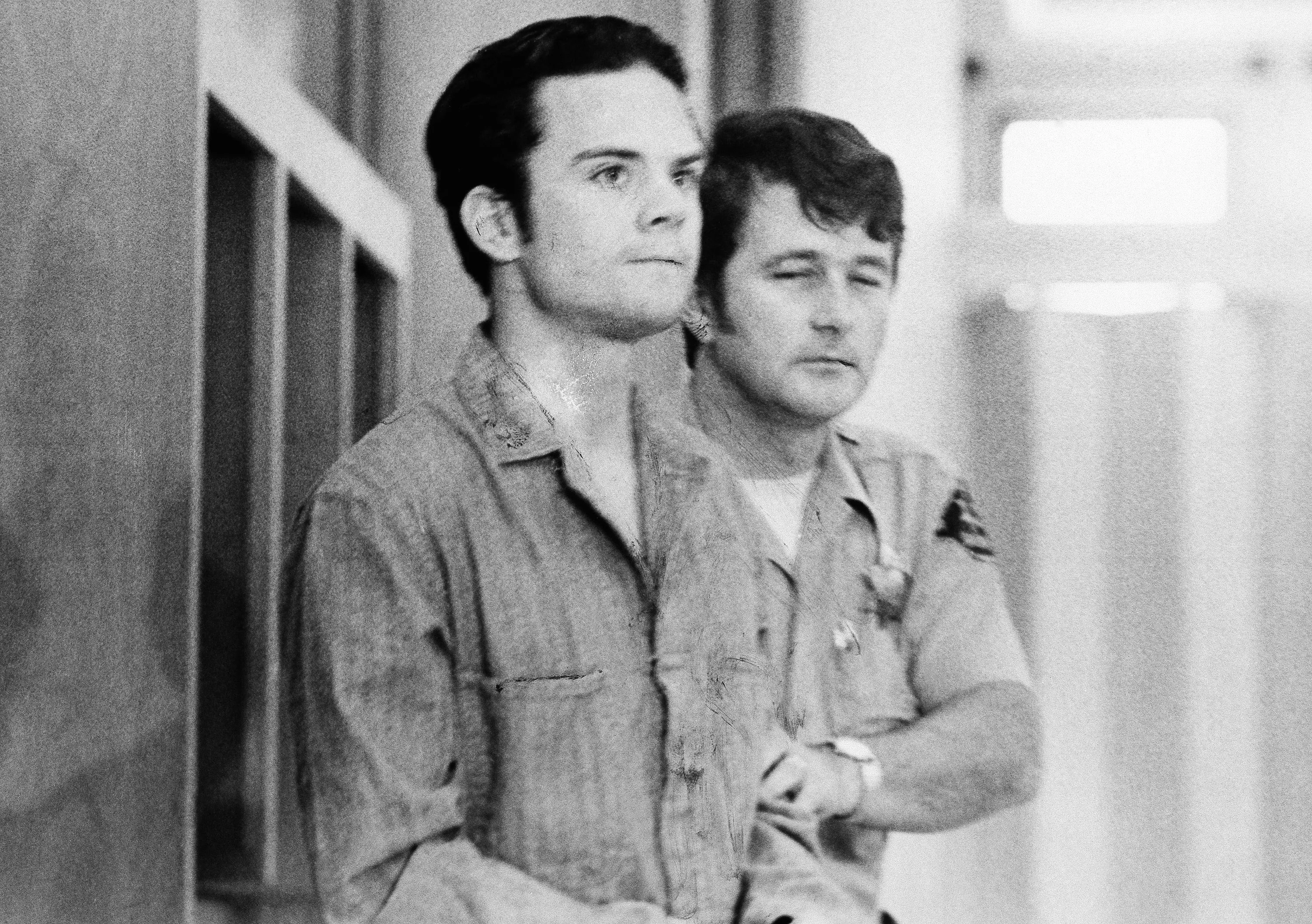
The Golden Boy Nobody Suspected
Herbert Mullin was born April 18th, 1947, in Salinas, California. Raised Catholic, stable family, the whole package. This kid built tree houses with his friends, played Little League baseball, went on Boy Scout camping trips. At San Lorenzo Valley High School, he was legitimately popular. Good grades, genuinely kind to people, had a girlfriend named Loretta. His classmates voted him Most Likely to Succeed. Teachers adored him.
But one thing bothered him. His birthday was April 18th. Same exact date as the 1906 San Francisco earthquake that killed thousands and leveled the city. For most people, that's a weird coincidence. For Herb, it planted something that would eventually consume him completely.
When Everything Breaks
Summer of 1965, right after graduation, his best friend Dean Richardson dies in a sudden car accident. This is where Herb's entire personality fractures. He doesn't grieve like a typical teenager. He completely withdraws from everyone, including Loretta. He starts building elaborate shrines to Dean in his bedroom. Full shrines. He becomes obsessed with reincarnation, with this idea that dead people leave behind some spiritual debt the living have to settle.
He enrolls at Cabrillo College, keeps changing his major because nothing feels right. Engineering to psychology and back again. He's desperately searching for some framework to explain what's happening inside his head. Then he reconnects with Jim Gianera, a mutual friend of Dean's. Jim offers him a marijuana cigarette. One joint. Herb smokes it. And in his increasingly fractured mind, this single moment becomes the source of everything wrong with him. He decides that marijuana cigarette poisoned his brain permanently. He will never forgive Jim Gianera for this.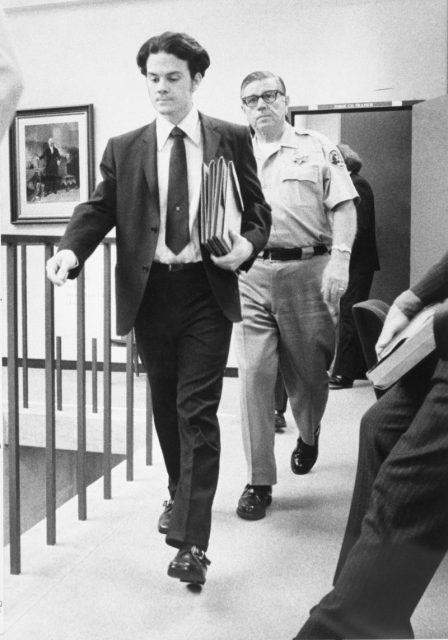
The Mental Health System Sees It Coming
Between 1969 and 1972, Herb gets committed to psychiatric facilities five separate times across California. Mendocino State Hospital, San Luis Obispo County, all over. Every single time, psychiatrists diagnose him with paranoid schizophrenia. The symptoms are completely obvious. He's hearing voices giving him commands, experiencing hallucinations, doing this thing called echopraxia where he involuntarily copies other people's movements. Doctors write in his charts that his prognosis is "poor" and "grave." They know he's dangerous.
But California had recently passed the Lanterman-Petris-Short Act. The intention was good: protect civil liberties of mentally ill people, prevent indefinite warehousing. But the execution was catastrophic because there was zero infrastructure for community care. So Herb keeps getting released after seventy-two hour holds. Over and over.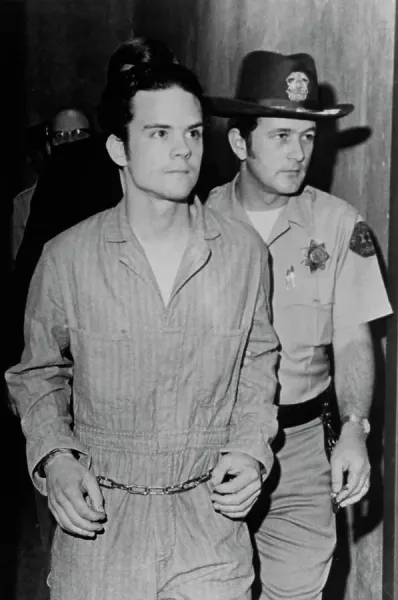
The Delusion Grows
His internal world becomes this terrifying place. He starts hearing what he calls "die songs" in his father's voice, telling him blood is necessary to keep the world stable. He fixates on the Vietnam War, but not politically. He genuinely believes that as long as American soldiers are dying in Southeast Asia, their deaths function as human sacrifices keeping the tectonic plates from shifting. As long as blood keeps flowing over there, California stays anchored.
Then the war starts winding down in 1972. Herb's anxiety goes through the roof because in his delusional framework, the sacrifices are stopping. He hears about some psychic's prediction that a massive earthquake will hit California on January 4th, 1973. To him, this is scientific certainty requiring immediate action.
So he formulates a plan. He's going to find thirteen people who will telepathically volunteer to die. He calls it singing the die song. In his psychotic reasoning, he'll communicate with people on some spiritual frequency, ask for their permission, and they'll agree because they understand the cosmic necessity. Their deaths will satisfy what he calls the nature god. California will be saved.
He tries to enlist in the Coast Guard and Marines because he wants some legitimate framework for the violence he feels compelled to commit. Both branches reject him because of his psychiatric history. So he realizes he's going to perform these sacrifices as a civilian.
The Killing Begins
October 13th, 1972. Friday the 13th. Herb is driving his Chevy station wagon along a mountain road when he spots Lawrence White, a 55-year-old transient. Herb pulls over, pops his hood like he's having car trouble. Lawrence stops to help. Herb beats him to death with a baseball bat. Later, he tells investigators he perceived Lawrence as the biblical Jonah, and that Lawrence telepathically begged to be thrown overboard so others might live.
Eleven days later, Mary Margaret Guilfoyle is running late for an appointment. She's 24, a student at Cabrillo College. She decides to hitchhike, which was incredibly common in Santa Cruz then. Herb picks her up. While driving, he stabs her multiple times through the chest and back. He drives her body to a remote hillside and disembowels her because he claims he's searching for physical proof of the pollution he believes is contaminating humanity. Years later, Mary's family would say that documentaries got made about Herbert Mullin, but nobody ever asked who Mary actually was.
The Priest in the Confessional
November 2nd, 1972. Herb goes to St. Mary's Catholic Church in Los Gatos. He's having doubts, feels like he needs to confess. He enters the confessional booth where Father Henri Tomei, a 65-year-old priest, is hearing confessions. During the sacred ritual, Herb's psychosis completely reframes the interaction. He becomes convinced Father Tomei has telepathically volunteered to become the next sacrifice. He attacks the priest inside the confessional. Beats him, kicks him, stabs him to death in this holy space meant for redemption.
The community is horrified, but law enforcement can't connect these murders. A transient, a hitchhiker, a priest. No discernible pattern links them.
Revenge and Witnesses
After murdering Father Tomei, Herb goes quiet for two months. But January 4th passes without any earthquake, and his paranoia intensifies. He decides he needs to eliminate the person who started his mental deterioration: Jim Gianera.
January 25th, 1973. Herb drives to Jim's old address, but Kathy Francis lives there now. She's friendly, tells him Jim and his wife Joan recently moved to a cabin in the woods, gives him directions. Herb drives to the cabin and confronts Jim. He demands to know why Jim gave him that marijuana cigarette. When Jim's answer doesn't satisfy him, Herb shoots him. Jim tries crawling to warn his wife Joan, but Herb breaks down the door and shoots her as well. Then he stabs both their corpses repeatedly because this murder is deeply personal.
But now he has a problem. Kathy Francis can link him to the Gianeras. So he drives back to her house. She's home with her two young sons, nine-year-old David Hughes and four-year-old Daemon Francis. Herb murders all three. Shoots both children in the head, then stabs their small bodies. When police discover the massacre, they assume it's drug-related. They have no idea this connects to anything else.
The Forest Massacre
February 10th, 1973. Herb is hiking through Henry Cowell State Park when he encounters four teenage boys illegally camping. Robert Spector, 18. Brian Card, 19. David Oliker, 18. Mark Dreibelbis, 15. Herb approaches them pretending to be a park ranger, tells them they're polluting the forest and need to leave. The boys dismiss him. The next day, Herb returns and shoots all four in the head through the tent fabric. He later claims he asked each telepathically for permission and they all agreed.
The Final Sacrifice
Three days later, February 13th, Herb is driving through Santa Cruz and sees Fred Perez, a 72-year-old retired prizefighter, working in his front yard. Herb performs a U-turn, rests his rifle across the hood, and shoots Fred in the heart. Broad daylight. A neighbor named Joan Stagnaro witnesses everything. She writes down his license plate and immediately calls police.
Herb gets pulled over within minutes. He doesn't resist. Doesn't say a word. In his mind, his mission is complete. Thirteen human sacrifices performed. California is saved.
The Trial and Prison
The trial becomes an intense legal battle over sanity. Herb admitted to all thirteen murders. The only question is whether he understood right from wrong. His defense presents his psychiatric history, brings in forensic experts who testify his delusions were so pervasive he genuinely believed he was saving millions. But the prosecution points to the Gianera and Francis murders. The fact that Herb returned to eliminate a witness demonstrates he understood legal consequences.
The jury deliberates fourteen hours and returns a split verdict. First-degree murder for Jim Gianera and Kathy Francis because those were premeditated revenge. For the other victims, second-degree murder because they were impulse killings driven entirely by delusions.
Herb eventually gets housed next to Edmund Kemper. Kemper stands six-foot-nine and absolutely despises Herb. Hates his constant singing, his bizarre behaviors. Kemper would throw water on him to shut him up, give him peanuts as rewards when he stayed quiet like training an animal.
Herbert Mullin was denied parole eight consecutive times. He died of natural causes on August 18th, 2022, at age 75, still believing he had successfully saved California from catastrophic destruction.
So many intervention points existed where this could have been prevented. Dean Richardson's death. The marijuana cigarette that became his obsession. Five separate psychiatric commitments where doctors documented he was dangerous, but a broken system kept releasing him. Thirteen innocent people became involuntary sacrifices in a delusion only Herbert Mullin could comprehend.
Mary Guilfoyle's family said it perfectly. Everyone wants to study Herbert Mullin. Nobody asks about the actual human beings he destroyed.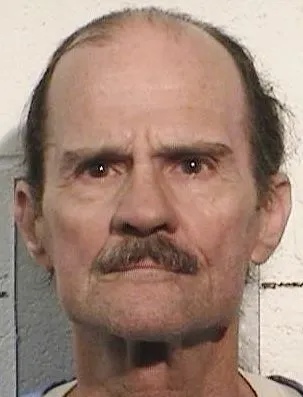

Host | Creator
Joe runs 10 Minute Murder because he's been trying to figure out since the '90s why humans are such spectacular disasters, when the Menendez Brothers and O.J. Simpson turned murder trials into must-see TV. While his classmates were watching Saturday morning cartoons, little Joe was watching Court TV and thinking, "What is wrong with people?" Thirty years later, he still doesn't have a good answer, but he's got a podcast about it.
When he's not studying the worst decisions ever made by our species, Joe screams supportive threats at the Buffalo Bills, reads everything he can get his hands on, and goes to stand-up comedy shows to remember that humans can be funny on purpose instead of by accident. Most nights you'll find him on his couch, yelling "You IDIOT" at a murder documentary like the killer can hear him through the screen. He calls it research. His therapist calls it "an interesting coping mechanism."
The Zombie Hunter Murders: Phoenix's Most Haunting Cold Case Finally Solved

 Spotify
 Apple Podcasts
 Pandora
 Amazon Music
 Podchaser
 Spreaker
 RSS Feed
 Audible
 Castbox
 iHeartRadio
 Castro
 Deezer
 YouTube