
Left to Die: The Chante Mallard Case and the Man in Her Windshield
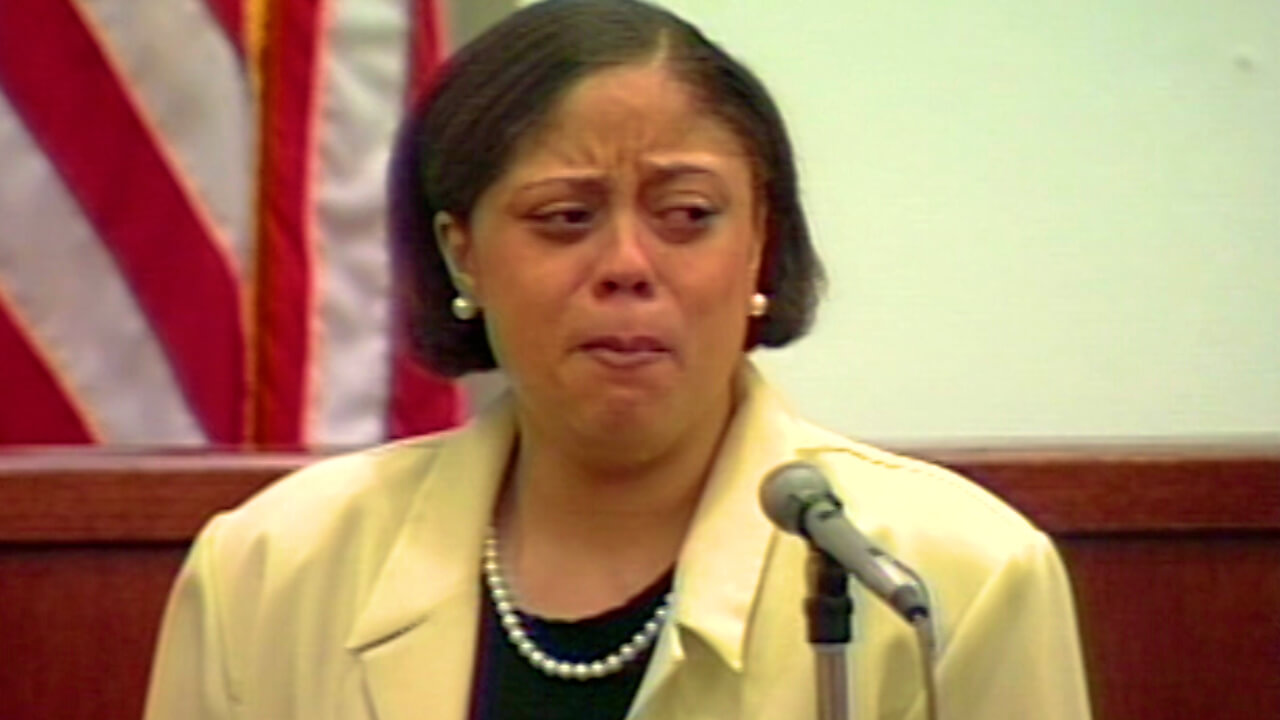
October 26, 2001. Fort Worth, Texas. A certified nursing assistant leaves a nightclub high on ecstasy, drunk, and stoned. She hits a homeless man on Highway 287. He goes through her windshield. And instead of calling 911, she drives home with him still alive and lodged in her car. Then she parks in her garage and closes the door. What happens next will make you question everything you know about the choices people make when they're afraid.
When a Car Accident Becomes Murder: The Chante Mallard Story
The Night That Changed Two Lives Forever
There are crime cases where you hear the facts and your brain tries to reject them because they sound too horrible to be real. This is one of those stories, and the truly disturbing part is how ordinary it starts.
October 26, 2001, around 2:30 in the morning. Chante Mallard leaves a Fort Worth nightclub called Joe's Big Bamboo Club. She's 25 years old, works as a certified nursing assistant at a retirement home, and she is completely wasted. We're talking drunk on multiple drinks, high from smoking weed in the car on the way to the club, and rolling on ecstasy that she split with her friend before they even walked inside.
Her friend can see Mallard is messed up, so she drives them both to her own apartment. That's the responsible move. The safe move. The move that saves lives. But Mallard makes a different decision. She gets behind the wheel of her 1997 Chevrolet Cavalier and decides to drive herself home.
Who Was Gregory Biggs?
Now let me tell you about Gregory Glenn Biggs. He's 37, a skilled bricklayer who fell on hard times after losing his truck a couple years back. For a tradesman, losing your vehicle means losing your livelihood. He's been staying at a Fort Worth homeless shelter, but he has a son named Brandon who loves him. He's a dad. A craftsman who built things with his hands and knew the value of precision.
The Collision on Highway 287
That night, Gregory is walking along Highway 287. It's dark on that stretch where Loop 820 curves into U.S. 287, and Mallard comes around that bend. Her vision is blurred from the ecstasy. Her reaction time is destroyed by the alcohol. And suddenly Gregory Biggs is right there in front of her car.
She hits him at highway speed.
The physics of what happens are specific. The bumper strikes his legs and nearly severs his left leg completely. His body rotates up onto the hood. Then his head and torso go through the passenger side windshield. He doesn't get thrown onto the road or run over. He goes through the safety glass and becomes lodged there. His head and upper body end up inside the car, resting on the floorboard and passenger seat. His legs are outside, draped over the hood in positions that didn't look possible.
When an Accident Becomes a Crime
At this point, this stops being a horrible accident. Mallard doesn't stop. She doesn't pull over. She drives approximately one mile to her house with Gregory Biggs embedded in her windshield, still alive and bleeding. Wind is rushing through the shattered glass. She takes him away from the highway where someone might have seen him and called for help.
She pulls into her garage and closes the door behind her.
Two Hours That Could Have Saved a Life
The medical examiner later testified about what those injuries meant. Near amputation of the leg. Multiple fractures. Internal trauma. Cause of death was bleeding out and going into shock. But here's what matters. The medical examiner estimated Gregory survived for one to two hours after the impact.
If Mallard had called 911 when she got home, even 30 minutes after she parked, paramedics could have applied tourniquets and started fluid resuscitation. They could have gotten him to surgery. He had a window where he could have lived. His death wasn't guaranteed by the collision. It became inevitable because of what happened in that garage.
Mallard sat in the car with him. She heard him moaning. She heard him calling out. And she cried. She apologized over and over. "I'm sorry, I'm sorry." She tried to pull him out herself but couldn't get him unstuck from the windshield. So she sat there with this dying man, a man she had actual medical training to help as a nursing assistant, and she watched the clock run out on his life.
Then she went inside her house and left him to die alone.
The Cover-Up Begins
By morning, Gregory Biggs was dead. Mallard borrowed a different car and picked up her ex-boyfriend, Clete Jackson, who'd gotten out of jail a few months earlier for burglary. When he arrived at her house and saw what was in the garage, he later described the body as grotesquely lodged in the windshield with the severed leg resting on the center console.
They drove to her friend's apartment to figure out a plan. There was talk about burning the car with the body inside to destroy DNA. Jackson drew a line there. He said, "We ain't going to burn nobody. We're going to put him somewhere so his family can find him so they can bury him, because it was an accident."
There's this strange morality at work. They were willing to hide a corpse and destroy evidence, but cremating a body was somehow too far.
Disposing of Gregory Biggs at Cobb Park
That night, Jackson brought his cousin to help. They spread a blanket on the garage floor and forcefully pulled Gregory out of the windshield. Jackson testified later that he apologized to the corpse while they worked. "I'm sorry, man." They loaded the body into a trunk, drove to Cobb Park in Fort Worth, and left him where he'd be discovered. Then they removed the blood-soaked passenger seat from the Cavalier and burned it in Mallard's backyard.
October 27th, Gregory's body was found in the park. The autopsy showed injuries from a high-speed impact, but there was no glass at the scene and no skid marks nearby. Police knew someone had moved him. They had a victim but no vehicle, no suspect, and no leads.
How a Party Confession Cracked the Case
Four months pass. Then in February 2002, Mallard goes to a party and starts talking. She tells someone named Marla O'Donnell that she hit a white man with her car. Whether this was guilt or some weird form of bragging, we don't know. But O'Donnell went to the police.
When detectives executed a search warrant on Mallard's house, they found the Cavalier sitting in her garage with the shattered windshield and the missing passenger seat. They found the charred seat frame in the backyard. Blood and hair inside the car matched Gregory's DNA.
The Murder Trial That Shocked Fort Worth
The trial started in June 2003. Mallard pleaded guilty to tampering with evidence but not guilty to murder. The prosecution had to prove intent when the initial impact was accidental. They used felony murder doctrine. Mallard committed a felony by failing to stop and render aid. While committing that felony, she did something obviously dangerous to human life by hiding Gregory in the garage and denying him medical care.
Prosecutor Richard Alpert put it simply during closing arguments. "A man is laying in her car moaning and bleeding and she needs someone to tell her what to do? Any decent person would call for help."
The defense tried to paint Mallard as a terrified young woman who panicked while high and drunk. They argued the drugs prevented rational thought. But Clete Jackson's testimony was too detailed and too disturbing to dismiss. He described the smell, the positioning of the body, and Mallard's hysteria in the garage.
The jury deliberated for less than one hour. Guilty of murder. She was sentenced to 50 years.
The Appeal and Legal Aftermath
Mallard appealed, arguing you can't be held criminally liable for failing to act. The appeals court said Texas law requires drivers in accidents to stop, render aid, and contact authorities. Her failure to do that, combined with driving home and hiding the car, made her guilty. They also ruled that even if the crash injuries were severe, withholding medical care was a major factor in causing Gregory to die when and how he did.
Why This Case Still Haunts Us
This case disturbed people because we understand accidents and we understand panic. But sitting in a garage with a dying human being and choosing your own freedom over their life is something different entirely.
Mallard wasn't born a monster. She was a nursing assistant who liked going out dancing. But high on drugs and paralyzed by fear of prison, she made a choice that turned a tragic accident into one of the cruelest murders in Texas criminal history.
Where Is Chante Mallard Now?
Chante Mallard is 49 now, incarcerated at the Murray Unit in Gatesville, Texas. She becomes eligible for parole on March 4, 2027. In two years, the parole board will decide if 25 years is enough payment for what she did.
Gregory Biggs never got to see his son Brandon get married. Never met grandchildren. Never got to share the moments that his son testified about missing. Brandon said the hardest part is knowing all the life milestones his father should have been there for.
The distance between a tragic accident and murder was less than one mile of road and two hours of time. Gregory Biggs died because Chante Mallard was more afraid of what might happen to her than she was capable of saving a stranger's life. She ha d the training. She had the time. She had a phone. All she needed was the courage to make one call.
She chose silence instead, and a man bled to death in the dark while she cried in her house and hoped the problem would disappear.

Host | Creator
Joe runs 10 Minute Murder because he's been trying to figure out since the '90s why humans are such spectacular disasters, when the Menendez Brothers and O.J. Simpson turned murder trials into must-see TV. While his classmates were watching Saturday morning cartoons, little Joe was watching Court TV and thinking, "What is wrong with people?" Thirty years later, he still doesn't have a good answer, but he's got a podcast about it.
When he's not studying the worst decisions ever made by our species, Joe screams supportive threats at the Buffalo Bills, reads everything he can get his hands on, and goes to stand-up comedy shows to remember that humans can be funny on purpose instead of by accident. Most nights you'll find him on his couch, yelling "You IDIOT" at a murder documentary like the killer can hear him through the screen. He calls it research. His therapist calls it "an interesting coping mechanism."
Operation Misty: The Undercover Sting That Caught a Serial Killer

 Spotify
 Apple Podcasts
 Pandora
 Amazon Music
 Podchaser
 Spreaker
 RSS Feed
 Audible
 Castbox
 iHeartRadio
 Castro
 Deezer
 YouTube