
Mackenzie Shirilla and the Crash That Became a Murder Case
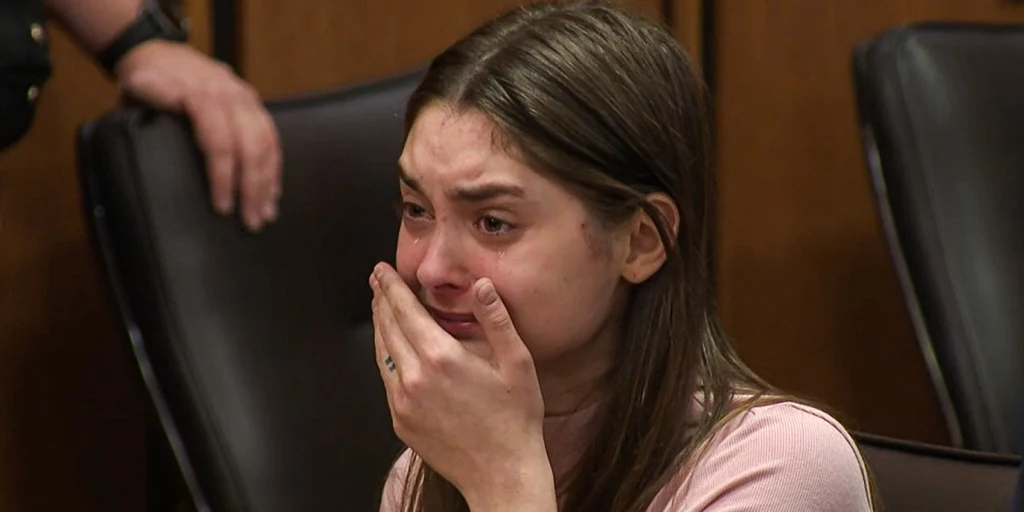
A 17-year-old girl behind the wheel. Her boyfriend in the passenger seat. His friend in the back. A dead-end industrial road in Ohio at 97 miles per hour with the accelerator pressed all the way to the floor. Two people died. One survived. And the debate over whether what happened was a crash or a plan has not stopped for a single day since.
Strongsville, Ohio: The Community That Holds All of This
Before we get into any of the actual events, let's spend a few minutes inside the community where this happened.
Strongsville, Ohio is a suburb about 17 miles southwest of Cleveland. As of 2022, it has roughly 46,000 residents, which puts it in that interesting middle zone where it's large enough to be a real, functioning city with real infrastructure, but small enough that a lot of people overlap. Your kids go to the same schools as your neighbor's kids. Your neighbors know your car. You've probably been to the same birthday parties as people you've technically never officially met. It's a solidly middle-class community where families plant themselves and stay for decades.
In the summer of 2022, it became the setting for a case that raised questions the legal system is still actively wrestling with in 2026. Questions about intent. About mental health. About what digital evidence is now capable of proving in a courtroom. And about whether a single missed filing deadline should be allowed to permanently close the door on new medical science.
The three people at the center of this story were deeply embedded in that community. They shared mutual friends. Their families knew each other. This was not an anonymous tragedy between strangers passing in the night. And that layer of it does not always come through in the media coverage, so let's put it back where it belongs.
Dominic Russo: Six Siblings and a Clothing Line Just Getting Started
Dominic Russo was born in September 2001. He grew up in one of those large, warm, organized-chaos households that you either grew up in yourself or always kind of envied from the outside. His parents are Christine and Frank. He had six siblings. Six. That house had to have been a constant, low-grade beautiful hurricane, and by all accounts Dominic carried that energy with him wherever he went. He was a person people moved toward without being able to quite explain why.
By 20 years old, he had a lot going on. He loved basketball. He was actively trading stocks, which at 20 puts him ahead of the curve by a pretty significant margin. He was producing his own music. He was laying early groundwork for an independent clothing line. He was in that period where you're trying several things at once and figuring out which of them are going to stick, right? And for Dominic, multiple things were sticking, and the people around him could feel the momentum building.
He was also nearly four years deep into a relationship that his family watched with increasing worry. The arc of that relationship is really the foundation of this entire story, so we're going to get there.
Davion Flanagan: Every Opportunity, Taken
Davion Flanagan's story deserves its own weight here, because it tends to get compressed in media coverage and it absolutely should not.
Davion was born in March 2003. His early childhood was hard in ways that leave marks. His biological parents struggled severely with substance use disorder, to the point where they could not safely care for Davion and his two younger sisters, Davyne and Dalia. When Davion was eight years old, all three of them were adopted by Jamie and Scott Flanagan in Strongsville.
Davion ran with every single opportunity that new stability gave him. He became a star running back for the Strongsville High School football team. He worked as a youth swim coach in the off-season. He graduated with the class of 2022 and was already working full time. He had submitted his application to Allstate Hairstyling and Barber College for the fall of 2023. He had a plan, a direction, a community that loved him, and two younger sisters who needed him around.
The thing about Davion's presence in this story that stays with me is how completely separate he was from the volatile dynamics between Dominic and Mackenzie Shirilla. He had zero involvement in any of it. He was a friend. He accepted a ride home from a party. That is the entire extent of his connection to what happened next. He was in the wrong car on the wrong morning, and that was enough to cost him his life.
Mackenzie Shirilla: The Persona and the Person Underneath
Mackenzie Shirilla was born in August 2004, which made her 17 years old on the morning of July 31, 2022. She grew up in Strongsville in a comfortable middle-class household with her parents Natalie and Steven and her older sister Danielle.
From her online presence, you'd see what a lot of teenagers were presenting in 2022: an influencer brand in progress. TikTok lifestyle content. Clothing samples from brands she reviewed. A following. A very curated, polished digital identity.
The people who knew her in person described something different. Multiple classmates and peers testified later that Mackenzie was deeply focused on the character of Regina George from the movie Mean Girls. Not as a cultural reference or an ironic thing. She reportedly tried to actively replicate the manipulative, hierarchical social behavior in her real daily life. A peer named Jaina Maynard testified that Shirilla was highly aggressive and that they had come close to physical confrontations multiple times. On social media, even the curated accounts carried an undertone. Captions like "I'm the one you die for." Videos where she talked about consuming large quantities of narcotics and surviving them. At the time, you could read that as teenagers saying provocative things online for views. In retrospect, it reads differently.
There's a broader context here that matters. 2022 was deep in the post-pandemic period, and the isolation of COVID had pushed teenagers aggressively into digital spaces. Research consistently showed a rise in anxiety, emotional dysregulation, and social aggression among teenagers, particularly young women, who had spent formative years with limited real-world social interaction. Clout culture, the performance of an idealized and invincible self for an online audience, was operating at full intensity. For someone already prone to emotional extremes, that environment was not helping stabilize anything.
Four Years of Combustion
The relationship between Mackenzie Shirilla and Dominic Russo started in 2018. She was 13. He was 16. The age gap at those ages already tells you something about how the dynamic was initially arranged, but what matters most here is what the relationship actually looked like over the years, because the pattern is everything.
What everyone who observed it described was an intensely codependent cycle. Major arguments. Breakups. Dramatic reunions. Repeat. For four years. By 2021, they had moved into a home owned by Dominic's mother Christine, and you might think that commitment would bring some stability. It did not. The conflicts escalated. Dominic reached out to his family repeatedly, looking for a way out. His brother Angelo testified to personally watching Dominic call Mackenzie's parents during arguments because she would refuse to leave their home after fights. Christine began noticing a significant escalation in physical confrontations in the six months before the crash, with Mackenzie physically hitting her son.
I want to be careful about something here, because toxic relationships are rarely simple. They involve two people, and the dynamic between two people is almost always more complicated than a clean, single-direction narrative. The text archives that investigators later recovered showed real pain on multiple sides. These were two young people completely stuck in a cycle that was damaging both of them in different ways. But within those messages was a specific, escalating pattern of threat-making that became the foundation of what the prosecution would later argue in court.
It's worth naming the broader context, too. Researchers studying teenage dating violence in the years following COVID noted a significant rise in emotional abuse, controlling behavior, and physical confrontation in adolescent relationships. The isolation had compressed normal social development into online spaces and then released teenagers back into physical proximity with limited practice at conflict resolution. By 2022, criminal psychologists were increasingly treating these kinds of escalating dynamics as serious precursors to physical violence, not adolescent drama.
What the Texts Actually Said
Investigators recovered thousands of text messages between Shirilla and Russo spanning years. Within those messages were things prosecutors would later call explicit evidence of a documented, long-running pattern of lethal threats.
In January 2020, during a breakup argument where Dominic told her she smothered him, Mackenzie sent a series of messages. In one, she wrote that if he left her she was going to flip out and that she wanted to bang her head against the wall until she was dead. And then, in the same conversation, she sent something that would later be described as remarkably prophetic: "Maybe you should treat the girl who would die for you a little better because when I'm gone you're going to miss me."
There were other messages throughout the years where she expressed severe depression, talked about how Dominic treated her, and wrote about wanting to end her own life. She wrote that she was going to kill someone. She wrote variations on wanting to die.
And in March 2020, this moved beyond texts.
Police and firefighters responded to a suicide threat at the Shirilla family home. Mackenzie was 15. The responding officers did not hospitalize her because her parents told them the threat was not genuine and that they did not believe their daughter was actually at risk. Her mother Natalie repeated this position under oath at trial in 2023, testifying that she had never believed Mackenzie was truly suicidal.
There are probably two things operating in that parental response simultaneously. Denial, certainly. And also possibly a worn familiarity with a child who makes dramatic statements, and a calculation, however mistaken, that this is more of the same pattern. Both things can be true at the same time. But the professional intervention that might have actually helped Mackenzie was not accessed at that point, and that is a fact that carries real weight in this story.
July 17, 2022: Two Weeks Before
On July 17, 2022, exactly two weeks before the crash, Dominic Russo called his mother Christine while he was in a moving vehicle. He was panicking. Mackenzie was driving erratically and threatening his life. Christine sent a family friend named Christopher Martin to go get Dominic. Martin found him on the shoulder of Interstate 71.
Martin told investigators that as Dominic fled the car, he could hear Mackenzie screaming "I'm going to wreck this car right now!" while hitting Dominic with her hands. Think about that for a second. Dominic had to wait for an opening, exit onto the shoulder of a highway, and be retrieved by a family friend like a roadside rescue. That's a picture of how trapped he felt in that relationship, and it matters for understanding what the next two weeks looked like.
Just days before July 31, Dominic recorded video on his phone. The footage shows Mackenzie standing outside his home, screaming, threatening to key his car and break in if he did not let her inside.
Two weeks separated that highway scene from the morning on Progress Drive.
Progress Drive, 5:30 a.m.
Progress Drive is an industrial corridor in the northwest sector of Strongsville. It's concrete-paved with enough surface wear and uneven sections that Officer Brent Robinson later testified he needed a maximum-effort grip on his patrol cruiser to maintain control at 54 miles per hour on that road. It is also a dead-end road. Keep that in mind.
At approximately 5:30 in the morning on July 31, 2022, Mackenzie Shirilla turned a black 2018 Toyota Camry onto Progress Drive. Dominic was in the front passenger seat. Davion was in the back seat, directly behind Dominic. They had been at a party. The car turned onto the road.
And then it accelerated.
The vehicle's black box, its event data recorder, captured everything in the final seconds with a precision that left zero room for interpretation. The accelerator pedal was at 100 percent. The car's peak speed reached approximately 97 miles per hour. The brakes were not engaged at any point. Zero percent brake activation. The car veered right, then left, left the roadway entirely, jumped the curb, and buried itself into the structural brick wall of the PLIDCO manufacturing facility at 80.5 miles per hour.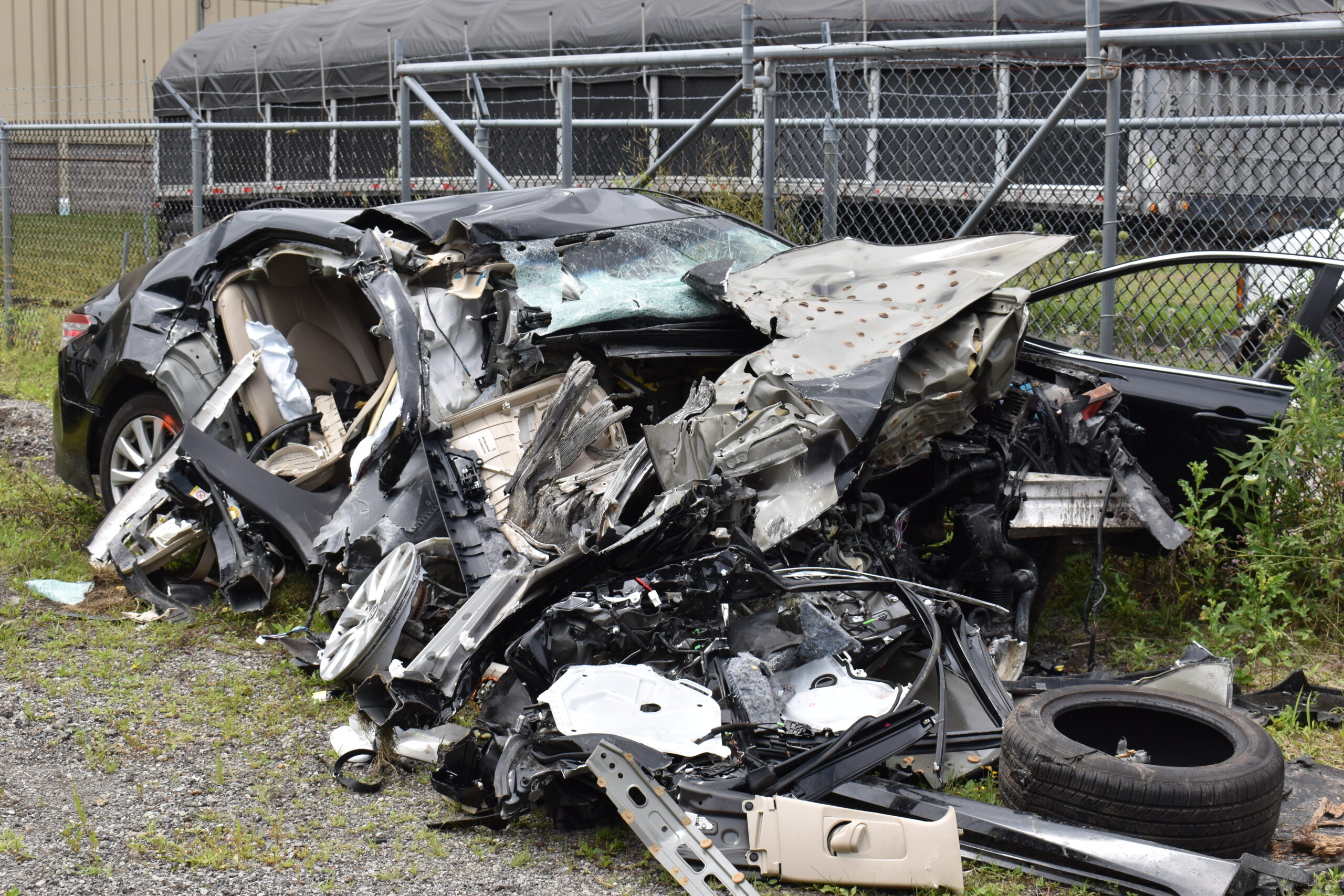
Emergency dispatchers received the crash call at 6:15 a.m. First responders arrived to find Officer Michael Galassi describing the vehicle as looking like it had been sliced clean down the middle.
Dominic Russo and Davion Flanagan were dead at the scene. Both had sustained non-survivable blunt force trauma.
Mackenzie was found unconscious but breathing, pinned under the collapsed dashboard. Her lower body was on the driver's side. Her upper body had been forced over to the passenger side by the impact. Wedged tightly between the floorboard and the fully depressed accelerator pedal was a fuzzy Prada slipper.
During her extraction, paramedics found 8.1 grams of psilocybin mushrooms tucked into her shirt. Officers recovered a digital scale, two cell phones, a bong, marijuana, and a Cadillac key fob from the wreckage. Toxicology later confirmed that while Mackenzie had no alcohol in her system, all three occupants had marijuana in their systems. Her blood-oxygen saturation upon extraction was 82 percent. Normal is between 95 and 100. She had sustained a lacerated liver, three broken ribs, and a fractured femur.
The Investigation: How a Location App Cracked the Case
The original classification of the deaths was accidental. That's standard for a high-speed vehicular crash with no immediate evidence pointing in another direction. Cuyahoga County Deputy Chief Medical Examiner Dr. Joseph Felo initially ruled the deaths accidental.
Then Dominic's peer group walked into the Strongsville Police Department voluntarily.
These were teenagers who came forward on their own and handed investigators access to their Life360 data. Life360 is a real-time GPS location sharing app that was extremely common among teenagers and families in 2022. You share your location with your friend group and everyone can see where everyone is in real time. Pretty routine app for that era. And the data it had captured from the morning of July 31 showed the Camry's precise speed and movement down Progress Drive. A sudden, massive acceleration. No deceleration at all. Then the signal drops dead at the exact point of impact.
Consumer GPS data from an app teenagers use to make sure their friends got home safe. That's what opened this case back up.
That data was then cross-referenced with the black box telemetry from the vehicle, and both told exactly the same story. Investigators also established that Mackenzie had driven on Progress Drive before the crash, just days prior. The prosecution would later argue this was deliberate preparation, that she had already scouted the road.
All of it was assembled and presented to Dr. Felo: the Life360 data, the black box, the years of text messages, the I-71 incident testimony, the video of Mackenzie outside Dominic's home. In March 2023, Dr. Felo amended both autopsy reports and changed the official manner of death from accident to homicide. He stated that the comprehensive investigation proved the driver's deliberate intent to cause lethal harm.
This was one of the very few instances in Ohio legal history where a medical examiner retroactively reclassified accidental deaths as homicide based almost entirely on electronic evidence of psychological intent rather than new physical autopsy findings. The physical roadway told almost nothing. The victims' phones, the car's computer, and a consumer location-sharing app did the work.
The Trial: POTS, Prada, and the Road She'd Already Driven
Mackenzie Shirilla was transferred out of juvenile court and indicted as an adult on 12 felony counts: four counts of murder, four counts of felonious assault, two counts of aggravated vehicular homicide, and related charges. She chose to waive her right to a jury trial. Her fate was placed entirely in the hands of Cuyahoga County Common Pleas Court Judge Nancy Margaret Russo.
The trial ran in August 2023. The defense came in with a medical argument. They said Mackenzie had suffered a sudden, involuntary blackout at the wheel due to Postural Orthostatic Tachycardia Syndrome, or POTS. POTS is a real condition. It affects the autonomic nervous system and can produce rapid heart rate, lightheadedness, and in serious episodes, fainting. Mackenzie had a documented prior diagnosis. The defense pointed to her 82 percent blood-oxygen reading upon extraction as evidence she was already unconscious before the car hit the wall.
Here's worth noting: POTS had its own cultural moment happening in parallel with this trial. Following COVID, POTS diagnoses rose significantly. The condition became far more widely recognized, and many people who had spent years being dismissed by doctors finally had a name for what they were experiencing. So the defense was working with a condition that had real public recognition, medical credibility, and a documented prior diagnosis on record. The chronic illness community paid close attention to how this trial engaged with that defense, because the stakes felt larger than one case.
The prosecution had a counter-argument for every piece of the medical case.
The accelerator was at 100 percent. A Prada slipper was physically wedged against it. The road she chose was a dead-end industrial corridor she had personally driven just days before. She had made explicit verbal and written threats over years about crashing cars with Dominic in them. And Davion Flanagan, an entirely uninvolved friend, was dead in the back seat. The prosecution argued that her willingness to take Davion with her to get to Dominic reflected the level of premeditated calculation involved, that this was a plan rather than an emotional break.
On August 14, 2023, Judge Nancy Russo delivered a verdict that went global. Guilty on all 12 counts. In her verbal delivery of the judgment, she described Shirilla's actions as controlled, methodical, deliberate, intentional, and purposeful. She said directly: "This was murder." She described the shift in behavior on Progress Drive as transforming "from a responsible driver to literal hell on wheels." And she addressed the POTS defense and any implied argument about a failed suicide attempt carrying legal weight: it does not. A failed suicide attempt is not a defense to murder.
On August 21, 2023, Mackenzie Shirilla was sentenced to life in prison with the possibility of parole after 15 years.
After the Verdict: Concerts, Phone Calls, and What She Said on Record
The aftermath produced its own set of moments that the public could not look away from.
At sentencing, prosecutors introduced video footage of Shirilla attending crowded music concerts and college Halloween parties approximately one month after her hospital discharge. Her mother Natalie testified and defended those outings by saying she had actively encouraged them because her daughter just needed a moment of fun after losing her friends. The families of Dominic Russo and Davion Flanagan were in that courtroom.
Recorded jail phone calls from the Cuyahoga County Jail became public after the conviction. In one, Mackenzie commented on her environment, saying she did not want to enjoy life there, but it was sad how they tried to make things pleasant. Her mother reminded her that the facility was designed for rehabilitation. Mackenzie responded that she did not need to be rehabilitated. Her mother agreed, adding that rehabilitation was for actual criminals.
In those same calls, Mackenzie expressed concern about being too old to start a family by the time she was eligible for release. That comment hit hard with a lot of people listening. Dominic Russo and Davion Flanagan are never going to get to have that concern. Their families carry a version of that reality every single day.
The Appeals, the Filing Deadline, and the Door That Closed
The Eighth District Court of Appeals upheld the conviction on direct appeal in September 2024. They ruled the evidence of intent was sufficient and that the prior threat history had been properly admitted at trial. In April 2025, the Supreme Court of Ohio declined to review the case.
Shirilla's family brought in a new defense attorney named Nemecek, who filed a petition for postconviction relief. The central argument was ineffective assistance of original trial counsel: specifically, that her trial attorney had failed to retain a medical expert, failed to formally admit her POTS medical records into evidence, and failed to introduce text messages that might have presented a more balanced picture of the relationship dynamics.
The new strategy centered on an affidavit from University Hospitals neurologist Dr. Kamal Chemali. He reviewed Shirilla's post-crash physiological data and concluded that her elevated lactate levels, her 82 percent blood oxygen, and her complete retrograde amnesia were all consistent with a seizure or a severe autonomic event that caused sudden unconsciousness at the wheel. He cited a 2018 study on seizure-related crashes, noting that the vehicle's trajectory, straight-line travel at high speed with zero braking activity, matched patterns consistently observed in drivers who lose consciousness involuntarily.
This is serious neurological analysis from a credentialed specialist at a major research hospital. Whatever your read on the broader case, post-crash physiological data from a qualified neurologist pointing to an alternative medical explanation deserved to be evaluated in a courtroom.
It was never evaluated.
Under Ohio Revised Code 2953.21, a postconviction relief petition must be filed within 365 days of the date the trial transcript is officially docketed in the court of appeals during the direct appeal. Shirilla's trial transcript was officially filed on October 24, 2023. That set the deadline at October 23, 2024.
Her legal team filed on October 24, 2024.
One day late.
The defense tried to argue around this. They pointed out that 2024 was a leap year, meaning a one-year period technically encompasses 366 days rather than 365. They also argued that the clock should have been triggered by juvenile bindover transcripts filed in December 2023 rather than the trial transcripts.
The prosecution countered that the 365-day window is jurisdictional. A single day of lateness does not simply weaken the petition. It completely eliminates the court's legal authority to consider it at all.
On March 12, 2026, the Eighth District Court of Appeals issued a unanimous ruling: Ohio law means 365 days. A leap year does not change that calculation. A juvenile bindover hearing does not satisfy the statutory definition of a trial transcript.
Dr. Chemali's neurological findings were rendered legally moot. Shirilla's life sentence stands. Every available appellate avenue is now exhausted.
One calendar day. That is the distance between an unheard neurological argument and the permanent finality of a life sentence. Whether that outcome is justice operating exactly as designed, or a deeply rigid application of procedural law to a question this significant, is a debate that has not settled and may not for years.
2026: The Documentary and the Debate That Keeps Going
As of 2026, Mackenzie Shirilla is 21 years old and incarcerated at the Ohio Reformatory for Women in Marysville under inmate number W111780. Her earliest potential parole eligibility date is October 2037, at which point she will be 33 years old.
In May 2026, Netflix released a documentary called The Crash, featuring the first jailhouse interviews with Shirilla and her legal team. The film tried to hold the tension between tragic teenage mistake and premeditated murder and let the audience draw their own conclusions.
The release had immediate real-world consequences. Shirilla's father Steve was placed on administrative leave from his teaching position over comments he made in the documentary. A close friend of Shirilla's named Rosie Graham, who appeared in the film, faced enough online harassment that she shut down her TikTok comments section and released a public statement criticizing how the documentary was edited. The response to the film was intense enough that it generated its own separate news cycle on top of the documentary itself.
Separately, the Investigation Discovery series Mean Girl Murders ran an episode called "Under the Influence" that offered a considerably less sympathetic portrayal, interviewing classmates who detailed the bullying behavior and the social aggression. The two productions interpret the same events from almost opposite positions, and the audience response to both has kept the public conversation alive more than three years after the crash on Progress Drive.
The reason this case holds people is that it lives in a truly contested space with real evidence on multiple sides. The forensic record: the black box data, 100 percent accelerator depression, zero braking, the prior threats on the highway, the dead-end road she had driven before, the Prada slipper. That evidence is solid. The medical counter-argument: the post-crash physiology, the credentialed neurologist's findings on seizure-related crash patterns, the documented POTS diagnosis. That evidence is serious. Both things exist. And because of one day on a calendar, they were never allowed to be examined side by side in front of a judge.
What has never been contested across any of this is who died. Dominic Russo had six siblings who loved him, a clothing line he was building from scratch, music he was producing, and a whole life in motion at 20 years old. Davion Flanagan had two younger sisters counting on him, a barber school application already filed, and years of potential he never got to use. They were in that car on the morning of July 31, 2022. They do not get to grow older, or argue about filing deadlines, or tell their side of anything to a documentary crew.
Their families carry all of that, every single day. No legal outcome on either side of this debate brings either of those young men back.
I Choose You: The Caleb Flynn Case


 Spotify
  Apple Podcasts
  Pandora
  Amazon Music
  Podchaser
  Spreaker
  RSS Feed
  Audible
  Castbox
  iHeartRadio
  Castro
  Deezer
  YouTube