Mississippi's Most Controversial Murder Trial: The Jessica Chambers Case

December 6th, 2014. A 19-year-old walks toward firefighters on a rural Mississippi back road. She's wearing only her underwear. Ninety-three percent of her body is burned. And before she dies the next day, she tries to tell them who did this to her. What she says becomes evidence that no prosecutor can overcome. This is the story of Jessica Chambers.
The Girl Who Wouldn't Die: Jessica Chambers and the Murder Trial That Couldn't End
Alright, buckle up. This one is brutal. We're talking about a case where the victim literally walked toward help while 93 percent of her body was on fire. Ninety-three percent. That's almost your entire body. And she's still moving, still trying to communicate, still fighting.
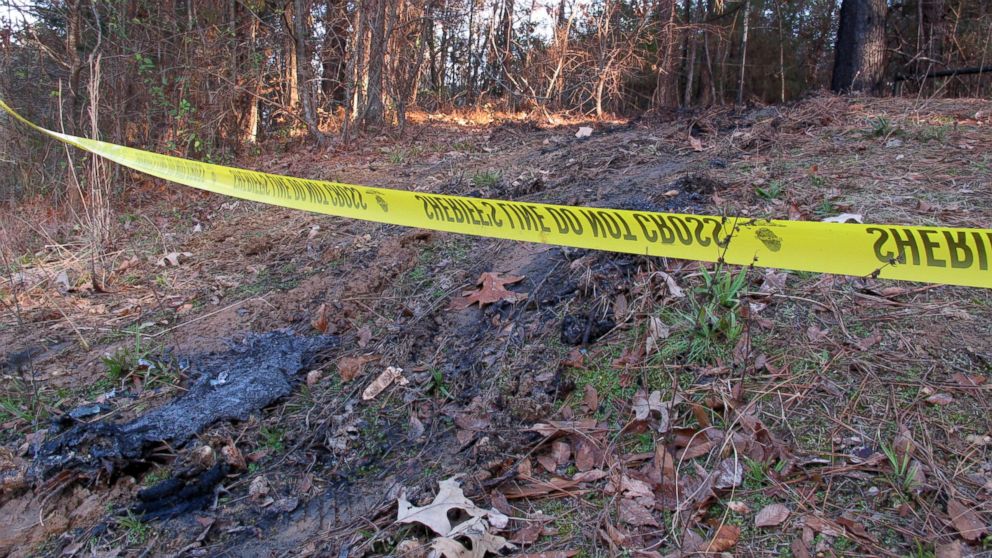
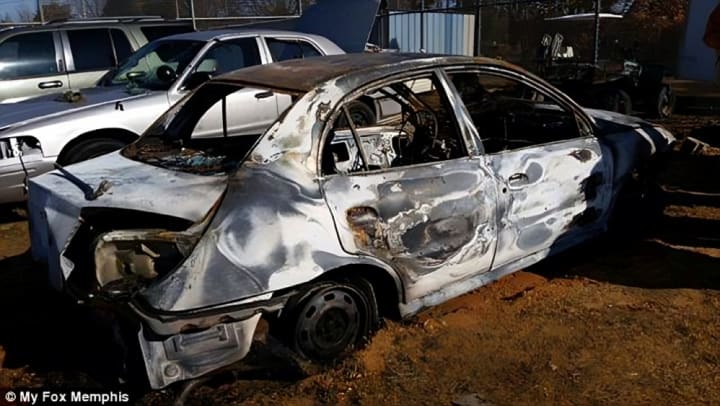
December 6th, 2014. Courtland, Mississippi. Population around 500. Jessica Chambers, 19 years old, former cheerleader, working at Goody's department store in Batesville, gets set on fire. And despite injuries that should have killed her instantly, she gets out of that car and walks toward the firefighters who show up around 8 PM thinking they're dealing with a vehicle fire.
When they see her, they're horrified. She's wearing only underwear in 40-degree weather. Her blonde hair is fried. She's burned beyond recognition. Firefighter Shane Mills knew Jessica personally. He didn't recognize her when he first saw her that night. He said it was one of the worst things he could imagine.
And despite everything, she's trying to tell them something. That detail right there, what she said to those first responders, becomes the thing that derails two murder trials and leaves this case stuck in legal limbo a decade later.

The Name That Changed Everything
Here's where this gets wild. At least eight first responders are on scene. Multiple people ask Jessica the same question. Who did this to you? And she gives them a name. The problem is, every single person who heard it says she said "Eric" or "Derek." Some heard "Erik." Some heard "Derrick." But they all heard basically the same thing.
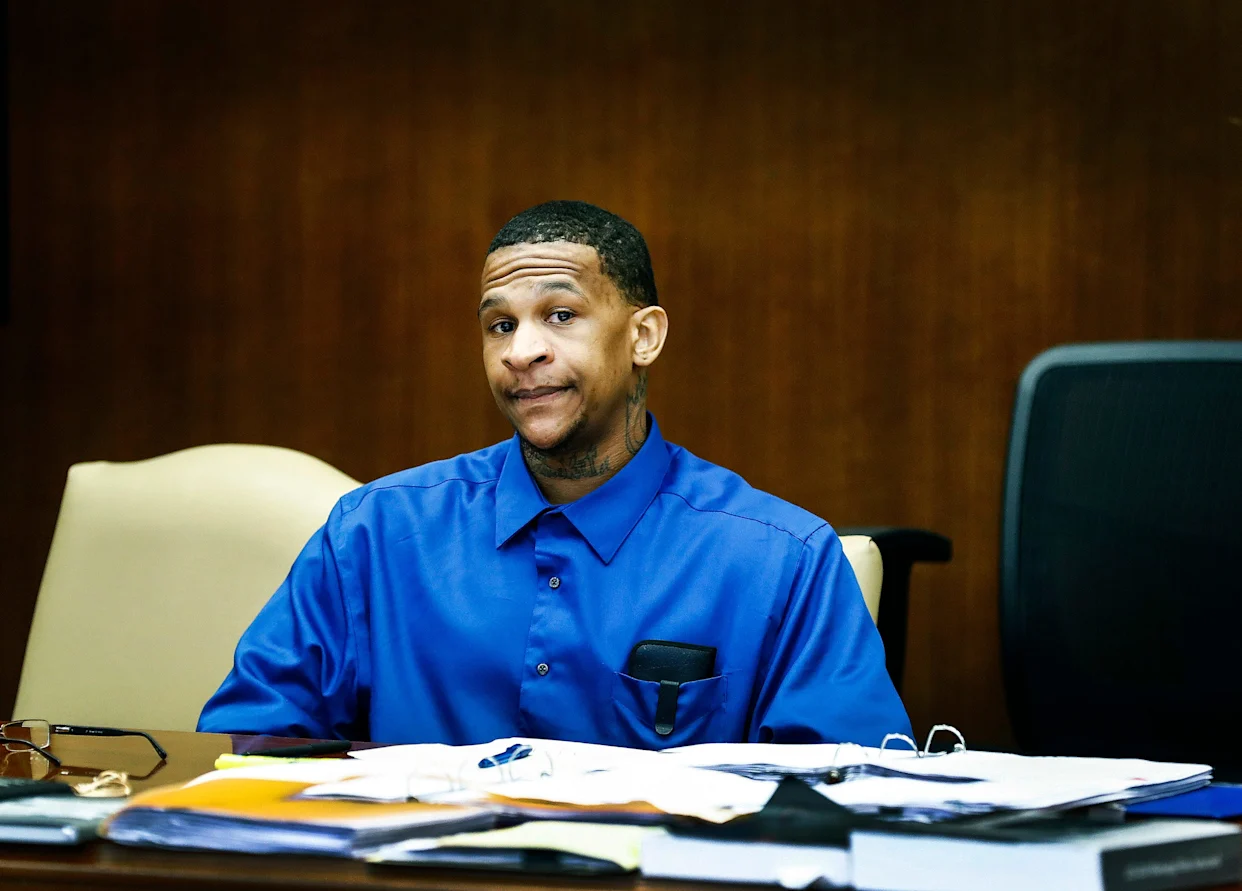
Now, the guy who gets charged with her murder? His name is Quinton Tellis. Not Eric. Not Derek. Quinton.
And Jessica knew Quinton. They'd been texting. They'd been hanging out for about two weeks. She absolutely knew his name. So if Quinton just set her on fire, why on earth would she say a completely different name? That's the question the defense hammered into the jury's head. And honestly, it's a pretty damn good question.
The prosecution's answer was basically, well, her throat was destroyed. Her mouth was full of burns. She had smoke inhalation. Maybe she was trying to say Quinton or Tellis, and it came out sounding like Eric. Or maybe the first responders, who are dealing with a scene straight out of a horror movie, just heard wrong.
They brought in a speech pathologist to testify. They had a doctor explain how severe throat and mouth burns affect your ability to form words. A doctor testified that Jessica had so much damage to her mouth, throat and chest that she wouldn't have been able to properly say and pronounce words. The argument was clinical and technical. But here's the thing. Eight different people heard the same name. That's a lot of people to all mishear the same way.
And you know what a dying declaration is? When someone is about to die and they try to tell you who hurt them, that testimony carries massive weight in court. There's this legal assumption that when you're dying, you're not going to lie. You're not going to play games. You're going to tell the truth.
Jessica was airlifted to a hospital in Memphis. She died early the next morning, December 7th, around 2:36 AM. She never got another chance to clarify. And that one name, Eric or Derek, became the thing prosecutors could never overcome.

Enter Quinton Tellis, Habitual Liar
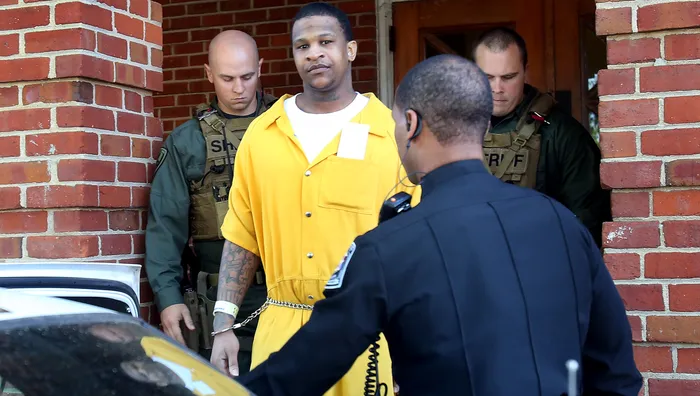
So who is Quinton Tellis? He's 27 when this happens. He's got three prior convictions in Panola County. Two for burglary, one for fleeing police. He got out of prison in October 2014, just two months before Jessica was killed. And here's what's not disputed: he was the last person confirmed to be with Jessica on December 6th.
The prosecution's theory goes like this. Quinton had met Jessica about two weeks earlier. He'd been contacting her repeatedly, asking for sex. She kept saying no. Text messages recovered from her phone showed she turned him down four times on the day she died. On December 6th, they meet up, they have sex in her car, something goes wrong. The prosecutor, District Attorney John Champion, theorized that Quinton tried to suffocate her, thought she was dead, then realized she's still alive and panicked. So he drives her and her car out to this back road, runs to his sister's house nearby, borrows her car, goes back to his place to grab gasoline from a shed, and then torches Jessica and the vehicle to eliminate the witness.
And look, gasoline was definitely involved. A small piece of Jessica's bra tested positive for gasoline at an ATF lab. Someone used an accelerant. Investigators found a gasoline canister in Tellis's garage.
But proving Quinton was that someone? That's where the prosecution ran into problems.
Because Quinton lied. A lot. When cops first talked to him, he said he only saw Jessica that morning. Quick interaction, nothing else. Then they came back with phone records, and suddenly his story changed. Oh yeah, actually we were together that evening. We had sex. I drove her car.
MBI Agent Tim Douglas testified that Quinton "repeatedly lied" during interviews. The prosecutor called him a liar to his face in court. And yeah, lying to cops is a terrible look. It makes you seem guilty as hell.
But the defense had an answer. Quinton had a girlfriend in Louisiana. He was probably cheating. Maybe he was selling drugs. He told investigators he met Jessica to sell her marijuana. So maybe he was lying to cover up other crimes, not murder. And by the time the FBI sat him down for a formal interrogation in January 2016, more than a year after Jessica died, his memory of the exact timeline was fuzzy at best.
Lies tell you someone has something to hide. They don't automatically tell you they're hiding murder.
Cell Phone Towers in Rural Mississippi
The prosecution's best evidence was digital. Phone records tell a detailed story. Jessica left her mom's house around 6:30 PM after telling her she was going to clean her car and get something to eat. She stopped at an M&M First Stop gas station, put $14 of gas in her car. The clerk, Ali Fadhel, said she seemed normal, nothing seemed wrong. Surveillance footage shows her at the gas station, and at one point something or someone catches her attention outside.
Her last call to her mom was around 6:45 PM. After that, nothing. At 7:26 PM, surveillance footage from a store across from Quinton's house shows a vehicle leaving his driveway area and heading south. At the same time, Jessica's phone starts moving in the same direction. By 8:04 or 8:06 PM, someone calls 911 to report a car fire.
Cell phone data showed Quinton's phone communicating with Jessica's phone throughout the evening. His DNA was on her car keys, found about an eighth of a mile from the burned vehicle. On paper, that sounds solid.
But here's the problem. Rural Mississippi doesn't exactly have cell towers on every corner. When defense experts testified about triangulation, they had to admit something crucial. In Panola County, cell phone pings can only narrow your location down to somewhere between two and 20 square miles.
Twenty square miles. That's not putting someone at a crime scene. That's saying someone was in the general vicinity of a small town. They could have been miles apart.
The defense argued Quinton was in Batesville, miles away, buying a prepaid debit card called a Green Dot card for his girlfriend when Jessica was attacked. And with cell data that unreliable, the prosecution couldn't definitively prove otherwise. So you've got circumstantial evidence. Suggestive evidence. But not proof beyond a reasonable doubt.
The Louisiana Connection That Changes Everything
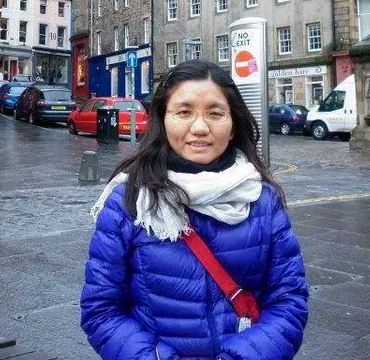
Here's something that makes this even more disturbing. About seven months after Jessica's murder, in late July 2015, a graduate student named Ming-Chen Hsiao was killed in Monroe, Louisiana. She was 34, from Taiwan, studying at the University of Louisiana at Monroe. She was killed around July 29th, but her body wasn't discovered until August 8, 2015, ten days later. She'd been tortured and stabbed more than 30 times. Someone wanted her debit card PIN, forced her to give it up, and then killed her. Detective Duane Cookson of the Monroe Police Department testified that veteran law enforcement officers called it one of the worst scenes they'd ever seen.
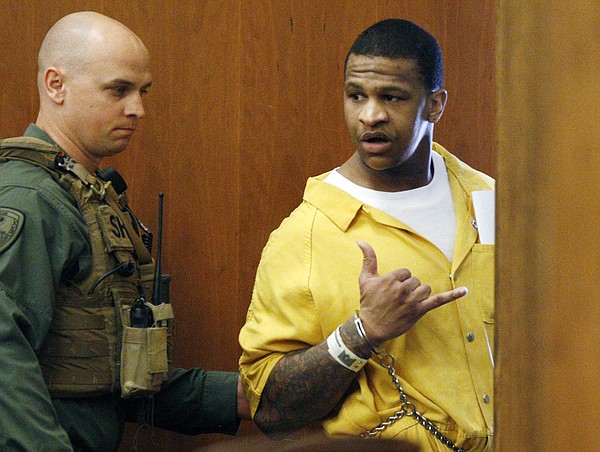
Quinton Tellis was caught using her debit cards after she died. Within days of her death, he withdrew several hundred dollars from her accounts at different times. Surveillance footage captured him at ATM machines using her card. On August 20, 2015, he was arrested. He admitted to using the cards.
And here's where it gets really interesting. At 5:22 PM on July 29th, Hsiao made her last phone call to a friend asking for a ride to church. Then at 8:16 PM, someone called her bank using her account and PIN. Immediately after that, a call to the same bank was made from Tellis's phone. That's some pretty damning digital evidence.
Quinton pleaded guilty to unauthorized use of Hsiao's card in May 2016. Got sentenced to 10 years as a habitual offender. He was also indicted on May 17, 2019 for second-degree murder in Hsiao's death.

Now here's the really wild part. That Louisiana murder case has been delayed over and over for years. It was scheduled to finally go to trial on December 1st, 2025. But just days before the trial was supposed to start, on November 29th, 2025, a key expert witness died in a car crash. Retired Brigadier General Paul Rowlett was driving to Monroe to testify when he was killed in a wreck in Hattiesburg. Rowlett was an Intelligence Analysis expert, and prosecutors said his testimony was vital for connecting physical evidence to Tellis. The trial got rescheduled to January 5th, 2026.
So more than ten years after Hsiao's murder, Tellis is finally about to face trial for it. And get this: he's asked for a bench trial, meaning a judge will decide his fate instead of a jury. Maybe he's thinking juries haven't worked out too well for him in the past, even when they couldn't convict him.
If you're an investigator and your suspect in a burning death case is also connected to a torture and stabbing murder where the victim was attacked more than 30 times for her debit card PIN, that paints a pretty clear picture. It tells you this person is capable of extreme violence for financial gain. It tells you there's a pattern of killing to eliminate witnesses.
But in the Mississippi trials, that evidence was mostly inadmissible. You can't tell a jury about another crime to suggest he probably did this one too. So the Hsiao murder stayed mostly out of the courtroom, even though it's the whole reason Mississippi investigators zeroed in on Quinton in the first place.
Two Trials, Two Mistrials, Zero Justice
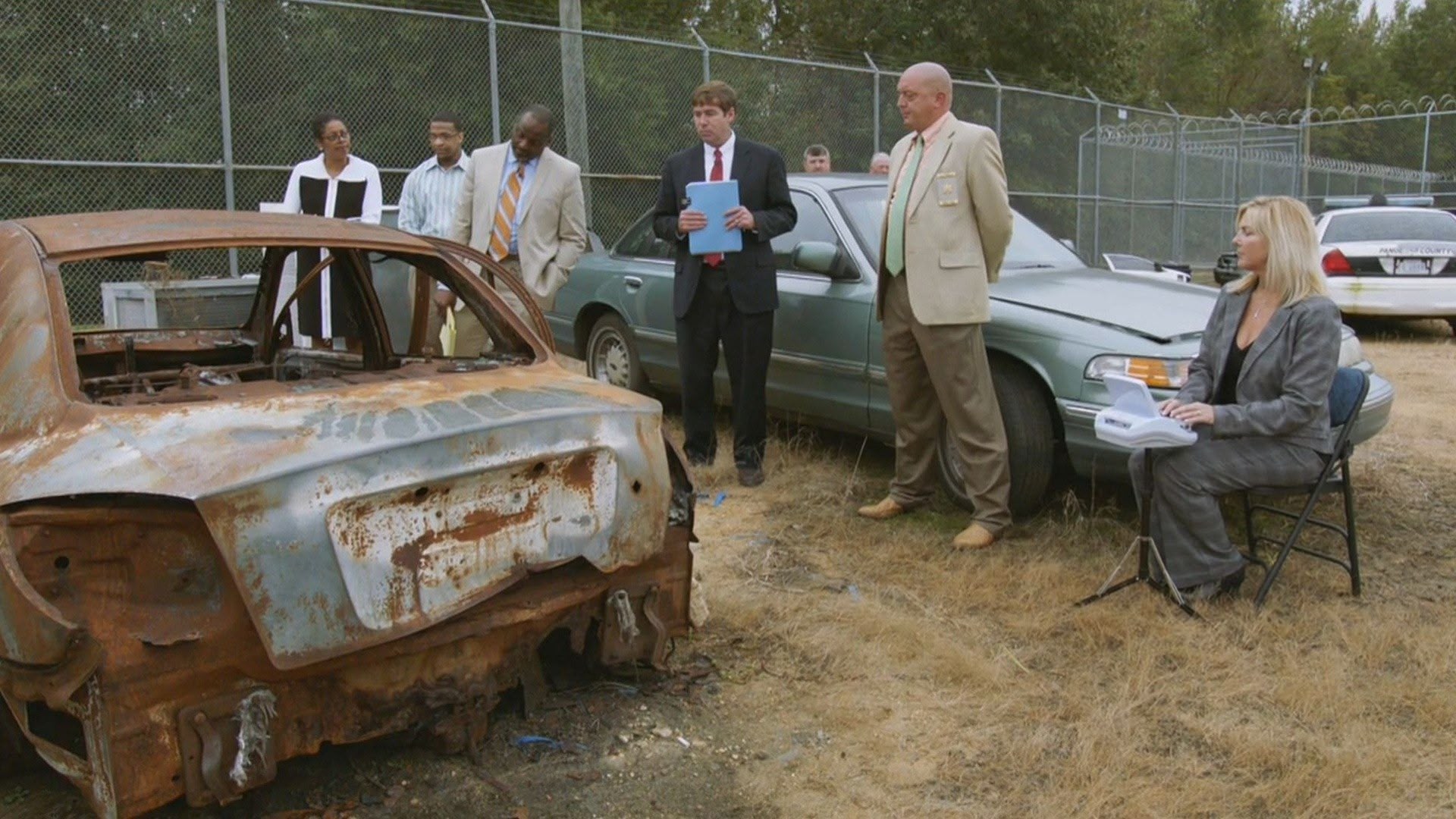
October 2017. First trial in Batesville, Mississippi. The jury was selected from Pike County, 225 miles away, to avoid local bias. The trial was emotional. Witnesses broke down. Spectators cried looking at graphic photos. First responders gave tearful testimony. One firefighter hugged Jessica's father as he stepped down from the stand.
Her mother, Lisa Chambers, took the stand. She teared up identifying her daughter. "That's my baby girl," she said.
After days of deliberation, the jury sends out a note. They've reached a verdict. But when Judge Gerald Chatham asks if they unanimously agreed, confusion erupts. Turns out they misunderstood the instructions. Many voted guilty, but they weren't unanimous. Hung jury. Mistrial.
September 2018. They try again in a different county. Same result. Hung jury. Mistrial.
The jury was stuck between two versions of reality. On one side, circumstantial evidence. Quinton lied repeatedly. His phone was in the area. His DNA was on her keys. Surveillance footage shows his sister's car pulling into his driveway at 7:50 PM and staying for about two minutes before heading out. Prosecutors say that's when he grabbed the gasoline. Cell phone records show his and Jessica's phones moving together.
On the other side, Jessica's dying words. Eric or Derek. A name eight people heard. A name that doesn't match. Investigators questioned 10 to 15 people named Eric or Derek in the area and cleared all of them.
And here's a detail that makes this even weirder. Eric Hill, a cousin of Tellis's then-wife Chakita Jackson, told police that days after Hsiao's death, Tellis allegedly bragged about torturing a woman to get her debit card PIN. Hill initially blamed someone else but later implicated Tellis. Court documents say Hill described details of Hsiao's wounds and other facts prosecutors claim only the killer would know. Hill is expected to be a witness in the upcoming Louisiana trial.
The jury couldn't get past that reasonable doubt. And you know what? I get it. When you've got eight first responders all hearing the same name, and it's not the defendant's name, that creates massive doubt.
After two mistrials, prosecutors faced a tough call. Try him a third time? Former District Attorney John Champion, who died in 2019, said at the time: "I mean he's as dangerous a criminal as I've ever dealt with, 26 years, I mean he's as dangerous as there is. So it's very important that either Louisiana get him convicted or we get him convicted." As of now, current Mississippi District Attorney Jay Hale hasn't said whether he'll pursue a third trial. Quinton is 38 now, serving time for the credit card fraud. But for Jessica's murder, there's no resolution. No conviction. No justice.
Jessica's mother, Lisa Chambers, died in October 2021 at age 52 without ever seeing justice for her daughter.
What We're Left With
Jessica Chambers fought to survive. She walked toward help when most people would have died instantly. She tried to give first responders a name. Eleven years later, we still don't know for sure who killed her.
Quinton Tellis lied to police repeatedly. The evidence against him is circumstantial but compelling. His phone data places him in the vicinity. His DNA is on her keys. Surveillance shows suspicious movement at his house. He changed his story multiple times. He was caught using another murdered woman's debit cards seven months later.
But two juries couldn't convict him because of those dying words. That name. Eric or Derek.
This case sits in limbo. Jessica's family has no closure. Her father, Ben Chambers, a mechanic with the Panola County Sheriff's Office, said after Quinton's arrest that investigators worked tirelessly on the case. But after two mistrials, that optimism has faded.
The community remains divided. And legally, there's no clear path forward for the Mississippi case. That's the frustrating reality when the victim's final words contradict the evidence pointing at the accused.
Maybe Jessica was trying to say Quinton or Tellis and it came out wrong. Maybe the first responders misheard. Or maybe there really is someone named Eric or Derek out there who got away with murder while Quinton Tellis took the heat.
What we do know is that in January 2026, Tellis will finally face trial for Ming-Chen Hsiao's murder in Louisiana. Maybe that trial will provide some answers. Maybe it won't. But after more than a decade, at least one of these cases is moving forward.
We may never know what really happened to Jessica Chambers. But we'll see if Louisiana can do what Mississippi couldn't.

Host | Creator
Joe runs 10 Minute Murder because he's been trying to figure out since the '90s why humans are such spectacular disasters, when the Menendez Brothers and O.J. Simpson turned murder trials into must-see TV. While his classmates were watching Saturday morning cartoons, little Joe was watching Court TV and thinking, "What is wrong with people?" Thirty years later, he still doesn't have a good answer, but he's got a podcast about it.
When he's not studying the worst decisions ever made by our species, Joe screams supportive threats at the Buffalo Bills, reads everything he can get his hands on, and goes to stand-up comedy shows to remember that humans can be funny on purpose instead of by accident. Most nights you'll find him on his couch, yelling "You IDIOT" at a murder documentary like the killer can hear him through the screen. He calls it research. His therapist calls it "an interesting coping mechanism."
The Zombie Hunter Murders: Phoenix's Most Haunting Cold Case Finally Solved

 Spotify
 Apple Podcasts
 Pandora
 Amazon Music
 Podchaser
 Spreaker
 RSS Feed
 Audible
 Castbox
 iHeartRadio
 Castro
 Deezer
 YouTube