
Route 40 Killer: Steven Brian Pennell and the Blue Van of Death
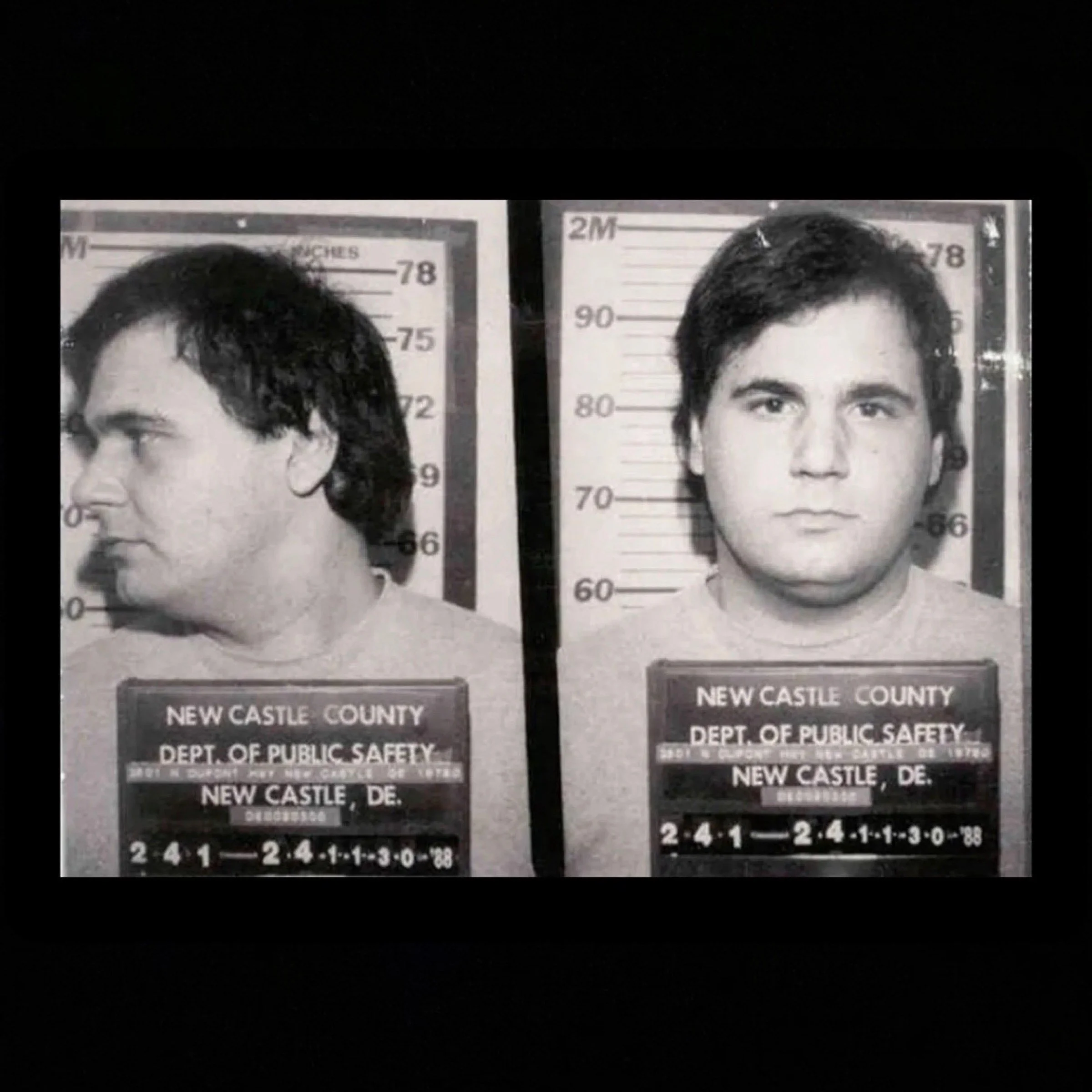
November 29th, 1987. Two teenagers looking for privacy pull off Route 40 in Delaware and spot what they think is a mannequin in the road. It's Thanksgiving weekend. The boyfriend drives closer. That's when they realize it's a woman's body, bound and brutalized. This is the beginning of Delaware's only serial killer case.
Delaware's Highway of Horror: Route 40 in the 1980s
Route 40 in Delaware. In the late 1980s, the stretch through Bear and Glasgow was lined with budget motels, truck stops, 24-hour diners. During the day it looked like any American highway. At night, near construction sites and industrial areas, it felt isolated. Vulnerable.
Sex workers and hitchhikers used Route 40 because traffic was constant. The highway had this quality where you were near Wilmington, near civilization, but when darkness fell you might as well have been in the middle of nowhere. That combination made it perfect for Steven Brian Pennell.
Shirley Ellis: The First Victim Who Deserved Better
Shirley Anna Ellis was 23 in November 1987. She'd worked as a prostitute but was turning her life around, enrolled in nursing school. During the AIDS epidemic, when most people were terrified and healthcare workers refused to go near AIDS patients, Shirley was visiting them. Bringing them food. Showing up when society had abandoned them.
On November 29th, three days after Thanksgiving, Shirley left her family home around 6 PM carrying a platter she'd prepared for an AIDS patient at Wilmington Hospital. She needed to make the 14-mile trek. Public transit basically didn't exist, so Shirley walked to Route 40 to hitchhike.
That evening, a couple drove to a construction site looking for privacy. The boyfriend spotted something in the road. He told his girlfriend it looked like a mannequin. They drove closer. It wasn't.
Shirley was found partially nude, hands and feet bound with adhesive tape, a ligature around her neck, her head bludgeoned with a hammer. The crucial detail: no sexual assault. The person who did this got off on the torture itself.
Catherine DiMauro and the Blue Fibers
Seven months passed. Then on June 28th, 1988, Catherine DiMauro, 31, was seen walking Route 40 around 11:30 PM. By morning, construction workers found her naked body. Same pattern: bound, beaten, tortured, no sexual assault, hammer, strangulation.
But Catherine's body gave investigators something new. She was covered in thousands of blue carpet fibers. Forensics determined they came from a vehicle's interior. Catherine had been forced to lie on a carpeted surface for an extended time. Every time she struggled, more fibers transferred to her body.
Police now knew they were looking for a vehicle with distinctive blue carpeting. The FBI profile said they were dealing with a sadist who didn't need sexual penetration. The torture itself was the gratification.
The Killer Accelerates: More Women Disappear
August 22nd, 1988. Margaret Lynn Finner, 27, goes missing. Last seen getting into a blue van. Her body was found near the Chesapeake and Delaware Canal, but decomposition destroyed most evidence. Pennell was never charged, though everyone believes she was his victim.
September 18th, Michelle Gordon, 22, was seen entering a blue Ford van. A witness who knew both Michelle and a local electrician named Steven Brian Pennell watched her climb in.
Michelle's body was found September 20th on rocks along the canal. The autopsy revealed cocaine in her system. The medical examiner believed the drugs weakened her heart, and when Pennell started torturing her, the shock caused her heart to stop before he'd finished. Michelle's body was dumped differently, tossed onto rocks.
Three days later, September 23rd, 26-year-old Kathleen Meyer vanishes. An off-duty officer spotted a young woman hitchhiking around 9:30 PM. He watched a blue Ford van pull over. Something felt off, so he wrote down the license plate as she climbed inside.
That plate came back to Steven Brian Pennell. Kathleen Meyer's body has never been found.
Officer Renee Taschner: The Undercover Cop Who Stared Down Evil
Delaware police formed a massive task force, over 60 officers. They brought in the FBI's Behavioral Science Unit. They made a gutsy decision. Send in a decoy.
Officer Renee Taschner volunteered. She dressed like the women working Route 40, got wired for sound, and walked the dark highway while backup teams shadowed her.
On September 14th, Renee noticed a blue Ford van cruise past her seven times in 20 minutes. She moved to a darker stretch. The van stopped. The driver motioned for her to get in.
Renee approached but didn't get inside. She talked to the driver, a nervous white male who barely made eye contact. She later described his eyes as blank and cold, like there was no life behind them. While backup ran the plates, Renee had to think fast. She needed to see inside without getting in.
She pretended to be interested in the van. She got him to turn on the dome light. When that light came on, Renee's heart stopped. The entire interior was covered in distinctive blue carpet. The same fibers found on Catherine DiMauro.
Renee made an excuse about being tired, said she needed sleep. Pennell got suspicious and drove off. But Renee had pulled fibers from the carpeting. Her backup team had the license plate, the driver's information, everything.
Steven Brian Pennell. 31 years old. Electrician. Married. Father of two. No criminal record.
The Arrest: Finding the Mobile Torture Chamber
Police watched Pennell for weeks. Renee ended up sitting next to him at a Moody Blues concert during surveillance. His young daughter approached Renee to ask for a donation to a school fundraiser.
Police observed Pennell continuing to cruise Route 40, still hunting, even as the community panicked and the net was closing.
On November 29th, 1988, exactly one year after Shirley Ellis's body was found, Pennell was arrested. Police searched the van.
It was a mobile torture chamber. Eight pairs of pliers. Handcuffs. Whips. Knives. Needles. Flex-cuffs. Two rolls of duct tape matching the tape used on victims. The blue carpet shedding fibers everywhere. Blood and hair samples matching the victims.
The Trial That Made DNA History in Delaware
Pennell's trial began September 1989. First time DNA profiling was used in a Delaware criminal case. The science was so new the judge held extensive hearings to determine admissibility. They used RFLP testing to match blood from Pennell's van to victims. The probability of it being someone else was essentially zero.
The fiber evidence was equally damning. Perfect match.
The jury convicted Pennell of murdering Shirley Ellis and Catherine DiMauro. They hung on Michelle Gordon because her cause of death was complicated by cocaine. Pennell received two consecutive life sentences.
But prosecutors weren't done. New evidence linked Pennell to Michelle Gordon and Kathleen Meyer. They indicted him again.
The Killer Who Demanded His Own Death
Pennell fired his attorneys. He asked to represent himself. Then he entered a no contest plea to both murders. And then he asked to be sentenced to death.
He cited the Bible. Numbers 35:30 and Genesis 9:6. He framed his execution as God's law and state law aligning. He claimed he wanted to spare his family years of appeals.
On October 31st, 1991, the court sentenced him to death. A psychiatric evaluation described Pennell as pleasant, attractive, friendly. No psychosis. No depression. No paranoia.
The Execution and Final Insult to His Victims
March 14th, 1992. Steven Brian Pennell became the first person executed in Delaware in 46 years.
In the days before, reporters tried to get him to reveal where he'd hidden Kathleen Meyer's body. Her family was begging. Pennell refused almost every interview. Finally, he agreed to one with his lawyer present. He revealed nothing.
When the time came for his last meal, Pennell refused it. He didn't apologize to the families. He didn't show remorse. He talked about abortion.
He said he was refusing his last meal because 33 million babies had been aborted, babies who died for no reason, while he was dying for a deed he deserved death for. He was glad Christ forgave him. Those babies never got a first meal, so he wouldn't take a last meal in their memory.
A man who tortured women to death with pliers and whips, who refused to tell a family where their daughter's body was hidden, used his final breath to lecture about abortion and position himself as spiritually redeemed.
The Women of Route 40 Remember
After the conviction, prosecutor Kathleen Jennings received flowers. The card read: "You made us feel human again, from the women of Route 40."
The women working that strip, women society often ignored, sent flowers thanking the prosecutor for treating them like they mattered. Because to Pennell, they didn't matter. They were objects he could use to satisfy his compulsion.
To this day, Kathleen Meyer's family doesn't have a body to bury. Pennell took that location to his grave.
The case forced Delaware to professionalize its homicide investigations. It established DNA precedent still used today. But more than anything, it's a reminder that evil doesn't look like we expect. Evil can be the guy who waves from his driveway. Evil can be the electrician with a wife and kids.
Steven Brian Pennell drove a blue van down a busy highway for over a year, hunting women in plain sight. Route 40 is still there. People still drive it every day. But for the families of five women, that highway will forever be marked by the man who turned it into his personal nightmare.

Host | Creator
Joe runs 10 Minute Murder because he's been trying to figure out since the '90s why humans are such spectacular disasters, when the Menendez Brothers and O.J. Simpson turned murder trials into must-see TV. While his classmates were watching Saturday morning cartoons, little Joe was watching Court TV and thinking, "What is wrong with people?" Thirty years later, he still doesn't have a good answer, but he's got a podcast about it.
When he's not studying the worst decisions ever made by our species, Joe screams supportive threats at the Buffalo Bills, reads everything he can get his hands on, and goes to stand-up comedy shows to remember that humans can be funny on purpose instead of by accident. Most nights you'll find him on his couch, yelling "You IDIOT" at a murder documentary like the killer can hear him through the screen. He calls it research. His therapist calls it "an interesting coping mechanism."
The Zombie Hunter Murders: Phoenix's Most Haunting Cold Case Finally Solved

 Spotify
 Apple Podcasts
 Pandora
 Amazon Music
 Podchaser
 Spreaker
 RSS Feed
 Audible
 Castbox
 iHeartRadio
 Castro
 Deezer
 YouTube