
The Girlfriend in the Cooler: The Wade Allen Case

In May 2019, police in Sturgis, Michigan got an anonymous call about a body in an apartment on North Maple Street. When they knocked on Wade Allen's door that night, he told them his girlfriend was an hour away in Kalamazoo. But when officers spotted two closed coolers sitting in his living room and asked to look inside, they discovered something that would haunt them forever. This is the story of Kelly Jean Warner, and the man who turned everyday picnic coolers into a tomb.
HOW A TRANSIENT LIFE BECAME A PERFECT COVER FOR MURDER
When someone with a stable routine vanishes, the alarm bells ring within hours. But Kelly Jean Warner, 43 years old in spring 2019, lived what investigators call a transient life. She moved frequently, had periods without regular contact. She was diabetic with other health issues. This was her reality, and it became her killer's greatest weapon.
When Kelly disappeared, there was no frantic employer calling her emergency contact. No landlord wondering about rent. Her absence folded quietly into the background of Sturgis, Michigan. What Kelly had was a sister who refused to accept the silence. Lisa knew something was wrong. She kept pushing, kept asking questions. That relentless pursuit is why we're talking about this case at all.
The Psychology of a Predator
Wade Allen was 35 years old when police came knocking in May 2019. He lived at 229 North Maple Street in Sturgis, a small town near the Indiana border. His apartment was apparently always a mess, which becomes relevant when you realize that mess was perfect camouflage for concealing a murder.
A forensic psychologist who analyzed the case labeled Allen a classic sexual psychopath. Psychopaths get stimulated by harming or manipulating people. They have no remorse, no empathy. The psychologist theorized that Allen might have a small amygdala, the brain region that processes emotions and fear. People with underactive amygdalas display fearlessness. They don't process punishment cues normally. They require extreme stimulation to feel anything.
She pointed to the strangulation and dismemberment as indicators of this need for extreme stimulation. According to this theory, cutting up Kelly's body after killing her wasn't simply about disposal. It was potentially a source of gratification. Whether you buy biological determinism or see it as an excuse for a monster is up to you. But what we know factually is that Wade Allen had a documented history of abuse toward Kelly and other partners stretching back years.
The Murder
According to what Allen later told cellmates, Kelly said something that set him off. He claimed he backhanded her, then strangled her to death. Strangulation is one of the most intimate forms of homicide because you maintain sustained physical contact for minutes while the person dies.
After Kelly died, Allen kept her body in the bathtub for what he described as "a little while." Then he dismembered her using a hacksaw. He stored her remains in two coolers in his living room. Not fancy freezers hidden in a basement. Coolers sitting in his living room. The same coolers someone might take camping. For weeks, Wade Allen lived his normal life with those coolers right there. Neighbors saw him. Life continued around him while Kelly Jean Warner decomposed inside plastic containers ten feet from his couch.
The Tip
On May 22, 2019, someone identifying himself as "Steven" called dispatch. Steven said Wade Allen had killed his girlfriend Kelly Jean Warner, dismembered her body, and stuffed her remains in a cooler in his apartment. He provided specific details about the location and Allen's appearance.
Officers arrived at 229 North Maple Street around 11:12 p.m. When they knocked, Allen stepped outside and closed the door. When police ask about your girlfriend's whereabouts and you close the door behind you, you're concealing something.
The officers asked if Kelly was inside. Allen said no, claiming she was in Kalamazoo, about an hour away. When officers asked permission to enter, Allen declined. He said his apartment was too messy. The officers told Allen to put on shoes because they were detaining him outside while securing a search warrant. At that point, Allen changed tactics and agreed to let one officer take a quick look.
One officer entered with Allen. He saw the coolers. Closed. Sitting in the living room. He asked Allen what was inside. Allen said he was getting ready for summer. The officer asked permission to open one. When he did, he later said on body camera footage he'd never be able to unsee it. Kelly Jean Warner's dismembered remains.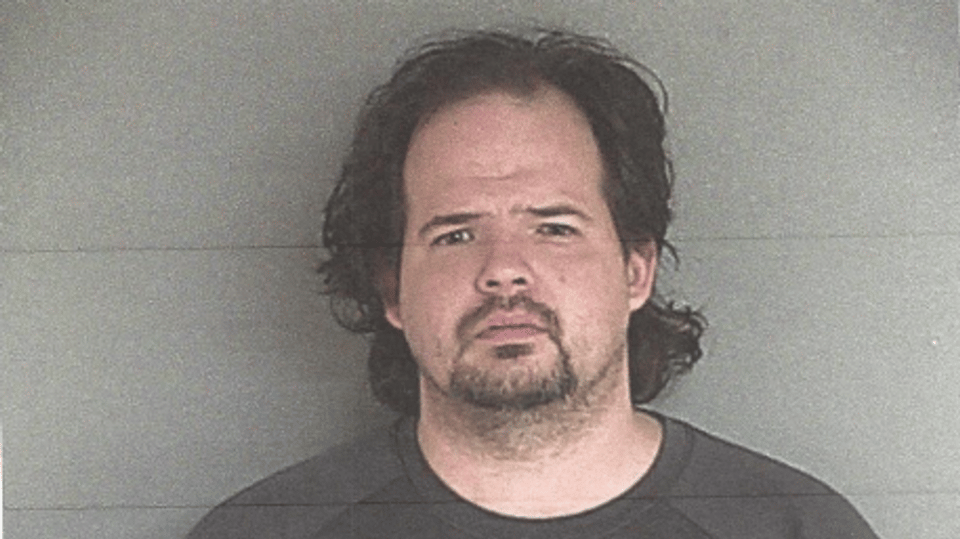
The Legal Battle
Allen's defense attorney argued that the initial apartment entry was unconstitutional. If the judge had agreed, all physical evidence could have been thrown out under the fruit of the poisonous tree doctrine. A murderer could have walked free on a technicality. But the trial court ruled that while the initial entry might have been problematic, the subsequent warrant affidavit was strong enough to establish probable cause independently. Allen's confession to cellmates later became insurance that the case wouldn't collapse.
When The System Fails
After his arrest in May 2019, Wade Allen sat in St. Joseph County Jail for 1,470 days before sentencing. During that time, Allen told cellmates about strangling Kelly. He provided details about keeping her body in the bathtub before dismembering her. One or more cellmates reported this to authorities. That testimony became crucial to the prosecution's case.
Then something inexcusable happened. The jail re-housed Allen together with one of the informants who had snitched on him. Officials later cited security lapses and lack of space in small rural jails. That explanation is both true and completely unacceptable. The absolute baseline rule in jail management is keeping violent suspects away from people testifying against them.
When Allen discovered the betrayal in October 2020, he retaliated by sexually assaulting the inmate. At sentencing, that victim appeared via video from a state prison where he was serving his own sentence. He told the judge that the assault was not consensual and that Allen was a monster. The judge added 38 months to five years to Allen's sentence specifically for that assault, making it consecutive to the murder sentence.
The Sentencing
On January 30, 2023, the day before his scheduled trial, Wade Allen pleaded no contest to second-degree homicide, attempted dismemberment and mutilation, and attempted third-degree criminal sexual conduct. A no contest plea has the same legal effect as a guilty plea but allows defendants to avoid verbally admitting details in court.
At his sentencing on June 1, 2023, Allen gave a rambling six-minute statement. He cried. He claimed he never wanted Kelly to die, that he should have taken better care of her. He asked Kelly's family for forgiveness while saying he had to forgive himself whether they forgave him or not. He never actually admitted to killing her.
The judge sentenced Allen to 39 to 60 years for murder, two to five years for attempted dismemberment, and 38 months to five years for the sexual assault, with that last sentence running consecutive. He was ordered to pay restitution for Kelly's burial expenses and to register as a sex offender for life.
The assistant attorney general called Allen a menace to society. She was prepared to present evidence of his long-established cycle of abuse toward Kelly and other partners dating back years. Lisa, Kelly's sister, was in the courtroom. After years of pushing for answers, she finally saw some measure of justice.
This case leaves you with uncomfortable questions. If Kelly Jean Warner had lived a different life, if she'd had stable routines, would she have been found sooner? Does someone's instability make them less visible when they vanish?
There's also the question of Wade Allen's brain. If he truly has a small amygdala that requires extreme stimulation, does that make him less culpable? Or is neuroscience just giving us a more detailed map of what evil looks like?
And there's the catastrophic failure of the St. Joseph County Jail. An inmate did the morally right thing by reporting Allen's confession. The system repaid him by locking him in a cell with the murderer he'd betrayed.
Wade Allen is currently incarcerated in the Michigan Department of Corrections. His earliest possible release would be around 2060, when he'd be approximately 76 years old. Given his consecutive sentences, he will almost certainly die in prison. Kelly Jean Warner's remains were finally laid to rest. Her sister continues to keep her memory alive.
Sometimes we talk about cases being solved. But solved doesn't mean healed. Kelly's family will carry this loss forever. The informant who was assaulted will carry that trauma forever. And somewhere in Michigan, there are police officers who still can't forget what they saw when they opened those coolers on a spring night in 2019.

Host | Creator
Joe runs 10 Minute Murder because he's been trying to figure out since the '90s why humans are such spectacular disasters, when the Menendez Brothers and O.J. Simpson turned murder trials into must-see TV. While his classmates were watching Saturday morning cartoons, little Joe was watching Court TV and thinking, "What is wrong with people?" Thirty years later, he still doesn't have a good answer, but he's got a podcast about it.
When he's not studying the worst decisions ever made by our species, Joe screams supportive threats at the Buffalo Bills, reads everything he can get his hands on, and goes to stand-up comedy shows to remember that humans can be funny on purpose instead of by accident. Most nights you'll find him on his couch, yelling "You IDIOT" at a murder documentary like the killer can hear him through the screen. He calls it research. His therapist calls it "an interesting coping mechanism."
The Zombie Hunter Murders: Phoenix's Most Haunting Cold Case Finally Solved


 Spotify
 Apple Podcasts
 Pandora
 Amazon Music
 Podchaser
 Spreaker
 RSS Feed
 Audible
 Castbox
 iHeartRadio
 Castro
 Deezer
 YouTube