
The Teahouse Killing: Sada Abe's Twisted Love Story
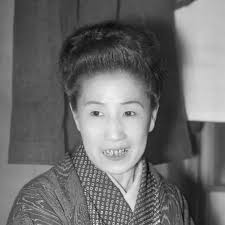
Tokyo, May 1936. A geisha walks into a police station carrying something wrapped carefully in silk inside her kimono sleeve. When detectives ask what she's hiding, she produces the severed penis of her dead lover. For three days, she's been wandering the city streets, going to movies, staying in hotels, treating these body parts like they're the man himself. Her name is Sada Abe, and her crime is about to become the most talked-about case in Japanese history.
The Sada Abe Murder Case: Japan's Most Notorious Crime of Passion
The Manhunt That Paralyzed 1930s Tokyo
So there's this moment in May 1936 where Tokyo police are dealing with full-blown mass hysteria. Rumors are flying that a madwoman is loose in the Ginza district, hunting men with a kitchen knife. Women in kimonos are getting stopped on the street. Everyone's genuinely terrified. The newspapers are running wild with speculation.
The reality? The woman they're searching for is sitting in movie theaters watching romantic films. She's browsing shops. She's checking into hotels and sleeping peacefully. And yes, she's carrying her dead lover's severed genitals in her purse, but she's treating them with the tenderness you'd show a photograph of someone you lost.
Her name is Sada Abe. Understanding how she ended up here means going back to a summer day when she was fifteen.
How Sexual Trauma Shaped a Future Killer
Tokyo in 1920 looks different from what you're probably thinking. Sada grows up in the Kanda neighborhood, the working-class heart of the city. Her family makes tatami mats for a living. She's the seventh of eight kids. Her mother has artistic ambitions that don't match their social class, so she encourages Sada to learn shamisen and singing. These skills could either refine you or mark you for the sex trade, depending entirely on which direction life pushes you.
Then one summer afternoon, she's at a friend's house when a university student forces himself on her. That violation determines everything that follows. Virginity in 1920s Japan is currency. It's a daughter's value to her family. Once you lose it, especially through rape, you're considered permanently damaged.
Her family doesn't pursue justice. They don't comfort or protect her. They treat her like she's the problem. She gets ostracized, labeled as corrupted, told she's unmarriageable. The message becomes clear: you brought shame to this household.
Sada absorbs this completely. If society declares her a prostitute for something done to her against her will, she'll become exactly that.
From Geisha to Sex Worker: Life in Tokyo's Pleasure Quarters
She enters the geisha world, except she's starting way too late to become one of those highly trained artists. She ends up working as what they politely call a "pillow geisha," which means high-end prostitute. She's moving through establishments where entertainment and sex work are the same thing.
Then she contracts syphilis. Before antibiotics, this diagnosis is catastrophic. The treatments involve arsenic injections and mercury compounds. You're subjected to mandatory police examinations because the government regulates licensed prostitution. To escape that humiliation, Sada starts working unlicensed, bouncing between cities as a waitress or maid, whatever keeps her name off official registers.
By 1936, she's thirty-one. In the pleasure quarters, that makes her ancient. She's been ground down by this system for over a decade, scarred by disease and hardened by hundreds of transactional encounters.
The Fatal Love Affair Between Sada Abe and Kichizo Ishida
The man she meets is named Kichizo Ishida. He owns a successful restaurant in Tokyo. He's married with children, respected in his community. He's also a regular patron of the pleasure districts, someone who believes his wealth entitles him to women's bodies as entertainment.
When he meets Sada, something shifts. Most geishas perform submission as part of the service. Sada doesn't do any of that. She's sexually forward, possessive, completely uninterested in the usual performance. For someone bored with scripted interactions, she becomes fascinating.
Their relationship unfolds mostly inside machiai, these assignation teahouses built specifically for secret affairs. They're tucked into quiet residential areas, offering privacy. Inside these spaces, the outside world vanishes. No family responsibilities, no economic pressures. There's nothing except two people and whatever they're building together.
They start spending entire days locked in these rooms. Heavy drinking. Marathon sexual encounters. And at some point, they introduce strangulation into their intimacy.
The Dangerous Sexual Games That Led to Murder
This part matters: she's not forcing this on him. According to trial records and her testimony, he actively wants this. He finds pleasure in being choked during sex, in how oxygen deprivation intensifies sensation. She uses her obi sash or a cord, tightening it around his throat until he's hovering at the edge of unconsciousness before releasing.
For Sada, this becomes transformative. Her entire adult life has been about being used, being controlled. But holding his breath in her hands? That's absolute power. She decides whether he lives or dies.
According to her statements, he tells her: "It feels so good, you might as well kill me."
So on May 18, 1936, she does.
May 18, 1936: The Murder at the Ogu Teahouse
They're staying at a teahouse in the Ogu neighborhood. They've been there for several days straight. On the morning of May 18, while he's sleeping, Sada wraps her sash around his neck one more time.
This time, she doesn't release it.
There's no struggle. No knocked-over furniture. It's quiet and intimate, the natural conclusion to everything they've been doing.
The Castration That Shocked a Nation
What happens next defines the case. She takes a knife and severs his genitals completely. When police ask her why, her answer is disturbingly rational: "I couldn't take his head or body with me. I wanted to take the part of him that brought back to me the most vivid memories."
She's not destroying him. She's preserving him. She can't carry his whole body, so she takes the part that represents their sexual connection. A dead, castrated man can never return to his wife. He can never sleep with another geisha. He belongs to her forever.
Before leaving, she uses his blood as ink. She writes on the bedsheets: "Sada, Kichi, the two of us forever." She carves her name into his thigh.
Then she walks out and disappears into Tokyo.
Three Days Wandering Tokyo With Her Lover's Remains
Over the next three days, Sada wanders the city in what witnesses describe as serene calm. She has the severed genitals wrapped in oil paper and cloth, tucked inside her kimono sleeve. According to testimony, she speaks to them like they're him, maintaining conversations with the body parts as though her lover is still present.
She buys tickets to romantic movies. She stays in different hotels. She goes shopping. She's living inside a private reality where her lover remains with her.
Meanwhile, Tokyo descends into chaos. The body has been discovered. The newspapers are exploding with coverage because every detail fits the "erotic grotesque" sensibility dominating 1930s Japanese media. Rumors multiply. Every woman in traditional dress becomes a potential suspect.
The Arrest: How Police Finally Caught Sada Abe
On May 20, police track her to an inn in Takanawa. When detectives enter, they don't encounter someone trying to escape. She's simply waiting. When they ask for evidence, she calmly unwraps the bundle and produces the genitals.
Multiple officers describe her demeanor as "radiant" or "peaceful." She doesn't resist.
Inside the Interrogation: The Glossy Record Revealed
The police interrogation creates transcripts known underground as the "Glossy Record." The interrogators press for explicit sexual details: specific positions, frequency, the exact mechanics of the strangulation. The state apparatus supposed to enforce public morality transforms into a consumer of pornography.
Sada answers everything directly. She's articulate and unashamed. She refuses to classify what she did as murder in any traditional sense. To her, this was preservation, love extended to its absolute extreme.
The Trial and Surprising Verdict
The trial brings in psychiatrists who diagnose her with "hysteria" and "nymphomania," catch-all labels for women who don't conform. They examine her menstrual cycle, investigate her family for signs of moral degeneracy.
The verdict surprises everyone: six years for second-degree murder and mutilation of a corpse. The leniency comes from the court recognizing elements of a traditional love-suicide. In Japanese culture, survivors of suicide pacts often get treated as tragic figures. There's also strange public sympathy building around her. In a society built on arranged, passionless marriages, her crime reads like absolute devotion taken to its conclusion.
She's released in 1941, freed as part of a general amnesty. She walks out into a Japan transformed by war.
From Killer to Celebrity: Sada Abe's Shocking Reinvention
After World War II ends, Sada reemerges as a celebrity. She publishes an autobiography in 1948. Then she stars in a traveling stage play where she performs as herself, reenacting a sanitized version of her crime.
Theaters fill with audiences paying to watch the actual murderer act out her story. Critics comment on the eerie authenticity of her performance.
By the 1950s, she opens a bar in Tokyo called Hoshikikusui. Writers and artists treat it like a destination. You can have sake poured by the woman who severed a penis and carried it through the city for three days. She becomes a living artifact.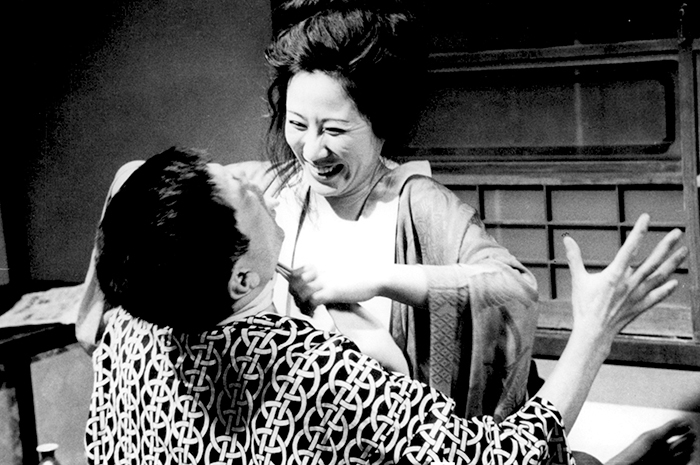
The Final Disappearance and Meeting With a Cannibal
Then around 1970, she vanishes. She closes the bar and cuts all contact. Theories spread: suicide, a Buddhist convent, a quiet death somewhere unnamed.
But there's one final chapter. Around 1992, she's reportedly located by Issei Sagawa, the infamous "Kobe Cannibal" who murdered and consumed a student in Paris, then got deported and released on a technicality. He finds her in a nursing home. She's eighty-seven.
Sada Abe died shortly after. There's no confirmed death certificate. No public grave. She exited the world as a ghost, the same way she spent those three days after the murder.

Host | Creator
Joe runs 10 Minute Murder because he's been trying to figure out since the '90s why humans are such spectacular disasters, when the Menendez Brothers and O.J. Simpson turned murder trials into must-see TV. While his classmates were watching Saturday morning cartoons, little Joe was watching Court TV and thinking, "What is wrong with people?" Thirty years later, he still doesn't have a good answer, but he's got a podcast about it.
When he's not studying the worst decisions ever made by our species, Joe screams supportive threats at the Buffalo Bills, reads everything he can get his hands on, and goes to stand-up comedy shows to remember that humans can be funny on purpose instead of by accident. Most nights you'll find him on his couch, yelling "You IDIOT" at a murder documentary like the killer can hear him through the screen. He calls it research. His therapist calls it "an interesting coping mechanism."

Operation Misty: The Undercover Sting That Caught a Serial Killer

 Spotify
 Apple Podcasts
 Pandora
 Amazon Music
 Podchaser
 Spreaker
 RSS Feed
 Audible
 Castbox
 iHeartRadio
 Castro
 Deezer
 YouTube