Spotify

 Apple Podcasts

 Pandora

 Amazon Music

 Podchaser

 Spreaker

 RSS Feed

 Audible

 Castbox

 iHeartRadio

 Castro

 Deezer

 YouTube
Bible Belt Strangler: The 40-Year Hunt for a Killer Who Targeted Redheads

Bible Belt Strangler: The 40-Year Hunt for a Killer Who Targeted Redheads So there's this case that's been sitting in the shadows for over 40 years. Between 1978 and 1992, women with red hair started turning up dead along interstates across the...
Bible Belt Strangler: The 40-Year Hunt for a Killer Who Targeted Redheads
So there's this case that's been sitting in the shadows for over 40 years. Between 1978 and 1992, women with red hair started turning up dead along interstates across the South. Tennessee, Kentucky, Arkansas, Mississippi. All strangled or beaten. All dumped like they were nothing. The FBI task force called them the Redhead Murders. The media went with "Bible Belt Strangler." Most of these women stayed nameless for decades. Jane Does. Because they were hitchhikers, sex workers, women nobody was looking for. Then in 2018, forensic genealogy finally gave them their names back. Tina Farmer. Espy Pilgrim. Tracy Sue Walker. Michelle Inman. DNA pointed to a truck driver named Jerry Leon Johns for at least one of the murders. Investigators still don't know if he killed them all, or if there were multiple killers working the same routes, hunting the same type of woman. Before the cops even announced Johns' name, a group of Tennessee high school students profiled the killer in a sociology project and got it right. This is about women the system failed twice. Once when they were alive, and again when they died. And it's about how science finally forced us to remember them.
#RedheadMurders #BibleBeltStrangler #TinaFarmer #JerryLeonJohns #TrueCrime #ColdCase #ForensicGenealogy
🔔 Subscribe for True Crime Cases multiple times a week
Never miss a story. Subscribe to 10 Minute Murder for bite-sized true crime episodes delivered fresh every week.
Discount codes from show sponsors. Support 10 Minute Murder and save money at the same time:
https://hypernaturalstyle.com/discount/10MM
https://zivo.life/discount/10MM
https://bigforkbrands.com/discount/10MM
https://prepstartsnow.com/discount/10MM
📱 Follow for Behind-the-Scenes Content Get exclusive case updates, research photos, and sneak peeks of upcoming episodes:
- Instagram: @10minutemurder on IG
- TikTok: @10minutemurder on TikTok
- Facebook: 10 Minute Murder on FB
- Rate & Review: Leave a 5-star review to help other true crime fans discover the show
- Share: Send this episode to fellow true crime enthusiasts
- Join the Discussion: Tag us in your episode reactions on social media
Become a supporter of this podcast: https://www.spreaker.com/podcast/10-minute-murder-bingeable-true-crime-stories--4603604/support.
0:00 You're listening to 10 Minute Murder. There's a stretch of interstate 75 in Tennessee where in January 1985 they found a young woman's body down in embankment. Bound, strangled, pregnant, red hair. She'd stayed nameless for 33 years. They called her the Campbell County Jane Doe. Her name was Tina Farmer and she was 21 years old. And the man who killed her, he might have killed a dozen more women just like her. Or maybe he didn't. That's the problem. [Music] Between October 1978 and 1992, someone was killing women with red hair and leaving them along highways across the American South.
1:11 That's 14 years. Maybe five victims, maybe 14. The FBI opened the task force. Local cops coordinated across state lines, which back then was basically unheard of. For over 40 years most of these women had no names. They were Jane Does, numbers in a file. When no one knows who you are, nobody's looking for your killer either. The first victim showed up in 1978, then another in 1983. By 1984 and 85, bodies were appearing every few months. Tennessee, Arkansas, Kentucky, Mississippi, Pennsylvania, West Virginia. All found within a few dozen yards of major interstates.
1:53 I-75, I-40, I-24. Women in their teens, 20s, 30s. All with reddish hair, mostly strangled some beaten. A few left partially clothed or naked. One was stuffed inside a refrigerator and left on the side of the road. The pattern was obvious, a mobile killer. Probably a trucker, they assumed. Someone who spent his days on these long southern routes, picking up women who were hitchhiking or working the truck stops. Women whose families might not even know they were dead. The media gave him a name, the Bible-Belt Strangler. We give the killer a nickname, a brand.
2:33 Meanwhile, the women stay anonymous. Let's talk about why these women stayed unidentified for so long. Bad forensic science played a role. Who they were played a bigger role. Most of the redhead murder victims were transient. Hitchhiker's sex workers. Women who had been estranged from their families. Women who existed on the margins of society in a way that made them invisible. In the 1980s, if you were a woman working the streets or hitching rides on the interstate, the system wasn't set up to protect you. When you went missing, there wasn't a whole lot of urgency to find you. Not that they're falling all over themselves to find you nowadays.
3:13 Lisa Nichols was 28 when her body was found along I-40 near West Memphis, Arkansas. September 1984. She was estranged from her family. She got identified pretty quickly through fingerprints in 1985. Tina Farmer was found in January 1985 near Jellico, Tennessee. Tina was 21. She was pregnant. She was bound and strangled and left down an embankment off I-75. She stayed nameless until 2018, 33 years. Why? Because nobody reported her missing. Because she'd been living on the road, because she was the kind of person the system was built to overlook.
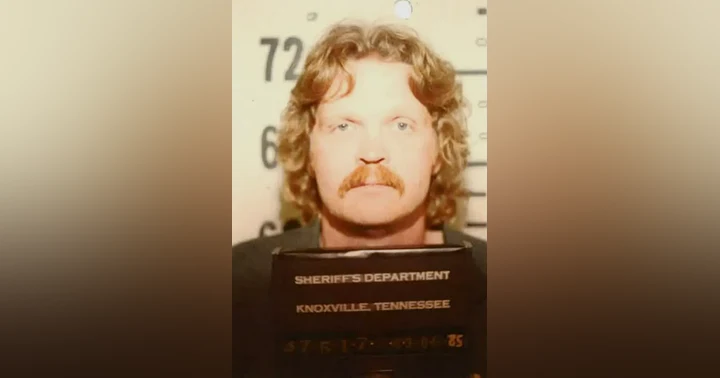
3:53 In 2019, investigators with a Tennessee Bureau of Investigation finally got a DNA match. The man who killed Tina Farmer was Jerry Leon Johns. A truck driver with a violent history. Exactly the profile everyone had suspected. In March 1985, just two months after Tina's body was found, Johns kidnapped another woman. Her name was Linda Shackie and she was a redhead. He bound her, strangled her with a piece of fabric ripped from her own t-shirt, and dumped her in a storm drain near I-40. Linda survived. She testified against him. Johns got convicted of aggravated kidnapping and assaults in 1987 and he went to prison.
4:33 He died there in 2015, four years before the DNA linked him to Tina. Linda's testimony is critical. She's the only person who lived through an encounter with Jerry Johns and can tell us exactly what he did. How he operated. How he picked up his victims. Her account gives us the clearest picture we have of his method and it matches what happened to Tina almost exactly. Did Jerry Johns kill all of them or just Tina? Special agent Brandon Elkins with the TBI has been clear about this. They've made a positive connection between Jerry Johns and Tina Farmer. They've made a positive connection between Johns and Linda Shackie.
5:13 They haven't connected him to any other redhead murder victims. SB Pilgrim, who was found in Kentucky in April 1985, Tracy Sue Walker, who was 15 and found in Jellico that same month, Michelle Inman, along I-24 in Tennessee in March 1985. The inconsistencies are the problem. Some of these women were strangled. Others were beaten to death. Some were found clothed. Others weren't. The dump sites were similar. The methods varied enough that investigators have considered the possibility that multiple killers were working the same routes, targeting the same kind of woman. The interstates in the south of the 1980s were crawling with truck drivers.
5:54 Thousands of men moving through the same corridors every week. If you're a predator and you're looking for vulnerable women, truck stops and highway on ramps are a target rich environment. More than one guy could have figured that out. We don't know. Jerry Johns killed Tina Farmer. That's a fact. Whether he killed the others is still an open question. In 2018, before the TBI even announced the DNA link to Jerry Johns, a high school teacher in Elizabeth, Tennessee, named Alex Campbell, started a sociology project with his students. The goal? Profile? The redhead murders killer. Where was this kind of club when I was in high school?
6:34 These kids were teenagers taking a sociology class. They had help from a former FBI agent and they approached the case methodically. They studied the crime scenes. They looked at the highways. They paid attention to the terrain. And they noticed something. Most of these bodies were found dozens of yards away from the road. Up or down steep embankments. Through thick brush, there were no drag marks. That meant the killer had to be strong enough to carry a body over rough ground. So the students concluded the killer was probably a large, physically strong male. Probably a truck driver given the geographic spread of the dump sites. Someone who could move freely across state lines without raising suspicion.
7:16 Months later, the TBI announced they had identified Jerry Johns, a truck driver with the physical strength to match. Exactly the profile the students had built. The students even launched a podcast called Murder 101 to document their work. They may have actually helped to identify Tina Farmer. They never got official credit for it. The TBI didn't acknowledge their work publicly. For decades, the biggest obstacle in this case was identification. You can't solve a murder if you don't know who the victim is. I mean, technically, you can, but you know what I mean. In the 1980s, if a woman didn't have ID on her and nobody reported her missing, she stayed a Jane Doe. The forensic science caught up.
7:57 In the early 2000s, DNA technology advanced to the point where investigators can pull usable profiles from old evidence. By 2018, investigative genetic genealogy, or IGG, became a game changer. IGG takes DNA from a crime scene and uploads it to public genetic databases like GED match. Then, genealogists build family trees, working backward from distant relatives to identify the victim or the perpetrator. That's how they identified Tina Farmer in 2018. SB Pilgrim, the woman found in the refrigerator in Kentucky, was also identified in 2018 through a DNA match with her grown daughter.
8:37 Tracy Sue Walker, who'd been a 15-year-old Jane Doe since 1985, was identified in 2022. Michelle Inman was identified in July 2023. These identifications gave families answers after 30, 40 years of not knowing. Being SB Pilgrim's daughter, finding out through a DNA test that your mother had been dead since 1985, that's the human cost of these cases. That's what gets lost in the headlines. Tina Farmer's killer is dead. Jerry Johns died in prison in 2015. The others, SB Pilgrim, Tracy Sue Walker, Michelle Inman, Lisa Nichols, we still don't know who killed them.
9:17 We don't know if it was Johns and the DNA evidence hasn't caught up yet, or if there were other men out there doing the same thing at the same time. There still might be more victims we don't know about. The FBI task force estimated between five and 14 murders. That's a pretty big range. It suggests there are Jane Doe's out there who fit the pattern and were never officially connected to the case. The redhead murders aren't fully solved. They're partially solved. One confirmed killer, multiple victims, a lot of unanswered questions about who else might have been out there on those highways hunting women nobody was protecting. This case matters because it exposes how the system fails certain people.
9:59 These women were poor, transient, living on the margins. They were killed and then erased. For decades they didn't even have names. It took 40 years and brand new technology to force us to remember them. The redhead murders are a reminder that all victims don't get the same attention. All cases don't get the same resources. Sometimes justice takes 40 years because nobody thought the victim was worth the effort. Now we know their names. They were real people. They mattered. Their stories deserve to be told. Thanks for listening to 10 Minute Murder, Vingible True Crime Stories.
10:46 I'm Joe, I'm the host and by the way I haven't mentioned this in a while but if you like the vibe of this episode and you like the vibe of this whole podcast, I do another one. It's called 10 Minute Mystery. There are little to no murders in that when we talk about aliens and big foods and all strange things. You can check that out anywhere that you listen to this one. You can listen to 10 Minute Mystery. Alright, let's get to an email. Subject the great sock mystery. Speaking of unusual. Hi Joe, people talk about missing socks like it's a joke but I'm missing seven. In a week I think my washing machine is committing crimes. Can you walk me through how a grown adult reports a non-human suspect genuinely puzzled area in Iowa?
11:28 And if this isn't the strange to see me live ever gotten listen area. I can kind of solve this for you. Let me ask you a question. Do you have a dog? If so, check your backyard. For the longest time I was just buying socks like crazy. I thought what's happening to all of my socks. I even started buying the exact same pair of socks like I would buy I'd buy them in bulk. And that's kind of a life hack too by the way because you don't have to spend time matching socks if you're just buying the same exact looking sock every time. But I was still missing socks and like where are the socks going and I went into the backyard one day like in the corner of a back yard where I didn't really go that often. I found like four socks. My dog had been taking them outside so I can tell you if you have a dog that's probably the culprit if you don't have a dog you're being burgoled by a sock burglar. Human or non-human I don't know.
12:20 Thank you for the email. Hey if you're a brand new listener to the podcast welcome and put your feet up get comfortable there are literally hundreds of episodes for you to binge on. You can go to 10minutemurder.com learn more about the podcast send me an email you can check out the murder blog and also sign up for the weekly 10 minute murder newsletter. I send that out on Mondays and it gives you kind of a look forward to the week the cases that I'm going to be covering on the podcast I don't ever talk about that here. So if you're curious about what's coming up that week that's the only real way that you can do that. Sign up for the weekly newsletter that comes out on Mondays. You OG listeners I love you so much keep sharing this podcast with your friends and your family anyone you think could be into brief bingeable true crime and that's going to do it.
13:02 Thank you again for listening to 10 Minute Murder. See you next time. next time.