Blueprint for a Monster: Edmund Kemper's Genius-Level IQ and Ten Murders
A teenager sits alone in the basement of his mother's house in Montana, holding a severed cat's head in his hands. He's already killed his grandparents. He's six foot four and thirteen years old. Decades later, the FBI will call him one of the most important interviews they ever conducted. This is True Crime Blueprint.
The Monster in the Basement
So let me tell you about Edmund Kemper, because his story is probably one of the most important cases in the entire history of criminal investigation. And I know that sounds like a bold statement, but stick with me here because this is genuinely the case that helped build the foundation for everything we understand about serial killers today.
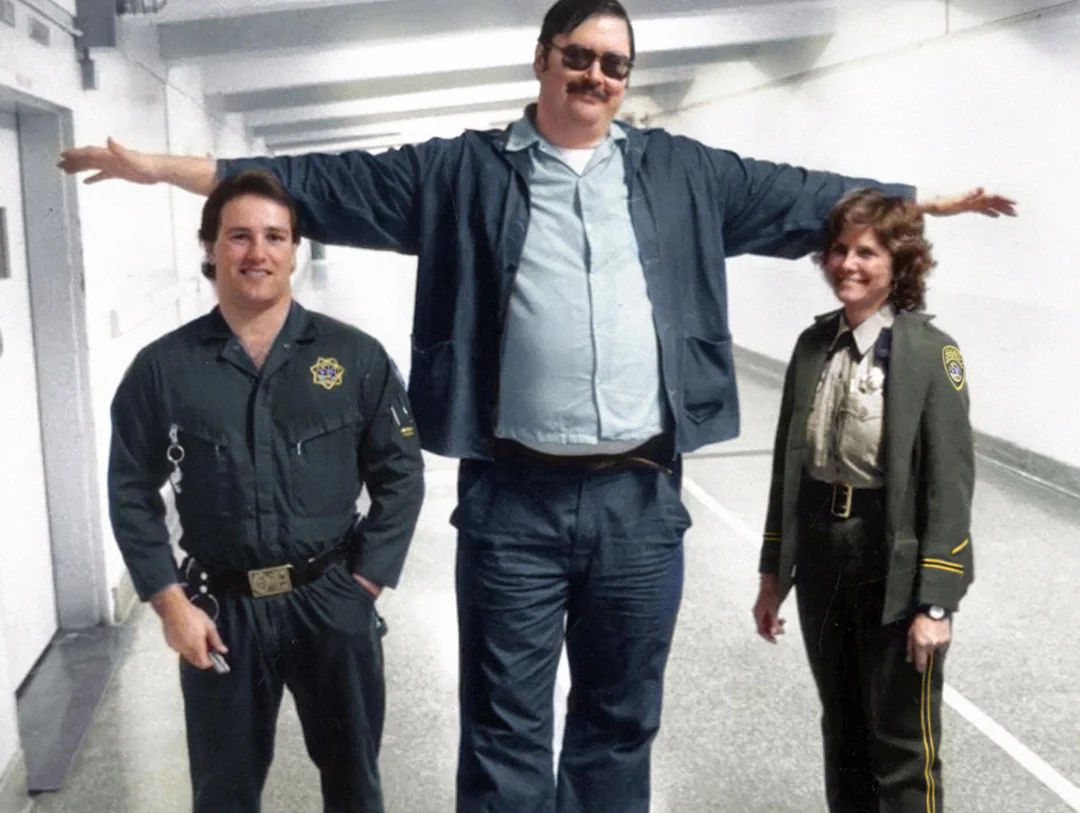
Edmund Emil Kemper III was born in Burbank, California on December 18th, 1948, and from the very beginning, he was different. He weighed thirteen pounds at birth, which is already pretty unusual, and by the time he was four years old, he was significantly taller than every other kid his age. By adolescence, he'd reach six foot nine. That kind of physical difference matters when you're a kid. It isolates you. Makes you stand out in ways you don't necessarily want to stand out.
But the size thing was only part of the problem. The real damage was happening at home, and it was relentless. After his parents divorced, Edmund ended up living with his mother, Clarnell, and his two younger sisters. They moved to Montana for a while before coming back to California. And Clarnell, by every account we have, was an absolute nightmare of a parent. She was an alcoholic, she was verbally abusive, and she seemed to genuinely believe that her son was some kind of dangerous creature that needed to be contained.
She was afraid of him. Or at least that's what she told herself. Maybe it was the size. Maybe it was his temperament. Whatever the reason, she made him sleep in the basement. Locked him down there at night because she was worried he might hurt his sisters. So here's this kid, already dealing with being physically different from everyone else, already dealing with his parents' divorce, and now his own mother is treating him like he's a monster. Locking him in a basement. Telling him, essentially, that there's something fundamentally wrong with him.
The psychological impact of that kind of treatment is hard to overstate. When a parent tells you that you're dangerous, that you're wrong, that you need to be isolated from normal people, you start to believe it. And for Edmund, that belief took root early and deep.
The Warning Signs Nobody Saw
Now, if you know anything about the psychology of violent offenders, you've probably heard of something called the MacDonald Triad. It's a set of three behaviors that researchers identified as potential early warning signs for future violent behavior. Those three things are bedwetting beyond the normal age, fire-setting, and cruelty to animals. And Edmund Kemper hit all three.
He was killing animals as a child. Cats, specifically. He would capture them, torture them, kill them, and then mutilate their bodies. At one point, he buried a family cat alive in the backyard, then later dug it up, cut off its head, and mounted the head on a stick. He kept that in his room. When his mother eventually found it and got rid of it, he killed another cat and cut it into pieces with a machete.
This is a kid who is already deeply disturbed. And the really chilling part is that he wasn't hiding it particularly well. He was playing these bizarre games with his sisters where he'd pretend to be executed in a gas chamber, asking them to pull an imaginary lever and then acting out his own death. He'd take their dolls and tear off the heads and hands, which is disturbingly specific and extremely telling when you look at what he does later.
But nobody intervened in a meaningful way. His mother was too busy being angry and drunk. His father had basically disappeared. So Edmund kept marinating in this toxic environment, and the violent fantasies kept building.
By the time he was a teenager, those fantasies had a very specific focus. He'd stand on the side of the road and imagine picking up female hitchhikers. He'd think about what he'd do to them. Where he'd take them. How he'd kill them. And the fact that he was already rehearsing these scenarios in his mind, over and over, meant that when he finally acted on them, he'd already worked through the logistics. He'd already made peace with what he was planning to do.
The First Murders: August 27, 1964
Edmund was fifteen years old. He was living with his paternal grandparents, Edmund and Maude Kemper, on their ranch in North Fork, California. His mother had basically shipped him off because she couldn't handle him anymore, and honestly, she was probably relieved to have him out of the house.
On August 27th, 1964, Edmund got into an argument with his grandmother. The details of what started the fight aren't entirely clear, and Edmund's own explanations have varied over the years. But what we know for certain is that at some point during that argument, he picked up a .22 caliber rifle and shot her in the head. Then he shot her twice more in the back.
His grandmother was dead in the kitchen. And Edmund's first thought, reportedly, was that his grandfather was going to be upset when he got home. So Edmund decided the best solution was to kill his grandfather too. When the older man pulled up to the house, Edmund met him outside and shot him before he even made it to the front door.
Then he called his mother. Not the police. His mother. He told her what he'd done, and she told him to call the authorities, which he did. When the police arrived, Edmund's explanation for why he'd killed his grandparents was chilling in its simplicity. He said he wanted to see what it felt like to kill Grandma. The murder of his grandfather was purely practical. He thought his grandfather would be upset, so he eliminated the problem.
The courts didn't know what to do with a fifteen-year-old who'd committed a double homicide. He was too young to be tried as an adult under California law at the time, so he was sent to Atascadero State Hospital, a maximum-security psychiatric facility. He would spend the next five years there, and during that time, he was extensively evaluated by psychiatrists and psychologists.
Here's the thing that's important to understand. Edmund Kemper was terrifyingly intelligent. His IQ tested somewhere in the 140s, which puts him in the near-genius range. And he was articulate, charismatic even, when he wanted to be. So the people evaluating him were impressed by how much insight he seemed to have into his own behavior. He participated in therapy. He answered questions thoughtfully. He seemed to be making progress.
And in 1969, the state decided he was no longer a danger to society. The California Youth Authority recommended he be released back into the custody of his mother. Yes, the same mother who had spent his entire childhood telling him he was a monster and locking him in the basement. The same mother who represented virtually every source of psychological trauma in his developmental years. That's who they released him to.
Multiple psychiatrists objected to this decision. They said explicitly that Kemper should not be released into his mother's care, that it was a dangerous situation, that he needed continued supervision. But the Youth Authority overruled them. And in 1969, Edmund Kemper moved back in with his mother in Santa Cruz, California.
The Calm Before the Pattern
For about three years, Edmund seemed to be living a relatively normal life. He was working various jobs, trying to figure out what he wanted to do. He was obsessed with law enforcement. He wanted to be a cop, actually applied to be a state trooper, but he was too tall. The height restrictions at the time wouldn't allow for someone six foot nine. So instead, he started hanging around the bars where local police officers drank. He became friendly with them, learned how they talked, how they thought, what kind of evidence they looked for at crime scenes.
He was also heavily involved with his motorcycle. He'd been in a serious accident in 1970 that left him with lingering injuries, and he received a decent settlement from that. So he had money, he had independence, and he had a lot of time to think.
During this period, he was still living with his mother, and their relationship was as toxic as ever. She berated him constantly, criticized everything about him, made him feel small despite his enormous physical size. And those old fantasies about picking up hitchhikers started coming back. Except now, they were getting more detailed. More specific. And he had the means to act on them.
In 1972, he started what he called his "practice runs." He'd pick up female hitchhikers, usually college students from UC Santa Cruz or Cabrillo College, and he'd just drive them to their destination. He wasn't hurting them. He was testing whether he could do it. Whether they'd get in the car with him. How comfortable they seemed. What they talked about. He was gathering data, essentially. Learning the rhythms of how these interactions worked.
And because he was this big, friendly-looking guy who drove a decent car and seemed harmless, women got in. They trusted him. Some of them even accepted rides from him multiple times. He became a familiar face around the campus areas. Some of the students called him "Big Ed."
May 7, 1972: The Pattern Begins
Mary Ann Pesce was eighteen years old. Anita Luchessa was also eighteen. They were both freshmen at Fresno State College, and they were hitchhiking back to campus after visiting friends at Stanford University. Edmund Kemper picked them up near Berkeley on the afternoon of May 7th, 1972.
He didn't take them where they wanted to go. He pulled off onto a rural road, produced a gun, and forced them into the trunk of his car. Then he drove them to a secluded area in the mountains. He brought Mary Ann out first, tried to suffocate her with a plastic bag, and when that didn't work quickly enough, he stabbed her repeatedly. Then he brought Anita out and stabbed her to death as well.
He put both bodies back in the trunk of his car and drove to his apartment. His mother wasn't home. He brought the bodies inside, photographed them, and sexually assaulted their corpses. Then he dismembered them. He kept some of the body parts for a while before eventually disposing of them in different locations around the Santa Cruz mountains.
The police found some of the remains within weeks, but they had no suspects. No witnesses had seen the women get into Kemper's car. There was no physical evidence connecting him to the scene. And because he'd scattered the remains, it was difficult for investigators to even establish a clear timeline or cause of death.
September 14, 1972: Aiko Koo
Fifteen-year-old Aiko Koo was hitchhiking to a dance class in San Francisco when Kemper picked her up. He drove her to a remote area, suffocated her, and then raped her corpse. He kept her body in his apartment overnight before dismembering it the next day.
One of the most disturbing details of this case is what happened after the murder. Kemper had a psychiatric evaluation scheduled. This was part of his ongoing supervision from his time at Atascadero. And he showed up for that evaluation with Aiko Koo's severed head in the trunk of his car. He passed the evaluation. The psychiatrist noted that he seemed well-adjusted, that he was making progress, and recommended that his juvenile record be sealed. Meanwhile, there was a human head decomposing in his trunk in the parking lot.
That tells you something about how good he was at presenting a false front. How well he understood what people wanted to see and hear.
January 8, 1973: Cindy Schall
Nineteen-year-old Cindy Schall was a student at Cabrillo College. She accepted a ride from Kemper, and he shot her in the head, killed her, brought her body back to his apartment. His mother was home that night, sleeping in the next room, while he dismembered Cindy's body in his bedroom. He put the pieces in plastic bags and left them in his closet overnight.
The next morning, after his mother went to work, he finished disposing of the remains. He threw most of them off cliffs into the ocean, but he buried Cindy's head in his mother's garden, facing up toward her bedroom window. He said later that he did that because his mother had always wanted people to look up to her.
February 5, 1973: Rosalind Thorpe and Alice Liu
Rosalind Thorpe was twenty-three, a senior at UC Santa Cruz. Alice Liu was twenty-one, also a student. They were hitchhiking together when Kemper picked them up. He shot them both, put their bodies in the trunk, and drove around with them for a while. He even stopped at a bar where his cop friends hung out, had a couple of beers, chatted with officers while there were two dead women in his trunk. Then he went home, brought the bodies inside, and went through his usual ritual of sexual assault, dismemberment, and disposal.
The Final Murders: April 20-21, 1973
On the night of April 20th, 1973, Edmund Kemper finally did what he'd probably been building toward his entire life. He walked into his mother's bedroom while she was sleeping and beat her to death with a claw hammer. Then he decapitated her and raped her severed head. He cut out her larynx and tried to put it down the garbage disposal, which he later said seemed appropriate given how much she had verbally abused him over the years.
But her body was in the house, and he knew he needed to buy himself some time. So he called one of his mother's friends, Sara Hallett, and invited her over for dinner. When she arrived, he killed her too. Then he took his mother's car and drove east.
He made it all the way to Colorado before he stopped. And then, for reasons that still aren't entirely clear, he pulled over at a payphone in Pueblo and called the Santa Cruz police. He told them who he was and what he'd done. They didn't believe him at first. He had to call back multiple times, insisting that he was the "Co-ed Killer" they'd been looking for, before they finally took him seriously and sent officers to arrest him.
The Interviews That Changed Everything
After his arrest, Edmund Kemper gave extensive confessions. He walked investigators through every single murder in meticulous detail. Where he'd picked the women up. What he'd said to them. How he'd killed them. What he'd done with the bodies. And he did all of this calmly, articulately, almost clinically.
The trial was relatively straightforward given his confessions. He was found guilty on eight counts of first-degree murder and sentenced to life imprisonment. But the real significance of Edmund Kemper wasn't what happened in the courtroom. It was what happened afterward.
In the late 1970s, two FBI agents named John Douglas and Robert Ressler started conducting interviews with incarcerated violent offenders as part of an ambitious new project. They wanted to understand how serial killers thought. What motivated them. How they selected victims. How they avoided detection. The goal was to develop a systematic way to profile unknown offenders based on behavioral evidence from crime scenes.
This was revolutionary. Before this, criminal investigation was almost entirely focused on physical evidence. Fingerprints, blood spatter, witness statements. The idea that you could look at how a crime was committed and use that to infer psychological characteristics of the offender was brand new.
And Edmund Kemper became one of their most valuable subjects. He was brilliant, he was articulate, and he had absolutely no reason to hide anything anymore. He'd already been convicted. He was never getting out. So he talked to them for hours and hours, explaining his thought processes, his fantasies, his techniques.
He told them about the "practice runs" with hitchhikers. He explained how he'd selected victims based on vulnerability and opportunity. He described the importance of controlling the situation, of making sure the victim was isolated before revealing his true intentions. He talked about the sexual component of the crimes, how the violence and the sexual gratification were completely intertwined for him.
And critically, he helped them understand the concept of the "organized" offender. Kemper planned his crimes. He thought them through. He took precautions to avoid leaving evidence. He was patient, methodical, and strategic. This was completely different from the "disorganized" offenders who acted impulsively, left chaotic crime scenes, and were usually caught quickly.
The Blueprint Emerges
The information that Douglas and Ressler gathered from Kemper and other serial killers became the foundation for the FBI's Criminal Profiling Program. They developed a classification system for violent offenders. They created interview protocols. They built a database of behavioral patterns that could be cross-referenced with unsolved cases.
This wasn't theoretical work. This was practical, applicable knowledge that changed how law enforcement approached serial crime. Before this, if you had a series of murders with no physical evidence linking them, you were basically stuck. But if you could analyze the behavior at the crime scenes and develop a profile of the likely offender, you suddenly had a direction for the investigation.
The interview data from Kemper specifically contributed to several key insights that are now standard in criminal profiling. The understanding that organized offenders often insert themselves into investigations, sometimes even befriending law enforcement. The recognition that sexual homicide is often about power and control rather than sexual gratification in the conventional sense. The awareness that many serial killers have extensive violent fantasies that predate their actual crimes by years or even decades.
Kemper also helped researchers understand the role of childhood trauma and maternal relationships in the development of violent offenders. His case became a textbook example of how early psychological abuse can create a feedback loop of rage, sexual dysfunction, and violent acting out.
What Changed After Kemper
The impact of the Kemper case on American criminology is hard to overstate. The FBI's Behavioral Science Unit, which later became the Behavioral Analysis Unit, grew directly out of the research that included his interviews. The profiling techniques developed from this research have been used in countless investigations since then.
We got better at recognizing patterns. We got better at understanding that serial killers aren't random, that they follow behavioral scripts, that those scripts can be decoded and used to predict future actions. We started training law enforcement to look beyond physical evidence and consider the psychology of the offender.
The case also influenced how we think about criminal justice and mental health intervention. Kemper had been flagged as dangerous multiple times. Psychiatrists had warned against releasing him to his mother. But the system ignored those warnings, and ten people died as a result. That failure led to reforms in how we handle violent juvenile offenders and how we assess risk.
There's also the broader cultural impact. Edmund Kemper has been featured in documentaries, books, true crime shows, and even fictionalized in series like Mindhunter, where his interviews with the FBI are dramatized. He's become, in a sense, the archetypal intelligent serial killer. The monster who can explain himself. The case study that helped us understand all the other cases.
The Man Behind the Data
Edmund Kemper is still alive. He's incarcerated at the California Medical Facility in Vacaville, the same place where those original FBI interviews took place. He's been denied parole multiple times and has actually stated that he doesn't think he should ever be released. He's expressed genuine remorse for his crimes, though obviously that's difficult to verify with someone who has demonstrated such a capacity for manipulation.
In interviews over the years, he's been remarkably candid about his motivations. He's said that he was driven by a combination of sexual frustration, rage toward his mother, and a desire for revenge against women who reminded him of his mother. He's acknowledged that he wanted to possess his victims completely, which is why he kept parts of their bodies and why he engaged in necrophilia. He's explained that killing his mother was always the real goal, and that the other murders were a kind of rehearsal for that final act.
Whether you believe that level of self-awareness is genuine or whether it's another form of manipulation is almost beside the point. The fact is that his willingness to articulate these thoughts and feelings gave researchers access to the internal logic of a serial killer in a way they'd never had before.
The Legacy of Understanding
So when we talk about Edmund Kemper as a blueprint, we're talking about multiple levels of influence. On one level, he's a blueprint for understanding a specific type of offender: the organized, intelligent, sexually motivated serial killer with severe maternal trauma. On another level, he's a blueprint for how we conduct criminal research. The interviews with Kemper established the methodology that's still used today when researchers and investigators talk to incarcerated offenders.
And on the broadest level, he's part of the blueprint for modern forensic psychology itself. The idea that we can systematically study violent behavior, identify patterns, and use those patterns to solve crimes was still relatively new in the 1970s. The success of the FBI's profiling program, built largely on cases like Kemper's, validated that approach and turned it into standard practice.
We're better at catching serial killers now than we were in the 1970s. Part of that is technology. DNA analysis, digital surveillance, better communication between law enforcement agencies. But part of it is understanding. We know what to look for. We know how these offenders think, how they operate, what mistakes they're likely to make. And we know those things, in significant part, because Edmund Kemper sat down with two FBI agents and told them everything.
That's the disturbing reality of this case. One of the worst serial killers in American history helped us become better at stopping serial killers. His crimes were horrific, unforgivable, and they devastated the families of his victims. But his willingness to explain himself afterward contributed to a body of knowledge that has likely saved lives since then.
The case of Edmund Kemper is a reminder that understanding evil doesn't mean excusing it. It means being clear-eyed about where it comes from, how it develops, and how it can be recognized before it escalates. It means learning from the absolute worst examples of human behavior so that we can prevent them from happening again.
And that's why this case matters. That's why it belongs in any serious discussion of how modern criminal justice evolved. Edmund Kemper didn't change because of what happened to him as a child. He didn't reform. He didn't become a better person. But the system changed because of him. Our understanding changed. Our methods changed.
That's the blueprint. Not a template for creating monsters, but a framework for stopping them.

Host | Creator
Joe runs 10 Minute Murder because he's been trying to figure out since the '90s why humans are such spectacular disasters, when the Menendez Brothers and O.J. Simpson turned murder trials into must-see TV. While his classmates were watching Saturday morning cartoons, little Joe was watching Court TV and thinking, "What is wrong with people?" Thirty years later, he still doesn't have a good answer, but he's got a podcast about it.
When he's not studying the worst decisions ever made by our species, Joe screams supportive threats at the Buffalo Bills, reads everything he can get his hands on, and goes to stand-up comedy shows to remember that humans can be funny on purpose instead of by accident. Most nights you'll find him on his couch, yelling "You IDIOT" at a murder documentary like the killer can hear him through the screen. He calls it research. His therapist calls it "an interesting coping mechanism."
The Zombie Hunter Murders: Phoenix's Most Haunting Cold Case Finally Solved

 Spotify
 Apple Podcasts
 Pandora
 Amazon Music
 Podchaser
 Spreaker
 RSS Feed
 Audible
 Castbox
 iHeartRadio
 Castro
 Deezer
 YouTube