From Football Hero to Fugitive: OJ Simpson
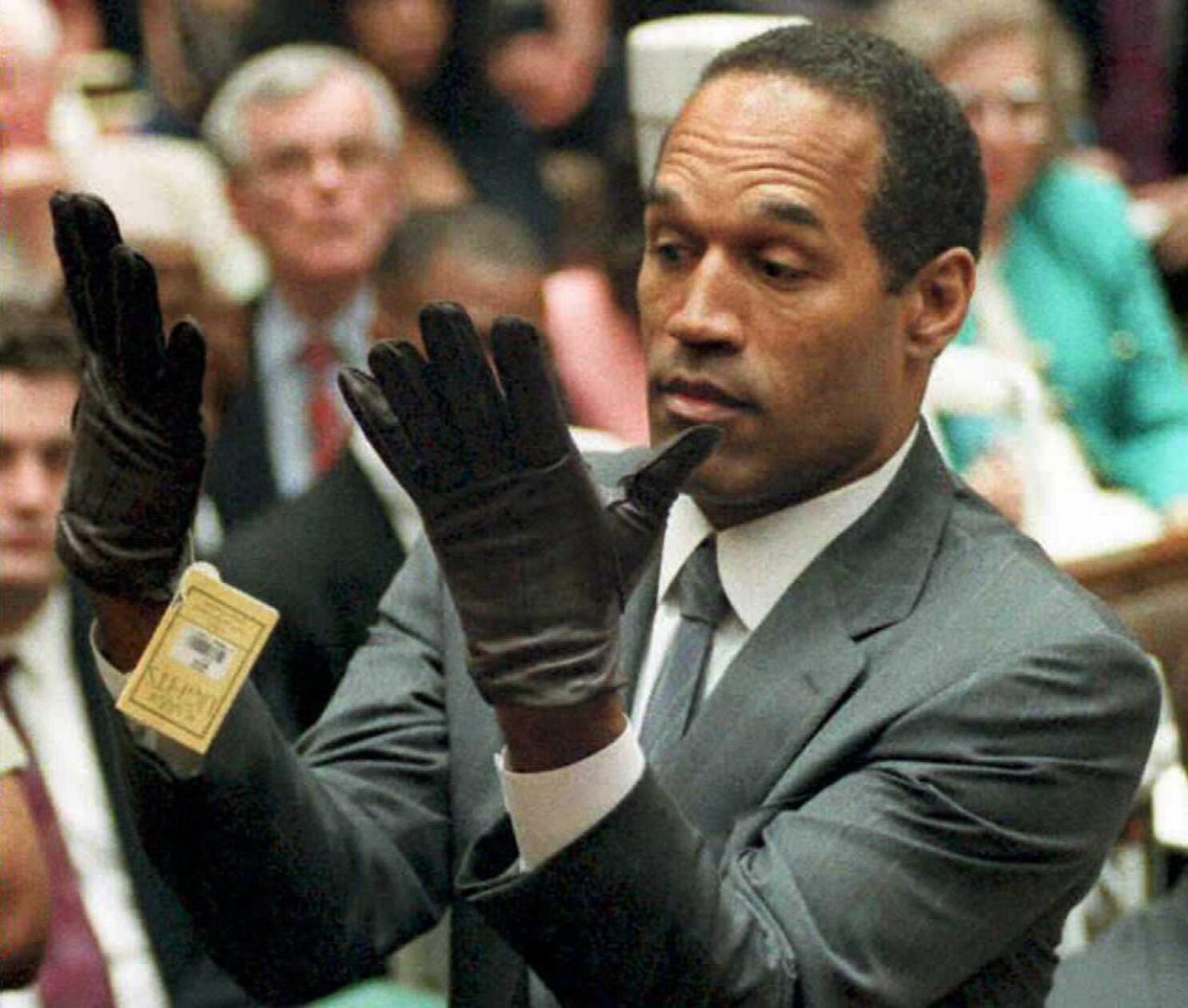
On June 12, 1994, two people were brutally murdered outside a Brentwood condominium. The ex-husband of one victim was charged, tried, and acquitted in a trial that captivated the world. But the acquittal was just the beginning. What followed was a complete transformation of the American criminal justice system, driven by the mistakes made during the investigation and the voices of victims that had been silenced for too long. This is True Crime Blueprint.
Building a Hero From Broken Bones
Let me take you back to 1947, to Potrero Hill in San Francisco. This is a rough neighborhood, low income, and into this world comes Orenthal James Simpson. And right from the start, life is throwing him curveballs. The kid develops rickets as a baby. If you don't know what rickets is, it's a metabolic bone disorder that basically makes your bones soft and weak. Little O.J. ends up pigeon-toed and bowlegged, and his legs are so messed up that he has to wear these heavy metal leg braces until he's five years old.
Now, his family can't afford surgery to fix this properly. His mom, Eunice, is working as an orderly in a psychiatric ward. That's the main income keeping the family afloat. His father, Jimmy Lee Simpson, leaves when O.J. is four. Jimmy Lee was a well-known figure in the San Francisco drag scene. He later came out as gay and eventually died from AIDS-related complications in 1986.
You've got this little boy wearing leg braces, getting called names like "Pencil Pins" by other kids, growing up without a father in a world that's already tough enough. And when those braces finally come off, something shifts in him. There's this drive that forms, this need to prove himself physically, to show everyone he's strong. Psychologists who've studied Simpson's life point to these early years as the foundation for his obsession with being physically dominant and publicly adored.
But here's the thing. When those braces came off, O.J. didn't immediately become a football star. He became a criminal.
The Persian Warriors and Willie Mays
By the time he's a teenager, Simpson is running with a gang called the Persian Warriors. This is serious gang activity in San Francisco, and he's not some low-level member. He's high-ranking. And he gets arrested. Three times. His first wife, Marguerite Whitley, who knew him in high school, later said he was "really an awful person" during this time. That's his wife saying that. The person who married him.
You have this angry kid with something to prove, getting locked up at the San Francisco Youth Guidance Center multiple times. That's usually the beginning of a story that goes one way and one way only. Prison. More crime. An early death, maybe.
But then something happens that sounds almost too Hollywood to be real. After his third arrest, Simpson meets Willie Mays. The Willie Mays. The baseball legend sits this kid down and tells him he needs to channel all that anger and aggression into sports. And somehow, it works.
Simpson joins the football team at Galileo High School. Then he goes to City College of San Francisco, and suddenly he's scoring fifty-four touchdowns in two seasons. Fifty-four. The transformation is complete. By 1968, he wins the Heisman Trophy at USC. He becomes a symbol of what people at the time called "racial transcendence." Here's this Black kid from the roughest part of San Francisco becoming America's football hero.
In 1969, he's the number one overall pick in the NFL draft. The Buffalo Bills take him, and he demands a record-breaking contract. And he gets it. Because by now, O.J. Simpson is a brand. He's in movies. He's doing commercials. He's running through airports for Hertz rental cars, and America loves him.
But that kid from Potrero Hill, the one who wore leg braces and got beat up and joined a gang? He never really went away.
Meeting Nicole
O.J. meets Nicole Brown in 1977. He's still married to Marguerite at the time, but that doesn't stop him. Nicole is eighteen years old, working as a waitress at a Beverly Hills nightclub called The Daisy. He's thirty. He's famous. He's charming. And she falls for it completely.
They get married in 1985, after his divorce from Marguerite is finalized. And from the outside, it looks perfect. Beautiful house in Rockingham. Two kids, Sydney and Justin. Money. Fame. The American dream.
But inside that house, something else is happening.
See, there's this thing psychologists call the "power and control" cycle in abusive relationships. And when you add fame and wealth to that cycle, it becomes absolutely toxic. Simpson saw Nicole as something he owned. A trophy, like his Heisman. Something that belonged to him and only him.
The first documented incident we know about happens in 1984. There's an argument involving a baseball bat and a Mercedes. Already, we're seeing violence. Already, there are warning signs. But nothing happens. No arrest. No intervention. Because in 1984, domestic violence is still seen as a private family matter. The police don't really get involved unless someone ends up in the hospital.
Then comes New Year's Day, 1989. This is the incident that should have stopped everything before it went further.
The 1989 Warning That Everyone Ignored
Police get called to the Rockingham estate at 3:00 in the morning on January 1, 1989. When they arrive, they find Nicole hiding in the bushes. She's wearing sweatpants and a bra. That's it. And she's bruised. Badly bruised. She's crying and screaming, "He's going to kill me! He's going to kill me!"
The officers go inside and find Simpson. And here's where you see how celebrity and wealth create this protective bubble. Simpson is cooperative. He's charming. He admits they had a fight, but he downplays it. And because he's O.J. Simpson, the football hero, the movie star, the Hertz guy everyone loves, the officers treat it differently than they would treat some regular guy in a regular neighborhood.
Nicole eventually files charges. Simpson pleads no contest to spousal battery. And his punishment? He gets to choose his own doctor for counseling. He pays a small fine. He gets probation. That's it.
No jail time. No real consequences. And the message this sends to Simpson is clear: you can do this and get away with it.
He keeps doing it.
The Escalation
After they divorce in 1992, things get worse. Nicole starts documenting everything. She's writing in her diary about how he's stalking her. He's showing up at her house uninvited. He's peering through her windows. She writes that she's terrified he's going to follow through on his threats to kill her.
But here's the heartbreaking part. She's documenting all of this, and it doesn't matter. Because the system doesn't have a way to handle this escalating threat. There's no framework for understanding that domestic violence is a progressive cycle. There's no lethality assessment. The police can't do anything unless he actually hurts her again.
And by the time he hurts her again, she's dead.
The Backdrop: Los Angeles Is Burning
Now, to understand why the O.J. Simpson trial ended the way it did, you have to understand what was happening in Los Angeles in the early 1990s. Because this trial didn't happen in a vacuum. It happened in a city that was still traumatized and divided by the Rodney King beating and the riots that followed.
March 3, 1991. Four LAPD officers pull over Rodney King after a high-speed chase. And they beat him. They beat him so badly that he suffers skull fractures, broken bones, permanent brain damage. And the whole thing is caught on video. This grainy, shocking footage that plays on every news channel in America.
For the first time, people are seeing proof of what Black communities in Los Angeles have been saying for decades. The LAPD has a brutality problem. The LAPD has a racism problem.
When those four officers go on trial in 1992, everyone expects convictions. The evidence is literally on video. How can they not be convicted?
April 29, 1992. The jury, which is majority white and was moved to Simi Valley, acquits all four officers.
Los Angeles explodes. The riots last six days. Fifty-three people die. Over a billion dollars in damage. Buildings burning. The National Guard called in. It's the deadliest civil unrest in American history.
And the aftermath of those riots is this: the LAPD is no longer seen as a legitimate institution by a huge portion of the population. The Christopher Commission investigation finds that the department has a "siege mentality" and a culture that tolerates and encourages excessive force against minorities.
When the murders happen in 1994, the LAPD is already on trial in the court of public opinion. And the defense team is smart enough to recognize this and use it.
June 12, 1994
Nicole Brown Simpson and Ronald Goldman are murdered outside Nicole's condo at 875 South Bundy Drive in Brentwood. The level of violence is extreme. Forensic experts call it "overkill," which is typically associated with crimes of passion.
Nicole's throat is slashed so deeply that she's nearly decapitated. Ronald Goldman, who was returning sunglasses that Nicole's mother had left at the restaurant where he worked, suffers multiple defensive wounds. He fought back. He tried to survive. He has stab wounds to his neck and chest.
The timeline gets established through Nicole's Akita dog, who starts barking around 10:15 PM. A neighbor discovers the bodies at 12:10 AM. The dog is walking around with bloody paws, clearly distressed.
And here's where the investigation begins. And here's where everything starts to fall apart.
The Crime Scene Catastrophe
If you study criminal justice today, the O.J. Simpson case is used as the textbook example of how NOT to process a crime scene. It's taught in every law enforcement academy as a cautionary tale.
First problem: the scene isn't secured properly. At one point, eighteen officers are present at the same time. Eighteen. They're walking around, potentially contaminating evidence, creating additional bloody footprints. There's no strict access control. People who don't need to be there are there anyway.
Second problem: they use a blanket from inside Nicole's home to cover her body. This introduces foreign fibers that complicate the trace evidence analysis.
Third problem: biological samples are collected with wet swabs and placed in plastic bags, then stored in a hot police truck for hours. Anyone who knows anything about DNA preservation knows this is a disaster. The heat and moisture cause DNA degradation and bacterial growth.
Fourth problem: Detective Philip Vannatter takes a vial of Simpson's reference blood and carries it around with him for several hours before booking it into evidence. Later, about 2cc of blood is missing from that vial. This becomes the cornerstone of the defense's theory that evidence was planted.
The prosecution has what should be overwhelming DNA evidence. Blood at the crime scene matches Simpson with a probability of 1 in 170 million. Blood on socks in Simpson's bedroom matches Nicole with a probability of 1 in 21 billion.
But the defense doesn't have to argue the science is wrong. They argue the evidence was collected so poorly that it can't be trusted. And they're right.
Enter Mark Fuhrman
Detective Mark Fuhrman is the officer who finds the famous bloody glove at Simpson's Rockingham estate. He's also the officer who climbs over Simpson's wall without a warrant. And he becomes the defense's perfect villain.
Because the defense team digs into Fuhrman's background and finds recordings. These are tapes he made with a screenwriter between 1985 and 1994, and on these tapes, Fuhrman uses the N-word forty-one times. He talks about planting evidence. He brags about beating suspects.
The defense then plays the tapes in court. He's caught in a lie. A racist lie.
And suddenly, the trial transforms. It becomes about whether a racist cop planted evidence to frame a Black celebrity.
The Dream Team Strategy
Johnnie Cochran, the lead defense attorney, is brilliant in his understanding of the moment. He knows the jury, which is majority Black, has lived through the Rodney King beating and the riots. He knows they don't trust the LAPD. He gives them a story that makes sense within their lived experience.
The story goes like this: Mark Fuhrman, a racist detective with a history of planting evidence, sees an opportunity to frame America's most famous Black man. He takes blood from the vial that Vannatter has been carrying around and plants it at the crime scene and at Simpson's house. The glove doesn't fit because it's not Simpson's glove. It's all a conspiracy.
Now, is this story true? Almost certainly not. But the question for the jury becomes: is this story possible? And given the LAPD's track record, given Fuhrman's tapes, given the sloppy evidence collection, the answer is yes. It's possible.
Barry Scheck, another defense attorney, systematically destroys the credibility of the DNA evidence by attacking the lab procedures. He shows that technicians didn't change gloves between samples. He shows that the lab wasn't properly accredited. He shows that contamination was not only possible but likely.
And here's the thing about juries. They don't weigh evidence like a scale. They construct a story. They try to make sense of what they're hearing through the lens of their own experiences. And for this jury, in this city, at this time, the story of a corrupt police department framing a Black man is more believable than the story of a beloved hero committing a brutal double murder.
October 3, 1995. After less than four hours of deliberation, the jury returns a verdict of not guilty.
The reaction is split entirely along racial lines. Most white Americans are shocked and angry. Most Black Americans see it as the system finally working the way it's supposed to, as a check against police corruption.
What Came After: The Template for Change
Simpson's acquittal sent shockwaves through every level of the criminal justice system. And within months, reforms started happening. Real, substantial changes that are still in place today.
Let me walk you through the most important ones.
Evidence Code Section 1370: Nicole's Voice
During the trial, Judge Lance Ito ruled that Nicole's diary entries couldn't be used as evidence. She had written explicitly about Simpson threatening to kill her. She had documented the pattern of abuse. But because she was dead, it was considered hearsay. And it didn't fit into the existing exceptions for hearsay evidence.
The California Legislature looked at this and said, "We need to fix this immediately."
In 1996, they passed Evidence Code Section 1370 as an urgency statute. It's sometimes called the "Nicole Brown Simpson Law." This law allows statements made by domestic violence victims to be admitted in court even if the victim is no longer alive to testify, as long as certain conditions are met. The statement has to be made at or near the time of the injury. It has to be made under trustworthy circumstances. It has to be in writing, recorded, or made to law enforcement.
What this means in practice is that in future domestic homicide cases, the victim's own words can be heard by the jury. The abuser can't silence their victim by killing them. That's a monumental shift.
Evidence Code Section 1109: The Pattern Matters
Traditionally, if you were on trial for a crime, the prosecution couldn't bring up other crimes you'd committed in the past. The thinking was that this would prejudice the jury. They might assume you're guilty of the current crime because you did something bad before.
But domestic violence doesn't work like other crimes. It's a pattern. It escalates. The 1989 New Year's incident was directly relevant to what happened in 1994, because it showed a progression of violence.
California passed Evidence Code Section 1109, which allows prosecutors in domestic violence cases to introduce evidence of prior acts of domestic violence. This shows the jury the pattern. It gives context. And it recognizes that domestic violence is fundamentally different from other criminal behavior.
Family Code Section 3044: Protecting the Children
After Simpson was acquitted, there was a custody battle over Sydney and Justin. Nicole's family wanted custody. Simpson wanted custody. And the courts had to figure out how to handle a situation where someone was acquitted of murder but had a documented history of abusing the children's mother.
In 1999, California enacted Family Code Section 3044. This law establishes a presumption that giving custody to someone who has committed domestic violence within the previous five years is harmful to the child. It's a rebuttable presumption, meaning the abuser can try to prove otherwise, but the burden is on them.
This was a recognition that you can't be a good parent if you're abusing your child's other parent. Even if you've never physically harmed the children directly, you're creating an environment of fear and trauma.
The Crime Lab Revolution
The Simpson trial exposed how many crime labs in America were operating without proper accreditation or oversight. The LAPD crime lab became a national embarrassment.
In response, the American Society of Crime Laboratory Directors (ASCLD) started implementing much stricter standards. Now, crime labs have to pass rigorous proficiency testing. They have to use double-blind sample analysis to prevent bias. They have to have environmental controls to prevent cross-contamination.
The sloppy handling that happened in the Simpson case would get a lab shut down today.
The Major Incident Command System
Modern police departments now use something called the Major Incident Command System for high-profile cases. This system has strict protocols for who can access a crime scene and why. Every person who enters has to sign a supplemental report justifying their presence. There's a mandatory final walk-through by the lead investigator to make sure nothing is missed or destroyed.
Crime scenes are blocked off with opaque screens to prevent media interference. The chaos that characterized the Bundy and Rockingham crime scenes would be impossible under today's protocols.
Mandatory Arrest Policies
Before the Simpson case, police officers had discretion about whether to arrest someone in a domestic violence situation. Often, they'd separate the parties and leave. This was part of the reason Simpson faced minimal consequences for the 1989 incident.
After Simpson, California and many other states implemented mandatory arrest policies. If an officer responds to a domestic violence call and sees physical signs of injury, they have to make an arrest. They don't have a choice. This removes the influence of celebrity, wealth, or the officer's personal biases.
The Birth of 24-Hour News
The Simpson trial also changed media forever. CNN carried the trial gavel-to-gavel. Suddenly, a single criminal case could sustain an entire network's ratings for months.
This led to the proliferation of legal analysts and talking heads. The courtroom became a reality TV set. Critics argue this shifted criminal trials from a search for truth to the production of entertainment. But it also made the legal system more accessible to regular people. Suddenly, everyone understood what "DNA evidence" meant. Everyone had an opinion about jury selection and reasonable doubt.
The Innocence Project
Here's an interesting twist. Barry Scheck and Peter Neufeld, two of Simpson's defense attorneys, used their expertise in DNA evidence to co-found the Innocence Project. This organization uses the exact same DNA technology they challenged in the Simpson trial to exonerate people who were wrongly convicted.
As of 2024, the Innocence Project has helped free over 375 people, including 21 who were on death row. The same lawyers who helped get Simpson acquitted have also helped hundreds of innocent people go free. The legacy is complicated.
Where They All Ended Up
Simpson lived in Las Vegas after his release, trying to maintain some semblance of his former life. But his sense of entitlement never went away. In 2007, he led an armed group into a Las Vegas hotel room to take back sports memorabilia he claimed was stolen from him. He was convicted of kidnapping and armed robbery and sentenced to thirty-three years in prison.
He was paroled in 2017. He died on April 10, 2024, at the age of seventy-six from metastatic prostate cancer. At the time of his death, he owed the Goldman and Brown families over $100 million from the 1997 civil judgment. Almost none of it was ever paid.
Sydney and Justin Simpson are both in their late thirties now. They have children of their own. They live private lives in the Southeast, and they've made it clear they want nothing to do with their father's legacy. They want to be left alone.
Johnnie Cochran died of brain cancer in 2005. F. Lee Bailey was disbarred and died in 2021. Robert Shapiro continues to practice law and co-founded LegalZoom.
Marcia Clark left the DA's office and became a successful crime novelist and TV commentator. Christopher Darden became a defense attorney and law professor. In 2024, he campaigned for a judgeship.
The Bigger Picture
What do we take away from all of this?
The O.J. Simpson trial was a catastrophic failure of the criminal justice system in many ways. Two people were brutally murdered. The person who almost certainly killed them walked free. The families of Nicole Brown Simpson and Ronald Goldman never got justice in the criminal court.
But that failure forced the system to evolve. It forced us to confront how we were failing domestic violence victims. It forced us to professionalize crime scene investigation. It forced us to understand that forensic science is only as good as the humans who collect and analyze the evidence.
Today, if Nicole Brown Simpson called the police about her ex-husband stalking her and threatening to kill her, there would be a lethality assessment. There would be intervention. Her diary entries would be admissible in court. The pattern of abuse would be recognized as a predictor of homicide.
Today, if investigators responded to a double homicide, they would wear full Tyvek suits. They would change gloves between samples. They would have strict chain of custody protocols. The evidence would be preserved properly.
Today, crime labs are accredited and tested rigorously. Defense attorneys can still challenge the science, but they can't point to the systematic incompetence that characterized the LAPD crime lab in 1994.
The Simpson trial taught us that wealth and fame don't predict behavior. Some of the most dangerous domestic abusers are the ones who look perfect on the outside. They're charming. They're successful. They're beloved by the public. And behind closed doors, they're terrorizing their partners.
This case became a template for how we handle high-profile criminal investigations today. Every reform, every new law, every updated protocol came from studying what went wrong in this case and figuring out how to do better.
In June 2024, the FBI released 475 pages of previously classified documents about the investigation. We're still learning new details thirty years later.
The civil judgment against Simpson's estate was accepted by his executor in late 2024. Fred Goldman, Ron's father, finally got at least partial financial recognition of what was taken from his family, even though his son has been gone for three decades.
The Final Truth
Here's what we know for certain. On June 12, 1994, two people were murdered. The investigation was botched so badly that the killer walked free. But their deaths led to reforms that have saved countless lives since then.
Nicole Brown Simpson's voice is now heard in courtrooms across America through Evidence Code 1370. Domestic violence victims are better protected because of laws passed in her name. Crime scenes are handled with scientific rigor that should have been used at Bundy Drive.
The trial was a circus. It was a media spectacle. It exposed the deepest racial divisions in American society. But it also forced us to build a better system.
And that's what we learned. Not from the verdict, but from everything that came after.

Host | Creator
Joe runs 10 Minute Murder because he's been trying to figure out since the '90s why humans are such spectacular disasters, when the Menendez Brothers and O.J. Simpson turned murder trials into must-see TV. While his classmates were watching Saturday morning cartoons, little Joe was watching Court TV and thinking, "What is wrong with people?" Thirty years later, he still doesn't have a good answer, but he's got a podcast about it.
When he's not studying the worst decisions ever made by our species, Joe screams supportive threats at the Buffalo Bills, reads everything he can get his hands on, and goes to stand-up comedy shows to remember that humans can be funny on purpose instead of by accident. Most nights you'll find him on his couch, yelling "You IDIOT" at a murder documentary like the killer can hear him through the screen. He calls it research. His therapist calls it "an interesting coping mechanism."
The Zombie Hunter Murders: Phoenix's Most Haunting Cold Case Finally Solved

 Spotify
 Apple Podcasts
 Pandora
 Amazon Music
 Podchaser
 Spreaker
 RSS Feed
 Audible
 Castbox
 iHeartRadio
 Castro
 Deezer
 YouTube