
Jeffrey Mundt and Joseph Banis: The Fourth Street House of Horrors
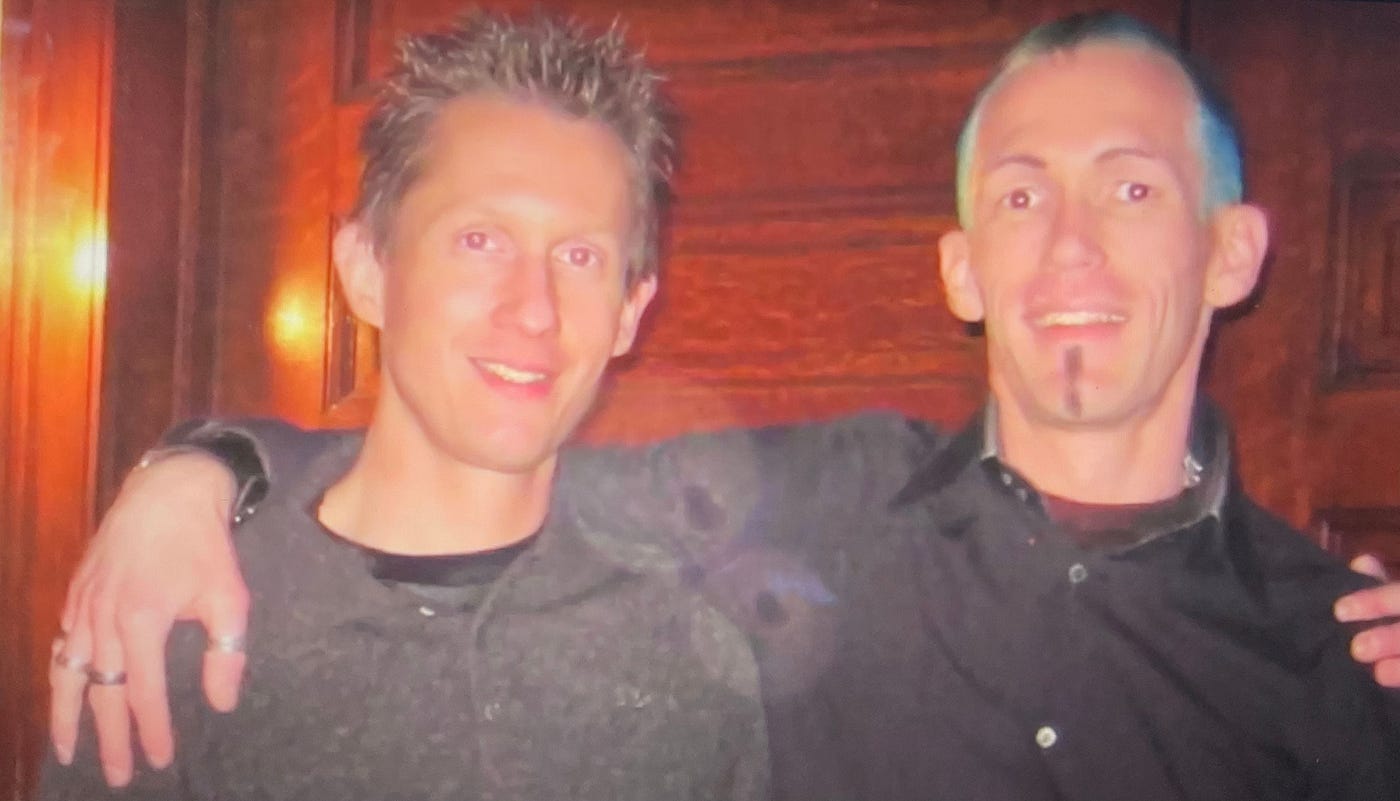
So here's what happened in Louisville back in December 2009. A hair stylist goes to a party at a Victorian mansion and never comes home. His family spends six months wondering where he is. Meanwhile, two guys are living in that house, going about their lives, walking over his body every single day. And when the truth finally comes out, it involves counterfeit money, federal agents, and two trials where each killer points at the other and says, "He did it."
When Your Basement Becomes a Crime Scene
Old Louisville is one of those neighborhoods that looks like it fell out of a history book. Victorian mansions, stained glass windows, the kind of place where people care about historic preservation and property values. It's beautiful. It's also where, in the summer of 2010, police dug up a basement floor and found Jamie Carroll's body stuffed into a plastic storage bin.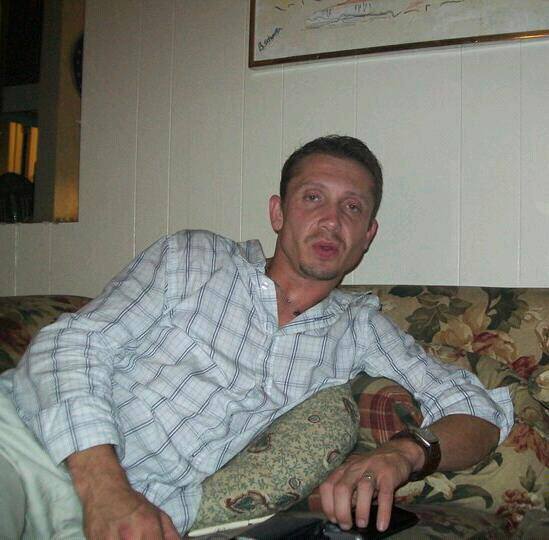
Jamie was 37 when he died. He grew up in Eastern Kentucky, went to beauty school in Paintsville, and became a master hair stylist. People loved him. His former classmates remember this guy who would walk around the salon yelling, "Roll that hair, girl," trying to pump everyone up during practice sessions. He eventually owned his own salon. He had clients who adored him, friends who described him as magnetic and charming. One ex-boyfriend remembered him as someone who was full of life, always in a good mood, always trying to be positive. Jamie also struggled with addiction, and that struggle eventually led him to Jeffrey Mundt and Joseph Banis.
These two men met on an adult hookup site in the fall of 2009. Mundt was the guy who looked good on paper. He'd worked on a major IT project at Northwestern University near Chicago before moving to Louisville. He dressed in suits, had no criminal record. His parents showed up to court with him. He was the kind of person juries want to believe. Banis was the opposite. He had a criminal record involving drugs and theft. He'd been labeled a Persistent Felony Offender in Kentucky, which is a legal classification that basically follows you around forever and makes everything worse when you get in trouble again. He'd just gotten out of prison when he met Mundt online.
Here's where things get complicated. Banis had also met Jamie Carroll online around the same time, right after getting out of prison. According to what came out later, Banis was in a relationship with Jamie while also starting one with Mundt. Mundt knew about Jamie. And according to Banis, Mundt didn't like the situation at all.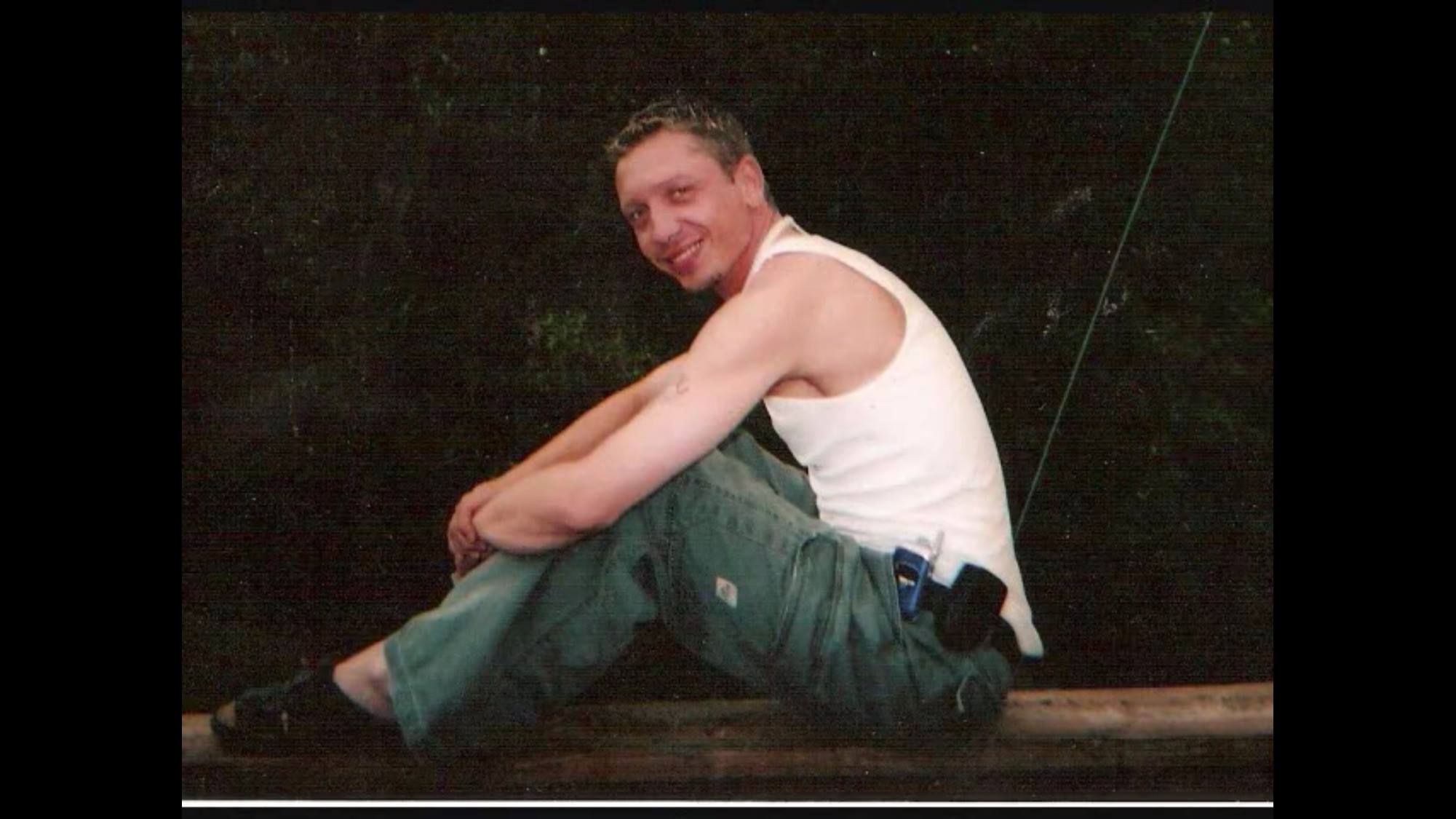
The Night Everything Went Wrong
In mid-December 2009, the three of them got together at Mundt's house on Fourth Street. It was supposed to be a party. Drugs, sex, the kind of night that probably seemed fine in the moment. What happened next depends entirely on who you believe.
Mundt's version goes like this: he and Jamie were in bed together when Banis suddenly attacked. Mundt says Banis slashed Jamie's throat with a knife while Jamie screamed Banis's name over and over. Then Banis shot him twice with a .38 revolver. Mundt claims he was so freaked out that Banis gave him a date rape drug to calm him down, then threatened to kill him if he didn't help dispose of the body.
Banis tells a completely different story. He says at one point during the night, Jamie left the bedroom to get more meth for them. Then Mundt asked him a question. "Do you think anyone would miss Jamie? We could take his drugs." Banis says he didn't understand what Mundt meant at the time. According to Banis, when Jamie came back, Mundt pulled out a knife and stabbed him. Jamie yelled, "Joey, Joey, help me," and then Mundt grabbed a .38 Smith and Wesson and shot him. Banis claims it was all over in about a minute and he was too disturbed to do anything.
Both versions agree on one thing. Jamie Carroll was stabbed and shot. He died in that bedroom. And then these two men, whatever combination of willingness and coercion was involved, worked together to make his body disappear.
The Engineering of Concealment
This is where the case gets really dark. Because what they did next required planning and effort and a level of detachment that's hard to process.
They needed to fit Jamie into a 50-gallon Rubbermaid container. He was five foot seven, 128 pounds. Still, getting a human body into that space isn't easy. So according to testimony from both men, one of them held the body while the other used a sledgehammer to break Jamie's kneecaps. They folded his body into a position that would fit. They poured lime over him to mask the smell and slow decomposition. They sealed the container with spray foam around the edges, strapped it with duct tape.
Then they dug a hole in the basement. Five feet deep into the dirt floor. They buried the container, smoothed everything over, and went back to their lives.
For six months, they lived in that house. Walked across that basement floor. Had people over. Nobody knew. Jamie's family was desperately trying to find him. His mother and his brothers spent half a year in agony, not knowing if he was alive or dead. When they finally found out the truth, the family could hardly talk to each other without crying.
The Chicago Arrest and Federal Mystery
In April 2010, things took a strange turn. Mundt and Banis went to Chicago and stayed at the Hyatt Regency. When they asked a doorman to change a $100 bill, their lives started to unravel. The bill was counterfeit. Police searched them and their vehicle. They found $55,000 in counterfeit currency. They also found date rape drugs, handguns, fake IDs, handcuffs, meth pipes.
The federal government got involved. The Secret Service showed up, which makes sense because counterfeiting is their jurisdiction. The CIA also got involved, which doesn't make sense at all for a domestic murder case. Federal agents seized their laptops and hard drives. Nearly a million files.
To this day, we don't know what was on those computers. Banis's lawyer tried to get access to the digital evidence, arguing that there might be communications proving who was really in charge. The CIA and Secret Service held onto it. That's strange. That raises questions nobody has answered. What were these guys into that required CIA involvement?
The 911 Call That Broke Everything Open
On June 17, 2010, the cover-up fell apart. Mundt and Banis got into a fight. A serious one. Mundt locked himself in a bedroom and called 911. You can hear the terror in his voice on the recording. "My boyfriend is attacking me. He's trying to get into the room where I'm hiding. Please. He's breaking down the door."
Police showed up and arrested Banis for domestic violence. They put him in the back of a squad car. That's when Banis made a choice. He knew that if Mundt got to tell his version first, Banis would take the fall for everything. So Banis told Detective Jon Lesher something that shocked him. He said he had information about a murder the police didn't even know had happened.
Lesher didn't believe him at first. He thought Banis was making it up. The story was too gruesome. A body buried in the basement for six months? Come on. But Banis gave them the location. The basement. The container. He gave them Jamie Carroll's name. He named Mundt as the killer.
The next day, June 18, 2010, detectives excavated the basement floor at the Fourth Street house. They found exactly what Banis said they would find. Jamie Carroll's body, six months after he disappeared, finally discovered.
Two Trials, Two Verdicts, Two Different Stories
The prosecution decided to try them separately. That meant each man could testify against the other. Each one became the star witness in the other's trial.
Banis went first in early 2013. Mundt testified that Banis was a monster who acted alone. The jury convicted Banis of complicity to murder and gave him life in prison with the possibility of parole after 20 years.
Then Banis cut a deal. He agreed not to appeal his conviction in exchange for that parole eligibility. He also agreed to testify against Mundt. So in May 2013, Banis showed up to Mundt's trial in an orange jumpsuit and handcuffs and told the jury that Mundt was the real killer. He testified that Mundt told him, "No one would ever believe you. I'm the great golden child on paper. They don't know about my secret fetishes or anything. You're a convicted felon, Joey."
Mundt's defense lawyer absolutely destroyed Banis on the stand. Pointed out his criminal history, his past lies, the fact that he'd already been convicted of murder. The jury didn't buy Banis's version. They found Mundt not guilty of murder. He was only convicted of tampering with evidence and facilitation to robbery. Eight-year sentence.
By August 2014, Mundt was out. He'd already served enough time between jail and home incarceration. He walked free. Banis is still in prison. His first shot at parole is June 2030.
The Questions That Remain
So who actually killed Jamie Carroll? Legally, Banis is the murderer. That's what the convictions say. The juries heard the same evidence and came to opposite conclusions about who did what.
The truth is probably somewhere in the middle. They were both there. They both participated in hiding the body. Whether one held the knife while the other watched, or whether they took turns, or whether one was truly forced at gunpoint, we'll never really know.
What we do know is that Jamie Carroll died violently in that house. His family spent six months not knowing where he was. And two men who each blame the other walked around for half a year with his body buried beneath their feet.
The federal evidence is still out there somewhere. Those million files. Whatever was on those hard drives that made the CIA take an interest. Maybe someday that information will come out and we'll understand more about what was really happening on Fourth Street.
For now, we're left with a case where justice feels incomplete. One man serves life. The other walked free. And a talented hair stylist from Eastern Kentucky, a guy people described as always trying to be positive, is reduced to being the victim in a basement nobody wanted to talk about.

Host | Creator
Joe runs 10 Minute Murder because he's been trying to figure out since the '90s why humans are such spectacular disasters, when the Menendez Brothers and O.J. Simpson turned murder trials into must-see TV. While his classmates were watching Saturday morning cartoons, little Joe was watching Court TV and thinking, "What is wrong with people?" Thirty years later, he still doesn't have a good answer, but he's got a podcast about it.
When he's not studying the worst decisions ever made by our species, Joe screams supportive threats at the Buffalo Bills, reads everything he can get his hands on, and goes to stand-up comedy shows to remember that humans can be funny on purpose instead of by accident. Most nights you'll find him on his couch, yelling "You IDIOT" at a murder documentary like the killer can hear him through the screen. He calls it research. His therapist calls it "an interesting coping mechanism."

The Zombie Hunter Murders: Phoenix's Most Haunting Cold Case Finally Solved


 Spotify
 Apple Podcasts
 Pandora
 Amazon Music
 Podchaser
 Spreaker
 RSS Feed
 Audible
 Castbox
 iHeartRadio
 Castro
 Deezer
 YouTube