Operation Misty: The Undercover Sting That Caught a Serial Killer
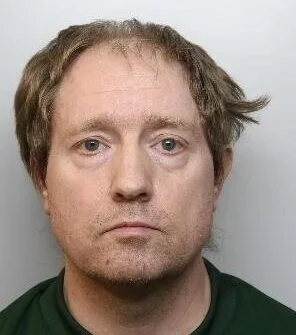
Gary Allen was eight years old when professionals started writing alarming things about him in official files. He was acquitted of murder at twenty-six. He was convicted of two murders at forty-seven. Everything in between is the story you're about to hear.
Gary Allen's Childhood in Hull: The Warning Signs Nobody Could Stop
There is a version of this story where Gary Arthur Allen gets stopped early. Where someone in a position of authority looks at the file, looks at the boy, and makes a decision that changes what happens to two women decades later. That version of the story does not exist. This one does.
Hull, England, 1981. Gary is eight years old, and the professionals around him are already alarmed enough to put his name in an official file. He has been referred for psychiatric evaluation, not because of a single bad incident or a rough patch at home, but because of a consistent and documented pattern of extreme, unprovoked aggression toward his younger siblings. The kind of behavior that worries people whose entire job is to stay calm around difficult children. Social workers who worked with him used the phrase "split personality," and they meant it as a clinical observation. He could appear cooperative and completely well-behaved in one moment, then become someone entirely unrecognizable the next. Between 1982 and 1983, he spent two terms at a residential home called Baynard House. Even in a structured, supervised setting with trained staff, the other version of him kept showing up.
By fourteen, the trajectory had steepened considerably. He attacked his mother with a clothes prop while she was bedridden and recovering from surgery, unable to defend herself. That same year, he grabbed a schoolgirl by the throat on the street, struck her in the head, and tried to force her to the ground. At fifteen, while living within the care system, he attempted to strangle the son of his foster carer. The boy survived. The documentation of this period is extensive and the institutional response was nowhere near enough.
From Hull to the British Army: Violence Finds a Larger Stage
He joined the British Armed Forces and was eventually stationed in Germany. The military can genuinely be a turning point for troubled people. For Gary Allen, it was mostly just a new geography for the same behavior. He threatened a housemate with a diver's knife. He attacked a man with a baseball bat. He boasted to friends about smashing another man's fingers over a car dispute.
And then there is this weird detail: he threw a television through a window because a song he liked did not win the Eurovision Song Contest. The song was "Better the Devil You Know," performed by Sonia for the United Kingdom at Eurovision 1993, held in Millstreet, Ireland. She finished second, losing to Ireland's Niamh Kavanagh by a single jury's final vote. Gary Allen responded to that disappointment by defenestrating a television. Eurovision 1993 almost predicted his whole arc, and none of it stopped him.
The 1997 Murder of Samantha Class: A Mother Found on the Humber Foreshore
On the morning of October 26th, 1997, a group of schoolgirls walking near the River Humber at North Ferriby found a woman partially submerged in the estuary mud.
Her name was Samantha Class. She was twenty-nine years old, a mother of three. Samantha had grown up in the care system herself, had experienced instability through her childhood and into adulthood, and had become involved in sex work. Her daughter Sophia would later stand in court and describe her as "a million beautiful things." Caring, gentle, and strong. Someone who imprinted on everyone she met.
The forensic picture of what happened to Samantha was devastating. Thirty-three external injuries or clusters of injuries to her head and body, severe internal trauma, multiple rib fractures. She had been strangled with a ligature. After her heart stopped, evidence indicated Allen drove his car over her body before dumping her in the Humber, where the tides eventually carried her to the North Ferriby shoreline.
Humberside Police launched one of the most thorough investigations the force had ever conducted. Nearly seven thousand people questioned. Two thousand men DNA tested. In July 1998, a routine drunk driving stop brought Gary Allen into the system. His DNA matched biological material recovered from Samantha Class.
The Gary Allen Acquittal in 2000: When Sheffield Crown Court Let a Killer Walk Free
During interviews, Allen admitted to having sex with Samantha the night she died and denied everything else. He had sold his car to a scrapyard the very next day, claiming he panicked after hearing about her murder on the news. There was a problem with that explanation: no media reports of her murder existed on the day he sold the car. None.
The trial took place in February 2000 at Sheffield Crown Court. The jury acquitted him.
He walked out of that courtroom a free man. Within thirty-five days, he had moved to Plymouth and was targeting sex workers. By December 2000, he was convicted at Plymouth Crown Court for two violent assaults, including one where his victim fought back, bit his hand, and screamed until he fled. In 2002, serving that sentence, he sat across from a probation officer named Rosemary Parkes and told her exactly who he was. He said he had a deep hatred of sex workers. He called them "scum." He told her: "I like to frighten them. I like to cause pain. I like to make them cry. I like blood. I like to hurt them. I enjoy it. It makes me feel good." He said the pleasure started in the planning stage.
Operation Misty: The Undercover Police Sting That Built a Fake Criminal World Around a Predator
By 2010, Allen was back in the Humberside area. Police were so genuinely convinced he would kill again that they built him an entire fictional criminal underworld. Operation Misty deployed seven undercover officers playing members of a fake gang, led by a man Allen knew as "Ian," a hardened criminal with a lot to hide. Ian spent two years earning Allen's trust through staged crimes. In one scenario, Allen sat in a getaway car while Ian appeared to beat another undercover officer. In another, he was asked to burn clothing Ian claimed was bloodstained after an incident overseas. Allen burned it and then photographed the burning pile on his iPhone to prove he could be counted on.
On December 6th, 2010, Allen told Ian he had something to say and warned that Ian probably would not want to know him afterward. Then he confessed. He said Samantha Class had threatened to report him for rape after a condom split, so he killed her and dumped her in the Humber.
Four hundred hours of recordings. The operation was discontinued in 2011 after Allen attacked a woman in Scunthorpe and went back to prison.
The 2018 Death of Alena Grlakova: A Rotherham Mother Who Was Planning to Go Home
While Allen cycled in and out of the prison system, a woman named Alena Grlakova was trying to rebuild her life in Rotherham. She was thirty-eight years old, a mother of four, and had emigrated from Slovakia to England in 2008. She had gone through a divorce, a period of serious hardship, and had found herself in sex work during the worst of it. At the time she disappeared on Boxing Day 2018, she had been making real plans to return home to Slovakia, to finally be close to her family again.
Her body was found in April 2019 in a stream in the Parkgate area of Rotherham. She had been strangled and left in the water. The similarities to Samantha Class were precise: a vulnerable mother, strangled, discarded near water, her final moments defined by a man who had been rehearsing this for decades.
Gary Allen's 2021 Murder Conviction: How a Changed Double Jeopardy Law Brought Justice After 24 Years
Gary Allen left Sheffield Crown Court in February 2000 believing he was permanently untouchable for Samantha's murder. Under centuries of English law, an acquittal was a wall nothing could breach. That was true. Until the Criminal Justice Act of 2003 partially abolished the double jeopardy rule for serious crimes in England and Wales, making retrials possible when new and compelling evidence emerged. Crucially, the law was written to be retrospective. It applied to acquittals that happened before it existed.
Allen had built his sense of safety on a legal foundation that had quietly been removed years before Alena Grlakova ever disappeared.
In 2021, at Sheffield Crown Court, Allen faced trial for both murders. The jury deliberated for two days and returned guilty verdicts on both counts. For the Class family, it was justice they had waited twenty-four years to see. Sophia said: "At least for us all there are no more questions."
Mr. Justice Goose sentenced Allen to life in prison with a minimum of thirty-seven years, calling him "wicked" and "extremely dangerous," a man whose warped view of women made it unlikely it would ever be safe to release him.
Gary Allen will likely die in prison. The eight-year-old boy who alarmed every professional around him became exactly what they feared. Two women, Samantha Class and Alena Grlakova, mothers and daughters and sisters, paid the price for every year the system moved him along without stopping him.
Samantha's family called her a million beautiful things. That is the whole story, really. She was a million beautiful things, and she deserved every year she never got to live.

Host | Creator
Joe runs 10 Minute Murder because he's been trying to figure out since the '90s why humans are such spectacular disasters, when the Menendez Brothers and O.J. Simpson turned murder trials into must-see TV. While his classmates were watching Saturday morning cartoons, little Joe was watching Court TV and thinking, "What is wrong with people?" Thirty years later, he still doesn't have a good answer, but he's got a podcast about it.
When he's not studying the worst decisions ever made by our species, Joe screams supportive threats at the Buffalo Bills, reads everything he can get his hands on, and goes to stand-up comedy shows to remember that humans can be funny on purpose instead of by accident. Most nights you'll find him on his couch, yelling "You IDIOT" at a murder documentary like the killer can hear him through the screen. He calls it research. His therapist calls it "an interesting coping mechanism."
The Wrong Mother: How Julie Rea Was Convicted of Killing Her Own Son

 Spotify
 Apple Podcasts
 Pandora
 Amazon Music
 Podchaser
 Spreaker
 RSS Feed
 Audible
 Castbox
 iHeartRadio
 Castro
 Deezer
 YouTube