
Sheila and Clay Fletcher: The Parents Who Let Their Daughter Die
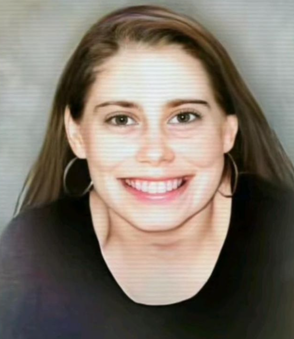
There's a house in Slaughter, Louisiana that first responders still struggle to talk about. What they found inside on January 3rd, 2022 was not the result of a stranger, a weapon, or a break-in. The people responsible lived there, both of them, and they were among the most respected members of their community. This is the story of Lacey Fletcher.
The Town of Slaughter and the Family Everyone Trusted
Slaughter, Louisiana. Population hovering around a thousand people. It's a place where everybody knows whose truck is parked in whose driveway, and that's not gossip, that's just Tuesday. Small towns like this run on reputation in a way that a city of a million people never really does. Your name carries weight out there. The life you project to your neighbors becomes a form of social currency, and the general unspoken agreement among decent people is that you don't go digging in someone else's business as long as they're conducting themselves appropriately in public.
The Fletcher family had spent years building a name that carried a significant amount of that weight. Sheila Fletcher worked as a clerk for the local court system and served as a town alderman. Clay, her husband, was equally embedded in the fabric of the community, serving as an officer in the Baton Rouge Civil War Roundtable, volunteering his time to document and preserve history. Neighbors described him as friendly, always visible in the yard or at community gatherings. By every observable measure, these were upstanding people, and Slaughter saw no reason to think otherwise.
Who Lacey Fletcher Was Before the World Got Small
Their daughter Lacey Ellen Fletcher was born on November 25, 1985. Her childhood was unremarkable in the best possible way. She went to school, played volleyball, and the people who knew her described her as sweet and kind. There was nothing about her early life that announced what was coming.
Around sixteen, Lacey began struggling in ways her family struggled to address. She developed severe social anxiety and was diagnosed with Asperger's syndrome, a neurodevelopmental disorder on the autism spectrum. A diagnosis like that, in the right environment with the right support, is entirely workable. People with Asperger's lead full, independent, connected lives all the time. Lacey's anxiety was real and significant, and the decisions her parents made in response to it over the following years would redirect the entire course of her life.
The Year 2002 and the Last Exit She Was Given
By 2002, Lacey was sixteen years old, and she had her last documented appointment with a medical professional. After that visit, Sheila and Clay moved her to homeschooling. Whatever the reasoning at the time, that decision functionally severed the last remaining connection between Lacey and any outside oversight. No more teachers, no more coaches, no mandated reporters with a legal obligation to speak up if something seemed wrong. After 2002, the only people responsible for Lacey's wellbeing were her parents, and her access to the world began narrowing in a way that nobody from the outside was positioned to see or stop.
Her world contracted year by year. Slaughter became just the Fletcher house. The Fletcher house became mostly the living room. The living room eventually became a single leather couch, and that couch became the entirety of Lacey Fletcher's existence for more than a decade.
The Psychology of How a Person Disappears in Slow Motion
Behavioral experts who have studied this case reference something called the "boiling frog" phenomenon in caregiving situations. The changes come so incrementally that no single moment presents itself as a crisis demanding action. In 2003, Lacey was a teenager who didn't want to go out. By 2010, she was a young woman who preferred to stay in. By 2015, she hadn't left the couch in years, and by then, the Fletchers had likely normalized every stage of her decline because they had been present for every small step along the way. Researchers also point to a concept known as "folie à deux," a shared psychological state between two people who reinforce each other's belief that a deteriorating situation is under control. Both frameworks appear to apply directly to the Fletcher household, and together they go some distance toward explaining how two seemingly rational adults could coexist with what was developing in their living room. Psychology can describe the mechanism. It offers no comfort whatsoever on the question of why they never tried to stop it.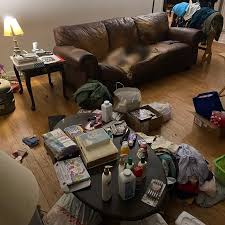
What First Responders Found on January 3, 2022
First responders arrived at 17203 Highway 964 on January 3, 2022, responding to a call from the residence. Lacey Fletcher was found seated on the leather couch. She weighed 96 pounds. Her body was covered in Stage IV pressure ulcers, wounds so advanced that bone was exposed in multiple areas. She was covered in fecal matter found in her hair, her ears, and under her fingernails. There was an active maggot infestation in her open wounds. She also tested positive for COVID-19, which almost certainly delivered the final blow to a body already compromised beyond recovery.
The couch itself held a complete record of what had been happening for years. Sheila and Clay had called it Lacey's sanctuary, a place she had chosen. What the forensic evidence showed was a woman left to disappear. Lacey had remained in the same position for so long that her body wore a cavity through the leather and foam cushioning all the way to the floor beneath it. The leather had been chemically dissolved by years of exposure. The hollow beneath her held accumulated biological waste that had saturated into the flooring.
Dr. Ewell Bickham, the East Feliciana Parish coroner, had spent decades in his profession. He described what he saw as the worst case of his career and called Lacey's death murder by neglect. The official cause was sepsis, a systemic infection originating from the Stage IV ulcers that had gone entirely untreated. Her weight at death confirmed years of severe malnutrition.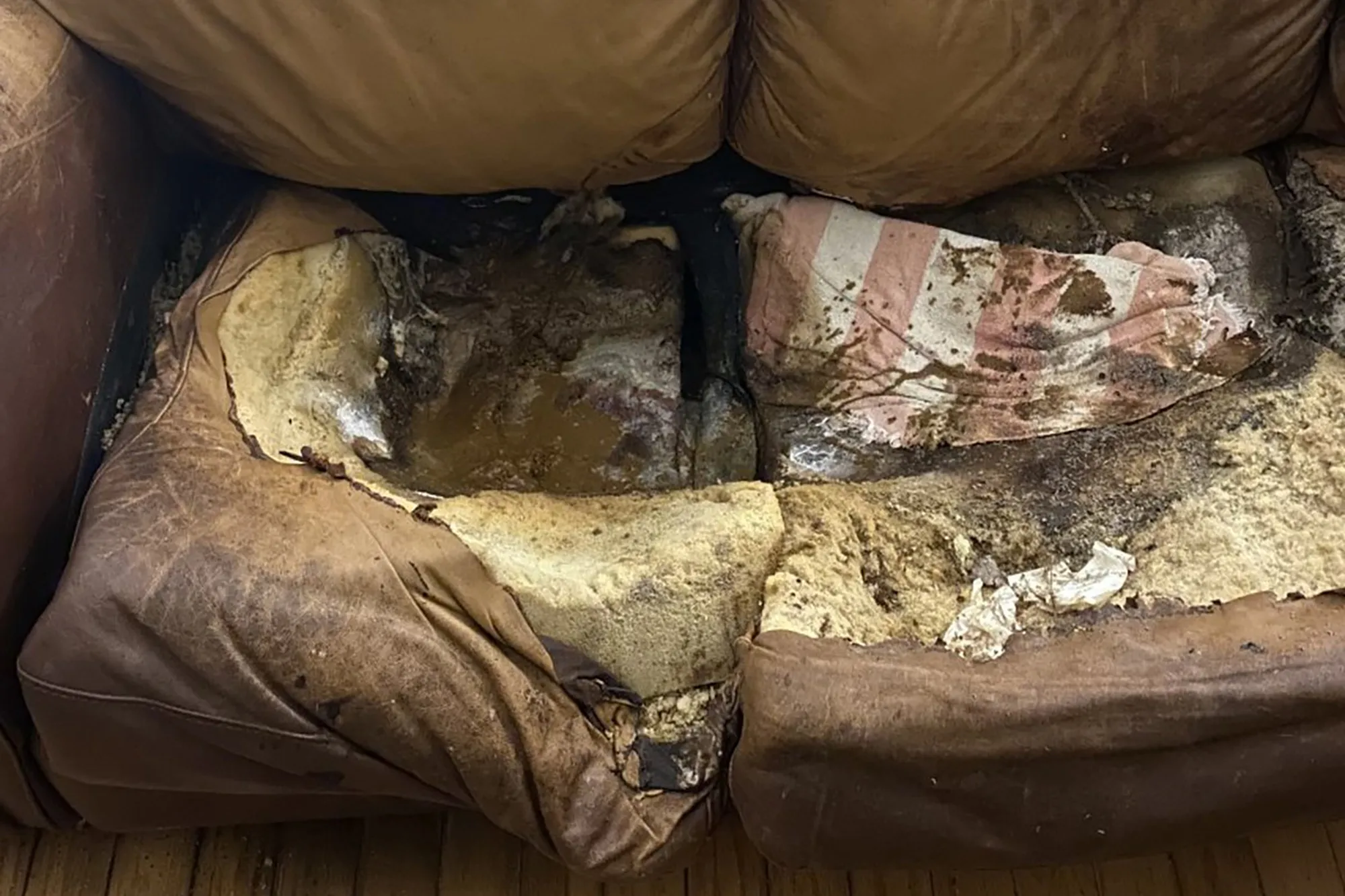
The Double Life Running on the Other Side of the Same Front Door
What is genuinely hard to absorb about this case is that Sheila and Clay were living entirely normally on the other side of that house. Eating meals in the kitchen, sleeping in their beds, traveling, attending social events. Clay was out doing yard work and chatting with neighbors. Sheila was driving to her job in the legal system of East Feliciana Parish and then coming home. They had functionally partitioned off one section of their home and one section of their minds, and within that partition, a human being was dying.
Researchers use the term high-functioning dissociation to describe the capacity to seal off a horrifying reality while operating completely normally everywhere else. Their neighbors had not seen Lacey in approximately fifteen years. When asked about her, the Fletchers offered vague reassurances. She's doing okay. She's still struggling a little. Because the Fletchers were trusted, well-regarded people, nobody pushed further and nobody called for a welfare check. This case has become one of the most widely cited examples in a national conversation about vulnerable adult protections. Children have layers of mandatory oversight surrounding them, teachers and coaches and pediatricians with legal obligations to act if something seems wrong. Adults with developmental disabilities living under the sole care of family frequently have no equivalent system. Lacey Fletcher fell through every gap that existed.
The Legal Battle, the Plea, and a Sentence That Divided People
In May 2022, a grand jury returned a second-degree murder indictment against both Sheila and Clay Fletcher in under two hours. Sheila resigned from her alderman position shortly after. Those indictments were tossed in 2023 on technicalities related to statutory language, producing a wave of public outrage, and a second grand jury returned the same charges. In February 2024, both Fletchers entered a no-contest plea to the reduced charge of manslaughter, which carries identical legal weight to a guilty plea while allowing defendants to avoid saying the words directly. Each received a forty-year sentence with twenty years suspended, meaning each will serve twenty years followed by five years of supervised probation.
A lot of people following this case sat with that math for a while. Prosecuting neglect is genuinely difficult because the crime lives in two decades of consistent inaction rather than in a single identifiable event, and manslaughter is often the most realistic charge prosecutors can actually secure. The law has real limits in these situations, and that awareness does not make the number feel adequate.
Lacey Fletcher's Legacy and What Comes Next
In the aftermath, advocates began pushing for legislation informally called Lacey's Law, which would require periodic welfare checks or medical attestations for disabled adults living solely under the care of family members, a framework designed to bridge the gap between protections extended to children and the relative invisibility of disabled adults in the current system. That conversation is still ongoing.
Lacey Fletcher played volleyball. She was described as sweet and kind. She had a diagnosis that came with real challenges, and the people who were supposed to walk through those challenges alongside her chose their reputation over her life, for twenty years, in a living room where the television was probably still on. The very least we can do now is say her name and mean it.

Host | Creator
Joe runs 10 Minute Murder because he's been trying to figure out since the '90s why humans are such spectacular disasters, when the Menendez Brothers and O.J. Simpson turned murder trials into must-see TV. While his classmates were watching Saturday morning cartoons, little Joe was watching Court TV and thinking, "What is wrong with people?" Thirty years later, he still doesn't have a good answer, but he's got a podcast about it.
When he's not studying the worst decisions ever made by our species, Joe screams supportive threats at the Buffalo Bills, reads everything he can get his hands on, and goes to stand-up comedy shows to remember that humans can be funny on purpose instead of by accident. Most nights you'll find him on his couch, yelling "You IDIOT" at a murder documentary like the killer can hear him through the screen. He calls it research. His therapist calls it "an interesting coping mechanism."
The Shadow of the Adirondacks: Robert Garrow and the Lawyers Who Kept His Deadly Secrets

 Spotify
 Apple Podcasts
 Pandora
 Amazon Music
 Podchaser
 Spreaker
 RSS Feed
 Audible
 Castbox
 iHeartRadio
 Castro
 Deezer
 YouTube