The Soho House Murder: How Sylvie Cachay's Breakup Turned Deadly

December 9th, 2010. The Soho House in Manhattan's Meatpacking District. A 33-year-old fashion designer is found dead in an overflowing bathtub, fully clothed in a black turtleneck sweater. The scene looks like an accidental drowning. But there's a seven-minute window that tells a completely different story. This is the murder of Sylvie Cachay.
When Success Attracts the Wrong Attention: The Sylvie Cachay Story
The Designer Who Saw Swimwear as Art
Sylvie Cachay collected bikinis when she was a kid. She saw them as these tiny engineering problems waiting to be solved. How do you make something that stays in place in the ocean while making someone feel beautiful? That's a very particular way of looking at the world. She was born in Arlington, Virginia, on January 7th, 1977, to Antonio Cachay, a prominent surgeon, and Sylvia, a painter. That combination of scientific precision and artistic expression showed up in everything she created later.
She grew up between McLean, Virginia, and Lima, Peru. She had dual citizenship, spoke four languages fluently, and moved through international circles with this ease that made people gravitate toward her. After studying fashion design at Marymount College, she worked her way up through the industry. Marc Jacobs, Tommy Hilfiger, and eventually Victoria's Secret, where she became head swimsuit designer. She learned how to marry commercial appeal with high-end aesthetics, which is legitimately difficult to pull off.
In 2006, she launched Syla, her own swimwear line. The reaction was immediate. Within the first year, Barneys was carrying her designs. Vogue, Elle, and InStyle featured her work. Sports Illustrated put her bikinis in their swimsuit video. Her publicist said the industry response was a genuine "wow" moment, which in fashion circles means you've created something special. The designs had this sophisticated quality to them. Crème and black leaf patterns, intricate construction that turned swimwear into something closer to evening wear. People called it demi-couture.
Then 2008 arrived. The global financial crisis wiped out independent labels across the board. Syla closed that year. For most designers, that would've been the end. Sylvie treated it like a temporary setback. By 2010, she was consulting for Anne Cole, networking at Soho House in Manhattan, and actively planning her comeback. Her friends described her as someone who couldn't walk past something wounded without trying to fix it. She rescued sick pigeons and nursed them in her apartment. She had two toy poodles, Pepper and Loli. That generous instinct made her a wonderful friend. It also made her susceptible to someone who knew how to exploit kindness.
The Boyfriend Who Brought Nothing
Nicholas Brooks was 24 in 2010. College dropout from the University of Colorado. No career, no real ambition, no discernible skills beyond spending his trust fund. He'd worked briefly at a cupcake shop before quitting. Sylvie would later call him a stoner in her emails, referring to their relationship as dating "the kid." Those aren't affectionate nicknames. Those are signals that respect has left the building.
Nicholas lived entirely off money from his father, Joseph Brooks, who'd won an Academy Award in 1977 for writing "You Light Up My Life." By 2010, Joseph was awaiting trial for raping or sexually assaulting 11 women. He'd lured aspiring actresses to his apartment for fake auditions that became sexual assaults. Nicholas had actually sued his father over trust fund administration. His sister Amanda later said their father had abused her. This family was rotting from the roots up.
Friends testified that Sylvie supported Nicholas financially and emotionally during their six months together. She paid for their lifestyle. He showed up and consumed resources. That was the dynamic.
How a Tragedy Created False Intimacy
They met in summer 2010. On their first date, they were walking Sylvie's two poodles when drunk revelers startled Pepper. The little dog bolted into traffic on Hudson Street and got hit by a car. Nicholas comforted Sylvie as Pepper was euthanized that night. Shared trauma like that creates accelerated bonding. You skip the normal process of getting to know someone because you've been through something intense together. Sylvie was grieving. Nicholas was present. She confused his proximity with actual care.
By December 2010, the relationship was collapsing. That week, Nicholas showed Sylvie a website he used to hire sex workers. He showed her casually, like it was something to share. She also discovered unauthorized withdrawals from her bank account. She knew he'd taken the money.
Sylvie sent what prosecutors later called the "F-U email." She wrote: "For the past six months I have supported you financially and emotionally. The fact u cheated on me makes me sick and you will pay. I am speaking with the credit card company and the police."
She also made a list of conditions. Stop smoking pot. Help clean the apartment. Get a job. She finished with: "If you can't do all these things, then this likely won't work." That wasn't negotiation. That was a breakup with a small escape clause. Sylvie was reclaiming her life and cutting off his access to her bank account.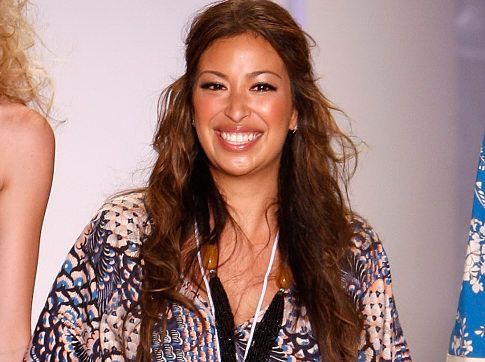
The Fire That Forced Them to a Hotel
The evening of December 8th, 2010, they were at Sylvie's West Village apartment. According to Nicholas's later police statement, they watched a movie, lit candles, and had sex. He claimed he went to shower and returned to find the bed on fire. He said he'd carelessly left candles behind the headboard. He also claimed Sylvie stayed asleep in the burning bed because she'd taken Xanax earlier.
Your bed catches fire and you don't wake up? The smoke alarm goes off and you're still unconscious? Prosecutors would later argue the hotel scene was staged. So the question becomes: was this fire actually an accident, or was it a deliberate move to get her out of her apartment and into a location where he had more control? The fire also provided a ready-made excuse for why she'd be exhausted and disoriented later.
They checked into the Soho House around 12:30 AM on December 9th. The hotel sits in the Meatpacking District on Ninth Avenue. Sylvie told the clerk her stoner boyfriend had set the apartment on fire. She mentioned taking Xanax and said she couldn't stay awake. She was stumbling, visibly impaired, needing assistance to walk.
Hotel employee Kristen Stephens helped Sylvie to Room 20. During that walk, Sylvie was alert enough to complain about Nicholas. She called him a child and said she planned to break up with him. Stephens left her on the bed intending to sleep. At 12:45 AM, a busboy delivered ice to the room. He observed Nicholas and Sylvie entering together. Nobody else went in. The timeline locked into place at that moment.
The Seven Minutes That Couldn't Be Explained
Between 12:45 AM and 2:00 AM, guests in adjacent rooms heard arguing. One neighbor specifically heard a voice yell, "You really hurt me." That destroys any narrative about Sylvie going peacefully to sleep. A confrontation was escalating in that room.
At 2:11 AM, the guests directly below Room 20 called the front desk. Water was leaking through their ceiling. For water to penetrate floorboards and drip into a room below, that bathtub upstairs had to overflow for several sustained minutes. The water breached the tub rim, flooded the bathroom floor, and soaked through the building's structure. Physics doesn't work instantaneously like that.
At 2:18 AM, security cameras recorded Nicholas Brooks leaving Room 20 for the last time. He was inside that room for at least seven minutes while water actively flooded the bathroom and leaked downstairs. There's no believable scenario where he's unaware unless he's unconscious. He walked out seven minutes later under his own power. He knew what was happening. He left anyway.
At 2:51 AM, after a second leak complaint, hotel staff entered the room. The bathtub faucet was running full blast. Sylvie Cachay was submerged in the water, face up. She was wearing a black turtleneck sweater, pink underwear, and her Rolex watch.
Nobody bathes in a turtleneck sweater. That single detail breaks the entire staged scene apart. She was attacked while fully dressed, strangled, then placed in the tub. The running water was meant to suggest accidental drowning. But he failed to undress her, probably from panic or because moving a body is harder than anticipated. An empty prescription pill bottle sat on the dresser, likely positioned to support a suicide or overdose narrative.
What the Medical Examiner Found
The autopsy revealed brutal violence. Cause of death: strangulation and forcible drowning. Bruises covered the front and back of her neck. Internal hemorrhaging showed up in her neck muscles. The injuries matched manual strangulation. Burst blood vessels appeared in her eyes, a condition called petechial hemorrhaging that happens during asphyxiation.
Her lungs weighed twice their normal weight. She'd inhaled a massive amount of water. She was alive when she went under, gasping for air while her lungs filled with water. A bite mark appeared on her hand. A cut was found inside her lip, suggesting a hand had been clamped over her mouth. Nicholas Brooks's DNA was on the bathtub faucet handle. He'd turned those controls himself.
The Hours After Murder
After leaving at 2:18 AM, Nicholas met his friend David Raleigh in the lobby. They went out drinking. He was partying while his girlfriend's body lay in the room he'd just exited. He returned to Soho House at 5:30 AM and found the lobby full of police. Hotel manager Bryan Alvarez pointed him out to officers. Alvarez later described Nicholas's reaction to news of Sylvie's death as blank and emotionless.
Detective Tommy Jones noted Nicholas appeared intoxicated with bloodshot eyes. During interrogation at the precinct, Nicholas fell asleep in the interview room. When he woke, he wrote a statement claiming he "never went near the tub." His DNA on the faucet proved otherwise.
When the Father Chose His Own Exit
While Nicholas sat in Rikers Island awaiting trial, his father Joseph Brooks killed himself on May 22nd, 2011. He used a helium suicide kit in his Upper East Side apartment. Plastic bag over his head, hose connected to a helium tank. His suicide note claimed he'd eventually be cleared of the rape charges but cited declining health. Two predators in one family, both meeting ruin within months.
The Trial That Sealed His Fate
The trial opened in June 2013. Manhattan DA Cy Vance presented motive and timeline. The F-U email showed Sylvie was cutting Nicholas off financially. The staged scene showed his attempt to cover the murder, an attempt that failed because of one piece of clothing.
Defense attorney Jeffrey Hoffman argued accidental drowning. He claimed Sylvie was heavily medicated with Xanax and Seroquel, passed out, and drowned accidentally. Medical experts testified the drug levels weren't sufficient to cause immediate unconsciousness.
The defense called Dr. Charles Wetli, who suggested neck injuries could've resulted from resuscitation attempts or consensual erotic asphyxiation. The judge shut down that theory. The court ruled there was no evidentiary basis for claiming the couple engaged in rough sex, so speculation was inadmissible. That ruling prevented the defense from blaming Sylvie for her own injuries. Under cross-examination, Dr. Wetli admitted strangulation was possible.
On July 11th, 2013, the jury convicted Nicholas Brooks of second-degree murder. On September 23rd, 2013, Judge Bonnie Wittner sentenced him to 25 years to life. She called the sentence richly deserved.
What We're Left With
Sylvie Cachay was rebuilding. She'd survived an economic collapse that destroyed her first business. She was consulting, networking, preparing for act two. She had the talent and the drive. What she couldn't survive was a trust fund beneficiary with no purpose who viewed her as a resource.
The forensic evidence was overwhelming. The seven-minute window destroyed his alibi. The turtleneck in the bathtub revealed what actually happened. At sentencing, Sylvie's mother said, "I knew she liked to be pretty." That simple statement captures what was stolen. Sylvie was days away from cutting Nicholas out completely. She almost made it.

Host | Creator
Joe runs 10 Minute Murder because he's been trying to figure out since the '90s why humans are such spectacular disasters, when the Menendez Brothers and O.J. Simpson turned murder trials into must-see TV. While his classmates were watching Saturday morning cartoons, little Joe was watching Court TV and thinking, "What is wrong with people?" Thirty years later, he still doesn't have a good answer, but he's got a podcast about it.
When he's not studying the worst decisions ever made by our species, Joe screams supportive threats at the Buffalo Bills, reads everything he can get his hands on, and goes to stand-up comedy shows to remember that humans can be funny on purpose instead of by accident. Most nights you'll find him on his couch, yelling "You IDIOT" at a murder documentary like the killer can hear him through the screen. He calls it research. His therapist calls it "an interesting coping mechanism."
The Wrong Mother: How Julie Rea Was Convicted of Killing Her Own Son

 Spotify
 Apple Podcasts
 Pandora
 Amazon Music
 Podchaser
 Spreaker
 RSS Feed
 Audible
 Castbox
 iHeartRadio
 Castro
 Deezer
 YouTube