
The Wrong Mother: How Julie Rea Was Convicted of Killing Her Own Son
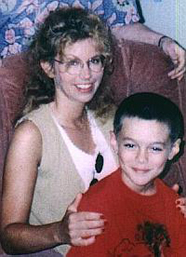
A ten-year-old boy is murdered in his bed in the middle of the night. His mother survives the attack and tells police exactly what happened. And within days, law enforcement has already made up their minds about who did it. What they didn't know was that the actual killer was already several states away, and he was going to spend the next seven years carrying this secret until a true crime author asked him exactly the right question.
The System Chose the Easy Answer: The Julie Rea Case
A Mother, a PhD, and a Custody Battle the Prosecution Would Turn Into a Murder Motive
October 1997. Lawrenceville, Illinois. Population around ten thousand people, which means everyone knows everyone, everyone's business is the whole town's business, and when something terrible happens, the rumor mill is already running well before the police tape goes up.
Julie Rea is thirty-five years old at this point. She's a PhD student in educational psychology at Indiana University, a field literally dedicated to understanding how children's minds grow and develop. She has a ten-year-old son named Joel Kirkpatrick, and by every account from people who actually knew him, Joel was one of those genuinely special kids. Brilliant and sweet, gifted and giving, the boy who made adults around him feel like maybe the next generation was going to be okay after all. He had that energy.
Julie and her ex-husband, Len Kirkpatrick, had been divorced since 1994 and were in the middle of a real custody dispute. A court had recently granted residential custody to Len, and Julie was actively appealing that decision. So Joel was at Julie's place for a visit on October 12th into the early morning hours of October 13th, 1997. He went to sleep in his room. His mom went to sleep in hers.
At four in the morning, Julie woke up to screaming.
The Night Joel Kirkpatrick Was Killed in Lawrenceville, Illinois
She ran into the hallway and came face to face with a masked intruder. She didn't have any framework for what was happening. It's four in the morning, she's been pulled out of sleep, and her brain is genuinely trying to catch up with what her eyes are seeing. She grabbed for him. She fought. She got dragged across the carpet, out through the back of the house, and struck in the face in the backyard before the intruder disappeared into the dark.
When she got back inside and found Joel, he was gone. He had been stabbed multiple times with a steak knife taken from her own kitchen. The scene was devastating.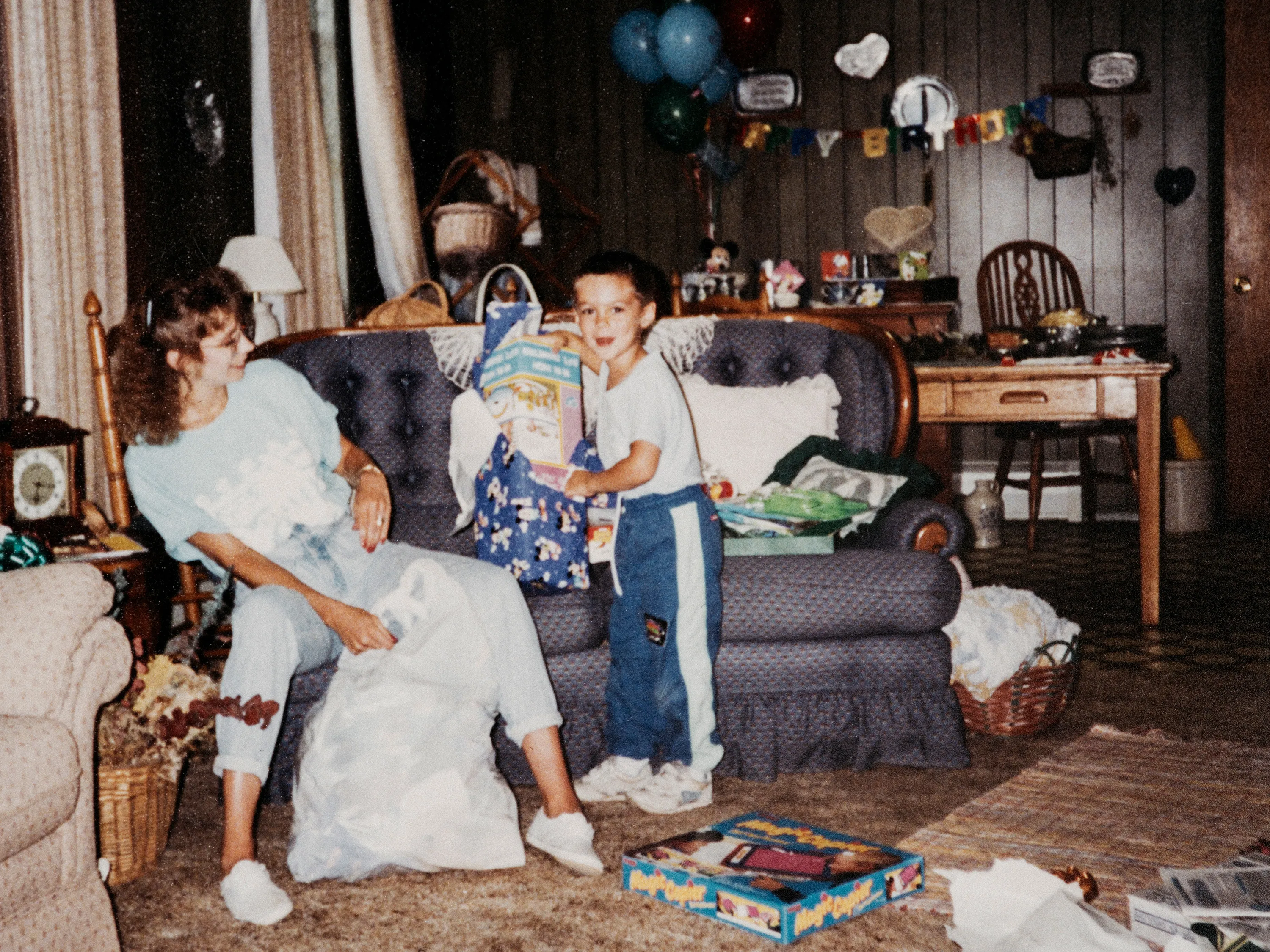
Why Investigators Focused on Julie Rea and Why That Was a Catastrophic Mistake
When law enforcement arrived, they noticed one thing and essentially built their entire theory around it: no forced entry. No busted door frame. No broken window. And for investigators in Lawrenceville in 1997, that detail functionally closed the case before it had a real chance to open. Their working assumption became that Julie had done this herself, that the custody dispute had pushed her to a point where she decided if she couldn't have Joel, nobody would.
The problem was the evidence, or really the complete absence of anything connecting her to it. Julie's clothing had no blood spatter. A nurse who treated her that morning documented what appeared to be rug burns on Julie's legs, which is exactly what you'd expect from someone who had been dragged across a carpet, which is exactly what Julie said had happened. The only blood on her clothing was a contact transfer pattern, consistent with someone who had touched their child after finding him.
But the no-forced-entry argument stuck. It stuck because it fit a story that was simpler and more emotionally satisfying than the alternative. Nobody in Lawrence County was seriously considering the profile of a nomadic, opportunistic killer, someone who travels constantly, targets homes with unlocked doors, and deliberately uses weapons found inside the house specifically to avoid carrying anything traceable. That profile was real and well-documented. It just wasn't on anyone's radar there.
The 2002 Trial, Wayne County, and the Moment Bias Took Over
Julie's 2002 trial was moved to Wayne County, Illinois. At some point during the prosecution's preparation, someone made a decision that tells you everything about their actual strategy. They introduced testimony suggesting Julie had once considered terminating her pregnancy with Joel. Her own OB-GYN testified this was false. Julie had in fact been placed on bed rest during her pregnancy specifically to prevent losing him. But the implication had already been heard by the jury.
Wayne County in 2002 was deeply socially conservative, and the suggestion landed exactly as intended. Combined with photographs of Joel and the custody battle narrative, it was enough. Julie was convicted and sentenced to 65 years in prison.
Tommy Lynn Sells: The Making of the Coast to Coast Killer
Now we need to talk about Tommy Lynn Sells, because understanding who he was matters enormously to understanding how this happened.
Tommy was born in Oakland, California, on June 28, 1964, and his childhood reads like a clinical study in every condition we now understand to produce profound psychological damage. His twin sister died of meningitis when they were eighteen months old. His mother then sent him to live with an aunt in Holcomb, Missouri, and those three years with Aunt Bonnie turned out to be, by Tommy's own account, the only genuinely happy stretch of his entire life. His warmest memory was riding his tricycle on the sidewalk outside her house. That's what he had to hold onto.
When Tommy was five, his mother discovered the aunt was planning to adopt him and came and took him back, not out of affection, but out of spite. He returned to neglect and instability. By seven he was skipping school and stealing alcohol from his grandfather. At eight he was being sexually abused by an older man named Willis Clark. At thirteen, his family packed up and moved away in the middle of the night without telling him. Just left. At fourteen, Tommy Lynn Sells started drifting across the country and essentially never stopped, spending two decades working carnival jobs and manual labor and killing people along the way. Investigators would eventually attribute a significant number of murders to him across multiple states, though the full scope of his crimes was never completely established. He became known as the Coast to Coast Killer.
October 1997: Tommy Lynn Sells Passes Through Lawrenceville, Illinois
On October 11, 1997, a man named Alan Berkshire encountered a twitchy, disoriented drifter at the Lawrenceville Drive Inn. He remembered him specifically because the man was difficult to be around, nervous and nail-chewing and hard to read. The man mentioned having family in Arizona and having recently worked in St. Louis, both of which turned out to be true of Sells at the time. Berkshire watched him walk off toward the railroad tracks. Those tracks led directly into the neighborhood where Julie and Joel lived.
On October 13th, Joel Kirkpatrick was murdered. On October 15th, Tommy Lynn Sells killed a woman named Stephanie Mahaney in Springfield, Missouri.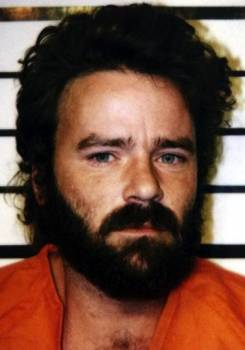
A True Crime Author, a Television Segment, and the Letter That Cracked the Case
In May 2002, ABC's 20/20 aired a segment on Julie Rea's case. A true crime author named Diane Fanning happened to be watching. She was writing a book about Tommy Lynn Sells and corresponding with him regularly while he sat on death row in Texas. When she heard the prosecutor dismiss the intruder theory as "garbage," she stopped cold. An opportunistic stranger, an unlocked door, a weapon grabbed from inside the house — that was Tommy's entire method, and she knew it.
She wrote to him. She asked if he had ever committed a crime in Illinois where a woman had been blamed for her son's death. She gave him no specific date. His response was to ask whether it happened "maybe two days before my Springfield, Missouri murder? Maybe on the 13th?"
Joel Kirkpatrick was killed on October 13th.
How Bill Clutter and the Illinois Innocence Project Rebuilt the Case for Julie Rea
Investigator Bill Clutter with the Downstate Illinois Innocence Project then spent years building the corroborating case around Sells' confession. He found Alan Berkshire, who placed a man matching Sells' description in Lawrenceville two days before the murder. He found Sandra Wirth, a Greyhound ticket agent in Princeton, Indiana, who remembered selling a ticket on October 14th to a frantic, disheveled man who said he needed to get to his mother in St. Louis. The ticket was for Winnemucca, Nevada, a location Texas Rangers confirmed Sells had passed through. A meteorologist reviewed weather data and established that there had been no dew on the ground that morning, which dismantled a deputy's earlier testimony about there being no visible footprints in the yard, because dew is what would have made footprints visible in the first place.
Sells ultimately provided more than fifty corroborating details: the specific light-colored nightshirt Julie was wearing, the layout of her kitchen, the location of the knife block, and the detail of Julie clinging to his leg as he dragged her across the floor. That last detail had never been made public. Julie had described it to investigators in 1997. The rug burns on her legs were the physical proof. Sells described the same moment seven years later without being given a single prompt.
Julie Rea's Exoneration and What Joel Kirkpatrick's Story Means
On July 26, 2006, after a retrial, a jury returned a verdict of not guilty. On December 1, 2010, the Circuit Court of Lawrence County issued Julie Rea a certificate of innocence, a rare formal declaration that she bore absolutely no responsibility for what happened to her son. Tommy Lynn Sells was executed by the state of Texas in 2014.
Joel Kirkpatrick was ten years old. He was brilliant and sweet and he deserved so much more than what he got. His mother spent nearly a decade fighting a system that had already reached its verdict, and the only thing that finally moved the needle was a death row killer who decided, for whatever reason, to tell the truth. That's a strange and heavy thing to sit with. And it's one of the reasons this case stays with you long after you've heard it.

Host | Creator
Joe runs 10 Minute Murder because he's been trying to figure out since the '90s why humans are such spectacular disasters, when the Menendez Brothers and O.J. Simpson turned murder trials into must-see TV. While his classmates were watching Saturday morning cartoons, little Joe was watching Court TV and thinking, "What is wrong with people?" Thirty years later, he still doesn't have a good answer, but he's got a podcast about it.
When he's not studying the worst decisions ever made by our species, Joe screams supportive threats at the Buffalo Bills, reads everything he can get his hands on, and goes to stand-up comedy shows to remember that humans can be funny on purpose instead of by accident. Most nights you'll find him on his couch, yelling "You IDIOT" at a murder documentary like the killer can hear him through the screen. He calls it research. His therapist calls it "an interesting coping mechanism."
The Shadow of the Adirondacks: Robert Garrow and the Lawyers Who Kept His Deadly Secrets

 Spotify
 Apple Podcasts
 Pandora
 Amazon Music
 Podchaser
 Spreaker
 RSS Feed
 Audible
 Castbox
 iHeartRadio
 Castro
 Deezer
 YouTube