The Zombie Hunter Murders: Phoenix's Most Haunting Cold Case Finally Solved
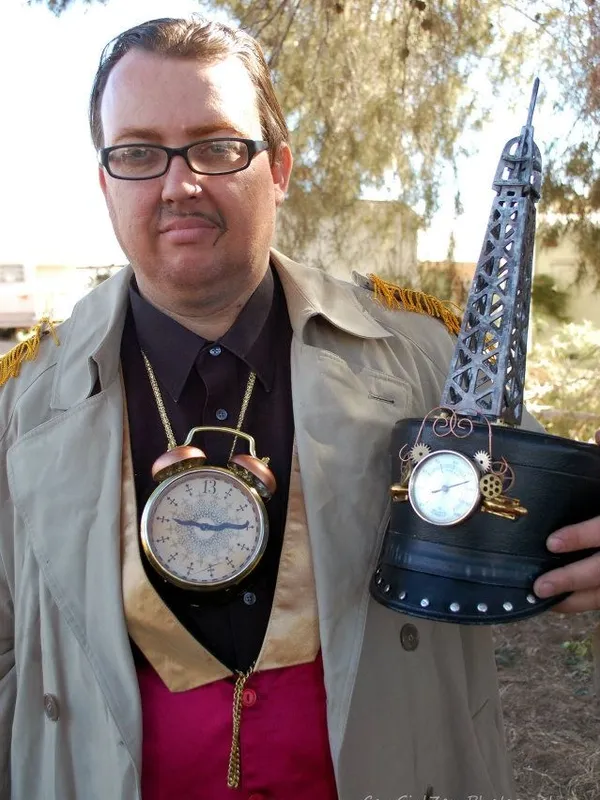
He was the guy everyone knew in Phoenix. The eccentric local with the custom car covered in fake blood, the elaborate homemade costume, the prop gun impressive enough to land in an airport exhibit. He called himself the Zombie Hunter. He went to festivals, he posed for photos with cops, and for 22 years nobody looked twice. This is the story of Bryan Patrick Miller and the Phoenix Canal Murders.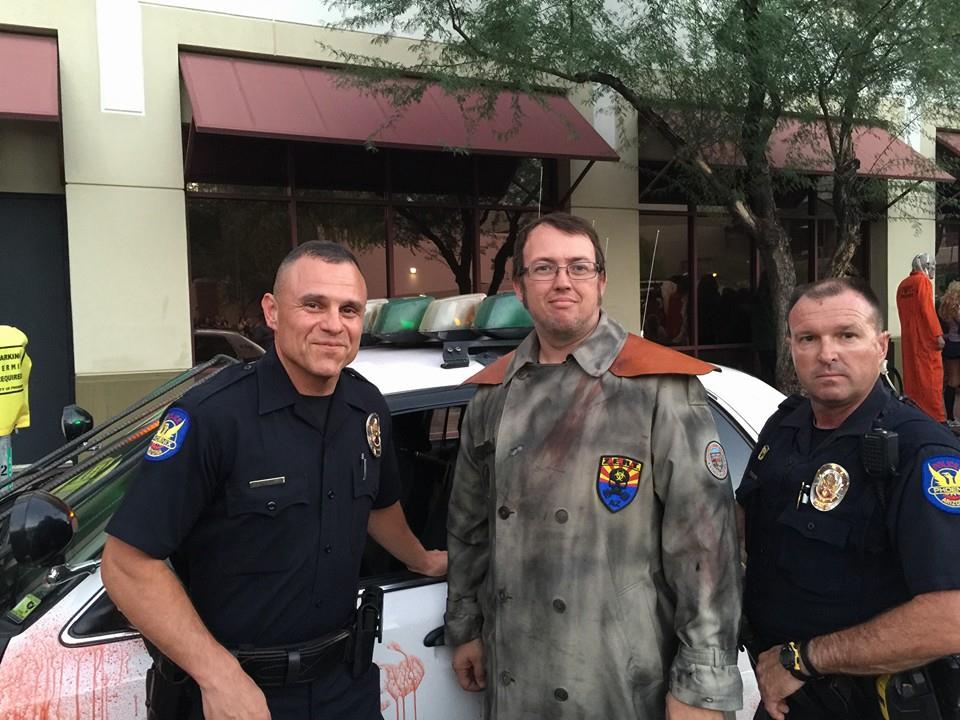
Phoenix Canal Murders: The Community That Trusted Its Own Streets
There's a quality to Phoenix evenings in the early 1990s that people who lived there still describe the same way. The heat breaks just enough around sunset to make going outside feel like an actual reward, and the canal paths that run through the valley become something genuinely beautiful at golden hour. Miles of paved trail through the desert, and when the light drops low it does things to the landscape that photographers travel from other states to try to capture. Families were out there. Joggers. Cyclists. People doing the ordinary things people do in places they have decided are safe. Phoenix in the early 1990s was a city moving fast, new apartment complexes rising alongside every strip mall, the desert getting paved over at a pace that felt almost breathless. The canal paths were where people exhaled.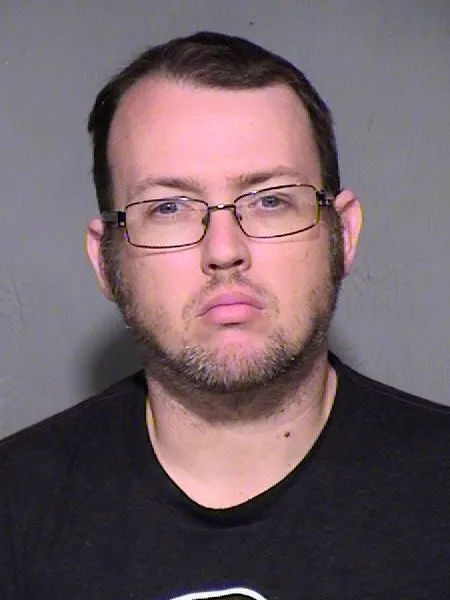
Angela Brosso: The Birthday That Never Came
Angela Brosso was 21 years old, recently arrived from Pennsylvania and building a life in Phoenix's burgeoning tech scene alongside her boyfriend Joe. On the evening of November 8th, 1992, she had a simple plan. Joe was back at their apartment near 25th Avenue and Cactus Road baking her a birthday cake, because tomorrow she was turning 22. Angela headed out for a solo ride on the canal path, something she did regularly without a second thought. She went out at golden hour and never came back.
Joe searched three separate times that night, riding the same paths, calling her friends and family. By morning, Angela's body had been found in a field adjacent to their apartment complex. She had been stabbed in the back and sexually assaulted. She had been decapitated. Her head was not at the scene. Her purple mountain bike was also gone. Eleven days later, a fisherman found her head caught on a grate in the Arizona Canal about two miles away. Forensic analysis of the decomposition suggested the killer had kept it before discarding it, which is a detail that tells you almost everything about who you are dealing with here.
Melanie Bernas and the Ritualistic Signature
Ten months passed. The fear settled into something the community absorbed and tried to move through, because people have to keep living. Then on September 21st, 1993, a 17-year-old Arcadia High School junior named Melanie Bernas went for an evening bike ride while her mother was out to dinner. A woman named Charlotte Pottle found blood and drag marks near a canal tunnel the following morning, and police recovered Melanie's body floating in the water. Stabbed from behind and sexually assaulted, identical in method to Angela. The additional detail here was the one that stayed with investigators for years. Melanie was dressed in a teal bodysuit that was not hers. Her own clothing and her bicycle were gone. The killer had changed her clothes after she died, arranged the scene to match something existing entirely inside his own interior world, and whatever that world looked like, it had been running for a long time before he ever acted on it.
In 1999, DNA from both scenes was matched to a single contributor. A serial predator, confirmed. A name, none. The profile sat unmatched in every available database, and the case moved into a waiting period that would stretch another fifteen years.
The Making of Bryan Patrick Miller
To understand what eventually broke this open, you have to go back to where Bryan Patrick Miller actually started, because his beginning is the story.
Miller was born in October 1972 and grew up in a Glendale suburb that looked entirely ordinary from the outside. His mother, Ellen Miller, worked as a detention officer and ran her household with a version of that authority that forensic psychologists later described as grievous psychological terrorization. She deprived Bryan of food for extended periods, isolated him from other children, beat the family pets in front of him, and made specific, repeated threats with knives and scissors targeting his genitals. This was the environment where his understanding of power and what people do to each other was formed.
By 1989 he was 16, and something had moved from impulse to intention. At the Paradise Valley Mall he walked up to a 24-year-old woman named Celeste Bentley waiting for a bus and stabbed her in the back without provocation. She survived. He went to juvenile detention for a year. While he was incarcerated, his mother cleaned his room and found a notebook. Inside was an entry he had titled "The Plan." It was a methodical, sequential description of what he intended to do someday to a young woman: locate her, abduct her, assault her, kill her, and dismember her remains. He was 16 when he wrote it. He was released, returned to Phoenix, and three years later Angela Brosso went out for a birthday eve bike ride.
The Zombie Hunter: Bryan Patrick Miller's Flawless Camouflage
Miller moved to Washington State in the late 1990s, married a woman named Amy, and in 2000 they had a daughter named Sarah. In 2002 he attacked a neighbor named Melissa Ruiz-Ramirez who had accepted a ride from him, stabbing her at his workplace. At trial he claimed self-defense, saying she had tried to rob him. He outweighed her by 90 pounds and had zero injuries. A jury acquitted him in December 2002, and because there was no conviction, his DNA was never entered into any database. That acquittal cost the investigation more than a decade.
After his divorce he returned to Phoenix, settled near 9th Street and Mountain View, and began raising his daughter as a single father. And this is the part of the story that requires a genuine moment to absorb.
He became the Zombie Hunter. Miller customized a decommissioned Ford Crown Victoria police interceptor with neon lights, fake blood running down the sides, and a life-size zombie mannequin caged in the backseat. He built a prop Gatling gun so detailed it ended up in an exhibit at Phoenix Sky Harbor International Airport. He joined the local steampunk and cosplay community, attended conventions and festivals every single weekend in full costume, and became a recognizable fixture across the city. He posed for photos with actual Phoenix police officers on a regular basis. The man at the center of their most enduring unsolved double murder, smiling beside the people who had been looking for him for years. The persona was so complete and so consistent that the community around him genuinely could not see through it.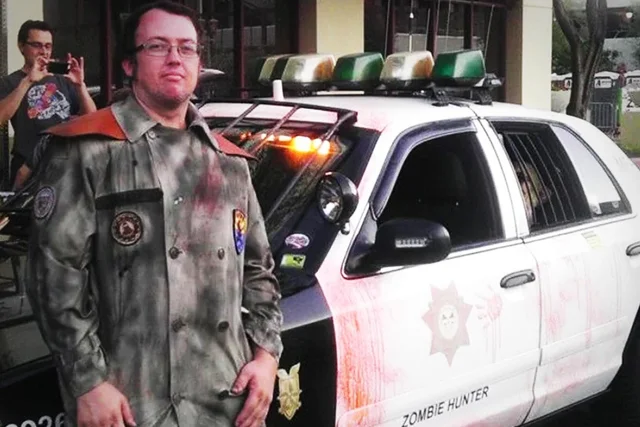
Forensic Genealogy and the Water Glass at Chili's
In 2014 the Phoenix Police Department brought in forensic genealogist Colleen Fitzpatrick, who compared Y-DNA from the crime scenes against public genealogy databases using a technique that was still relatively new at the time. What came back was a surname: Miller. Cold case Detective Clark Schwartzkopf cross-referenced that against the existing files and found that Bryan Patrick Miller had appeared in peripheral leads as far back as 1994 without ever being meaningfully pursued. The profile aligned: a man with a documented history of unprovoked stabbings who had lived near both canal locations during both murders. To make an arrest they needed fresh DNA.
On January 2nd, 2015, Schwartzkopf met Miller for lunch at a Chili's in Phoenix, posing as a detective revisiting old neighborhood leads. Miller arrived in the Zombie Hunter car with his teenage daughter. Undercover detectives were already seated inside, the glasses and silverware pre-handled with sterile gloves. Throughout the meal Miller was careful, barely touching his water glass until Schwartzkopf prompted him enough times that he finally took a few sips. Technicians secured the glass the moment he left. On January 13th, 2015, the results came back as a perfect match to the DNA from both Angela Brosso and Melanie Bernas. Miller was arrested at his home later that day. Confronted with the evidence, he was composed. "I don't see how that's possible."
The Trial, the Sentence, and the Cases Still Open
His bench trial began in October 2022. He pleaded not guilty by reason of insanity, with his defense built around dissociative amnesia, arguing the abuse he suffered had fractured his personality so completely that he retained no memory of either murder. The prosecution countered that Miller was a sexual sadist whose intent had been documented in his own handwriting since adolescence, and that the 1989 notebook was a blueprint, not a symptom. His ex-wife Amy testified about letters in which he described enjoying cutting her, about the nature of their relationship, and about a moment during their marriage when he mentioned attacking another girl. She had believed at the time he was saying something dark to disturb her. She had put it out of her mind.
On June 7th, 2023, Judge Suzanne Cohen sentenced Bryan Patrick Miller to death for the murders of Angela Brosso and Melanie Bernas. Angela's mother Linda spoke about the grandchildren she will never know. Melanie's sister Jill described thirty years of grief with no floor.
Brandy Myers was 13 when she vanished on May 26th, 1992, going door to door for a school fundraiser three blocks from Miller's home. Amy Miller told investigators that Bryan had confessed to her that Brandy knocked on his door that day, and that he killed her and disposed of her remains. No physical evidence has ever been recovered and prosecutors have so far declined to pursue charges. Shannon Aumock was 16 when she died in 1992, and had been in the same juvenile detention facility as Miller when he was a teenager. Both cases remain open.
The canals are still there. People still ride along them at golden hour. And somewhere in Phoenix's memory is the image of a man in an elaborate handmade costume, rolling through weekend festivals in a fake cop car, waving at strangers, posing for photos with the officers hunting him. He called himself the Zombie Hunter. He was very good at it.

Host | Creator
Joe runs 10 Minute Murder because he's been trying to figure out since the '90s why humans are such spectacular disasters, when the Menendez Brothers and O.J. Simpson turned murder trials into must-see TV. While his classmates were watching Saturday morning cartoons, little Joe was watching Court TV and thinking, "What is wrong with people?" Thirty years later, he still doesn't have a good answer, but he's got a podcast about it.
When he's not studying the worst decisions ever made by our species, Joe screams supportive threats at the Buffalo Bills, reads everything he can get his hands on, and goes to stand-up comedy shows to remember that humans can be funny on purpose instead of by accident. Most nights you'll find him on his couch, yelling "You IDIOT" at a murder documentary like the killer can hear him through the screen. He calls it research. His therapist calls it "an interesting coping mechanism."
The Wrong Mother: How Julie Rea Was Convicted of Killing Her Own Son

 Spotify
 Apple Podcasts
 Pandora
 Amazon Music
 Podchaser
 Spreaker
 RSS Feed
 Audible
 Castbox
 iHeartRadio
 Castro
 Deezer
 YouTube