Spotify

 Apple Podcasts

 Pandora

 Amazon Music

 Podchaser

 Spreaker

 RSS Feed

 Audible

 Castbox

 iHeartRadio

 Castro

 Deezer

 YouTube
Burned and Flushed: The Dennis Nilsen Serial Killer Case

Burned and Flushed: The Dennis Nilsen Serial Killer Case Dennis Nilsen murdered at least twelve young men between 1978 and 1983 in North London, making him one of Britain's most prolific serial killers. The investigation into the Muswell Hill...
Burned and Flushed: The Dennis Nilsen Serial Killer Case
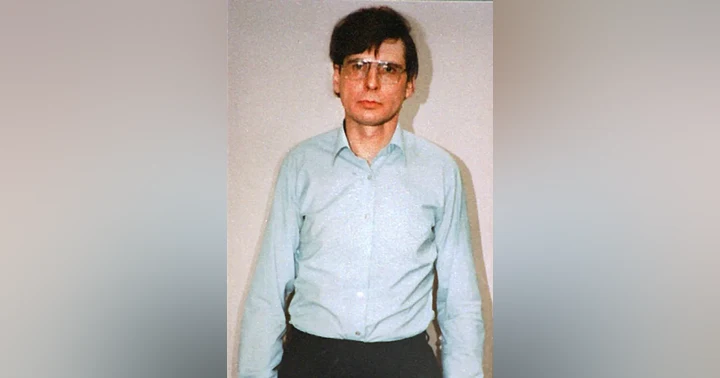
Dennis Nilsen murdered at least twelve young men between 1978 and 1983 in North London, making him one of Britain's most prolific serial killers. The investigation into the Muswell Hill Murderer only began after plumber Michael Cattran discovered human remains blocking a drain at Cranley Gardens in February 1983. Nilsen's victims were primarily vulnerable gay men, homeless youth, and runaways whose disappearances went largely unnoticed by police.This is the story of a killer who kept bodies as companions, a man so emotionally detached he compared disposing of human remains to washing dishes after dinner. We're talking about someone who burned bodies in garden bonfires crowned with car tires to mask the smell, who later tried flushing dismembered remains down the toilet when he moved to a smaller flat. The case exposes one man's pathology and a system that failed repeatedly to protect some of society's most marginalized people. Police ignored reports from survivors, dismissed missing persons cases, and allowed prejudice to dictate which lives deserved investigation. Five years. Twelve to fifteen victims. And it all ended because of a blocked drain.
#DennisNilsen #MuswellHillMurderer #BritishSerialKiller #TrueCrime #SerialKiller #LondonMurders #ColdCase
🔔 Subscribe for True Crime Cases multiple times a week
Never miss a story. Subscribe to 10 Minute Murder for bite-sized true crime episodes delivered fresh every week.
Discount codes from show sponsors. Support 10 Minute Murder and save money at the same time:
https://hypernaturalstyle.com/discount/10MM
https://zivo.life/discount/10MM
https://bigforkbrands.com/discount/10MM
https://prepstartsnow.com/discount/10MM
📱 Follow for Behind-the-Scenes Content Get exclusive case updates, research photos, and sneak peeks of upcoming episodes:
- Instagram: @10minutemurder on IG
- TikTok: @10minutemurder on TikTok
- Facebook: 10 Minute Murder on FB
- Rate & Review: Leave a 5-star review to help other true crime fans discover the show
- Share: Send this episode to fellow true crime enthusiasts
- Join the Discussion: Tag us in your episode reactions on social media
Become a supporter of this podcast: https://www.spreaker.com/podcast/10-minute-murder-bingeable-true-crime-stories--4603604/support.
0:00 "You're listening to 10 Minute Murder." [dramatic music] Between 1978 and 1983, Dennis Nielsen murdered at least 12 young men in North London. He kept their bodies as companions, burned them in his garden, and when that became impossible, tried flushing them down the toilet. Police ignored survivors who reported him. The case only broke open when a plumber found human fingers blocking a drain. This is the story of the killer, the victim's nobody looked for, and the system that failed them all. [dramatic music] [dramatic music] [dramatic music] [dramatic music] [dramatic music] [dramatic music] [dramatic music] [dramatic music] [dramatic music] So there's this moment in February 1983, when a plumber named Michael Catrin was standing outside an apartment building in North London, looking down into a drain that's completely blocked.
1:11 He's been called because residents are complaining about the smell and about backed up toilets. When he gets to the drain cover, takes it off and shines his light down there, he sees what looks like flesh, actual flesh, and four human fingers. Dennis Nielsen, the tenant from the attic flat, comes out to see what's happening. Michael shows him what he's found, and Nielsen completely calm, says it looks like someone's been flushing down their Kentucky Fried Chicken. Kentucky Fried Chicken, that's how Dennis Nielsen's five-year spree ended. Not because of brilliant detective work, not because someone connected the dots, because he was trying to flush pieces of his victims down a toilet that couldn't handle what he was asking it to do.
1:54 But let's rewind and go back to the beginning. Dennis Andrew Nielsen was born in November 1945 in Frazierburg, Scotland. When he was six years old, his grandfather died. Nielsen was close to him, really close, and that death hit really hard. What came next might have been worse. His family took him to view the body at the funeral. For a six-year-old kid, seeing someone he loved, lying there dead, created this twisted connection in his brain between affection and death, between love and loss and corpses. Later in life, Nielsen would point to that moment as the thing that broke something inside him.
2:34 Whether that's true or another convenient explanation, we'll never really know. There's some debate about whether Nielsen was being honest about his childhood or constructing a narrative that absolved him from any responsibility. At 16, Nielsen joined the army. He worked in the Army Catering Corps as a cook and a butcher. He learned how to break down animal carcasses, how to cut through bone and tissue, how to portion things out efficiently. These were practical skills for military food service. They also turned out to be practical skills for something much darker. After leaving the military in 1972, Nielsen tried joining the police.
3:14 During his training, he developed this fascination with morgue visits and autopsied bodies. The people who knew him said he seemed drawn to death in a way that wasn't normal, even for someone training in law enforcement. He didn't last long in police work. Eventually, he ended up working a civil service job, helping people find work at a job center in Kintish Town. But underneath that ordinary exterior, Nielsen was struggling with something that he couldn't resolve. He was gay, living in a time and place where that came with its own challenges. More than that, he desperately wanted companionship but couldn't handle the emotional complexity of an actual relationship. He wanted someone there, someone who wouldn't leave, someone who wouldn't reject him, someone who wouldn't make demands or have their own needs.
4:02 His solution was murder. On December 30, 1978, Nielsen committed his first confirmed killing at his home on Melrose Avenue in North London. The victim was 14-year-old Stephen Holmes. The boy had been to a rock concert and was trying to buy alcohol at the Crickle Wood Arms Pub. Nielsen brought him home. They drank and the next morning when Holmes tried to leave, Nielsen strangled him with a necktie. He then drowned him in a bucket of water in the kitchen. Stephen Holmes, 14-years-old, his family had no idea what happened to him for almost three decades. It wasn't until 2006 that police confirmed he was Nielsen's first victim.
4:45 After the murder, Nielsen did something that would become his signature. He bathed the body, dressed it, kept it in his flat for days, sometimes weeks. He would sit with it, talk to it, create this illusion of companionship. The body became what he wanted. Silent, compliant, unable to leave. This is Necrophilia, the attraction to corpses. For Nielsen, it wasn't only sexual. It was about control and connection and this deeply broken need for presence without the risk of emotional pain. Psychologists who later studied his case described it as a way of deadening anything that felt threatening or dangerous in his desires.
5:28 When he was finally done with the body, when it started to decay too much to maintain the illusion, he would dissect it in his bathtub. His butchering skills from the army came back. He treated it like any other task, breaking down the body into manageable pieces. At Melrose Avenue, he had a garden. He would burn the remains in bonfires. To cover the smell of burning human flesh, which has a distinct smell, he'd top each fire with an old car tire. The rubber would burn and create this thick, accurate smoke that masked what was really happening. Between 1978 and late 1981, Nielsen killed somewhere between 10 and 12 people at that address.
6:09 Young men, mostly. Many of them vulnerable in some way. Gay men at a time in being openly gay could be dangerous. Homeless kids, runaways, sex workers. People whose disappearances often went unreported or were treated as low priority by police. Kenneth Ockenden was a 23-year-old Canadian tourist visiting relatives in London. Nielsen met him in December 1979 and strangled him with headphone cords. 16-year-old Martin Duffy was homeless, lured back with promises of shelter and a meal in May 1980. Billy Sutherland was 26, a father who'd come to London looking for work. He visited the job center where Nielsen worked and never made it home.
6:52 And that's a crucial part of this story. Nielsen wasn't some criminal mastermind. He wasn't particularly careful. There were survivors who got away. Andrew Ho, a student from Hong Kong, escaped after Nielsen tried to strangle him during what Nielsen claimed was bondage play. Ho reported it to the police in October 1979. Douglas Stewart overpowered Nielsen and escaped. Paul Nobs woke up with bruises and a cutthroat, confused about what happened. Carl Stoddard nearly drowned in Nielsen's bathtub before somehow regaining consciousness days later. These men reported attacks to the police. They described being strangled, losing consciousness, waking up confused and injured.
7:34 The police didn't follow up aggressively. These were young men from marginalized communities. The systematic homophobia at the time meant that their reports were dismissed or minimized. Nielsen kept killing because the system gave him room to operate. By late 1981, the situation at Melrose Avenue was becoming unsustainable. He'd had to burn so many bodies that neighbors were starting to notice. The logistics were getting messy, so Nielsen moved to a new place, an attic flat at 23 Kranley Gardens in the Muzzwell Hill area of North London. This move changed everything. The new flats didn't have a garden. No space for bonfires.
8:14 Nielsen needed a new disposal method, and the one he chose was catastrophically stupid. He started cutting bodies into smaller and smaller pieces and flushing them down the toilet. Human tissue doesn't break down and plumbing the way Nielsen seemed to think it would. Bones don't just dissolve. Flesh clogs pipes. Between late 1981 and early 1983, he killed at least three more people at Kranley Gardens. John Howlett, a 23-year-old guardsman, Graham Allen, 27, and finally Steven Sinclair, a 20-year-old struggling with addiction who Nielsen met on Oxford Street, January 26, 1983.
8:55 With each murder, more remains went into the drains. The system was backing up. Residents started complaining about the smell and the blocked toilets. Nielsen himself even wrote a complaint letter about the plumbing. That's when Michael Catrenn got called on February 8, 1983. When he found the fingers and the flesh in the drain, he told a supervisor, Gary Wheeler. They came back the next morning and they found that someone had cleared most of the drain overnight. Only scraps of flesh and four bones remained. They called the police, like they should have done the day before when they found the fingers. Detective Chief Inspector Peter J showed up with colleagues and waited for Nielsen to come home from work.
9:37 When he arrived at 5.15 pm, J asked him directly where the rest of the body was. Nielsen didn't hesitate. He invited them inside and immediately started confessing. He told J he'd killed 15 to 16 young men that he'd picked them up at pubs, brought them home and strangled them. The confession came fast, almost like a relief. Five years of secret murders, of maintaining this double life, of disposing of body after body. When he finally got called, Nielsen seemed almost eager to unload it all. Inside the flat, police found the smell of decomposition overwhelming. Nielsen showed them to garbage bags in his wardrobe filled with human remains.
10:19 Body parts in a tea chest, more remains under a drawer in the bathroom. He calmly directed them to everything, like he was giving a tour. Police searched both residences. At crannly gardens, they found remains of three victims. At the old Melrose Avenue address, they found charred bone fragments in the garden, evidence of all of those bonfires. Nielsen went to trial on October 24, 1983, charged with six counts of murder and two counts of attempted murder. His defense argued diminished responsibility, claiming an abnormality of mind reduced his culpability. The diagnosis that seemed to fit was skitzoid personality disorder, a condition characterized by detachment from social relationships and emotional flatness.
11:06 For Nielsen, that meant wanting companionship, but being psychologically incapable of handling the emotional demands of an actual living person. During the trial, prosecutors presented Nielsen's own writings. In one passage, he compared the murder process to a meal. The victim was the dirty platter after the feast. Disposing of the body was only washing up a clinically ordinary task. That metaphor tells you everything about how he viewed his crimes. The murder was functional. It gave him access to what he wanted, the body, the silent companionship. Everything after was clean up. The jury didn't buy it. On November 4, 1983, Nielsen was convicted and sentenced to life in prison with a recommendation of 25 years minimum.
11:53 In 1994, that was upgraded to a whole life sentence. In prison, he spent nearly two decades writing his autobiography. Six thousand pages called "History of a Drowning Boy." The home office blocked its publication while he was alive. It was eventually published after his death, with a forward warning readers not to take Nielsen's self-analysis at face value. Dennis Nielsen died on May 12, 2018 at York Hospital. He was 72. The real legacy isn't only about one killer, it's about how society failed the victims. These were young men whose lives were already precarious. When they disappeared, nobody looked very hard.
12:34 When survivors reported attacks, police didn't investigate thoroughly. The systemic homophobia created an environment where Nielsen could operate for five years. Twelve to fifteen victims. Multiple survivors who tried to report him. And it only stopped because of a plumbing failure. The Nielsen case is a reminder that protecting society means protecting all of its members, especially the most vulnerable. When we decide some lives matter less than others, when we allow prejudice to determine which disappearances deserve investigation, we create spaces where predators can thrive. Dennis Nielsen was a broken person who did monstrous things.
13:14 The system that allowed him to continue for five years was broken too. Thanks for listening to "10 Minute Murder." Bingeable True Crime Stories. My name is Joe, and let's get to this email because it's a super strange one. Subject random but important. Joe, if you found a brief case full of cash on your doorstep, what's your first move? My friend group had a heated debate about this, and you somehow became the tiebreaker. Choose wisely. Sam and Flagstaff, Arizona. Sam, this feels like a setup. And I don't like it, but I will answer. Obviously, I called the police.
13:58 And for no other reason, but whoever left this on my doorstep knows where I live. If they come back and go, "Oh shit, I left this on accident on your door." And I go, "I don't know what you're talking about." Clearly, they know I took it, and they'd probably inflict some kind of bodily harm. But if you call the police, you can go, "Hey man, there's a briefcase of cash on my doorstep. What do you expect me to do?" They still might do something to you, but at least the police are involved now. I know the obvious answer is, "You keep that. Why shouldn't you be the beneficiary?" And the reason is, like I said, they know where you live. Unless it's enough money to take it and just run, change your identity, and all that stuff. Which if it's in a briefcase, it's not going to be enough money. But you get what I'm saying. Hey, if you're a brand new listener to the podcast, this is a weird one to jump in on, but make sure you hit subscribe wherever you're listening right now.
14:44 Go to 10minuteMurder.com, you can contact me, sign up for the newsletter, read the blog, all kinds of things about the podcast are there. And that's going to do it. That's your episode for today. Thank you again for listening to 10 Minute Murder. See you next time.