Spotify

 Apple Podcasts

 Pandora

 Amazon Music

 Podchaser

 Spreaker

 RSS Feed

 Audible

 Castbox

 iHeartRadio

 Castro

 Deezer

 YouTube
Duty To Warn: The Case Every Therapist Learns About
Duty To Warn: The Case Every Therapist Learns About
Therapy is supposed to be a safe space. You talk, they listen, and everything stays in the room. But what happens when someone crosses the line from intrusive thoughts to actual plans to hurt...
Duty To Warn: The Case Every Therapist Learns About
Therapy is supposed to be a safe space. You talk, they listen, and everything stays in the room. But what happens when someone crosses the line from intrusive thoughts to actual plans to hurt someone?
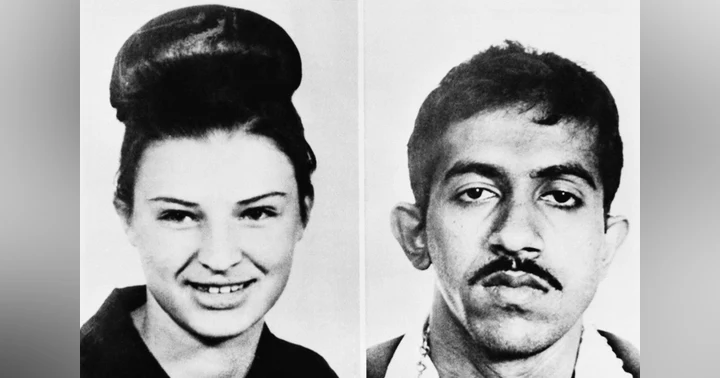
In this episode of 10 Minute Murder, we’re digging into the 1969 case that forced the legal system to decide when privacy ends and public safety begins. Tatiana Tarasoff had no idea she was in danger. Her killer had told his therapist exactly what he was planning. The therapist told the police. And still, nothing was done.
This isn’t just a case about one tragedy. It’s the reason therapists in the U.S. now have a legal duty to warn. Because Tatiana’s death made it painfully clear what happens when no one does.
#TarasoffCase #DutyToWarn
#TrueCrimePodcast #TherapistConfidentiality #MentalHealthLaw #TatianaTarasoff #LegalLandmark #10MinuteMurder
Welcome back to 10 Minute Murder! Your go-to podcast for quick, bingeable true crime stories. Seriously, you tuning in means more to me than my morning caffeine, and if you know me, that’s saying a lot.
💡 Haven’t subscribed yet? Now’s your chance! Hit that subscribe button, and you’ll never miss your favorite bite-sized dose of true crime.
📢 Love true crime? Share the love! Got a friend who’s as obsessed with true crime as you are? Share the podcast with them and let the bingeing marathon begin.
📱 Get Social With Me: Follow along on social media for behind-the-scenes goodies, sneak peeks of upcoming episodes, and the occasional “should I really post this?” moment.
📬 Your Turn! Have a case you’d love for me to cover? Or just want to say hi? Drop me an email—I love hearing from you and might just feature your suggestion in an upcoming episode!
Thanks for being here, and let’s make 2025 the year of binge-worthy true crime. 🖤
(BTDubs- If you're into the brief and bingeable vibe, search for and subscribe to my other podcast: 10 Minute Mystery)
10minutemurder.com
email: joe@10minutemurder.com
_______
Follow 10 Minute Murder-
Facebook:
https://facebook.com/10MMpodcast
Instagram:
https://www.instagram.com/10minutemurder/
TikTok:
https://www.tiktok.com/@10minutemurder
Threads:
https://www.threads.net/@10minutemurder
Youtube:
https://youtube.com/channel/UCkJLUCEZlkn9In3AA46RVxw
*******
Become a supporter of this podcast: https://www.spreaker.com/podcast/10-minute-murder--4603604/support.
0:00 There's a reason therapists aren't supposed to tell anyone what you say in their office. Unless, of course, you say something that makes them think you're about to kill someone. Then it gets a little murky. In today's episode, we're heading back to the late 60s, California, where one therapist did speak up, called the cops, followed the protocol, and still, none of it mattered. What followed led to a legal firestorm, a lot of finger pointing, and one of the most important mental health rulings in US history. But before we dive in, if you like your true crime, brief and bingeable, you're in the right place. Hit follow now for at least two new episodes every week.
0:40 This is 10 Minute Murder. Let's get into it. [Music] At some point, a lot of us end up sitting across from a therapist. Usually it's too unpacked something heavy from our past. Trauma, abuse, neglect, take your pick. We talk, they listen. Maybe not at just the right time to make us feel heard. Then they offer something helpful, a little clarity, maybe a plan. There's a kind of unspoken agreement built into that setup.
1:22 What's said in the room stays in the room. You open up, piece by piece, because you trust it's not going anywhere, you didn't send it. But mental health isn't a one-size-fits-all. Some people catch the flu and barely notice it. For others, it's deadly. Mental illness works the same way. What helps one person might do nothing for someone else. And when it spirals, it doesn't always just affect the person experiencing it. Unlike physical illness, we don't usually think about mental health issues as something that could affect the people around them. There's no contagious element. You can sit next to someone with depression and you're not going to walk away with it.
2:02 That's part of the disconnect. The other part is so much of it happens quietly. Internally, you don't always see it unless you're trained to look, or unless the person opens up in therapy. But therapy isn't just about venting into a void. It's about trust and confidentiality. That's the deal. What you say in there stays in there, unless maybe it doesn't. Because what happens when someone says something that crosses a line? What if a person tells their therapist they're thinking about hurting someone and not just hypothetically? Not in a dark and stormy journal entry kind of way? What if they have a name, a plan, a calm tone when they say it?
2:45 Now, the therapist is stuck. On one hand, there's the oath. Patient first, total confidentiality. On the other, there's a very real human being who might be in danger. So what takes priority? The safety of the public or the privacy of the patient? Depending on who you ask, you'll probably get a strong opinion. There are people who believe therapists should step in immediately if there's a threat. And there are people who believe that even hinting at breaking that trust undermines everything therapy is supposed to be. Like most messy, uncomfortable questions in this country, it took a tragedy from the courts to get involved.
3:25 And that brings us to California in 1967, where a young woman's life and death would push the legal system to draw a line that had never existed before. Today's case takes us to California, the campus of UC Berkeley in the late 1960s. That's where Prosangit Padaar, a student from Bengal, had just arrived to begin his studies. He didn't know anyone yet. He was new to the country, new to the culture, and doing what most international students do. Trying to find a place to land. He moved into the international house, a space on campus set up to help students like him feel less isolated. They held weekly events, social mixers, community dinners, even folk dancing lessons.
4:09 And it was in one of those dance classes that Prosangit met fellow student named Tatiana Terrasoth. Tatiana was outgoing, easy to talk to and friendly. The weekly classes gave them plenty of chances to talk, and over time a friendship started to build. Prosangit saw something more in it, especially after Tatiana gave him a New Year's Eve kiss. But Tatiana didn't mean it that way. It was a holiday moment, part of the night's celebration. Nothing more. When she realized Prosangit had taken it as something romantic, she tried to let him down gently. She cared about him as a friend, but she wasn't interested in dating him. She was already seeing someone else.
4:51 Prosangit didn't take the rejection very well. He became fixated on Tatiana, obsessed with why she didn't return his feelings. He started following her around campus. He skipped classes, his grades tanked. His friends saw the shift and started to worry. He was withdrawn, unkempt, often seen crying or talking to himself. What had started as a one-sided crush, had turned into something far more troubling. By the time Prosangit was barely speaking to Tatiana, his obsession had taken a darker turn. He began secretly recording their conversations, not to hear her voice again, but to analyze them. He wanted to study her words and find out why she didn't love him back.
5:35 It was less about heartbreak and more about control. His friends noticed something wasn't right and urged him to seek help. Eventually he did. Prosangit started therapy with Dr. Lawrence Moore, a psychologist at UC Berkeley's Cowell Memorial Hospital. And at first it seemed like he was getting better. He was showing up to appointments, he was engaged, there was a flicker of hope. But hope didn't last long. That summer while Tatiana was in Brazil, Prosangit walked into Dr. Moore's office looking bright and bright. But during that session he told the doctor something chilling. When Tatiana came back, he was going to kill her.
6:15 Dr. Moore immediately recognized the seriousness of what he heard. He tried to reason with Prosangit. With the moment the session ended, he picked up the phone and called the campus police. He told them that Prosangit was experiencing an acute paranoid schizophrenia episode and posed a danger to himself and others. Police brought him in, but the man they met wasn't unstable. He was calm, cooperative, he answered their questions clearly and respectfully. Based on how he presented, they decided not to detain him. Dr. Moore's supervisor, Dr. Harvey Paulson, also evaluated Prosangit and agreed.
6:55 In his opinion, there was no cause for further action. Dr. Moore wasn't done. He continued pushing for Prosangit to be committed, but there was only so much he could do. Without legal support from the university or psychiatric backing, his options were limited. Eventually, Prosangit stopped therapy altogether. Because of Dr. patient confidentiality, Dr. Moore wasn't legally allowed to warn Tatiana or her family. If he did, he risked losing his license. There were no laws in place at the time to protect someone in Tatiana's position. And so, no one warned her. By the time Tatiana returned from Brazil, Prosangit had moved in with her brother.
7:38 He was no longer in treatment. Police had been told not to intervene, and Tatiana had no idea that Prosangit had told anyone he planned to kill her. In late October, Prosangit showed up at Tatiana's house. She wasn't home, but her mother was. Her mom answered the door and told him to leave. He did. Later that evening, he came back. This time, Tatiana answered. Prosangit asked to talk. Tatiana stepped outside, but something must have felt wrong. She started to scream. That's when he pulled out a pellet gun and a butcher knife. Tatiana ran down the street screaming. Prosangit followed. He shot her, caught up to her, and stabbed her repeatedly.
8:21 Then he calmly called the police, confessed to the murder, and asked to be arrested. Tatiana's family was obviously devastated, and they were furious. They believed, rightfully so, that if they had been warned even once, they would have never let her leave the house that night. That she might have had the chance to protect herself, that someone could have intervened. They filed a lawsuit against Dr. Moore, Dr. Paulson, the campus police, and the University of California. Their claim was simple. Someone should have told them. They argued that since Prosangit had disclosed a specific plan to murder Tatiana, and since Dr. Moore had taken the threat so seriously, seriously enough to call the police, that there was a clear obligation to notify the people in danger.
9:09 But the court disagreed. The case was thrown out. The court ruled that Dr. Moore had a greater duty to protect his patient's confidentiality than he did to protect Tatiana's safety. The legal system, at that point, offered no gray area. Tatiana's family did not stop there. They appealed the case and took it to the California State Supreme Court. This time, the court acknowledged that no laws had been broken, but they agreed the case was worth reviewing. Initially, the court ruled that mental health professionals should have a legal obligation to warn anyone their patients might pose a danger to. But the psychiatric community pushed back hard. They argued that any breach of confidentiality would destroy trust in the therapeutic relationship.
9:57 The backlash was strong enough the court went back and reviewed the ruling again. After the second review, the court came to a new conclusion. Mental health professionals have a dual obligation. One to their patients and one to the people their patients might reasonably harm. The justice in the case wrote words that would go on to define this ruling. "The protective privilege ends where the public peril begins." The court likened mental illness to physical disease. When someone is exposed to a dangerous, contagious illness, doctors are required to notify others who might be at risk. Tatiana's case, they argued, should have been treated the same way.
10:39 Tatiana's civil case was eventually settled out of court. Procindgett was found guilty of second-degree murder and sentenced to five years. He served four of those five years. Later, his conviction was overturned. He was released on the condition that he returned to India. But the legal legacy he left behind changed how mental health and public safety are handled in the United States. Today, the duty to warn exists because of what happened to Tatiana. And the question that still lingers is this, why did it take a murder for us to figure that out? Thanks for listening to this episode of 10 Minute Murder.
11:30 I'm Joe, I'm the host, and if you're a brand new listener to the podcast, make sure you hit subscribe, wherever you're listening right now. Also follow along on social media. You can check out the links in the show notes or go to 10minutemurder.com and also on the website 10minutemurder.com, all kinds of other things that you can check out about the podcast. And I want to say that what happened to Tatiana Teresoff should never have happened. She didn't know she was in danger because the system decided she didn't need to know. And by the time anyone questioned that decision, it was already too late. Her case changed the law. It forced the courts to draw a line between protecting someone's privacy and protecting someone's life.
12:11 But it came at a very high cost. And I want to know what you think about the case. You can email me, Joe@10minutemurder.com, or in the comments post what your thoughts are on this super important case to legal history. That's going to do it. That is your episode for today. Thank you so much for listening to 10minutemurder. minute murder.