Spotify

 Apple Podcasts

 Pandora

 Amazon Music

 Podchaser

 Spreaker

 RSS Feed

 Audible

 Castbox

 iHeartRadio

 Castro

 Deezer

 YouTube
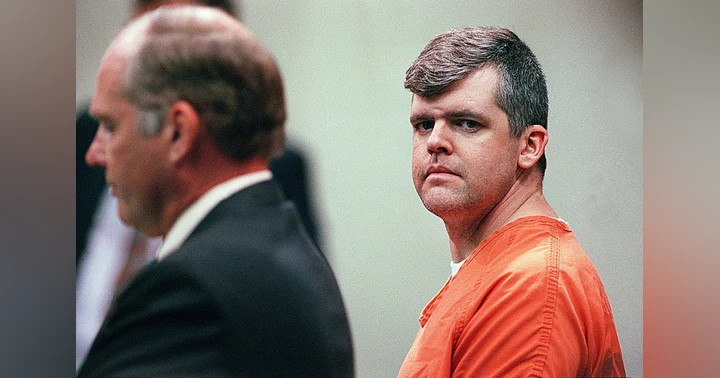
Gulf War Ghosts: The Jeffrey Hutchinson Death Row Case
Gulf War Ghosts: The Jeffrey Hutchinson Death Row Case What happens when a decorated Gulf War veteran's mind becomes a casualty of war that no one wants to acknowledge? Jeffrey Hutchinson's story isn't your typical family annihilation case. This is...
Gulf War Ghosts: The Jeffrey Hutchinson Death Row Case
What happens when a decorated Gulf War veteran's mind becomes a casualty of war that no one wants to acknowledge? Jeffrey Hutchinson's story isn't your typical family annihilation case. This is about a system that failed to hear the voice of a broken soldier, a legal nightmare built on procedural technicalities, and the devastating cost of untreated military trauma. We're diving deep into a case where the evidence was overwhelming, the appeals lasted decades, and the most important questions were never answered. This one will stay with you long after you hit stop.
#JeffreyHutchinson #GulfWarVeteran #MilitaryPTSD #DeathRowCase #VeteranTrauma #FloridaDeathPenalty
🔔 Subscribe for True Crime Cases multiple times a week
Never miss a story. Subscribe to 10 Minute Murder for bite-sized true crime episodes delivered fresh every week.
📱 Follow for Behind-the-Scenes Content Get exclusive case updates, research photos, and sneak peeks of upcoming episodes:
- Instagram: @10minutemurder on IG
- TikTok: @10minutemurder on TikTok
- Facebook: 10 Minute Murder on FB
- Rate & Review: Leave a 5-star review to help other true crime fans discover the show
- Share: Send this episode to fellow true crime enthusiasts
- Join the Discussion: Tag us in your episode reactions on social media
Become a supporter of this podcast: https://www.spreaker.com/podcast/10-minute-murder-bingeable-true-crime-stories--4603604/support.
0:00 I shot my family. Those four words changed everything for Jeffrey Hutchinson, a decorated Gulf War veteran whose mind had become another casualty of war. But what happened next would expose every crack in our justice system. [Music] Jeffrey Hutchinson was supposed to be one of the good guys.
0:42 Born in Alaska on November 6, 1962, he grew up in Kettle Falls, Washington, where by all accounts he was a regular kid dealing with ADHD. After high school, he worked as a mechanic and security guard, the kind of steady jobs that built communities. Then he made a decision that would define the rest of his life. He joined the US Army. Hutchinson became a paratrooper, earned his way into the Rangers, and when Operation Desert Storm kicked off, he answered the call. He served his country in the Gulf War, but that quick but brutal conflict sent thousands of young Americans into a desert filled with chemical weapons and burning oil fields.
1:22 But here's what nobody ever talks about enough. Coming home from war doesn't always mean the war is over. When Hutchinson returned to the United States, he carried something invisible with him. A California psychiatrist would later diagnose him with Gulf War illness, a condition that wreaks havoc on everything from sleep patterns to memory to basic cognitive function. The same doctor identified something called neurodysimmunity and warned it could trigger unconscious fits of rage. This is where the story gets complicated, because we're dealing with a man whose brain was literally damaged by his service to our country, but the legal system he would eventually face had no real framework for understanding what that meant.
2:05 After his discharge, Hutchinson tried to build a normal life. He moved to Spokane, Washington, where he met Renee Flattery, a 32-year-old mother of three who were separated from her husband. By 1998, they'd moved together to Creswood, Florida, along with Renee's children, nine-year-old Jeffrey, seven-year-old Amanda, and four-year-old Logan. People who knew them during this period describe Hutchinson as a good partner and father figure. He treated those kids like they were his own. The neighbor's soul would look like a functional family unit, but underneath the surface, something was brewing that nobody could fully understand at the time. Goal for illness isn't like a broken leg you can see and treat.
2:46 It's a constellation of symptoms that can include chronic pain, insomnia, memory problems, and, yes, sudden bursts of uncontrollable anger. Veterans were coming home with these symptoms, and the medical establishment was still trying to figure out what the hell is happening to these people. Hutchinson was living with diagnosed ADHD, Gulf War illness, and the invisible wounds of combat trauma. He was trying to be a partner and father while his brain chemistry was fundamentally altered by his military service. That's the context for what happened next. September 11, 1998 started like a lot of domestic disputes do, with an argument between partners.
3:27 Hutchinson and Renee got into it about something, and he responded by packing some clothes and guns into his truck and heading to a local bar. This wasn't unusual behavior for someone dealing with combat trauma. When everything feels overwhelming, sometimes you just need to remove yourself from the situation. While he was drinking, Renee called a friend in Washington. She thought Hutchinson had left for good this time, and honestly, maybe part of her was relieved by that thought. Nothing with someone struggling with untreated military trauma couldn't have been easy. But around 40 minutes later, after Hutchinson left the bar, someone placed a 911 call from the house that would haunt everyone for the next 27 years.
4:24 Even in only what could be described, as a bizarre turn, the same caller started talking about masked intruders, claiming some guys from Quantico were at the house and they were responsible for the shootings, not him. It was like listening to two completely different people on the same call. When deputies arrived 10 minutes later, they found Hutchinson on the garage floor, still connected to 911. His shotgun was on the kitchen counter, and inside that house was a scene that nobody should ever have to witness. Renee and her two youngest children, Logan and Amanda, were found in the master bedroom each killed with a single shotgun blast to the head. But it was what happened to nine-year-old Jeffrey that would become the legal lynchpin for Hutchinson's death sentence.
5:06 Jeffrey tried to defend himself. The forensic evidence showed he'd been shot first in the chest, with the blast also hitting his arm as he tried to reach up and block it. But he didn't die immediately. Instead, he stumbled into the living room, fell to the floor, and was still conscious when Hutchinson reloaded that pump shotgun and fired a second shot into the boy's head. This sequence was argued that it wasn't a heat of passion. It was methodical, deliberate, and it would later be classified as heinous, atrocious, and cruel by the court. The forensic evidence was overwhelming. Shotgun residue on Hutchinson's hands, Jeffrey's tissue on his clothing, and no injuries consistent with fighting off intruders.
5:50 But here's what makes this case so complex. The same man who could commit such methodical violence was also genuinely suffering from documented brain damage and trauma-related disorders. Those two realities can coexist, and that's what makes this story so difficult to process. Hutchinson's trial in 2001 should have been where his military trauma got a full hearing. His defense team presented evidence of his Gulf War syndrome, his ADHD diagnosis, his military service record, and expert testimony about how chemical weapons exposure can alter brain function and behavior. The prosecution had their overwhelming physical evidence, including that 911 call, where two of Hutchinson's friends identified his voice as saying he'd shot his family.
6:36 They had forensics. They had timeline. They had everything they needed for a conviction. The synancing phase is where things got interesting in a really dark way. Judge G. Robert Barton made a decision that reveals how the legal system tried to balance competing truths. He sentenced Hutchinson to life without parole for killing Renee, but death for murdering three children. The judge acknowledged Hutchinson's clean record and military service as mitigating factors for Renee's murder. But when it came to those kids, especially Jeffrey's brutal second shooting, the court decided that no amount of military trauma could excuse that level of cruelty to children. Here's where this case becomes a perfect example of how legal technicalities can completely override justice.
7:23 Under federal law, death throw inmates get one year after their state appeals are finalized to file in federal court. But calculating that deadline is incredibly complex, and Hutchinson's attorney screwed it up. They filed his federal habeas appeal three weeks late, thinking that he had more time. This wasn't some lazy mistake. Hutchinson himself saw the danger coming. A week before the actual deadline, he told his lawyers point blank to either file immediately or he'd fire them and do it himself. They promised they would file. But they didn't. That procedural error meant no federal court ever reviewed the substance of his claims about military trauma and mental illness.
8:05 The most important part of his legal defense was silenced because of a calendar mistake made by the very people supposed to save his life. The legal doctrine that destroyed him is called agency, which holds clients responsible for their lawyer's actions. But think about how absurd that is in context. A brain damaged veteran on death row is supposed to somehow monitor and control attorneys who specializing complex federal deadline calculations. Now, I'm in no way saying that this man deserved to be released or anything of the sort. But what I am saying is that he has a right to fair and competent representation. And it seems like in this instance, he didn't really get that.
8:45 In his last weeks, Hutchinson's case came down to one final question. Was he sane enough to execute? His team brought in a psychiatrist who diagnosed him with delusional disorder. For decades, Hutchinson had maintained that the murders were part of a government conspiracy to silence him. And his execution was the state's final move in that conspiracy. The defense argued that while Hutchinson understood he was going to be executed, his delusion prevented him from rationally understanding why the state was doing it, which is the legal standard for competency. But the state brought their own experts who painted Hutchinson as a manipulative liar, whose conspiracy theories were contrived defensive tactics, not genuine mental illness.
9:29 Dr. Wade Myers testified that he found no evidence of a fixed delusion at all. The court sided with the state's experts, finding their opinions credible and compelling. On May 1, 2025, Jeffrey Hutchinson was executed by lethal injection at Florida State Prison. He was pronounced dead at 8.15 pm, becoming the fourth person executed in Florida this year. It makes Jeffrey Hutchinson's case so haunting isn't whether he was guilty. Clearly, I think he was, and did deserve to be punished. The evidence was overwhelming. The problem is that our system never truly grappled with what military trauma means in the context of criminal justice.
10:11 We send people to war. They come back with invisible wounds. And when those wounds contribute to unthinkable violence, we execute them without ever really examining their role in creating those wounds. 129 military veterans wrote to Governor DeSantis calling Hutchinson's mind a "casualty" like any lost limb in combat. Florida's Catholic bishops pleaded for mercy, acknowledging the victim's tragic deaths while arguing that life imprisonment served justice better than execution. None of it mattered. The procedural error that kept federal courts from reviewing his military trauma meant that the most important questions about his case were never answered. We'll never know if a full federal review of his Gulf War illness and brain damage might have changed anything.
10:57 What we do know is that Jeffrey Hutchinson was both a decorated veteran who served his country and a man who committed horrific acts of violence against innocent children. Both of those things can be true simultaneously, and our justice system struggled to hold that complexity. His execution ended not with resolution, but with the same contradictions that defined his entire case. Overwhelming evidence of guilt alongside legitimate questions about whether a traumatized veterans' broken mind deserved death or treatment. Those questions died with him on May 1, leaving us to wonder if justice was truly served or if we simply chose the easier path of permanent silence.
11:46 Thanks for listening to 10 Minute Murder, Bingeable True Crime Stories. My name is Joe, I'm the host, and if you're a new listener make sure you hit subscribe right now, wherever you're listening, press the subscribe button. If you're an OG listener, been listening for a while, some of you tell me that you're like three times through listening to all of the episodes. All of the episodes. That's crazy to me, they're like, I don't keep track, honestly. I don't know how many there are, probably 500, 600 or something like that. But to listen to all of them, one time through, that's a big deal. To listen to all of them a couple of times, that's nearly impossible if you ask me, but three times, crazy work. But I love you for it.
12:26 If you want to learn more about the podcast, get in touch with me, any of that stuff, you can go to 10minutemerder.com. And let me quickly touch on this speaking of today's episode. It may seem like, and the things I was saying that I'm almost like I'm on, Jeffrey Hutchinson's side in this, and I am absolutely not. The side that I'm on is the side where everyone gets their day in court, fairly. I'm a big advocate of mental health, I think that that should be taken very seriously. I'm a big advocate for our military, and with full transparency, I don't agree with the death penalty. I don't think we should have one. And I do understand that that comes from an opinion of someone who's never had anyone close to them their lives taken.
13:12 I could change my mind if that were to happen. But I don't think that killing someone for killing someone is punishment. Leave them in jail for the rest of their life. That's punishment to me. Killing someone isn't the answer to killing someone. But again, I get if I'm not going to argue with you, if you're in the opposite end of that, I get it. I understand where you're coming from, and you have your right to feel that way. Anyway, let's get to a listener email before I get myself canceled. Subject, the one that hooked you. Hey Joe, what was the very first case you ever read about and made you think I want to tell stories like this? Vanessa in Austin. And Vanessa, thanks for the email. It was the OJ Simpson case. I was a, I'm a howled, I was at the time.
13:54 I was in school. School age, like maybe a freshman in high school. I can't remember exactly. But I paid very close attention to the OJ Simpson case. Watched it all the time. Would come home from school when school started back. Come home from school and we could all the updates about it and see what's happening and all that stuff. And stuck with it for the whole time. And I've since watched a documentary after documentary about it. I've read books about it. Still, it's a very interesting case to me. And then after that case was the Scott and Lacey Peterson case where I got really engulfed in what was going on there. So as a couple of them, OJ Simpson and then the Scott and Lacey Peterson case. And at the time, I didn't think, oh, I want to tell stories like this, but I thought, man, it would be interesting to work in the world where these stories are being told.
14:38 I didn't think I would be the one telling them, but here we are. Alright, that's going to do it. That is your episode for today. Thank you again for listening to 10 Minute Murder. See you next time. [Music]