Spotify

 Apple Podcasts

 Pandora

 Amazon Music

 Podchaser

 Spreaker

 RSS Feed

 Audible

 Castbox

 iHeartRadio

 Castro

 Deezer

 YouTube
Hidden in Plain Sight: How Joseph Naso Killed for 50 Years Undetected
Hidden in Plain Sight: How Joseph Naso Killed for 50 Years Undetected When a routine probation check in 2010 uncovered a handwritten "List of 10" on a kitchen table in Reno, Nevada, investigators had no idea they were about to crack open decades of...
Hidden in Plain Sight: How Joseph Naso Killed for 50 Years Undetected
When a routine probation check in 2010 uncovered a handwritten "List of 10" on a kitchen table in Reno, Nevada, investigators had no idea they were about to crack open decades of cold cases. Joseph Naso, a 76-year-old former photographer with a history of petty crimes, had been living under everyone's radar for years. That list would become the roadmap to connecting him to four brutal murders spanning from the 1970s to the 1990s. What makes this case even more disturbing? Recent revelations from a fellow death row inmate suggest Naso's actual victim count could be as high as 26 women. From his "rape diary" dating back to his teenage years to his obsessive collection of victim photographs and trophies, this is the story of how one man's compulsive documentation became his ultimate downfall. And why his narcissistic need for recognition led to confessions that law enforcement couldn't extract through traditional methods.
#JosephNaso #AlphabetKiller #DoubleInitialKiller #SerialKillerConfession #DeathRowConfidential #ColdCaseBreakthrough #TrueCrimePodcast
🔔 Subscribe for True Crime Cases multiple times a week
Never miss a story. Subscribe to 10 Minute Murder for bite-sized true crime episodes delivered fresh every week.
📱 Follow for Behind-the-Scenes Content Get exclusive case updates, research photos, and sneak peeks of upcoming episodes:
- Instagram: @10minutemurder on IG
- TikTok: @10minutemurder on TikTok
- Facebook: 10 Minute Murder on FB
- Rate & Review: Leave a 5-star review to help other true crime fans discover the show
- Share: Send this episode to fellow true crime enthusiasts
- Join the Discussion: Tag us in your episode reactions on social media
Become a supporter of this podcast: https://www.spreaker.com/podcast/10-minute-murder-bingeable-true-crime-stories--4603604/support.
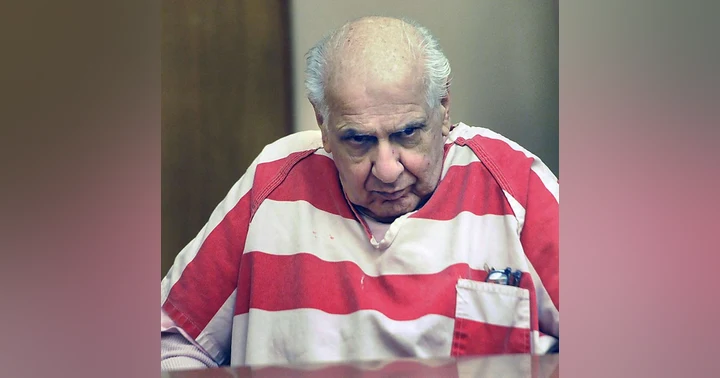
0:00 In 2010, a probation check in Nevada uncovered something prosecutors would later call a road map to murder, a handwritten list, 10 women, 10 locations, and one man who had been hiding in plain sight for decades. [Music] You know that neighbor that seems completely normal. The one that waves from his driveway.
0:41 Maybe complaints about the weather if you talk to him lives a pretty unremarkable life, right? Joseph Nesso was that guy. Born in Rochester, New York in 1934, he did all the regular things, served in the Air Force, got married, had a sunny cared for in his later years, worked as a freelance photographer. In the 1970s, he took classes at San Francisco colleges, moved around California, like a lot of people did, and eventually ended up in Reno, Nevada. His neighbors knew him as "crazy Joe" because he was a little odd. Maybe eccentric is a better word, the kind of quirky you roll your eyes at rather than worry about. Here's what makes this story so terrifying.
1:23 While Nesso was living this completely kind of ordinary life, he was documenting something that would eventually reveal him as one of America's most prolific serial killers. According to a handwritten record, Nesso kept himself. His first sexual assault happened in 1950 when he was just 16 years old, so we're talking about someone who started victimizing women as a teenager and continued for nearly five decades. Five decades of abuse. In 1958, he was convicted of rape in Rochester, New York. Now, this is where things get really messed up. Instead of going to prison for a significant amount of time, investigators allegedly told him, "Get out of town, pack up and leave."
2:07 That's your consequence for rape. Just get out of here. This decision might have been one of the most catastrophic mistakes in criminal history. Psychologists talk about how avoiding real consequences can create a sense of invincibility in offenders. If you can walk away from a rape conviction with basically a warning, what does that tell you about how seriously society takes your crimes? The rapes continued through 1998, possibly into the 2000s, all meticulously logged in his records. For almost 50 years, this man was assaulting women while maintaining the appearance of a regular guy with a regular life. Nesso earned the nickname "The Double Initial Killer" because four of his confirmed victims had first and last names starting with the same letter.
2:53 Law enforcement started noticing this pattern and it became his signature. His method was calculated and horrifying. Prosecutors later proved that Nesso would drug his victims, photographed them while they were unconscious or after he killed them, strangled them with ligatures like nylon stockings, then dumped their bodies in rural areas of Northern California. The evidence against him was overwhelming. Take Roxine Rogache's case. His DNA was found on the pantyhose she was wearing. His ex-wife's DNA was on a pair wrapped around her neck, and this wasn't circumstantial evidence. This was direct physical evidence placing him at the scene of murder. But what really sets Nesso apart is his compulsive need to collect things.
3:35 When police searched his home, they found hundreds of thousands of photographs of women. Many appeared unconscious, drugged, or dead, posed in lingerie next to mannequin parts. He also kept obituaries, newspaper clippings about missing women, and personal items belonging to his victims. Of course, you know, criminologists call these trophies, and they serve a specific psychological purpose. They allow killers to relive their violent acts and maintain psychological control over their victims even after death. For Nesso, killing was just a part of a larger ritualized process of dominance and fantasy. Let me tell you about some of the lives Nesso destroyed, some of the women whose lives he took.
4:19 I mentioned Roxine Rogache. She was 18 years old when she was found strangled near Fairfax, California in 1977. The DNA evidence connecting Nesso for her murder is undeniable. Carmen Colone, she was 22, discovered dead along the Carcunas, scenic highway in 1978, and here's an interesting detail about her case. She shares a name with a victim from the Rochester Alphabet murders, a completely different case where Nesso was actually considered a person of interest. Cherelia Patterson, 56, washed ashore in Marin County in 1981. Nesso was the prime suspect back then because he managed the building where she lived, but the case went cold for 30 years.
5:00 Sarah Dillon was born Renee Shapiro. She was a huge Bob Dylan fan who was last seen heading to a concert in 1992. Her passport and ID were found in Nesso's safety deposit box, along with a note about the concert date. Pamela Parsons, 38, worked as a waitress and was found dead in Yuba County in 1993. Nesso actually admitted to photographing her and kept newspaper clippings about her disappearance. There's Tracy Tafoya, 31, found dead in Yuba County near the Mary'sville cemetery in 1994. Nesso's personal log mentioned being with a woman named Tracy on the day she disappeared. The gap between Nesso's four convictions and the estimated six to 26 victims shows you how serial killer investigations really work.
5:49 Courts can only convict based on evidence that meets legal standards. The personal records found in his possession suggest his actual crimes were way more extensive, but you gotta have the evidence. And I know you've seen some of the biggest cases in history get solved by pure accident. In 2010, Nesso was on probation for petty theft when he violated his parole by having ammunition. During the routine search of his Reno home, authorities found what one prosecutor called a treasure trove of evidence. The most important discovery was sitting right on his kitchen table. A handwritten list of 10 women with geographical locations. Investigators immediately realized this could be the road map to connect Nesso with cold cases going back for decades. What happened next was pretty amazing. The list gave them specific targets for DNA analysis of evidence that was over 30 years old and had been stored at room temperature.
6:45 Normally, that would degrade genetic material beyond use, but the contra-coast of county sheriff's crime lab managed to extract usable DNA from this old evidence. Even better, they found an extremely rare genetic marker in Nesso's DNA that matched the crime scenes. The list pointed them to bodies. The bodies provided the scientific proof they needed for convictions. Despite having a million dollars available for legal representation, Nesso made what every legal expert called a catastrophic decision. He decided to represent himself in court. His court behavior was described as befuddled and oinery. His defense strategy was amateur hour.
7:25 Nesso admitted to photographing women, including some of his victims and to writing about rape in his journals. Then he tried to explain it away by claiming rape was loose talk for making out or having great sex. Pretty unbelievable. He presented dozens of his regular photography work to try to convince a jury that he was a legitimate artist. This approach had zero chance against the mountain of evidence prosecutors had assembled. An incompetent defense attorney would have hired DNA experts to challenge the forensic evidence. Instead, Nesso's narcissistic belief that he could outsmart everyone sealed his fate. After a two-month trial, the jury deliberated for eight hours before finding him guilty on four counts of first degree murder. He got the death sentence in November 2013, through California's moratorium on capital punishment, means he'll probably never actually be executed. And the story takes another dark turn. Joseph Nesso's ego wouldn't let the story end with his conviction. Over the past few years, documentaries have revealed that Nesso spent a decade confessing to a fellow death row inmate, William A. Nograera said that he actually killed 26 women.
8:37 His fellow inmates kept detailed notes, 300 pages of them. So what triggered these confessions? Well, Nesso was furious when media reports attributed one of his murders to another serial killer, Rodney A. Cala, known as the dating game killer. His need for recognition and control over his reputation was so powerful that he told another prisoner's secrets he had never revealed to anyone else. Nograera, the person who he confessed to, was resinnanced to 25 years to life in the summer of 2024. Gave his notes to retired detective Kin Mains. Mains was able to verify some of the details, including a claim that Nesso posed as a photographer at the Oakland A's to lure victims.
9:19 The baseball team. And one particularly disturbing discovery, Mains found a search warrant from Nesso's house that listed a collection of over 26 coins. He believes each coin represents one victim. The Joseph Nesso case shows us something really disturbing about how certain serial killers think. His compulsive documentation wasn't separate from his crimes. It was central to how he experienced and remembered his violence. Photographs, diary entries, and victim keepsakes weren't evidence he accidentally left behind. They were essential parts of his psychological satisfaction. He needed these items to relive his crimes and maintain his sense of power over the women he killed.
10:02 What's really remarkable is how his ego became the key to understanding the full scope of his crimes. Decades of traditional police investigation couldn't get these confessions out of him, but one fellow inmate willing to listen to Nesso brag about his accomplishments, unlocked information that could connect him to cases across multiple states and decades. Recent documentaries suggest Nesso could be one of America's most prolific serial killers, active from the 1950s through the 1990s, while remaining largely undetected. His case shows how one predator can operate for decades by maintaining a facade of normalcy, while systematically documenting his own violence. The most haunting part, for nearly 50 years, this man was photographing women, living as someone's neighbor, someone's father, while methodically destroying lives. The list of 10 wasn't where his crimes started. It was where his ability to hide them finally ended. Joseph Nesso. Crazy Joe, his story reminds us that the most dangerous people aren't always the most obvious monsters lurking in dark alleys. Sometimes they're the ones offering to take your picture.
11:17 [Music] Thanks for listening to 10 Minute Murder, Bingeable True Crime Stories. My name is Joe. Nice to meet you. Hope you're doing well today and thank you for listening to the podcast. If you're a new listener, hit subscribe wherever you're listening right now. If you're an OG listener, as always, I love you forever. Please keep sharing this podcast with your friends and families. It makes more difference than you realize. You might think, "I'm just going to let these people know about this podcast that Joe does." I like it. Maybe they will. What you don't realize is when you share it with them, they listen. And then if they like it, they'll share it with other people. That's how successful podcasts work. This thing is already in like the top 1% of all podcasts. Thanks to you, but I'd kind of like to see it keep going. Do better, reach more people. And I hope you don't mind helping me do that. If you want to know more about the podcast, get in touch with me. You can go to 10minutemerter.com. Here's an email from one of you that listens and went to the website. Hi, Joe.
12:20 Are you a morning person or a night person when it comes to writing and recording? Do you find one time of day makes you better at telling these stories? Chris from Raleigh. And Chris, that's very close to where I was born, by the way. I appreciate the email and I'm neither one. Tbh, I wake up in the morning and I'm not in a bad mood, but I'm not also a morning person. I'm not chipper in the morning and I'm not like fully focused and motivated to do things immediately. My brain needs some caffeine to wake up. And then at night, I'm kind of in chill mode. That's when I'm watching these documentaries and I'll read some of the cases and I don't really write at night and I don't record at night very often. I do want to have to like my behind all record at night, but I feel like I sound better and you would never know it, but I feel like I would I sound better like midday. So that's when I tried to do the bulk of these episodes around that time. Well, lunch time and then like 6 p.m. And I've been asked that before if I'm a morning person or a night person and my answer is always the same, I'm like an 11.30 a.m. kind of guy. That's my wheelhouse right there about 11.30. Chris again, hold North Carolina down, thank you for the email and I appreciate you listening and thank you for listening to 10 minute murder. I'll see you next time.
13:33 [Music]