
 Spotify

 Apple Podcasts

 Pandora

 Amazon Music

 Podchaser

 Spreaker

 RSS Feed

 Audible

 Castbox

 iHeartRadio

 Castro

 Deezer

 YouTube
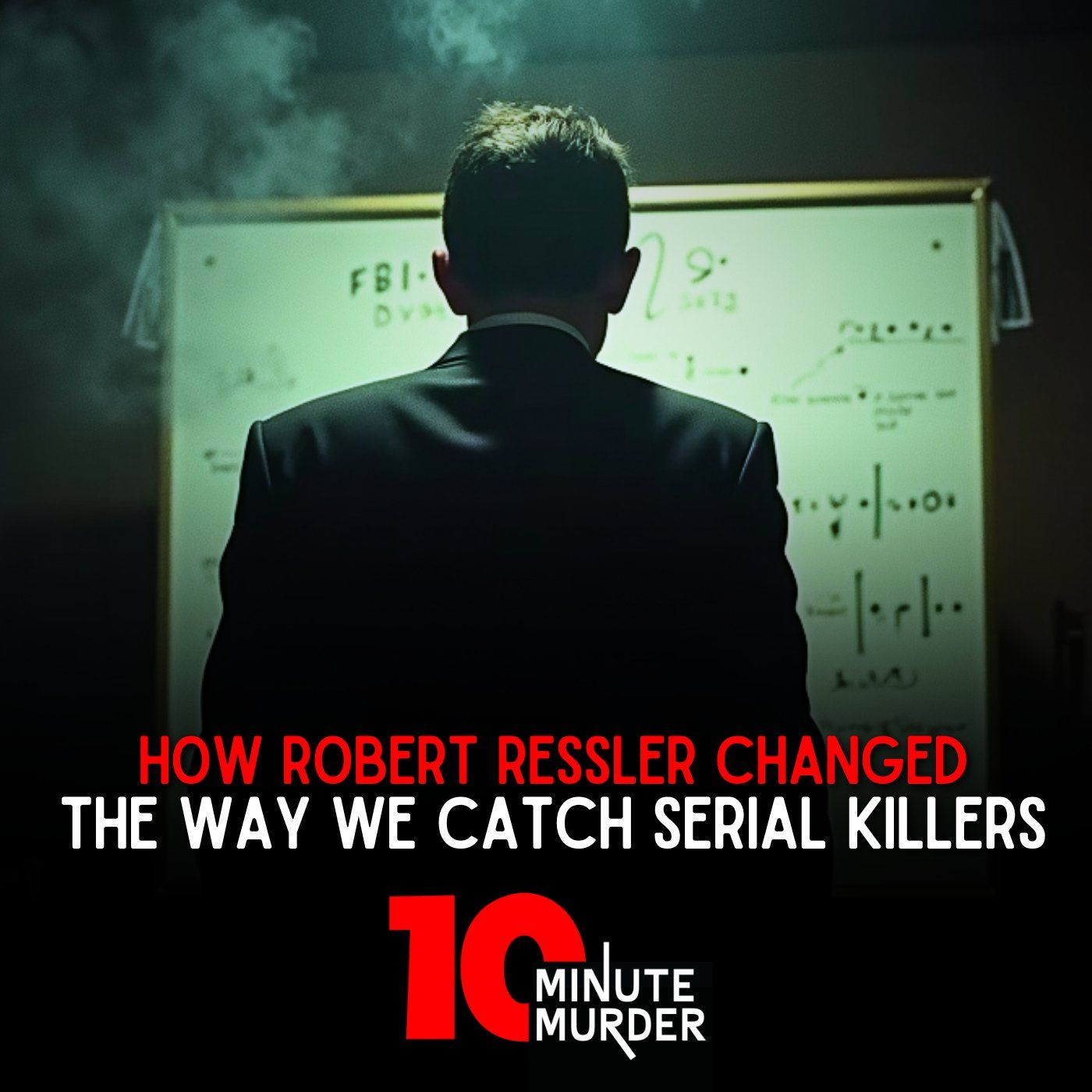
How Robert Ressler Changed the Way We Catch Serial Killers
How Robert Ressler Changed the Way We Catch Serial Killers
We all know the term "serial killer," but did you know it wasn’t always part of our vocabulary? Meet Robert Ressler, the man who not only coined the term but also revolutionized criminal...
We all know the term "serial killer," but did you know it wasn’t always part of our vocabulary? Meet Robert Ressler, the man who not only coined the term but also revolutionized criminal profiling as we know it today. In this episode, we’ll take you through Ressler’s journey—from his Chicago childhood, where he crossed paths with notorious killer John Wayne Gacy, to his groundbreaking work with the FBI’s Behavioral Science Unit. We’ll explore his chilling encounters with some of the most infamous serial killers in history and how his work continues to influence investigations around the world. Whether you’re a true crime aficionado or just curious about the mind behind the modern understanding of serial killers, this episode is one you won’t want to miss.
Thank you so much for listening to and supporting 10 Minute Murder!
SUBSCRIBE to 10 Minute Murder.
Have friends that also like true-crime stories?
SHARE this podcast with them!
CONNECT on social media to read about new episodes and see visuals that go along with the story.
10minutemurder.com
email: joe@10minutemurder.com
_______
Follow 10 Minute Murder-
Facebook:
https://facebook.com/10MMpodcast
Instagram:
https://www.instagram.com/10minutemurder/
TikTok:
https://www.tiktok.com/@10minutemurder
Threads:
https://www.threads.net/@10minutemurder
Youtube:
https://youtube.com/channel/UCkJLUCEZlkn9In3AA46RVxw
If you have a request for a case to be featured on 10 Minute Murder, or have any questions for Joe (the host), please feel free to send them to the email address above.
*******
Become a supporter of this podcast: https://www.spreaker.com/podcast/10-minute-murder--4603604/support.
0:42 Today, the concept of a serial killer, even the very term itself, is so ingrained in our cultures and in our mindsets that it's almost impossible to imagine a point in time where we weren't constantly talking about notorious murderers and podcasts and learning about them and documentary. But the term serial killer has actually only been around since the nineteen seventies, and before then it wasn't really even a thing that investigators thought about. That often hard to believe, but it's true. Before then, anyone who went on a killing spree went widely unnoticed, or at the very most, was believed to be a particularly deranged criminal and sort of a one off situation. The closest we'd come to thinking about the concept of potential serial killers was when the British were calling a string of murders crimes in series. Now, as we all know, that barely scratches the surface of what the term serial killer means today, because today we have the general knowledge of who serial killers tend to be, what kind of childhood they usually tend to have, and what kind of lives they usually live as adults. But where did all the facts and all the statistics for this particular crime profile come from. Who was the man that coined the term serial killer? Well, his name was Robert Wrestler. Robert grew up on North Memora Avenue in Chicago, Illinois, in the nineteen forties and nineteen fifties, and from a
2:14 young age he found himself drawn toward the sensationalized stories and news articles about killers, rapists, and other violent criminals. Far from terrorized or even repulsed by the men who seemed to make these things go bump in the night, Robert wanted to know what made them tick. This urged to understand the very people who seemed to be wanting to tear civilized society apart at the seams, only grew stronger when Robert found out that he actually knew a real life serial killer, John Wayne Gacy, had grown up in the same neighborhood as Robert Wrestler. They were even in the boy Scouts together. When Robert realized that he had been face to face with a man who would later be convicted of a whopping thirty three murders, he knew he had found his true calling. Robert did whatever he could do to piece together the puzzle of murderers and other violent crimes. They weren't being called serial killers just yet, because society was beginning to understand that these murders had things in common with each other, and if they had things in common, then maybe there was a way to pick up on their trails sooner rather than later and potentially stop future killings. Robert set out on his journey. He first joined the Army, where he was stationed in Okinawa, Japan, for two years. He then enrolled in the School of Criminology and Police Administration at Michigan State University. With this degree under his belt, Robert was one step closer to becoming the man that would forever
3:47 shape criminal profiling all over the world. But rather than jumping straight into a career in law enforcement, Robert first returned to the Army. He served as a military police officer from nineteen fifty seven to nineteen sixty two, and then he was the commander of a criminal investigation division. It was then his job to solve homicides, robberies, and arson cases. And here is where we see the start of Robert's burgeoning criminal profiling career. Robert was finally getting hands on experience chasing, capturing, and interviewing the criminals that had fascinated him since he was a child, and it was only the beginning of what was to come. The Army then paid for him to return to Michigan to finish his master's degree in police administration, and after two more years of service, Robert retired. Maybe retired is not the correct term in this case, because it was more like Robert retired from the military only to head straight into the FBI. You see, the FBI were putting together a new unit, the Behavioral Science Unit. This elite team of investigators were to go right to the source of some of the biggest and most heinous crimes across America and try to get to the root of the terror.
5:02 They were charged with the task of gathering as much information and data as possible and putting together criminal profiles on some of America's most dangerous criminals. It was almost a case of the chicken and the egg. Was all of this sum twist of fate and had the changing of times just made Robert's dream job land right in his lap, or had Robert's previous work and expertise accumulated in the perfect opportunity for him to pursue his passion. Either way, Robert was the right man for the job. He found himself staring down the rap sheet of men who had killed and killed again. They weren't standalone instances of a deranged criminal simply being more cruel and more dangerous than the others. These killers usually struck seemingly at random, and usually in a burst of violent activity. This sudden spree of murders that came out of nowhere reminded Robert of movie serials he'd watched as a child, and then everything seemed to click. He started calling these criminals serial killers, and the rest is history. Well not quite yet. Robert was actually still in the midst of making history. Between nineteen seventy six and nineteen seventy nine, he and his partner John Douglas began the unenviable task of sifting through data and statistics so that they could put together a criminal profile for what a serial killer would typically look like.
6:25 And to do that, they had to speak with known serial killers themselves. Robert Wrestler and John Douglas found themselves sitting across the table from infamous men like Charles Manson, Robert Speck, and son of Sam himself, David Berkowitz. Together, they flew all across the country and recorded thousands of hours of interviews just trying to piece the puzzle together and find out what all of these men had in common. Robert claimed that during these interviews, where they were left alone in a locked room with these men, most of the time he didn't feel unsafe or uneasy when talking with him, even though they were known and convicted serial killers.
7:07 But in his book Whoever Fights Monsters, Robert does recall one incident where he felt his life was actually in danger. It was during his third interview with Ed Kemper, a serial killer who was over six feet nine inches tall and had decapitated his own mother. Over the course of this interview, Robert discovered that the buzzer to call the guards wasn't working. This alone would be enough to shake most people, but Robert quickly found himself out of the frying pan and into the fire. Not only did he notice that the buzzer wasn't working, Ed Kemper, a very smart man, did as well. According to Robert, Ed then stood up and grinned, quote, if I went ape shitt in here, you'd be in a lot of trouble. Wouldn't you, he asked Robert, I could screw your head off and place on the table to greet the guard. Robert left the interview shaken, obviously, but otherwise unharmed, and continued his work.
8:08 Work that has, needless to say, shape the course of American investigative processes forever more. But that is not all that Robert did. Now, armed with all of this new information and a criminal profile for serial killers that could potentially help catch an untold number of serial killers in the future, Robert needed a way to share it with as many investigative agencies as possible. He and a retired detective from the LAPD named Pierce Brooks set up ViCAP, the Violent Criminal Apprehension Program. This is a centralized computer database for information on ongoing or unsolved homicides across the country. Again, this may sound almost like common sense, or that should be a given that law enforcement offices would have something like this or even just share information with each other.
9:00 For America, this was a first. Up until this point, it was incredibly common that serial killers would evadue capture by committing crimes across multiple jurisdictions, like we saw with people like Ted Bundy. Law enforcement from these jurisdictions would then individually investigate the killings, not knowing that their counterparts across state lines were doing the exact same thing and could potentially move the investigation along quicker with some collaboration. ViCAP not only helped law enforcement offices communicate on ongoing investigations, but it then helped piece together vital information on killer's modus operandi and where they likely were to strike again.
9:42 With this new program, Robert made history yet again and became known as the father of modern criminal profiling. He worked on several huge cases like Jeffrey Dahmer, Ted Bundy, and Richard Chase, and was asked to confer on other cases like the ABC murders in Johannesburg, South Africa and the ongoing murders in Ciudad Juarez, Mexico. He officially retired from the FBI in nineteen ninety, but his work still continued as well as giving advice and council where he could. Robert wrote several books, gave lectures, and traveled internationally to aid and ongoing investigations. That was until twenty thirteen. Robert unfortunately had Parkinson's disease, which had severely hindered his ability to travel and work in his later years. He eventually died because of this condition at his home in Sponsylvania County, Virginia, at the age of seventy six. That is ten Minute Murder for Today, brief and bingeable true crime. I'm Joe, that's my name. I'm the host, and thank you for taking the time to listen to the podcast. And it's a very different episode than the usual murder story. I hope you enjoyed it. I definitely enjoyed learning all about Robert Wrestler during the course of this And if it's something that you dig, let me know Joe at ten minute Murder dot com. That's my email address. And if
11:14 there's a story about a person, a thing, anything that doesn't have to be a murder story like we normally cover. This episode, I hope is evidence that we can cover a wide range of topics that are all under the same kind of umbrella. You've got some of this, pop it in your head right now, email it to me Joe at ten minute Murder dot com and I'd love to cover it here in the podcast. Hey, if you're a brand new listener, subscribe and let your friends and family know about ten Minute Murder as well. And when you become a subscriber, you can more easily catch up on all the back episodes of the podcast and hear the new ones as soon as they come out. And I don't say this enough, but if you really love this podcast, leave a rating and review. If you're really into the short murder stories, the brief and bingeable aspect of this podcast, leave a five star review any place that's possible, because it helps ten Minute Murder grow and grow, and that's going to do it. Thank you so much for listening to ten Minute Murder. Goodbye,