Spotify

 Apple Podcasts

 Pandora

 Amazon Music

 Podchaser

 Spreaker

 RSS Feed

 Audible

 Castbox

 iHeartRadio

 Castro

 Deezer

 YouTube
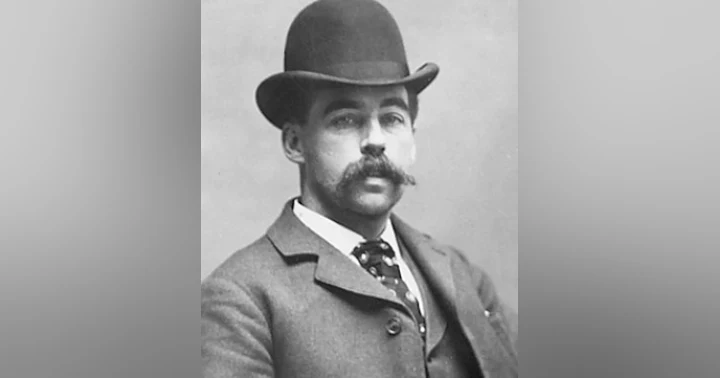
Inside the Murder Castle: The True Story of H.H. Holmes and His Killing Factory
Inside the Murder Castle: The True Story of H.H. Holmes and His Killing Factory Herman Mudgett didn't become America's most notorious serial killer by accident. He built a three-story hotel in Chicago specifically designed to kill people, and he did...
Inside the Murder Castle: The True Story of H.H. Holmes and His Killing Factory
Herman Mudgett didn't become America's most notorious serial killer by accident. He built a three-story hotel in Chicago specifically designed to kill people, and he did it right before the 1893 World's Fair brought millions of visitors to the city. But here's what most people get wrong about the H.H. Holmes story: the Murder Castle wasn't always meant for murder. It started as a massive fraud scheme, and the killing came later. We're breaking down the real story of the man who turned death into a business model, sold human skeletons to medical schools, and died terrified that someone would do the same thing to his corpse. This is the documented truth behind America's first serial killer, and it's somehow worse than the legend.
#HHHolmes #MurderCastle #TrueCrime #SerialKiller #ChicagoHistory #WorldsFair1893 #UnsolvedMysteries
🔔 Subscribe for True Crime Cases multiple times a week
Never miss a story. Subscribe to 10 Minute Murder for bite-sized true crime episodes delivered fresh every week.
Discount codes from show sponsors. Support 10 Minute Murder and save money at the same time:
https://hypernaturalstyle.com/discount/10MM
https://zivo.life/discount/10MM
https://bigforkbrands.com/discount/10MM
https://prepstartsnow.com/discount/10MM
📱 Follow for Behind-the-Scenes Content Get exclusive case updates, research photos, and sneak peeks of upcoming episodes:
- Instagram: @10minutemurder on IG
- TikTok: @10minutemurder on TikTok
- Facebook: 10 Minute Murder on FB
- Rate & Review: Leave a 5-star review to help other true crime fans discover the show
- Share: Send this episode to fellow true crime enthusiasts
- Join the Discussion: Tag us in your episode reactions on social media
Become a supporter of this podcast: https://www.spreaker.com/podcast/10-minute-murder-bingeable-true-crime-stories--4603604/support.
0:00 In 1893, a pharmacist in Chicago built a hotel specifically designed to kill his guests. He installed gas lines in the bedrooms, secret passages in the walls, and a crematorium in the basement. His victims disappeared during the world's fair, and their skeletons ended up in medical schools across the country. This is the true story of America's first serial killer.
0:50 So here's something most people don't know about H.H. Holmes. His real name was Herman Webster Muget, and before he became famous for killing people, he was actually really good at stealing furniture. I know that sounds random, but stay with me because it matters. In 1892, Herman ordered massive amounts of furniture from companies like Toby Furniture Company. He told them he was buying on behalf of a legitimate business and promised to pay cash on delivery. When the furniture arrived, he accepted it, and then he never paid. When the sheriff showed up with a warrant to recover the stolen goods, the hotel rooms were completely empty. The police were stumped until they bribed a worker who showed them where everything was hidden.
1:32 Bedroom sets concealed behind fake walls covered with fresh wallpaper, dishes and crockery stuffed into spaces above the kitchen ceiling. This is important because it tells us something about the building that would become known as the murder castle. Does hidden rooms and secret passages everyone talks about? They were originally built for fraud, not murder. Herman was a con artist, and the architecture of his building reflected that. He designed it to hide stolen merchandise, avoid paying contractors, and run insurance scams. The killing came later. Herman Webster Muget was born in New Hampshire in 1861. His childhood fits a pattern we see over and over in serial killer cases.
2:17 He was physically abused at home, had trouble making friends, and showed signs of early cruelty toward animals. Before he even turned 11, he was performing what he called "experimental operations on neighborhood pets." There's one story from his childhood that people always bring up. Some older kids chased him into a doctor's office and forced him to touch a human skeleton. Whether this actually happened the way he described it or not, something clearly connected in his brain between fear, power, and the human body. That connection would define everything he did later. He went to the University of Michigan Medical School from 1882 to 1884. He didn't finish, but he learned enough about anatomy to be dangerous.
2:58 While he was there, he started stealing cadavers from the labs and reselling them to other medical schools. He also figured out how to run insurance fraud schemes using unidentified bodies. This is where his criminal career actually began, not with murder, but turning dead bodies into money. At the time he moved to Chicago, Herman had changed his name to Dr. Henry Howard Holmes. The title gave him authority he hadn't earned, and the new identity helped him escape the trail of fraud charges he'd left behind in other states. He was married to at least three different women at the same time, possibly four, each marriage, a part of a con, a way to gain access to money or property or social connections. In 1893, Chicago hosted the world's Colombian exposition, also called the White City.
3:44 This was a massive event. Over 27 million people visited Chicago that year to see modern inventions like the Ferris Wheel, the zipper, and electric lights. The fair transformed the city into a temporary boom town, with thousands of people arriving every day looking for work and housing. Holmes saw an opportunity. He bought a pharmacy in the Englewood neighborhood from a woman named Mrs. E. S. Holton. Soon after that sale, Mrs. Holton disappeared. Holmes told people she had moved to California. She probably never even left the building, to be honest. Across the street from the pharmacy, Holmes constructed a three-story mixed-use building. The ground floor had retail shops, and the upper floors were designed as a hotel.
4:28 He told people he was building it to accommodate the world's fair visitors, which made perfect sense given the housing shortage in the city. But here's where things get complicated. We know a lot about how this building was constructed because Holmes refused to pay anyone who worked on it. Construction companies sued him, and those lawsuits created a paper trail. An architect named Edward Gowler even produced detailed diagrams of the building's layout during one of these legal battles. According to these documents, the building started as a legitimate, if fraudulent, business venture. The transformation into a murder facility happened gradually. Holmes modified the building as he went, adding features that had nothing to do with running a hotel, and everything to do with controlling.
5:11 And killing the people inside. The building had soundproof rooms. Gas lines were installed in some of the guest rooms, controlled by valves in Holmes' private quarters. There were hidden passages that allowed him to move through the building unseen, and peepholes where he could watch his guests. The building had shoots that dropped from the upper floors down to the basement. The basement is where the real horror happened. Police found a dissection table down there, along with massive vats that Holmes used to dissolve bodies and acid. There was an eight-foot-tall iron stove that looked like an oil furnace, but was actually used as a crematorium. Holmes would strip flesh from bones using the acid, burn what remained in the furnace, and then clean and articulate the skeletons.
5:56 He sold those to medical schools. Think about that for a second. He wasn't killing people in a frenzy. He was processing them. He had a system. Trap them in the soundproof rooms, killed them with the gas, dropped them down the shoot into the basement, dissolved the tissue, burned the evidence, and sell whatever was left. This was industrialized murder. Now, I have to mention this because it's important for accuracy. A lot of what people believe about the murder castle is exaggerated. The torture equipment, the elaborate medieval dungeon aesthetic, most of that came from the newspapers in the 1940s, not from the original police investigation in the 1890s. The real building was horrifying enough without all the added mythology.
6:39 The gas chambers were real, the acid vats were real, the crematorium was real, but Holmes wasn't stretching people on racks or building iron maidens. He was running an efficient, profitable murder operation, and that's somehow more disturbing than the Gothic fantasy version. Figuring out exactly how many people Holmes killed is basically impossible. He confessed to 27 murders at first. Then later changed his story and claimed more than 130. Newspapers at the time speculated he killed 200 people. Modern historians think the real number is somewhere between 9 confirmed victims and maybe 50 total. The victims we can confirm are mostly connected to his financial crimes.
7:24 Mrs. Holton, the woman who sold him the pharmacy, was probably his first victim in Chicago. Julia Connor and her daughter Pearl disappeared after Julia's husband, who ran a jewelry counter in Holmes' store, left town. Many Williams and her sister Nanny both vanished after Holmes married many and gained control of her property. Imeline, one of his mistress' disappeared as well. But the case that actually got him caught was the murder of Benjamin Pytzel and three of Pytzel's children. Holmes convinced him to fake his own death for a $10,000 insurance payout. Then Holmes actually killed him and collected the money. To cover his tracks, he murdered three of Pytzel's children in three different states.
8:04 Holmes was the crime that finally brought him down. A detective named Frank Geier tracked the murders across state lines and arrested Holmes in 1894. The insurance fraud was too big, too spread out, too complicated to hide. Holmes' trial happened at the peak of yellow journalism in America. Publishers like Joseph Pulitzer and William Randolph Hearst were competing for newspaper sales by printing the most sensational, shocking stories they could find. Holmes was perfect for them. They called him the beast of Chicago, the torture doctor, the devil in the white city. They printed wild, unverified claims about his crimes, many of which came directly from Holmes himself, who loved the attention and kept changing his story to make himself sound more notorious.
8:49 He told reporters he'd suffocated people in vaults, boiled, man in oil, poisoned, wealthy women. Some of this might have been true. A lot of it probably wasn't. The newspapers didn't care about accuracy. They cared about circulation. And Holmes, being a narcissist who craved in for me, was happy to give them whatever they wanted. There's even a persistent theory that Holmes was also jacked the ripper. The timeline sort of works. Holmes had medical training and jacked the ripper's murders showed anatomical knowledge. Some handwriting analysis claimed that Holmes writing matches letters supposedly written by the ripper. Holmes's great-great-grandson has publicly argued that his ancestor was in London during the White Chapel murders.
9:34 Most historians dismiss this theory as wishful thinking. People want to connect two famous killers into one ultimate boogie man, but there's no solid evidence that Herman Muggett was ever in London and the theory mostly exists because it makes for a good story. Holmes was executed by hanging on May 7, 1896 in Philadelphia. He was 34 years old. He'd been convicted of murdering Benjamin Petzl, although everyone knew he'd killed far more people than that. According to witnesses, he was calm during his execution. He didn't seem afraid or remorseful. Right before he died, he recanted his confession and claimed he'd only killed five people, which is obviously a lie. Even on the gallows, he was still running a con, trying to control his own narrative.
10:18 But here's the wildest part of the whole story. Holmes left very specific instructions for his burial. He wanted to be placed in a pine coffin, and then he wanted that coffin to be filled completely with cement. The heavy coffin was supposed to be buried 10 feet underground and covered with more cement. Why would he do this? Because he was terrified someone would try to steal his corpse. Holmes had spent years stealing bodies, cutting them apart and selling them to medical schools. He made money by turning human remains into commodities. He knew exactly how that system worked because he'd built part of it himself. He was so absolutely paranoid that someone would dig him up, dissect him, and sell his skeleton the same way he'd done to other victims.
11:03 Even after this incredibly secure burial, rumors spread that Holmes had somehow faked his execution and escaped. People claimed he'd bribe officials to hang another prisoner in his place. These stories persisted for decades, which tells you something about how Holmes was perceived. People genuinely believed he was capable of conning the entire criminal justice system, even from inside a prison cell even facing execution. The story of H.H. Holmes is fundamentally a story about the commercialization of death. Herman Muget learned in medical school that bodies had value, and he spent the rest of his life exploiting that knowledge. He built a business model around fraud, murder, and corpse disposal.
11:45 The murder castle was a factory, and human beings were the product. Because he, America's first serial killer, probably not. There were certainly other killers operating before him, but he might have been the first to industrialize it, to create systems and infrastructure specifically designed for repeated, profitable murder. The legend of H.H. Holmes is bigger than the reality, but the reality is bad enough. Nine confirmed victims, maybe 50 total, processed through a building in Chicago that started as a real estate scam and evolved into something much worse. The man who built it died cemented into the ground, finally anonymous, and a mobile.
12:26 Exactly what he feared most. Thanks for listening to 10 Minute Murder, Bingeable True Crime Stories. My name is Joe, and I'm happy to be your host. If you enjoyed this episode, make sure you share it with your friends, your family, your acquaintances. Someone you talk to on the street randomly doesn't matter as long as you let them know about the podcast. Sign up for the newsletter, 10minutemurder.com, you'll find it there. Also on the website, you'll see a place where you can read the blog and also contact me directly.
13:08 Like this message, subject, country music. Hey Joe, love the podcast and I've been listening since the beginning, I never miss an episode, but I do have one question. Most of the time the music you play is some sort of heavy beat or atmospheric, I don't know what to call it, but you know what I mean. You never really play any country music. Is there a reason for that? Not complaining for the record, just curious, Sam in Austin. And I tell you what Sam, first of all, thank you for the message. I don't really dig country music that much. I mean I like some of it. Some of it's okay. But there are parts of it that just kind of great on my nerves. It starts to sound the same to me when you listen to country music from the 90s and there are 2000s, that country music, love it.
13:51 Can't get enough of it. And there's some modern country music that I do like, but I just don't really enjoy it that much as a whole. But just for you, you've probably been able to tell, but I'm playing this music right now just for you, Sam. This music is only for you. No one else gets to enjoy it unless you like country music then. I guess you can enjoy it. But Sam, I appreciate the email and thank you for listening to 10 Minute Murder. I'll see you next time.