Spotify

 Apple Podcasts

 Pandora

 Amazon Music

 Podchaser

 Spreaker

 RSS Feed

 Audible

 Castbox

 iHeartRadio

 Castro

 Deezer

 YouTube
Six Murders, No Answers: What Happened at Hinterkaifeck?

Six Murders, No Answers: What Happened at Hinterkaifeck?
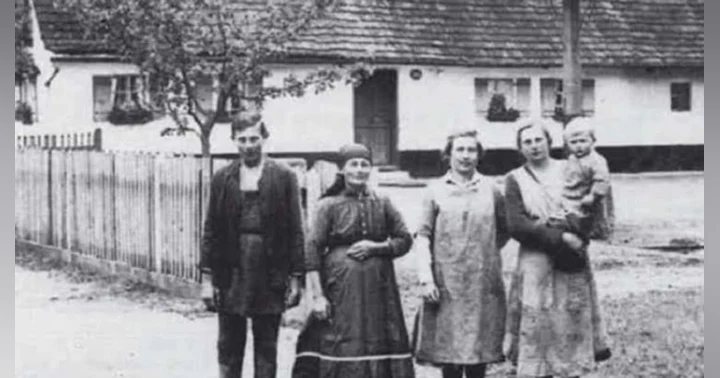
In 1922, the Gruber family’s remote Bavarian farm became the scene of one of the most unsettling murder cases in history. Six people—including two children—were brutally killed, but the real...
Six Murders, No Answers: What Happened at Hinterkaifeck?
In 1922, the Gruber family’s remote Bavarian farm became the scene of one of the most unsettling murder cases in history. Six people—including two children—were brutally killed, but the real horror? Their murderer didn’t leave. For days, they lived in the house, ate the food, and even tended the animals.Long before the bodies were found, there were warnings: strange footsteps in the attic, an unfamiliar newspaper appearing out of nowhere, and a maid so terrified she quit and never came back. Decades later, the Hinterkaifeck murders remain unsolved, filled with disturbing details, baffling theories, and one undeniable fact—whoever did it disappeared without a trace.In this episode, we dig into the eerie events leading up to the crime, the suspects that never stuck, and the clues that still keep investigators—and true crime fans—obsessed.
#TrueCrime #UnsolvedMystery #HistoricalCrime #CrimePodcast #Hinterkaifeck #TrueCrimeCommunity #ColdCaseFiles #CrimeHistory
Welcome back to 10 Minute Murder! Your go-to podcast for quick, bingeable true crime stories. Seriously, you tuning in means more to me than my morning caffeine, and if you know me, that’s saying a lot.
💡 Haven’t subscribed yet? Now’s your chance! Hit that subscribe button, and you’ll never miss your favorite bite-sized dose of true crime.
📢 Love true crime? Share the love! Got a friend who’s as obsessed with true crime as you are? Share the podcast with them and let the bingeing marathon begin.
📱 Get Social With Me: Follow along on social media for behind-the-scenes goodies, sneak peeks of upcoming episodes, and the occasional “should I really post this?” moment.
📬 Your Turn! Have a case you’d love for me to cover? Or just want to say hi? Drop me an email—I love hearing from you and might just feature your suggestion in an upcoming episode!
Thanks for being here, and let’s make 2025 the year of binge-worthy true crime. 🖤
(BTDubs- If you're into the brief and bingeable vibe, search for and subscribe to my other podcast: 10 Minute Mystery)
10minutemurder.com
email: joe@10minutemurder.com
_______
Follow 10 Minute Murder-
Facebook:
https://facebook.com/10MMpodcast
Instagram:
https://www.instagram.com/10minutemurder/
TikTok:
https://www.tiktok.com/@10minutemurder
Threads:
https://www.threads.net/@10minutemurder
Youtube:
https://youtube.com/channel/UCkJLUCEZlkn9In3AA46RVxw
*******
Become a supporter of this podcast: https://www.spreaker.com/podcast/10-minute-murder--4603604/support.
0:00 In 1922, a small farm in Bavaria became the site of something straight out of a horror story. Six people gone, not just killed, but wiped out in a way that made even seasoned investigators uneasy. And the worst part, whoever did it, didn't leave right away. They stuck around. Eighth the food, took care of the animals, made themselves comfortable. Before any of that, though, there were signs. Explained noises in the attic, footprints in the snow leading to the house, but not away from the house. And a maid who was so freaked out that she quit on the spot and never looked back when she left. This is the story of the Hinter-K-Fec murders, a case that left behind a crime scene, a lot of theories, and a killer who vanished into thin air.
0:46 But before we dive in, if you like your true crime brief and bingeable, you're in the right place. Hit follow now for at least two new episodes every week. This is 10 Minute Murder. Let's get into it. In 1922, deep in the Bavarian countryside, nestled among rolling fields and medieval towns, was Hinter-K-Fec, a small farming community where everyone knew everyone.
1:34 And on one of its remote farms lived the Gruber family. Andreas Gruber, the stern and notoriously difficult patriarch, ran the household alongside his wife Cecilia. Their widow daughter, Victoria Gabriel, lived with them, raising her two children, seven year old Cecilia Gabriel, named after her grandmother, and two year old Joseph. The family managed the farm with occasional help from seasonal workers, but their only permanent employee was their living maid. Now, I'm about to try to pronounce this maid's name, and just know that I'm not going to say it right, but I'm going to make an attempt. Cresnan's regar. Her first name is K-R-E-S-Z-N-E-N-Z.
2:16 If you want some homework to try to figure that one out. Okay, back to the story. That was until 1921 when Cresnan's had enough, and it wasn't the back-breaking labor or Andreas impossible personality that drove her away. It was the house itself. For months, the Gruber household had been plagued by something, or someone they couldn't see. Footsteps creaked through the adequate night, unexplained thumbs echoed through the house. Wispers whispered about spirits, and the family started to believe them. Each time Andreas checked the attic, he found nothing, but the noise has stopped. Cresnan's finally quit, refusing to spend another night in a place that she was convinced was haunted.
3:01 For months, the family struggled without a maid in the house. Which is so relatable to everyone, listening, I'm sure. J.K., but by the spring of 1922, they finally found a replacement maid, Maria Baumgartner. She arrived in March, settling in for her first night on the job. It would also be her last, because as it turned out, the thing lurking in the attic may not have been supernatural at all. Shortly before the tragedy at Hinter K.Fek, Andreas Gruber noticed something strange, something that should have sent alarm bells ringing. A newspaper from Munich had appeared at the farm. It wasn't theirs. In fact, no one in town subscribed to that paper.
3:42 Andreas assumed it was just a mix-up, an innocent mistake by the postman. The next day, something far less easy to dismiss. Two sets of footprints in the fresh snow. They led from the dense forest straight into the farm's machine room. There were no tracks leading back out. The lock had been broken. Andreas told his neighbors, who immediately offered to help him search the property, he refused. If he accepted, maybe they would have found something or someone hiding in the barn. Maybe they would have seen where someone had been sleeping in the hay. Or notice the indentions on the attic insulation where a body had been clearly laying. But Andreas didn't check.
4:23 We can only wonder how differently things might have played out if he had. Maybe he was just being difficult, as he was known to be, or maybe he had bigger things on his mind. Because inside the house, tensions were rising. By the next morning, seven-year-old Cecilia Gabriel arrived at school with a story. Her family had spent the entire night locked in a brutal argument. It was so bad that her mother Victoria fled the house. Hours later, she was found hiding in the forest and brought back home. Whatever happened that night, tensions inside the Gruber household had reached a breaking point. But whatever Victoria was running from, she didn't escape it for long. That night, while the Gruber's new maid, Maria Baumgartner settled in for her first evening on the job, something was happening outside.
5:11 One by one, members of the family were lured into the barn. Maybe they heard a noise. Maybe someone called for help. We still don't know. But what we do know is that once they stepped inside, they never walked back out. Each one was struck over the head with a farm tool, likely something like a pickaxe. There were no defensive wounds, no sign of a struggle. Whoever did this, the victims either didn't see it coming or they knew they're killer. All but one died instantly. Seven-year-old Cecilia Gabriel survived long enough to suffer. When her body was found, her small hands were tangled in her own hair. She had ripped out entire tufts, likely in pain or terror before she finally succumbed.
5:56 Inside the house, Maria never woke up. She was killed in her sleep just hours into her new job. In his bassinet, two-year-old Joseph was also murdered where he lay. By morning, the Gruber Farm had fallen completely silent. The night after the murders, a local man passing by the Gruber Farm noticed something strange. Someone was tending the oven inside the house. The figure, appearing to be a man, held up a lantern. But when the passerby tried to get a closer look, the man turned the lantern toward him. Blinding him with the light. The local walked away, unsettled. He later recalled a foul smell coming from the chimney.
6:36 That moment was never properly investigated, but it should have been. Because whoever had wiped out the entire Gruber family hadn't left the scene. They stayed. For days, the killer lived inside the farmhouse, eating the family's food, lighting their fires, and even tending to their livestock. Maybe they were buying time. Maybe they just wanted to make sure no one came looking too soon. Local merchants and craftsmen visited the farm. Some of them noticing movement inside, but receiving no response at the door. Others went about their business, not realizing the entire household was dead inside. Four days passed, before a neighbor decided enough was enough.
7:17 Lawrence, the neighbor, increasingly concerned sent his 16-year-old son to check on the Grubers. The boy returned, saying the farm was eerily silent. No one was there. That was enough to send Lawrence himself, along with two other men to investigate. He was the first to step into the barn, and the first to trip over a body. Andreas Gruber lay lifeless in the hay. Nearby, the rest of his family, stacked together, murdered the same way. Inside the house, Maria Baumgartner and two-year-old Joseph were found in their beds, killed in their sleep. And then Lorenz did something odd. He pulled out a key to the farmhouse, unlocked the door, and walked in, alone, unarmed, and without hesitation.
8:02 If the killer had still been inside, he didn't seem worried. "I'm going to get my son," he told others. Because Joseph, the baby who had been murdered and found inside his crib, Lorenz had signed his birth certificate, claiming him as his own. Everyone in town knew the real story. Lorenz and Victoria had been involved. Maybe they still were, but Joseph wasn't his son. That much was clear. The true father, likely Andreas Gruber himself. Ew. And this wasn't some town rumor. It was documented. Andreas had already been accused of having an incestuous relationship with Victoria, and it wasn't a secret that she hated it.
8:44 But with her husband dead and two children to raise, she had nowhere else to go. When she became pregnant with Joseph, she begged Lorenz to claim the baby as his own. He did, for a while. But keeping Andreas' secret didn't make things easier. If anything, it made them worse. Andreas remained just as cruel, and tensions between him and Lorenz continued to escalate. When the truth about the incest finally became public, Lorenz testified against Andreas in court. Both Andreas and Victoria were convicted. And after the murders, people started asking the obvious question, was this revenge? Initially, investigators thought the motive might have been robbery.
9:25 The Grubers were wealthy, rumored to have gold stashed somewhere on the farm. But when police searched the property, the gold was still there. Whoever did this wasn't after money. So the town came up with their own explanations. Some believed Victoria's husband actually hadn't died in war. And he had returned, found her raising another man's child, and killed the entire family in a jealous rage. Others thought Victoria had started demanding child support from Lorenz, and he snapped. Lorenz himself never confirmed these theories, and he successfully sued several people who accused him of being the killer. But if Lorenz didn't do it, then who did? Of all the suspects, two names stood out, Anton and Karl Bickler, seasonal farmhands who had once worked at Hinterkäfek.
10:14 They knew the land well. But more importantly, they had a personal connection to the Grubers. Their sister, Kres Nens, had been the Grubers' former maid, and on her deathbed, she made a confession that should have changed the case forever. She told her priest that she believed her brothers committed the murders. That she tried to tell the police before, but no one listened. During her official statement, she'd mentioned that her brothers hated the family, especially Andreas. They had worked under his supervision during the potato harvest, and anyone who knew Andreas knew he wasn't exactly pleasant to work with. Add in the widely known incest rumors, and the Bickler brothers had more than enough reason to despise him.
10:55 Police had wanted to question them back in 1922, but by the time the investigation heated back up, Anton and Karl had disappeared. That's where things ended. Kres Nens begged the priest to take her confession to the authorities to finally reveal what she knew. But he didn't. Too much time had passed. The case was already cold. And so the mystery of the Hinter-K-Fekke murders was left unsolved. The farm was eventually demolished. The case was closed. And all that's left today is a concrete memorial, standing where an entire family lost their lives to a crime that, over a century later, still has no definitive answer. Thanks for listening to this episode of 10 Minute Murder.
11:46 My name is Joe. I'm the host. And if you're a brand new listener, first of all, welcome. Pretty stoked that you're here. Make sure you hit subscribe wherever you're listening right now. It may say subscribe, it may say follow, they're all different. Don't know why they're different, but they are. Press that button and that's more easily going to help you go back and listen to previous episodes of the podcast. And you'll be first in line, essentially, when the new ones come out. So press subscribe right now. More information on the show? You want to contact me? You can do that at 10minutemurder.com. Also on 10minutemurder.com, there's a murder blog that has photos while we're talking about the episode. And in the show notes of this episode, you'll find links to where you can follow 10-minute murder on social media.
12:31 So I encourage you to do that. And some people have reached out asking why I've repeated some episodes that I've done three, four, five years ago. And there's a pretty simple answer to that. I am my own worst critic. And I think if I go back and listen to an episode I did four or five years ago, I'm like, oh man, that kind of sucks. It probably doesn't suck, but I think I can do better if that makes sense. And I don't do this on cases where there's little information and I'm just saying all the things that I can possibly say about the story. I'm only doing it on the bigger ones where there's a different angle I can take a new perspective to present the story in a better way in my opinion. So the short answer to that is I want to do the story better in a different way.
13:15 And the episode coming after this one, if you're listening to this on the day that it's released, give it a couple of days and come back and check. So the story I'm doing after this one is one that I wanted to do three, four, five years ago, but I didn't think I could do it justice at that time. I've been working on it and I think I got it right. So coming up on the next episode of this podcast will be the Trayvon Martin story. So be looking for that one coming up very soon. And that's going to do it. That is your episode for today. Thank you again so much for listening to 10 Minute Murder.