Spotify

 Apple Podcasts

 Pandora

 Amazon Music

 Podchaser

 Spreaker

 RSS Feed

 Audible

 Castbox

 iHeartRadio

 Castro

 Deezer

 YouTube
Stand Your Ground or Hunt Your Target? The Trayvon Martin Case
Stand Your Ground or Hunt Your Target? The Trayvon Martin Case
In 2012, 17-year-old Trayvon Martin left home to grab a snack from 7-Eleven. He never made it back. A two-minute encounter with George Zimmerman—a neighborhood watch volunteer with a...
Stand Your Ground or Hunt Your Target? The Trayvon Martin Case
In 2012, 17-year-old Trayvon Martin left home to grab a snack from 7-Eleven. He never made it back. A two-minute encounter with George Zimmerman—a neighborhood watch volunteer with a history of bad decisions—ended with Trayvon dead, Zimmerman claiming self-defense, and the country splitting down the middle.
What really happened that night? Why was Zimmerman told not to engage, but did anyway? And how did a simple walk home turn into a national flashpoint? This episode unpacks the case, the trial, the protests, and what came after—including Zimmerman’s post-trial spiral that somehow involved road rage, domestic violence, and art theft.
This isn’t just a crime story—it’s a moment in history that changed the conversation on race, self-defense laws, and justice in America.
#TrayvonMartin #TrueCrime #JusticeForTrayvon #CrimePodcast #StandYourGround #BlackLivesMatter #UnarmedBlackMan #AmericanJustice
Welcome back to 10 Minute Murder! Your go-to podcast for quick, bingeable true crime stories. Seriously, you tuning in means more to me than my morning caffeine, and if you know me, that’s saying a lot.
💡 Haven’t subscribed yet? Now’s your chance! Hit that subscribe button, and you’ll never miss your favorite bite-sized dose of true crime.
📢 Love true crime? Share the love! Got a friend who’s as obsessed with true crime as you are? Share the podcast with them and let the bingeing marathon begin.
📱 Get Social With Me: Follow along on social media for behind-the-scenes goodies, sneak peeks of upcoming episodes, and the occasional “should I really post this?” moment.
📬 Your Turn! Have a case you’d love for me to cover? Or just want to say hi? Drop me an email—I love hearing from you and might just feature your suggestion in an upcoming episode!
Thanks for being here, and let’s make 2025 the year of binge-worthy true crime. 🖤
(BTDubs- If you're into the brief and bingeable vibe, search for and subscribe to my other podcast: 10 Minute Mystery)
10minutemurder.com
email: joe@10minutemurder.com
_______
Follow 10 Minute Murder-
Facebook:
https://facebook.com/10MMpodcast
Instagram:
https://www.instagram.com/10minutemurder/
TikTok:
https://www.tiktok.com/@10minutemurder
Threads:
https://www.threads.net/@10minutemurder
Youtube:
https://youtube.com/channel/UCkJLUCEZlkn9In3AA46RVxw
*******
Become a supporter of this podcast: https://www.spreaker.com/podcast/10-minute-murder--4603604/support.
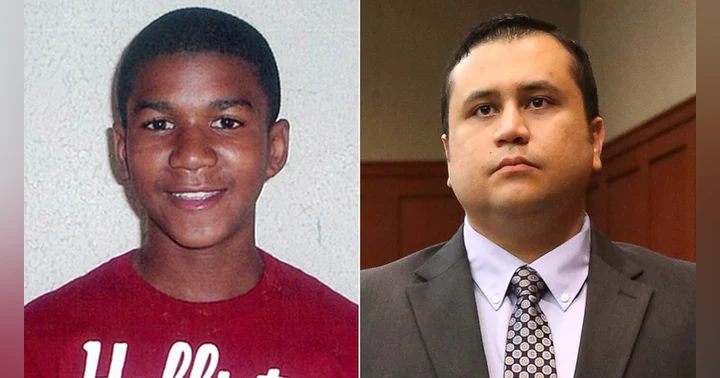
0:00 On a regular normal night in February of 2012, 17-year-old Trayvon Martin walked into a 7/11 for some snacks. That was it. That was his crime. At least in the eyes of George Zimmerman. Zimmerman, a self-appointed neighborhood watchman with a history of, "Let's call it, questionable decision-making," saw Trayvon and decided that he looked suspicious, and he made a choice that would change both of their lives forever. A two-minute encounter turned into a national firestorm, one that exposed deep divides in America's justice system, and, frankly, in common sense. This case is more than about one tragic night.
0:40 It's about everything that led up to it, the fallout that followed, and why Trayvon Martin's name still matters more than a decade later. Before we dive in, if you like your true crime, brief and binge-able, you're in the right place. It followed now for at least two new episodes every week. This is 10-minute murder. Let's get into it. [Music] Others are saying that nothing is ever black or white, that life exists in the gray where nuance matters.
1:34 And sure, if every single moment of someone's life was put under a microscope, most people wouldn't walk away looking perfect. But some people don't get the chance to walk away at all. Seventeen-year-old Trayvon Martin didn't ask to be a symbol. He didn't ask for his life, his choices, or his name to be dissected by strangers, debated by politicians, and twisted into talking points. He was a kid, a real person, and before his name became a headline, before his face was on every screen, Trayvon was just a teenager with big dreams. Born in Miami, Florida, in 1995, Trayvon had always been good with his hands.
2:15 As a kid, he could take a part of bike and put it back together like it was nothing. It wasn't just a hobby, for Trayvon it was instinct. Fixing, repairing, understanding how things worked. It was a skill that would evolve over time, shaping his plans for the future in ways that no one could have predicted. Like a lot of kids, Trayvon Martin had big dreams. And for a while, those dreams revolved around football. He had the skills, the teamwork, and the drive. And it wasn't hard to picture him possibly going pro. But then something else caught his attention. Something bigger. Aviation. The same hands that spent years fixing up bikes now had a new focus, airplanes.
2:56 In 2009, Trayvon enrolled in a seven week aviation program. By the time it was over, he knew. This was it. This was his future. It didn't matter if he was flying the planes or repairing them. He just wanted to be around them. His interest ran deep, and he put in the work to prove it. The following year, he returned to the program. This time as a volunteer, helping teach new students. He was building something for himself. He had a future. But none of that would matter when he crossed paths with the wrong person on the wrong night. After completing the aviation program, Trayvon didn't move on. He came back. The next year, he returned as a volunteer, helping new students learn the same skills he had just mastered.
3:39 He was serious about making it his future. College was next. Either the University of Miami or Florida A&M. He had options, and he had a plan. No one gets through their teenage years without a few missteps. Trayvon wasn't perfect. No teenager is. He had his run-ins at school, the kind most kids rack up at some point, showing up late, skipping class, pushing boundaries, then came graffiti. Then a search of his backpack turned up a marijuana pipe with a bag of residue. That last one called him a 10-day suspension. His mother made a decision. She sent Trayvon to live with his father in Sanford, hoping a change of an idea.
4:19 Even environment might help him get back on the right track. He wasn't in trouble with the law. He wasn't violent. He was just a teenager, figuring things out. But none of that mattered when he met George Zimmerman. Trayvon's parents had divorced when he was five. His father remarried, then divorced again. And by 2012, he was living with his new fiancee in a gated community in Sanford, Florida. That's where Trayvon had been sent to stay after his latest school suspension. On the night of February 26, 2012, Trayvon's father and his fiance went out to dinner, leaving him and is soon to be stepbrother at home. At some point, Trayvon decided to walk to the local 7-11-4 snack.
5:01 It wasn't an unfamiliar trip. He knew the neighborhood. He had spent time there before and even played football with the other kids in the area. But this time, the walk back wouldn't be routine. Because that night, Trayvon Martin crossed paths with George Zimmerman. Born in Virginia in 1983, George Zimmerman was raised in a strict household. His father was a former military man who spent 22 years in the US Army. When he wasn't enforcing discipline, religion filled in the gaps. George grew up in a devoutly Catholic home, serving as an altar boy from age 7 to age 17. He had structure. He had rules, and for most of his early life, he seemed to follow them.
5:43 At 14, he joined the Junior Reserve Officers Training Corps with plans to become a Marine. By 15, he was working three part-time jobs to buy his first car. On paper, his early years suggested someone with ambition, drive, and a clear path forward, much like Trayvon. But somewhere along the way, something changed. George had a plan for his life, and then he lost control of it. George Zimmerman had once envisioned a future in the military. But after high school, instead of enlisting, he moved to Florida and took a job selling insurance. That alone wasn't a red flag. Plenty of people take different paths than they originally planned.
6:23 But at some point, things started to shift. His first arrest came when he allegedly assaulted an undercover police officer who was in the process of arresting one of George's friends. The charges were dropped in exchange for him completing an alcohol education program. But a month later, he was back in legal trouble. This time, a former fiancé filed a restraining order alleging he had been physically abusive. It wouldn't be the last time his name would come up in connection to domestic violence. But back then, people around him weren't putting the pieces together yet. A few years later, George married a woman named Shelley Dean and moved to Twin Lakes, the same gated community where Trayvon Martin's father lived.
7:04 He took jobs at car dealerships and a mortgage audit firm. But at night, he was pursuing something different, an associate degree in criminal justice. It looked like he was trying to realign his life, maybe even work his way toward law enforcement. And to make that happen, he became the self-appointed head of his neighborhood watch. That decision would change everything. On the night of February 26, 2012, Trayvon was walking home from the 7-11, a trip for snacks, a normal night, nothing out of the ordinary. Except for one thing. George Zimmerman was out patrolling the neighborhood. Trayvon was on the phone with his girlfriend when he realized he was being followed.
7:47 Zimmerman was also on a call, reporting a "suspicious person." The dispatcher told him to not approach. He did anyway. It happened next, played out in less than two minutes. A confrontation, a struggle, a gunshot. By the time police arrived, Trayvon Martin was dead. He had no weapon. He had a bag of skittles and a can of Arizona iced tea. Zimmerman, on the other hand, had injuries. Black eyes, a broken nose, cuts on the back of his head. He claimed self-defense. He said he had no choice. After five hours of questioning, he was released without charges. But the case wasn't closed, not by a long shot.
8:30 Word spread. Protests erupted. Thousands of people demanded justice for Trayvon Martin. And when the 911 calls were made public, the outrage only grew. In one recording, the dispatcher clearly told Zimmerman to stay away. He ignored it. In another, a voice believed to be Trayvon's can be heard screaming for help before the fatal shot. Public pressure worked. Six weeks later, Zimmerman was charged with second-degree murder. At trial, he leaned on Florida's Stanyard Ground Law, a controversial policy that allows the use of lethal force of a person feels threatened. The jury bought it. Zimmerman walked.
9:10 People were furious, but legally, it was over. For brief moment, Zimmerman was seen as a hero in certain circles. Just four days after his acquittal, he made headlines again. This time for pulling a family from a crashed SUV. Some saw it as redemption. Others saw it as a convenient timing. But whatever good will he gained didn't last long. Months later, his estranged wife called 911, claiming he assaulted her father and threatened her with a gun. The case didn't stick. Then another woman accused him of holding her gunpoint. Another charge dropped. Then came the domestic assault case, where he allegedly threw a bottle of wine at a woman.
9:51 And then there was the road rage incident. A man named Matthew Aparson called the police, reporting that Zimmerman had followed and threatened him. Aparson later confronted him, allegedly saying, "You don't know you were wrong for killing that little black boy?" Zimmerman retaliated by stalking him. Months later, Aparson fired a shot at Zimmerman's truck, narrowly missing him. Aparson was convicted of attempted murder. In the years that followed, Zimmerman found a new way to make money, selling paintings online. His first piece, an American flag, which sold for over $100,000. But then came another controversy. Turns out his original artwork wasn't so original.
10:32 He had been copying other people's work without credit, sparking yet another scandal. More than a decade after Trayvon Martin's death, George Zimmerman continues to surface in the public eye, not because he's changed, but because he hasn't. From lawsuits to public appearances, to selling the gun he used to kill Trayvon, Zimmerman seems less interested in staying quiet and more focused on doubling down. He became a symbol, not of self-defense, but of what happens when accountability slips through the cracks. And for a lot of people, he represents a justice system that doesn't always live up to its name. Trayvon Martin was 17. He had no weapon, no criminal record, and no idea that walking home with a bag of skittles could end his life.
11:17 Zimmerman walks free, with a platform and a price tag on his notoriety. And while the courtroom chapter of this case may be closed, the conversation around it, about race, justice, and who gets to claim fear as a defense, is still very much open. Thanks for listening to this episode of 10 Minute Murder, Brief and Bingeable True Crime. I'm Joe, I'm the host, and if you're a new listener, hit subscribe wherever you're listening right now. And that'll more easily help you catch up with what's going on with the podcast. If you're an OG listener, you've been around a while. First of all, I love you.
11:58 Don't change. Second, make sure you're still sharing the show with your friends and family. The numbers continue to show that you are. I just want to make sure that you're still doing that. Because a lot of you reach out and say, "Hey, how can we help the show?" What is it we can do to help keep this thing going? And since day one, that's kind of what I've always said. The way you can best help 10 Minute Murder is to tell more people about 10 Minute Murder. Since I know that murder podcasts aren't for everyone, I have another one. It's about mystery, 10 Minute Mystery. So if they're not into murder, maybe they're into mystery. And what kind of mystery, Joe? I'm glad you ask. Bigfoot, UFOs, missing people. If it's a mystery, you name it.
12:38 I'm probably going to talk about it on that podcast. So let them know about 10 Minute Mystery as well. If you want to get in touch with me or see photos from the episodes that we talk about, all the stuff lives at 10minuteMurder.com. And because I know probably a dozen of you are going to reach out and say, "Joe, what's your opinion on George Zimmerman and Trayvon Martin? Do you think it was self-defense or do you think it was murder?" And I'm really not sure why I would get that question, but I know I will, even though I'm about to say what I'm going to say, I'm still going to get the... It's not everyone listens this far into the podcast. To be honest, let's be honest, not everyone listens way deep into where I'm just rambling about things. But I will tell you, there's a reason I've put it on a 10 minute murder podcast because I think it's murder.
13:23 At best, it's second degree murder. And I think that's what he should have been charged with. I think that's what should have happened, but obviously it didn't. That's why I'm talking about it on a murder podcast. And a lot of people on the other side of it like to bring up Trayvon Martin's background and say that he liked to fight. He had marijuana in his possession at one point, didn't he? Does that mean he should be killed because he's walking home from a store? No. Doesn't matter what's in his background, the George Zimmerman had no right to go and shoot him. He chased him down and shot him, despite the fact that a dispatcher told him to leave him alone. They were going to handle it. So yes, I think it was murder. I hope that clears it up. Alright, that's going to do it.
14:03 That's your episode for today. Thank you again so much for listening to 10 Minute Murder.