Spotify

 Apple Podcasts

 Pandora

 Amazon Music

 Podchaser

 Spreaker

 RSS Feed

 Audible

 Castbox

 iHeartRadio

 Castro

 Deezer

 YouTube
Thanksgiving Day 2012: How Byron Smith Executed Two Teen Burglars
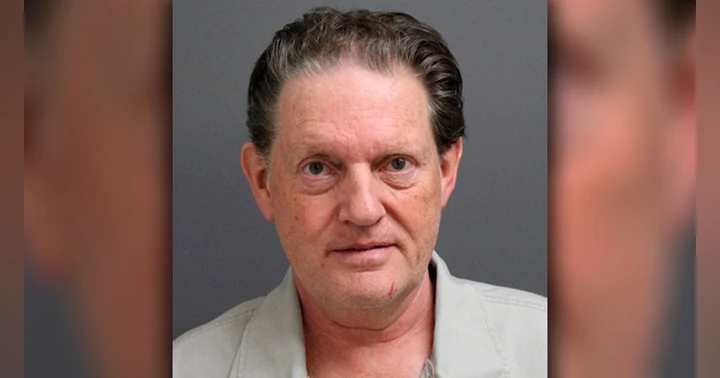
Thanksgiving Day 2012: How Byron Smith Executed Two Teen Burglars Byron David Smith, a 64-year-old retired security engineer, shot and killed teenagers Nicholas Brady and Haile Kifer during a home invasion in Little Falls, Minnesota on Thanksgiving...
Thanksgiving Day 2012: How Byron Smith Executed Two Teen Burglars
Byron David Smith, a 64-year-old retired security engineer, shot and killed teenagers Nicholas Brady and Haile Kifer during a home invasion in Little Falls, Minnesota on Thanksgiving Day 2012. The double homicide investigation revealed audio recordings Smith made of the entire incident, leading to his arrest, trial, and conviction for first-degree premeditated murder. Forensic evidence and witness testimony showed Smith had prepared an ambush in his basement after multiple prior burglaries of his property.
Smith had been burglarized before. His father's POW watch was gone. Four thousand dollars in cash, stolen. By Thanksgiving 2012, he was exhausted, paranoid, wearing a gun around his own house. When two teenagers broke into his basement that day, Smith was ready. He'd moved his truck to make the house look empty. He had two guns. And he turned on his audio recorder. What that recording captured over the next twenty minutes would become the most damning evidence in Minnesota legal history. This case redrew the line between the Castle Doctrine and cold-blooded execution, and Smith documented every second of his own downfall.
#ByronSmith #LittleFallsMurders #TrueCrimePodcast #CastleDoctrine #SelfDefenseGoneWrong #MinnesotaMurder #ThanksgivingMurders
🔔 Subscribe for True Crime Cases multiple times a week
Never miss a story. Subscribe to 10 Minute Murder for bite-sized true crime episodes delivered fresh every week.
Discount codes from show sponsors. Support 10 Minute Murder and save money at the same time:
https://hypernaturalstyle.com/discount/10MM
https://zivo.life/discount/10MM
https://bigforkbrands.com/discount/10MM
https://prepstartsnow.com/discount/10MM
📱 Follow for Behind-the-Scenes Content Get exclusive case updates, research photos, and sneak peeks of upcoming episodes:
- Instagram: @10minutemurder on IG
- TikTok: @10minutemurder on TikTok
- Facebook: 10 Minute Murder on FB
- Rate & Review: Leave a 5-star review to help other true crime fans discover the show
- Share: Send this episode to fellow true crime enthusiasts
- Join the Discussion: Tag us in your episode reactions on social media
Become a supporter of this podcast: https://www.spreaker.com/podcast/10-minute-murder-bingeable-true-crime-stories--4603604/support.
0:00 You're listening to 10 Minute Murder. 64 years old, retired security engineer, been burglarized so many times that he's sleeping with a gun. Then on Thanksgiving 2012, two teenagers break into his basement. Byron Smith was ready. He'd moved his truck to make the house look empty. He was armed with two guns, and he turned on his audio recorder. But that recording captured would seal his fate for life.
0:55 Byron Smith was 64 years old in 2012, retired from the US State Department where he'd worked as a security engineer, setting up security at American embassies in places like Bangkok, Cairo, and Beijing. That professional background becomes crucial because the prosecution would argue that someone with his expertise couldn't claim pure panic. Smith had real reasons to be scared. In the months before Thanksgiving 2012, his house in Little Falls, Minnesota got hit repeatedly. Theaves took $4,000 in cash. His video camera, chainsaw, gold coins, but losing his father's POW watch devastated him.
1:35 Irreplaceable sentimental value. Something deeply personal gets violated when a thief takes that from you. Neighbors testified Smith looked terrified in those final weeks, sleep deprived, even visibly upset. He started wearing a holstered gun around his own house. He began stashing water bottles and granola bars in the basement, preparing for an extended standoff. These actions became legally significant because they show preparation rather than spontaneous reaction. Nicholas Brady and Haley Kuifer were cousins. Brady was 17. Haley was 18. Police had linked Brady to at least two prior burglaries of Smith's property.
2:15 He stole that cash, the video camera, the chainsaw. Brady had an accomplice named Cody Casper who'd actually done odd jobs for Smith. Yard work cleaning up around the property, those types of things. These teens had insider knowledge about what Smith owned and where he kept them. The day before Thanksgiving, Brady and Kuifer got connected to another burglary where they stole prescription medications. Investigators found those stolen pills in the cars the teens were driving on Thanksgiving day. Smith knew Brady had burglarized him. He felt targeted and believed law enforcement had done nothing to stop it. Thanksgiving morning 2012, Smith drove his truck away and parked it at a neighbor's home. He wanted his house to look unoccupied.
2:57 Then he went back into the basement and positioned himself in a chair with a clear view of the stairway. He armed himself with two weapons, a Ruger Mini-14 rifle and a high standard 22 caliber revolver. Then Smith turned on his audio recording system. Six hours and 25 minutes of recording time. Maybe he thought this would prove his innocence. Instead, that audio became the prosecution's most powerful evidence. Byron Smith also unscrewed the light bulbs in the basement. Intruder's would be descending into darkness while he maintained tactical advantage. In legal terms, what he was doing was called "lying in weight."
3:38 Prosecutors argued he created conditions designed to lure intruders into a lethal trap. On 12.30 pm, Nick Brady broke in through a bedroom window. The audio captures breaking glass than footsteps. Smith waited 12 minutes in silence. Then Brady started down the basement stairs. Smith opened fire. Two shots hit Brady as he descended. Brady fell, groaning and wounded. Medical examiner testimony confirmed these initial shots were serious, but wouldn't have immediately killed him. Smith's rifle jammed. He switched to his 22 caliber revolver and fired a third shot.
4:19 Close ranged through Brady's hand into his right temple. That headshot became the fatal wound. The audio captures Smith saying, "You're dead." Then the sound of Byron Smith dragging Brady's body, wrapping him in a tarp, putting him into a workshop, heavy breathing, Smith reloading his weapon. Then he waited. 10 full minutes pass on that recording. Haley Kyfer entered the basement approximately 10 minutes after her cousin. That time gap matters enormously. 10 minutes provides time to call 911 to secure the scene to make different choices. Those 10 minutes eliminate any argument that Smith acted in continuous panic.
5:02 The audio captures Kyfer softly calling Nick. As she starts down the stairs, Smith fires. He falls. His gun jams. The recording captures him saying, "Oh, sorry about that. Sarcastic and mocking." Then Kyfer screams, "Oh my God." Smith fires multiple times, six shots in total. Between shots he tells him, "You're dying." He called her a bitch multiple times. Smith dragged her into that workshop and placed her on top of Brady's body. Haley was still breathing. And Smith delivered one final shot under the chin.
5:43 He would later describe this to police as, "A good, clean finishing shot." Those five words became the most damning evidence. That's execution language. The audio later captured Smith's voice reflecting on what he'd done. He referred to both teenagers as "Vermin." He described the killings as his civic duty. He said, "I don't see them as human." Judge Douglas Anderson blocked most of the evidence about Brady and Kyfer's criminal histories. The judge ruled that Smith didn't know who was breaking in when he started shooting. The trial focused on what Byron Smith did after the initial threat was neutralized. The prosecution had his own recording. The ten minute wait between shootings, the taunting, the close range headshots delivered to wounded teenagers no longer capable of harming anyone.
6:31 The final finishing shots. Not captured on audio, Smith himself recorded. Byron Smith didn't call 911 on Thanksgiving. He kept both bodies in his basement overnight. At one point on the audio, he practices what he'll say to lawyers. He whispered, "In your left eye." Prosecutors noted Kyfer was ultimately shot in her left eye, suggesting Smith had been rehearsing the killing. Friday morning, Smith called the neighbor asking for lawyer recommendations. That neighbor contacted the Morrison County Sheriff's Office. When deputies arrived, Smith led them to the basement workshop where both bodies lay wrapped in tarps stacked on top of each other.
7:12 Brady had three gunshot wounds. Kyfer had six. Smith told the investigators he'd "solved the break-ins in the neighborhood." He saw himself as solving a problem through violence because law enforcement had failed him. Smith's defense attorney made a strategic decision. He would not testify at his murder trial. This probably aimed to prevent cross-examination about those recorded statements. The prosecution played that audio recording. 15 minutes of condensed audio. The jury heard breaking glass, the footsteps, and gunshots. Brady groaning, "Smith saying, 'You're dead. A body being dragged. 10 minutes of silence.' Then Kyfer's voice, more gunshots, her screams, smiths mocking, and the final fatal gunshot.
7:56 The courtroom sat in silence except for family members sobbing. The jury deliberated for three hours. April 29, 2014. Guilty on two counts of first degree premeditated murder. Guilty on two counts of second degree murder. Smith was immediately sentenced to two concurrent life sentences without parole. His appeals went nowhere. He petitioned the US Supreme Court in 2021. Denied. Currently, Byron Smith remains incarcerated in Minnesota. In 2024, 12 years after the killings, Smith filed a civil defamation lawsuit against Jeremy Luberts, a lead investigator who'd written a book about the case.
8:37 More than a decade into a life sentence, Smith is still fighting to control the narrative. Still convinced, he was wronged. The Byron Smith case became a landmark. It defined exactly where Minnesota law draws the boundary between justified self-defense and criminal murder. Smith's security background worked against him. One with his training should have understood proportionate response. Should have recognized when a threat had been neutralized. Should have known to call law enforcement. The jury heard all of it. The preparation, the lying in weight, the multiple weapons, the reloading between victims. And above all, Smith's own voice documenting his malice. The castle doctrine protects your right to defend your life in your home.
9:20 It doesn't grant you the right to become judge, jury, and executioner. Byron Smith crossed that line on Thanksgiving 2012, and his own recording provided undeniable proof beyond any reasonable doubt. "Cute. I'm sure she thought she was a real pro. I feel a little bit safer. I'm totally safe. I'm still shaking a bit, but a little bit safer. I refuse to live in fear. I am not completely armed, I'm wrong. I felt like I was cleaning up a mess.
10:01 I was going by sitting dirty. Still more of a person's system would be dampened. I had to do it. I had to do it. I could see that as you. If I see that as vermin, this bed was going to go through her life, spoiling things for other people, stealing, robbing, drug use. I tried to be a good person. I tried it to, and I should be friends with other people, help them when I can.
10:46 I tried to be a good citizen, and because I tried to be a decent person, they think I'm a taxi, I'm a sucker. They think I'm there for them to take advantage of. It's not the reward for being a good person." Thanks for listening to 10 Minute Murder, Bingeable True Crime Stories. I'm Joe, and here's a quick message from one of you that listens. It's a great podcast-related housekeeping. Joe, not a question, but I love when you talk about how you make the show. Stuff like editing, scripting, all that behind the scene stuff. Makes me appreciate the episodes even more. I just wanted to tell you that.
11:27 Serena in Billings Montana. Serena, thank you for the email. I don't really talk about it that much, because in my opinion, that's the boring stuff. That's the stuff that you guys don't want to hear. What's that thing that you don't want to see how the sausage gets made? I may have just wrecked that, but you get what I'm saying. And yeah, right, there's a lot that does go into making the show. I do at least two episodes per week, sometimes three episodes per week, like this week. And there's an enormous amount that goes into it that I can't even describe to you. I need a whole podcast episode just to talk about how I go about making each one of these episodes. But I do appreciate people that understand that it takes a lot to make this happen.
12:07 So thanks, Serena for saying that. Hey, if you're a brand new listener to the podcast, hit subscribe right now. Then you can go to the website 10minuteMurder.com. You're going to find links to all the places you can listen. We'll not all of them, sure. I'm sure I miss some links, but most of the places you can listen, the places that you can connect with the show on social media. There's a blog there, also a place for you to sign up for the newsletter. And you can email me. If you're an OG listener, happy Thanksgiving to you and yours. Hope it's a great one. I appreciate you rating and reviewing the podcast, sharing it with your friends and your family. And that's going to do it. That's your episode for today. Thank you again for listening to 10 Minute Murder.