Spotify

 Apple Podcasts

 Pandora

 Amazon Music

 Podchaser

 Spreaker

 RSS Feed

 Audible

 Castbox

 iHeartRadio

 Castro

 Deezer

 YouTube
The 50-Year Grudge: Carl Ericsson's Fatal Revenge on His High School Rival
The 50-Year Grudge: Carl Ericsson's Fatal Revenge on His High School Rival When 73-year-old Carl Ericsson walked up to Norman Johnson's door in Madison, South Dakota on a freezing January night in 2012, he was about to settle something that had been...
The 50-Year Grudge: Carl Ericsson's Fatal Revenge on His High School Rival
When 73-year-old Carl Ericsson walked up to Norman Johnson's door in Madison, South Dakota on a freezing January night in 2012, he was about to settle something that had been eating at him since high school. Fifty years. That's how long he'd been carrying around this grudge. And when Norman opened that door, Carl shot him twice in the face with a .45 caliber pistol. The prosecution said it was about a locker room prank from the 1950s. The victim's family said it was jealousy that never died. The psychiatrist said it was severe depression and impaired judgment. But here's what nobody disputes: a beloved teacher and coach is dead, and the man who killed him says he wishes he could turn back the clock. This is a story about what happens when resentment doesn't fade with time, when mental illness collides with ancient anger, and when someone decides that destroying another person is the only way to feel whole again.
#TrueCrime #ColdCase #RevengeKilling #MurderPodcast #SouthDakotaCrime #CarlEricsson #NormanJohnson
🔔 Subscribe for True Crime Cases multiple times a week
Never miss a story. Subscribe to 10 Minute Murder for bite-sized true crime episodes delivered fresh every week.
Discount codes from show sponsors. Support 10 Minute Murder and save money at the same time:
https://hypernaturalstyle.com/discount/10MM
https://zivo.life/discount/10MM
https://bigforkbrands.com/discount/10MM
https://prepstartsnow.com/discount/10MM
📱 Follow for Behind-the-Scenes Content Get exclusive case updates, research photos, and sneak peeks of upcoming episodes:
- Instagram: @10minutemurder on IG
- TikTok: @10minutemurder on TikTok
- Facebook: 10 Minute Murder on FB
- Rate & Review: Leave a 5-star review to help other true crime fans discover the show
- Share: Send this episode to fellow true crime enthusiasts
- Join the Discussion: Tag us in your episode reactions on social media
Become a supporter of this podcast: https://www.spreaker.com/podcast/10-minute-murder-bingeable-true-crime-stories--4603604/support.
0:00 You're listening to 10 Minute Murder. January 31, 2012, a doorbell rings in Madison, South Dakota. Norman Johnson, age 72, walks to his front door. The man standing there asks Norman to confirm his identity. Norman's like, "Yeah, that's me." And then everything Norman built over seven decades in in two gunshots. The shooter is 73 years old and he's been waiting 50 years for this moment.
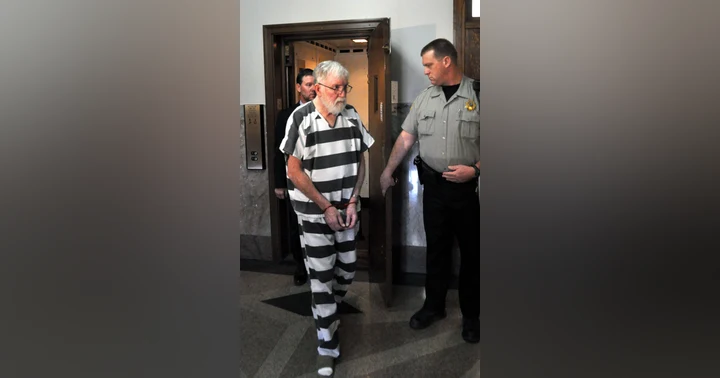
0:56 So here's what we know happened on January 31, 2012. Carl Erickson, 73 years old, woke up in his home in Watertown, South Dakota. He got in his car and drove south to Madison about an hour away. He had a 45 caliber pistol with him. When he arrived at Norman Johnson's house, he rang the doorbell like he was stopping by to chat about the weather. Norman Johnson answered the door. He was 72, retired, living the good life after decades of teaching and coaching at Madison High School. Carl looked at him and asked Norman to verify who he was. Norman confirmed his identity and then Carl shot him twice in the face.
1:38 Norman's wife Barbara found him on the floor. She saw a man walking toward a dark sedan parked outside. That very night, police arrested Carl Erickson and charged him with first degree murder. When Carl appeared before the judge, he didn't deny anything. He said, "I shot him, your honor." And then he said something that made this case go national. He told the judge the reason he killed Norman was because of something that happened over 50 years ago. In high school, in the locker room. Carl claimed someone put a jock strap on his head. That's it. That's the motive. A locker room prank from the 1950s. To understand how we got here, we need to go back to Madison High School in the 1950s.
2:22 This is where Carl Erickson and Norman Johnson first crossed paths. And with the seeds of something toxic got planted in Carl's mind. Norman was the high school sports star. Track athlete, later played college football. He was the guy everyone knew, the guy everyone liked. After college, Norman earned both the bachelor's and a master's degree, then came back to Madison to teach and coach. He stayed there for 30 years. When Norman died, over 600 people showed up to his funeral. That's roughly one-sixth of Madison's entire population. That tells you everything about how this community felt about Norman Johnson. Carl worked as the student sports manager, not the athlete, not the star.
3:05 The guy who helped out, the guy who stayed in the background. Carl did find for himself. He went to college, became an insurance salesman, got married and stayed married for 44 years. He lived in Wyoming for a while, then moved back to South Dakota and settled in Watertown. He had no criminal record. By all outward measures, Carl Erickson was living a stable, conventional life. But something was rotting underneath all that stability. Carl told the police and the judge that the reason he killed Norman was because of a locker room incident. Someone put a jock strap on his head when he was a teenager. And that humiliation never left him. He said it was apparently in my subconscious.
3:47 Here's the problem. Nobody else remembers this happening. Late county state's attorney Keith Meyer said that he couldn't find anyone who could cooperate Carl's story, not one person. The prosecutor couldn't even confirm whether Carl specifically named Norman as the person who did it. So we're left with this question. Did this incident actually happen the way Carl remembered it? Or had Carl's mind turned some minor teenage interaction into a defining trauma that justified murder? Norman's daughter Beth had her own theory. She said Carl was just jealous of dad his whole life. She said Carl envied Norman's success in standing in the Madison community.
4:28 Beth dismissed the locker room story as just goofing off and said she couldn't understand how anyone could hold on to something like that for 50 years. The real answer probably involves both humiliation and jealousy twisted together into something much darker. In January 2012, the same month Carl killed Norman, a psychiatrist named Dr. Robert Guybink met with Carl for the first time. What he found was alarming. Carl was severely depressed. He told Dr. Guybink that every night he wished he wouldn't wake up in the morning. Carl had a long history with anxiety problems. And what the doctor described as severe recurrent depression.
5:09 That is, for the most part, treatment resistant. And here's the most important part. The doctor said Carl's thinking was irrational and his judgment was impaired. Carl's brother Dick, who was a successful attorney in City of Fishland Madison, confirmed that Carl struggled with depression and alcoholism. This was less of a gradual decline in more of a psychiatric collapse. Carl was suicidal. He was mentally falling apart. And in that state of depression and distorted thinking, he fixated a Norman Johnson as the source of all of his failures. Think about what's happening in Carl's mind. He's 73 years old, battling severe depression, feeling like his life has been a complete waste.
5:50 Norman was thriving in Madison, beloved by everyone, celebrated for decades of success. Carl moved back to South Dakota and settled into Watertown, not Madison. He came back into the area where Norman was a local hero. Where Norman had everything Carl felt he'd been denied. For someone prone to resentment, that proximity felt probably unbearable. Norman represented everything Carl believed he should have been. When Carl's mental illness stripped away his ability to think rationally, that resentment turned into a mission. Carl drove from Watertown to Madison. He bought a gun, he rang the doorbell, he asked Norman to confirm his identity.
6:32 Each action followed the next with cold purpose. This was a planned execution. The reason behind all that planning was completely irrational. Killing someone over a 50-year locker room prank is not a sane response. Killing someone because you envy their success is not a sane response. The planning showed deliberation. The motivation showed a broken mind. When Norman answered the door and confirmed who he was, Carl shot him twice in the face. Barbara found her husband lying on the floor. Carl walked back to his car and then drove away. He was arrested that night. At his sinencing hearing, months later, Carl apologized to Barbara.
7:13 He said, "I just wish I could turn the calendar back." That suggests he understood what he had done once the acute episode passed. But by then, Norman was dead and Carl's life was over too. Carl was initially charged with first-degree murder, which in South Dakota can carry the death penalty or life in prison. He pleaded not guilty at first and asked for a jury trial. His defense attorney, Scott Brantlin, recognized that the evidence was overwhelming and that Carl's mental state needed to be a part of the equation. On May 1, 2012, Carl changed his plea. He pleaded guilty but mentally ill to second-degree murder.
7:54 This is a specific type of plea in South Dakota law. It's not the same as not guilty by reason of insanity. With that plea, you'd potentially be sent to a psychiatric facility and could be released if you got better. The guilty but mentally ill plea means you're still convicted and still going to prison. The court acknowledges you were mentally ill when you committed the crime. On June 15, 2012, Carl was sentenced to life in prison. The law requires he received psychiatric treatment while incarcerated. If he needs specialized care, he can temporarily be transferred to other facilities. He'll always return to the penitentiary to serve out his life's sentence.
8:34 This verdict balanced two things, justice for Norman's family, who needed to know Carl would never be free again, and recognition that Carl's mind was profoundly impaired when he pulled that trigger. With this case, does is force us to ask uncomfortable questions about memory, grudges, and how the mind can twist minor wounds into life-defining traumas. Did that locker room incident actually happen the way Carl remembered? Maybe? Maybe not? What matters is that Carl believed it, and he built his entire sense of victimhood around it. Underneath that story was something more corrosive. Carl spent 50 years watching Norman succeed.
9:15 Watching him be celebrated. Watching him live the life Carl thought he deserved. When Carl's mental illness stripped away his ability to suppress that envy, it exploded outward. Norman Johnson spent his life teaching kids, coaching track, being a good husband and community leader. He had no idea Carl was carrying this around. On January 31, 2012, when he opened that door to see who was ringing the bell, he had seconds to live. Carl Erickson is still in prison now in his mid-80s. He destroyed Norman's life, Barber's life, and his own. For what? A grudge that may have been based on something that never really happened the way he remembered it.
9:57 A jealousy that ate him alive from the inside out. A mental illness that turned bitterness into bullets. This is what happens when resentment doesn't fade. When you can't let go. When you decide the only way to feel better about your life is to end someone else's. Nobody wins in the end. Norman is dead. Carl is locked up forever. And a small town in South Dakota lost one of its most beloved members because a 73-year-old man couldn't let go of high school. Thanks for listening to "10 Minute Murder," "Bingeable True Crime Stories."
10:38 I'm Joe, I'm the host. This email is "Subjects on Popular Opinions Welcome" from Courtney and Denver. Hey Joe, what is one true crime documentary or podcast everyone loves that you just couldn't get into? I promise I won't judge unless you say "Mind Hunter." And I will not say "Mind Hunter" because I absolutely love it. And I'm having a hard time with this question because I can't think of one immediately. What if I tell you a true crime personality that I've just never really cared for? Nancy Grace. I understand people lover. She's got a big fan base and people love everything that she does. It's just not for me.
11:18 It feels too sensationalized. A little too over the top. Some people dig that and that's fine. I'm not judging you. I'm just saying that that's not for me. But what I will judge about her is it feels like sometimes her southern accent is put on. I live in the south. I've lived in the south for a very long time. I know a southern accent and I know a fake southern accent and that feels fake sometimes. Not all the time, but it sounds like sometimes she puts on a little bit. So Nancy Grace is not my favorite, but she's had a ton of success and that's great for her. Hey, if you're new to the podcast, make sure you hit subscribe right now wherever you're listening. Unless of course you're Nancy Grace fan. Then now you probably hate my guts, which is valid.
11:58 But you can still subscribe if you want to. Share the podcast with your friends and your family. Help the show grow by doing that. Go to the website 10minuteMurder.com. There you're going to find all kinds of things including a blog. And also I need to let you know that if you've signed up for the newsletter that I've been sending out. And you haven't been receiving the newsletter that I've been sending out. Check your spam folder because a lot of them are going there. I don't know why and I don't know how to fix it. The only way that I know of to fix it is to tell you that it's happening and you go into your spam and then you fish it out of there. And then your email will go, oh, this isn't really spam. But a good chunk of you that have signed up for the newsletter are actually opening it and reading it and getting a lot out of it.
12:38 Because I can see I get the stats and I can see who's not specifically who. But how many of you are opening and it's a bunch of you. So that makes me feel good that I'm putting the time and effort into creating that newsletter and people are actually reading it. So again, if you want to sign up for it, you can go to 10minuteMurder.com. And that's going to do it. That is your episode for today. Thank you again so much. I'm honored every time I release one of these episodes and I see the download numbers and it increases every time. It means so much to me that you guys enjoy what I'm doing here. So thank you again. See you next time. (upbeat music) [Music]