Spotify

 Apple Podcasts

 Pandora

 Amazon Music

 Podchaser

 Spreaker

 RSS Feed

 Audible

 Castbox

 iHeartRadio

 Castro

 Deezer

 YouTube
The Death of Candace Newmaker: When Therapy Becomes Torture

The Death of Candace Newmaker: When Therapy Becomes Torture Sometimes the people we trust most to help our children are the ones who cause the most harm. In April 2000, ten-year-old Candace Newmaker traveled from North Carolina to Colorado for what...
The Death of Candace Newmaker: When Therapy Becomes Torture
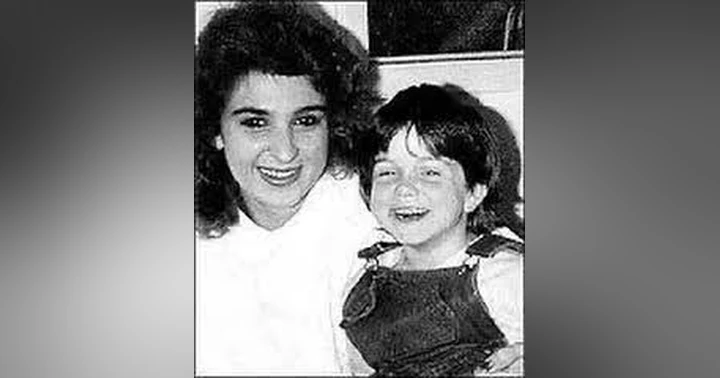
Sometimes the people we trust most to help our children are the ones who cause the most harm. In April 2000, ten-year-old Candace Newmaker traveled from North Carolina to Colorado for what her adoptive mother hoped would be life-changing therapy. Instead, it became a 70-minute session that ended in tragedy. This is the story of how pseudoscientific treatment masquerading as legitimate therapy killed a little girl, and how her death changed laws across the country. We'll explore the dangerous world of attachment therapy, the warning signs that were ignored, and the adults who failed Candace when she needed them most.
#CandaceNewmaker #AttachmentTherapy #RebirthingTherapy #PseudoscienceKills #ChildAbuse #TrueCrime #JusticeForCandace
🔔 Subscribe for True Crime Cases multiple times a week
Never miss a story. Subscribe to 10 Minute Murder for bite-sized true crime episodes delivered fresh every week.
📱 Follow for Behind-the-Scenes Content Get exclusive case updates, research photos, and sneak peeks of upcoming episodes:
- Instagram: @10minutemurder on IG
- TikTok: @10minutemurder on TikTok
- Facebook: 10 Minute Murder on FB
- Rate & Review: Leave a 5-star review to help other true crime fans discover the show
- Share: Send this episode to fellow true crime enthusiasts
- Join the Discussion: Tag us in your episode reactions on social media
Become a supporter of this podcast: https://www.spreaker.com/podcast/10-minute-murder-bingeable-true-crime-stories--4603604/support.
0:00 Ten-year-old Candace Newmaker went to Colorado for therapy that was supposed to help her bond with her adoptive mother. Instead, she was wrapped in flannel, pinned down by four adults and told to fight her way out, while they pressed their full weight on her small body. For 70 minutes, she begged for air. For 70 minutes, they told her to keep fighting. She never made it home. [Music] Candace Elizabeth Newmaker came into this world on November 19, 1989, and Lincoln, 10 North Carolina.
0:53 Back then, her name was Candace Tiara Elmore, and her life started in a way that no child should have to experience. Born into a family where neglect was the norm, Candace lived with her birth parents, Angela and Todd Elmore, alongside her siblings, Michael and Chelsea. But here's the thing about child protective services. They don't remove children from their birth families lightly. The system is designed to keep families together whenever possible, offering services, supports, and multiple chances for parents to turn things around. When CPS finally does step in to permanently terminate parental rights, it means they've documented substantial evidence that the parents cannot and will not provide the most basic necessities for their children's safety and well-being.
1:39 That's exactly what happened with Candace and her siblings. At age 5, she had already endured more trauma than many adults will face in a lifetime. Social services removed all three children from their birth home, and their parents' rights were terminated forever. Two years later, Hope entered Candace's life in the form of Jean Newmaker, a pediatric nurse practitioner from Durham, North Carolina. Jean was a single woman with a heart for helping children, and she decided to adopt seven-year-old Candace. For many families, this would be the beginning of a beautiful healing journey. But trauma leaves marks on children that aren't easily erased by love and good intentions alone. Candace began exhibiting behaviors that concerned her new mother.
2:22 She was acting out at home, displaying defiance and anger that seemed disproportionate to the typical childhood testing of boundaries. Jean, being a healthcare professional, recognized that Candace needed help processing her early experiences. She took her daughter to a psychiatrist who prescribed medications to help manage her behaviors. For two years, they've tried this approach, but instead of improving, Candace's behavior seemed to deteriorate further. There were reports that particularly alarmed Jean. Candace had been playing with matches, which, while concerning, is actually something many curious children do. More troubling were reports that she'd killed goldfish. For any parent, especially one trying to help a traumatized child heal, this behavior would be absolutely terrifying.
3:08 Jean felt desperate. She loved her daughter, but was running out of options. Traditional therapy and medication weren't working. She needed something different, something more intensive. Enter William Goeble, a licensed psychologist in North Carolina. When Jean shared her frustrations about Candace's continuing behavioral issues, Goeble made a referral that would change everything. He suggested she take Candace to Colorado for intensive attachment therapy sessions. By Candace's 10th birthday, Newmaker concluded that her daughter suffered from attachment disorder. The treatment would be conducted by Connell Watkins, who ran a clinic in Evergreen, Colorado. Now here's where things get problematic right from the start.
3:51 Watkins was operating without proper licenses for this type of work, and she was conducting sessions in her basement. The fact that this was happening outside of the realm of legitimate license practice should have been a massive red flag. But Jean was desperate, and desperate parents often overlook warning signs when someone promises to help their struggling child. The cost was pretty steep, $7,000 for two weeks of intensive sessions. For single mother, this represented a significant financial commitment, but Jean was willing to do anything to help Candace. Before we go further into what happened to Candace, we need to understand what attachment therapy actually is. Because despite its clinical sounding name, it's not legitimate therapy at all.
4:35 Attachment therapy is a pseudoscientific mental health intervention intended to treat attachment disorders in children. The theory behind it goes, something like this. Children who have experienced early trauma and abandonment develop what practitioners call attachment disorders. They believe these children are filled with suppressed rage that prevents them from bonding with their new caregivers. The supposed solution involves what they call holding therapy or re-birthing. During the height of its popularity, the practice was found primarily in the United States. Much of it was centered in about a dozen locations in Evergreen, Colorado. Exactly where Jean was taking Candace. The process is as disturbing as it sounds.
5:17 Children are physically restrained, often laying upon by adults, while therapists try to provoke intense emotional responses like rage and despair. The goal is to break down the child's resistance completely, reducing them to what practitioners call infantile state, where they can then be supposedly reparented through forced eye contact, bottle feeding and cradling. Here's the crucial point. The entire approach is not based on legitimate attachment theory as developed by psychologist John Bulby. The practice has resulted in adverse outcomes for children, including at least six documented child fatalities. Real attachment theory focuses on understanding how early relationships shape a child's ability to form healthy connections.
6:04 Not on physically dominating children into submission. On April 18, 2000, three days before Candace's therapy was set to end, Watkins and her unlicensed assistant Julie Ponder decided it was time for the re-birthing session. This was supposed to be the culmination of Candace's treatment, the moment she would finally attach to her adoptive mother. Candace was wrapped in flannel to represent a womb and told to free herself while four adults use their hands and feet to push down on Candace's small body, making it impossible for her to move or breathe. Think about that for a moment. Here's a 70-pound 10-year-old girl, completely wrapped in flannel sheets and pillows to simulate a birth canal.
6:48 Four adults with a combined weight of 673 pounds were using their hands and feet to press down on her, supposedly simulating uterine contractions. They expected her to fight her way out of the restrained while they actively worked against her. From the very beginning, Candace was in distress. She complained. She pleaded. She screamed for help and for air. But according to the twisted logic of attachment therapy, this resistance was exactly what they wanted to see. They interpreted her desperation as the rage they needed to break through. What happened next was captured on video because Watkins routinely recorded her sessions. This footage would later become the key evidence in the criminal trial that followed.
7:32 Candace stated 11 times during the session that she was dying. 11 times this little girl told the adults who were supposed to be helping her that she was dying. And how did Ponder respond? Go ahead. Die right now for real. For real. Let that sink in. A child is telling you she's dying and your response is to encourage it, almost antagonize. 20 minutes into this nightmare, Candace vomited and defecated inside the sheet. Any reasonable person would recognize these as signs of severe distress requiring immediate intervention. But they kept going. They kept pressing down on her small body, interpreting her body's distress signals, as therapeutic progress.
8:14 40 minutes into the session, Candace was asked if she wanted to be reborn. She faintly responded, "No." This would ultimately be her last word. Even in her weakened state, even after 40 minutes of torture, she still had the strength to refuse what they were doing to her. Ponder's response to this final act of resistance was to call her a "quitter." Quitter, quitter, quitter, quitter, quitter, quitter, quitter, quitter. She's a quitter. At some point during the session, Jean Newmaker became too distressed watching what was happening to her daughter. Watkins asked her to leave the room, claiming that Candace might pick up on Jean's sorrow. So, in Candace's final moments, even her adoptive mother wasn't there to advocate for her. After talking for five more minutes, Watkins and Ponder finally unwrapped the child they had been restraining for over an hour. They found that she was motionless, blue on the fingertips and lips, and not breathing. Watkins' first reaction wasn't alarm or immediate medical intervention. Instead, she casually declared, quote, "Oh, there she is. She's sleeping in her vomit."
9:23 As if a child being unconscious and blue was somehow normal. It was only when Jean rushed back into the room and began CPR that anyone seemed to grasp the severity of what had occurred. Watkins finally called 911, but it was far too late. When paramedics arrived ten minutes later, they told them that Candace had been left alone for five minutes during a rebirthing session and was not breathing. Even then, they weren't being entirely truthful about what happened. Paramedics were able to restore her pulse and she was flown by helicopter to a hospital in Denver. However, she was declared brain dead the next day as a consequence of his fixia. On April 19, 2000, one day after the session was supposed to help her heal, ten-year-old Candace newmaker died. The entire fatal session, along with ten hours of other sessions from the preceding days, had been videotaped as part of Watkins' standard practice. This evidence would prove crucial in the legal proceedings that followed.
10:22 In 2001, Connell Watkins, 54, and Julie Ponder, 40, were found guilty of reckless child abuse resulting in death. They each received 16-year prison sentences. Watkins was released and accepted to a transitional community setting on June 6, 2008, having served approximately seven years of her sentence. Jean Newmaker also faced consequences for her role in the tragedy. She pleaded guilty to neglect and abuse charges and received a four-year suspended sentence. After serving her sentence, the charges were expunged from her record. Candace Newmaker was a little girl who deserved love, patience, and genuine help healing from her early trauma. Instead, she encountered adults who believed that her resistance to their methods was something to be crushed rather than understood.
11:10 She died calling out that she was suffocating, and the people who were supposed to be helping her told her to die for real. Thanks for listening to 10-minute murder, bingeable true crime stories, and man, today's story was hard. I'm sure it wasn't easy to listen to, and it definitely wasn't easy to tell. But I think important that the story is told. Hey, I'm Joe, the host of this podcast, and if you would like to get in touch with me, you can do that. Go to 10minutemerder.com. There's a place there you can email me if you want to.
11:52 Here's an email from one of you that listens. Hey, Joe, I'm curious about your setup. What might do you use, and do you record a studio or at home? That is from Daniel in Cincinnati. Daniel, thank you for the email. And the microphone I use is a Synthizer MKH416. It doesn't look like your traditional podcast or microphone, because that's not what I bought this microphone to do. I also do voice overs for a variety of things. And this is one of the industry standard microphones in the voice over industry. And that's why I got it. Kind of expensive, but I've had it a long time. And the answer to the second part of that, do I record in a studio or at home? Yes. I have a studio in my home.
12:33 So that's where I record. I bought a house maybe a year or two before I started this podcast. And for whatever reason, the mudroom in this house is giant for a mudroom. It doesn't make any sense to me. And I wasn't going to use a mudroom that went to the backyard. So I decided to convert it into a studio space. And that's where I am right now. Daniel, thank you for the email and thank you for listening to 10 Minute Murder. I'll see you next time.