Spotify

 Apple Podcasts

 Pandora

 Amazon Music

 Podchaser

 Spreaker

 RSS Feed

 Audible

 Castbox

 iHeartRadio

 Castro

 Deezer

 YouTube
The First Female Serial Killer: Why Aileen Wuornos's Case Still Matters

The First Female Serial Killer: Why Aileen Wuornos's Case Still Matters When Aileen Wuornos was executed in 2002, the state of Florida called her a cold-blooded serial killer. But her story is way more complicated than that. We're talking about a...
The First Female Serial Killer: Why Aileen Wuornos's Case Still Matters
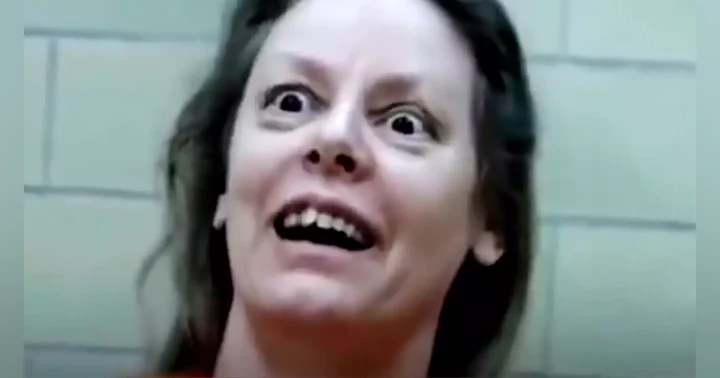
When Aileen Wuornos was executed in 2002, the state of Florida called her a cold-blooded serial killer. But her story is way more complicated than that. We're talking about a woman who survived childhood sexual abuse, was kicked out at 15 and forced into sex work to survive, and ended up killing seven men along Florida's highways. She said it was self-defense. The prosecution said she was lying. But here's what they didn't tell the jury: her first victim was a convicted rapist. That evidence? Kept from her defense team. This case forces us to ask some really uncomfortable questions about justice, trauma, and what happens when someone who's been victimized their entire life becomes the perpetrator. Today, we're breaking down the life and crimes of Aileen Wuornos, and trust me, nothing about this story is black and white.
#AileenWuornos #TrueCrime #SerialKiller #FemaleMurderer #FloridaDeathRow #SelfDefense #TrueCrimePodcast
🔔 Subscribe for True Crime Cases multiple times a week
Never miss a story. Subscribe to 10 Minute Murder for bite-sized true crime episodes delivered fresh every week.
Discount codes from show sponsors. Support 10 Minute Murder and save money at the same time:
https://hypernaturalstyle.com/discount/10MM
https://zivo.life/discount/10MM
https://bigforkbrands.com/discount/10MM
https://prepstartsnow.com/discount/10MM
📱 Follow for Behind-the-Scenes Content Get exclusive case updates, research photos, and sneak peeks of upcoming episodes:
- Instagram: @10minutemurder on IG
- TikTok: @10minutemurder on TikTok
- Facebook: 10 Minute Murder on FB
- Rate & Review: Leave a 5-star review to help other true crime fans discover the show
- Share: Send this episode to fellow true crime enthusiasts
- Join the Discussion: Tag us in your episode reactions on social media
Become a supporter of this podcast: https://www.spreaker.com/podcast/10-minute-murder-bingeable-true-crime-stories--4603604/support.
0:00 Between 1989 and 1990, seven men picked up a hitchhiker along Florida's highways. None of them made it home. Eileen Wernos said she killed them in self-defense. The state said she was a monster. A movie later said she was a monster too. But what if the truth is somewhere in between? What if the evidence that could have saved her life was hidden from her jury? Let's get into it. [Music] So you know how society loves to put people in these neat little boxes. Good guys over here, bad guys over there.
0:56 Eileen Wernos absolutely destroyed that box. Her story is one of those cases where the more you learn, the less certain you become about anything. Between 1989 and 1990, Eileen Wernos killed seven men across central Florida. She became known as America's first female serial killer profiled by the FBI. But calling her a serial killer and leaving it at that, that's like reading the last page of a book and thinking you know the whole story. So let's back up. Eileen Carol Wernos was born in 1956 into a situation that was already a disaster. Her biological father was locked up for child molestation when she was still a baby. And he later died by suicide in prison.
1:40 When she was four years old, she and her brother got shipped off to live with their maternal grandparents. You think that might be a fresh start, right? It wasn't. Her grandfather was an alcoholic who beat her with a belt for the smallest things. We're not talking about regular discipline. I know I was hit with a belt occasionally as a child. You listening to me right now, many of you were hit with a belt as a child. And I wouldn't technically call that abuse. What we're talking about is the severity of this physical abuse. And it gets worse. There's evidence that he sexually abused her as well. Her grandmother knew what was happening the whole time and did nothing to stop it. At 14 years old, Eileen was raped by a family friend. She waited six months before revealing that she was pregnant and her grandparents blamed her for her own pregnancy. 14-year-old gets raped, becomes pregnant, and the adults in her life blame her. She was forced to give the baby up for adoption and then her grandfather kicked her out of the house. At that time, she was 15 years old. So what do you do when you're 15, homeless, and have been failed by every adult who was supposed to protect you? Eileen started working as a prostitute along the highways of central Florida. She carried a gun because, well, sex work is dangerous, and it's Florida. Especially when you're doing it on the side of highways with complete strangers. Psychologists who studied her case later diagnosed her with anti-social personality disorder and borderline personality disorder. They pointed to her history of
3:13 severe attachment disruptions and trauma as major contributing factors to what happened next. From late 1989 through late 1990, the bodies of seven middle-aged white men were discovered in central Florida. The killer had robbed all five victims before shooting them to death and stealing their cars. The first victim was Richard Mallory. He was 51 years old, a shop owner who picked up by Leighne along Interstate 75. His body was found several miles from his abandoned car in December 1989. He'd been shot multiple times in the chest. Then came David Spears, a 43-year-old construction worker shot six times. Charles Carr's Cadden, 40, part-time rodeo worker shot nine times. Peter Sims, 65, who was heading to New Jersey. His body was never found, but his car turned up abandoned on July 4th, 1990. Troy Burris, 50-year-old car salesman, Charles Humphreys, a retired Air Force major who'd worked as a child abuse investigator. And Walter Antonio, 62, shot four times in the back and head. Leighne was living with her partner Tyra Moore during all of this. After the first killing, she told Tyra what she had done. Tyra wasn't scared. And when the police eventually came knocking, Tyra cooperated. She helped them record a confession from Leighne that led to her arrest in January 1991. Here's where things get kind of messy. Leighne claimed from the beginning that she killed these men in self-defense. She said they either raped her or tried to rape her,
4:48 and she believed she was going to be beaten or killed if she didn't act first. The prosecution, they painted her as a cold-blooded murderer, who killed for money and to eliminate witnesses. But let's talk about what the jury never heard. One example of poor representation revealed in subsequent appeals was trial counts was failure to uncover Richard Mallory's prior rape conviction, which could have cooperated Eileen's argument of self-defense. He later became known that Mallory had previously been convicted of attempted rape in Maryland and had served time in prison. So the first man that she killed was a prior offender, a convicted rapist. That information existed. The prosecution knew about it, and it was never presented to the defense team. After the trial, when this came to light, the judge refused to allow it in as evidence and post trial proceedings. But wait, there's more. When Eileen gave her videotaped confession, she insisted at least 16 times that she killed in self-defense. That part of the video was edited out before the jury saw it.
5:49 And I don't mean that she killed 16 people. I mean 16 times during the recorded confession. She said she killed in self-defense. I know I said that weird. And then there's the prosecutor, John Tanner. This guy had previously written articles calling prostitutes "pure evil." He was also friends with the presiding judge. Legal experts have pointed out that gender bias likely played a significant role in how this case was handled. Studies show that women in Florida were sometimes treated more harshly than men who committed similar crimes. After her conviction for killing Mallory and her death sentence in 1992, Eileen's story changed. She pleaded guilty or no contest to the other murders and said she'd killed for robbery, not self-defense. But here's the thing about that. In a private interview with Documentary in Nick Brumfield, she suggested that the killings were actually self-defense. She said she couldn't take being on death row anymore and just wanted the whole thing to be over with. She knew that whatever she said wasn't going to change the fact that she was on death row. So she just wanted it to be done. Eileen spent over a decade on Florida's death row and her mental state fell apart during that time. She fired multiple attorneys. She wrote rambling motions claiming she was being abused. In 2001, she dropped all of her appeals. She said she wanted to die because, quote, "She seriously hates human life and would kill again if they kept her alive." Some of her former lawyers raised concerns that she wasn't mentally competent to give up her appeals. But state appointed psychiatrist to examine her and said that she
7:21 was competent enough to make that decision. On October 9, 2002, Eileen Wernos was executed by lethal injection. Her final words were honestly pretty disturbing. She said, "I just like to say I'm sailing with the rock and I'll be back like Independence Day, like Jesus, June 6, like the movie, big mother ship and all. I'll be back." A lot of experts saw those final words as confirmation that her mental state had completely deteriorated. All right, look, I'm not here to say that Eileen Wernos was innocent. Seven men are dead. That's a fact. You can't do that. You can't kill other people. But what I am saying is that her case raises some seriously uncomfortable questions about how our justice system handles people who have been victimized their entire lives and then become perpetrators themselves. And again, I'm not saying had she not be put on death row, she should just be released into the wild, not at all. What I am saying is when you're sexually abused as a child, kicked out at 15, forced into sex work to survive, and then you kill someone who you claim tried to rape you. And it turns out that person was actually a convicted rapist. But nobody tells your jury that information. That is not justice. It's a broken system.
8:35 Eileen Wernos's story is a dark reminder of what happens when childhood trauma goes unaddressed. When society fails the most vulnerable people and when the legal system cares more about getting a conviction and getting the truth, was Eileen a victim? Absolutely. Was she also a killer? Yes, both things can be true at the same time. And maybe that's the most important lesson here. People aren't always one thing or the other. Sometimes they're both. And our justice system needs to be able to handle that complexity instead of ignoring it.
9:22 Thanks for listening to 10 Minute Murder, Bingeable True Crime Stories. I am Joe, I'm your host, and sometimes I feel it's weird to introduce myself after the story's over. Normally, introductions are done at the beginning, but that's not what we do here. And to be honest, I switched it to this way because I thought it's important to jump right into the story because all of our attention spans are shorter. If I were to do this rambling bit toward the beginning, most of you would tune out. Although there is a big group of you that say that this part of the episode is your favorite part of the episode where I just ramble about nonsense and different things. And I read a weird email from one of you that listens to my weird podcast because we're all weird here. Except for this one, I got an email that I'm going to read right now and it's not weird. It's just like a straight up one of the most one of the most normal emails I've gotten in a while, by the way. Here it is. Subjects, hold on, I can't see it. Subject cold cases and chaos.
10:17 Hey, Joe, I've noticed that some of the cold cases you cover are way messier than the solved ones. It's like they were written by someone who lost the plot halfway through. Do you have any case that stands out as the most unnecessarily complicated? Or like, how do they even allow this to happen? Levels of messy. That's from Trina in Houston. And Trina, let me tell you, yes. And I just covered the case and I've covered it twice now in this podcast and I can't stop talking about it. It's the Ellen Greenberg case. You haven't heard about that. Look it up. There's been some recent news dealing with her case. And when you do look it up, you're going to see, oh, that's a suicide. Why is Joe talked about this twice? Because there's no possible way, in my opinion, that that's a suicide.
10:58 That lady was attacked and murdered in her own home. And instead of me explaining this whole thing right now, just go back and listen to the Ellen Greenberg story on my podcast. And you'll see exactly what I'm talking about. It's so frustrating. But Trina, thank you for the email. It's a great question. If you've got a question, you can go to 10minutemerder.com and email me there. There's also on the website, all kinds of information about the podcast, where to listen, where to follow on social media, all that cool stuff. Before I forget, if you're a new listener, make sure you hit subscribe. If you're an OG listener, I love you with my whole heart. And that's going to do it. That's your episode for today. Thank you again for listening to 10 Minute Murder. See you next time.