Spotify

 Apple Podcasts

 Pandora

 Amazon Music

 Podchaser

 Spreaker

 RSS Feed

 Audible

 Castbox

 iHeartRadio

 Castro

 Deezer

 YouTube
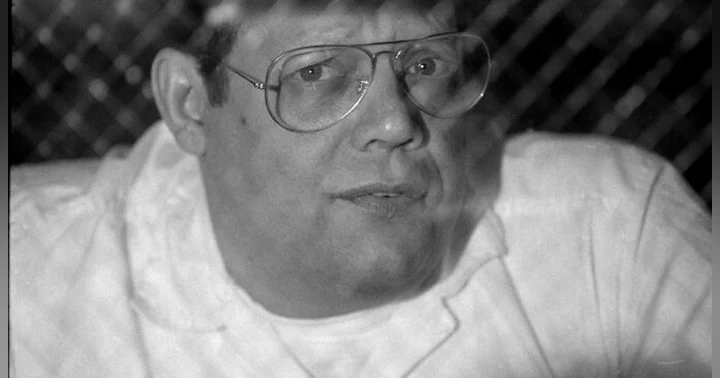
The Pixy Stix Killer: How Ronald O'Bryan Weaponized Halloween

The Pixy Stix Killer: How Ronald O'Bryan Weaponized Halloween Halloween 1974 was supposed to be another night of trick-or-treating in Pasadena, Texas. Instead, it became the night that changed Halloween forever. When 8-year-old Timothy O'Bryan died...
The Pixy Stix Killer: How Ronald O'Bryan Weaponized Halloween
Halloween 1974 was supposed to be another night of trick-or-treating in Pasadena, Texas. Instead, it became the night that changed Halloween forever. When 8-year-old Timothy O'Bryan died from poisoned candy, investigators uncovered a twisted plot orchestrated by the one person who should have protected him most: his own father. Ronald O'Bryan didn't destroy Halloween by accident. He weaponized the holiday, turning a beloved childhood tradition into his personal murder weapon. This is the story of greed disguised as grief, a father's ultimate betrayal, and how one man's desperate scheme created fears that still haunt Halloween today.
#RonaldOBryan #HalloweenMurder #TrueCrime #CandyMan #HalloweenKiller #ToxicParenting #HalloweenSafety
🔔 Subscribe for True Crime Cases multiple times a week
Never miss a story. Subscribe to 10 Minute Murder for bite-sized true crime episodes delivered fresh every week.
📱 Follow for Behind-the-Scenes Content Get exclusive case updates, research photos, and sneak peeks of upcoming episodes:
- Instagram: @10minutemurder on IG
- TikTok: @10minutemurder on TikTok
- Facebook: 10 Minute Murder on FB
- Rate & Review: Leave a 5-star review to help other true crime fans discover the show
- Share: Send this episode to fellow true crime enthusiasts
- Join the Discussion: Tag us in your episode reactions on social media
Become a supporter of this podcast: https://www.spreaker.com/podcast/10-minute-murder-bingeable-true-crime-stories--4603604/support.
0:00 What if I told you that the person who created America's fear of poisoned Halloween candy was actually trying to commit the perfect murder? In 1974, a father in Texas handed his eight-year-old son a pixie stick within an hour that child was dead. Today, we're diving into the case that changed Halloween forever and asking the question, "How far would you go to solve your own problems?" [Music] October 31, 1974, started like any other Halloween night in Pasadena, Texas.
0:56 The O'Brien family gathered with their neighbors, the Bates family, for dinner before trick or treating. Ronald O'Brien, an optician and deacon at his Baptist church, seemed like the perfect suburban dad, heading out with the kids. His wife stayed home while Ronald took their two children, eight-year-old Timothy and five-year-old Elizabeth, along with the Bates children through the neighborhood. But something was different about this particular Halloween outing. While the other kids and adults moved together as a group, Ronald kept separating himself. When they approached a house without lights on, the children naturally moved on. That's the universal symbol for we don't have candy or we're not home.
1:36 Ronald didn't. He lingered behind and when he rejoined the group minutes later, he was waving five oversized pixie sticks, claiming, quote, "rich neighbors had given them the expensive treats." And here's where the story gets disturbing. A former Pasadena detective later recalled that O'Brien had those pixie sticks shoved up the sleeves of his raincoat. Ronald was carrying concealed weapons disguised as Halloween treats, premeditated and ready for distribution. Ronald distributed the candy strategically, one to Timothy, one to Elizabeth, two to the Bates children, and one to a random 10-year-old from their church that they encountered.
2:16 When they returned home, Timothy wanted to try his pixie sticks before bed. The powder was difficult to get out, so his father helped him loosen it. Timothy immediately complained that it tasted bitter, and Ronald suggested that he wash it down with a little coolade. Within minutes, Timothy was vomiting and convulsing. He went limp in his father's arms and was dead in less than an hour. What appeared to be a tragic Halloween accident was actually the culmination of months of planning by a father who had decided his son was worth more dead than alive. Let me explain. Ronald Clark O'Brien had mastered the art of looking successful while failing spectacularly.
2:57 On paper, he was everything in 1970's suburban community valued, a professional optician, a church deacon who sang in the choir, and ran the bus program, a married father of two. One pastor even called him a good Christian man and an above-average father. The reality painted a far different picture. Ronald had been fired from 21 jobs in 10 years for reasons, including negligence and fraudulent behavior. At the time of the murder, he was about to be fired again for suspected theft. His weekly salary of $150 wasn't covering his family's expenses, and he was drowning in debt. The numbers tell the story of a man in complete financial free fall.
3:38 He owed over $100,000, roughly $640,000 in today's money. He had defaulted on bank loans, and his car was about to be repossessed. For someone maintaining the image of suburban success, these mounting failures created unbearable pressure. But Ronald had a plan that was as methodical as it was monstrous. And January 1974, he took out $10,000 life insurance policies on both of his kids, Timothy and Elizabeth. And September, he added another $20,000 policy on each child. Days before Halloween, he secured yet another $20,000 policy on each child. The insurance agency itself raised objections to these successive policies, but Ronald pushed it through.
4:24 The total value reached $100,000, exactly matching his debt load. His wife knew nothing about these policies or their family's financial situation. Ronald was planning to solve his money problems by murdering his children and collecting insurance payouts. Ronald's preparation for murder began a year before Timothy's death. A chemist's acquaintance testified that O'Brien had asked him about the lethality of cyanide as early as the summer of 1973. He was researching murder methods while his family believed he was being a good father, a good Christian and husband. Shortly before Halloween, a clerk got a Houston chemical supply store that recalled a man in a beige or blue smock, similar to what an optician would wear, inquiring about purchasing cyanide.
5:11 The man left when he discovered cyanide was only sold in bulk quantities. Ronald was literally shopping for the tools to kill his children. His weapon of choice was deceptively simple but terrifyingly effective. He opened the pixie sticks, replaced the top two inches of candy powder with potassium cyanide and he re-sealed them with staples. The single pixie sticks Timothy consumed contained enough cyanide to kill two adults, while the four others contained enough to kill three to four adults each. Ronald's plan relied on the emerging urban legend of stranger danger and poisoned Halloween candy. By giving poison treats to multiple children, he hoped to make Timothy's death appear random rather than targeted.
5:56 It was a calculated attempt to hide familial murder behind societal fears. Police suspected Ronald almost immediately and their instincts proved correct. A Pasadena detective was struck by O'Brien's bizarre lack of emotion, noting that he didn't behave like most fathers would, after losing a child and didn't need to be physically restrained from rage or grief. His performance of grief was unconvincing to trained observers. Not that everyone grieves the same way, but when it's over the top fake, you can tell. Ronald's story crumbled under scrutiny. Initially, he claimed he couldn't remember which house gave him that candy, despite trick-or-treating on only two streets.
6:36 When pressed, he eventually led police to the home of air traffic controller Courtney Melvin. But Melvin had an airtight alibi. He was working at the airport on Halloween night, verified by multiple witnesses. The evidence against Ronald became overwhelming. He was arrested on November 5, 1974, and indicted on one count of capital murder and four counts of attempted murder. Investigators uncovered his crushing debt, a suspicious life insurance policies, and testimony from the chemical supply salesman and chemist about his cyanide inquiries. Fates had intervened to save the other four children. One of the Bates children started to open his candy before his mother told him to save it for the next day.
7:19 Most remarkably, the 10-year-old from the church was found a sleep in bed still holding the unopened candy, because O'Brien's stable was too secure for him to open by himself. Ronald's trial began May 5, 1975, and garnered national attention. The prosecution's case was devastating. His own wife testified against him, stating she knew nothing about the insurance policies, and that Ronald had forced Timothy to choose the pixie sticks. His sister-in-law and brother-in-law testified that on the day of Timothy's funeral, he talked about using the insurance money for a long vacation. Ronald made the fatal error of taking the stand in his own defense. His testimony was unconvincing and inconsistent, and his performance failed when it mattered the most.
8:04 After just 46 minutes of deliberation, the jury found him guilty of capital murder and four counts of attempted murder. Even hardened criminals on death row despised O'Brien so much that they petitioned the warden for permission to hold the celebration when he was executed, and their request was granted. His crime was so universally condemned that men who had committed capital offences themselves found his actions unforgivable. On March 31, 1984, Ronald Clark O'Brien was executed by lethal injection. His final statement was a masterpiece of denial, declaring what is about to transpire in a few moments is wrong, and offering forgiveness to those involved in his execution, while never once confessing or apologizing for his actions.
8:51 As his execution was carried out, a crowd gathered outside the prison and mockingly shouted, "Tricker treat." Ronald O'Brien did more than kill his son. He fundamentally changed how Americans celebrate Halloween. Despite his case being the only confirmed death from Poisoned Halloween candy, the fear he created became central to the holiday. The tragic irony is profound. A targeted murder motivated by greed became the foundation for nationwide fears of random, stranger danger. The phenomenon became known as Halloween sadism, and the focus on Poisoned candy obscured the more complex truth of familial betrayal. The consequences for Ronald's surviving family were devastating.
9:35 Shortly after his conviction, his wife filed for divorce. Five-year-old Elizabeth was later adopted by her mother's new husband. Ronald's selfishness didn't end with Timothy's death. It shattered the lives of everyone he claimed to love, forcing his daughter to change her name to escape the shadow of her infamous father. Fifty years later, parents still inspect Halloween candy. Hospitals still offer free x-rays of treats, and communities still organize safe, trick-or-treating alternatives. Ronald O'Brien weaponized Halloween, turning a beloved childhood tradition into something parents approach with caution, and a little bit of fear. The real horror of this story centers on a father who calculated the exact monetary value of his children's lives.
10:18 Decided the insurance payout was worth more than their futures, and then methodically planned their murders while maintaining the facade of being a loving parent. The ghost of Halloween isn't hiding in the shadows waiting to harm children. It's the specter of ultimate parental betrayal, reminding us that sometimes the real monsters are the ones we trust the most. [Music] Thanks for listening to Ten Minute Murder. Bingeable True Crime Stories. My name is Joe, I'm the host, and if you're a new listener, hit subscribe wherever you are listening right now.
11:00 You can go to the website 10minutemerder.com, find out more about the podcast. There are links there where you can listen, there are in other places, other than where you're listening right now. There are also links where you can find the show on social media, and you can also send me an email if you go to 10minutemerder.com. Like this one, subject True Crime Burnout. Joe, do you ever take breaks from True Crime? If so, what do you watch, read, or listen to when you want something completely different? Mark in St. Louis. Great question, Mark. Thank you for the email. Stand up Comedy. Usually. That's about as opposite as I can get from True Crime, so I consume so much stand up comedy. But aside from that, I like to read mysteries.
11:41 It's rare that I'll read a True Crime book. And I like a mystery, so it's usually some type of mystery, not always murder mystery. It can be like a sci-fi mystery, like what's happening here, a Stephen King situation. I like that a lot. And if you want a recommendation on that, read Project Hail Mary. It's by Andy Weir. It is one of the best books I've ever read, period. It's kind of a sci-fi mystery about space. But not like nerdy, not like in a nerdy way. It's more approachable. You won't feel like a dumb dumb reading that book. It's not going to go over your head. All right, that's going to do it. Thank you again for listening to 10 Minute Murder. I'll see you next time.