Spotify

 Apple Podcasts

 Pandora

 Amazon Music

 Podchaser

 Spreaker

 RSS Feed

 Audible

 Castbox

 iHeartRadio

 Castro

 Deezer

 YouTube
The Sunday Morning Slasher: Carl Watts and the Deal That Almost Set Him Free

The Sunday Morning Slasher: Carl Watts and the Deal That Almost Set Him Free Sometimes the most dangerous people are the ones who slip through every crack in the system. Carl Eugene Watts should have been stopped at fifteen when he first attacked a...
The Sunday Morning Slasher: Carl Watts and the Deal That Almost Set Him Free
Sometimes the most dangerous people are the ones who slip through every crack in the system. Carl Eugene Watts should have been stopped at fifteen when he first attacked a stranger. He should have been caught in college when a student was stabbed thirty-three times. He definitely should have been arrested in Michigan when police had him under twenty-four-hour surveillance. Instead, he moved to Houston and killed twelve more women before anyone could touch him.
What happens when childhood trauma meets untreated mental illness and a justice system that keeps making deals with the devil? You get someone who confessed to over a dozen murders, got immunity for all of them, and nearly walked free after twenty-four years. The Sunday Morning Slasher earned his nickname by attacking women in the early hours when they felt safest, moving so fast that witnesses said entire encounters lasted less than fifteen seconds.
This is the story of missed opportunities, failed systems, and one nineteen-year-old woman who jumped from a second-story balcony to save her roommate's life. It's about how Carl Eugene Watts almost got away with what experts believe could have been over 100 murders, and why it took a desperate last-minute effort from Michigan authorities to make sure he never saw freedom again.
#CarlEugeneWatts #SundayMorningSlasher #SerialKiller #TrueCrime #HoustonMurders #MichiganMurders #ImmunityDeal
🔔 Subscribe for True Crime Cases multiple times a week
Never miss a story. Subscribe to 10 Minute Murder for bite-sized true crime episodes delivered fresh every week.
📱 Follow for Behind-the-Scenes Content Get exclusive case updates, research photos, and sneak peeks of upcoming episodes:
- Instagram: @10minutemurder on IG
- TikTok: @10minutemurder on TikTok
- Facebook: 10 Minute Murder on FB
- Rate & Review: Leave a 5-star review to help other true crime fans discover the show
- Share: Send this episode to fellow true crime enthusiasts
- Join the Discussion: Tag us in your episode reactions on social media
Become a supporter of this podcast: https://www.spreaker.com/podcast/10-minute-murder-bingeable-true-crime-stories--4603604/support.
0:00 When Carl Eugene Watts was caught red-handed trying to drown a woman in her own bathtub, Houston police thought they had him dead to rights. So they made a deal. He'd confessed to 12 murders in exchange for complete immunity. What could go wrong? Well, as it turns out, pretty much everything. Because 24 years later, Carl was about to walk free, and authorities realized they'd made a bargain with someone who may have killed over 100 women. [Music] You know how sometimes people try to explain a way terrible behavior by pointing to a rough childhood?
0:57 Well, Carl Eugene Watts had pretty much every textbook example of childhood trauma you could think of. Born in 1953 in West Virginia, Carl's early years read like a psychology case study waiting to happen. His father was one of those stern military types, who probably thought showing emotion was a sign of weakness. When Carl was young, his parents divorced, leaving him in that classic single-mother household situation. Then, because life apparently wasn't complicated enough, his mother remarried and started having more children. Carl watched his place in the family hierarchy shift, and jealousy began to fester. Now, millions of kids grow up with divorced parents, military fathers, and blended families without becoming serial killers.
1:43 These circumstances alone don't create monsters, but there was something fundamentally different brewing in Carl's brain. Something that would take these ordinary childhood struggles and twist them into something far more sinister. When Carl was eight years old, life through him another curveball that would prove to be absolutely devastating. He and his younger sister both contracted meningitis, which basically was a death sentence back in the early 1960s. Even today, meningitis can kill you, but medical treatment has come a long way since then. His sister bounced back relatively quickly, the way kids sometimes do. But Carl? Carl was fighting for his life.
2:24 The hospital had to isolate him from other patients because his condition was so severe. He endured multiple spinal taps, which, if you've never had one, involves a doctor sticking a needle into your spine to extract fluid. It's exactly as pleasant as it sounds. His body temperature spikes so high for so long that doctors worried it might cause permanent brain damage. And here's where the story takes a turn that his family would never forget. When Carl finally recovered and came home from the hospital, he wasn't the same kid who left. Carl had never been what you'd call an academic superstar, but after the meningitis, his performance in school went from bad to worse.
3:05 He had to repeat a grade, which is always a confidence crusher for any kid. But the changes went deeper than grades. The outgoing, somewhat normal eight-year-old had transformed into this quiet, shy, introverted child who seemed to exist in his own little world. His family noticed the personality shift immediately, but they figured it was probably normal after such a traumatic illness. Kids change, right? Sometimes they grow out of phases, except Carl didn't grow out of this one. That's when the nightmares started. At first, these weren't your typical childhood nightmares about monsters under the bed or scary movies. Carl's dreams were disturbingly specific.
3:47 He would be attacked by evil women or would have to fight them off. The content was violent and disturbing enough that he would wake up screaming, begging for help from anyone who would listen. His family probably thought this was another side effect of his illness, maybe some sort of trauma response. They likely expected the nightmares to fade with time, the way most childhood fears do. But something unprecedented started happening instead. Carl began looking forward to these dreams. By the time he turned 12, he had stopped calling them nightmares altogether. Now they were just dreams, and he had started fantasizing about making them reality.
4:27 He would follow girls around his neighborhood, watching them, studying them, and mentally rehearsing the violent scenarios that played out in his sleep. This is where the story gets genuinely terrifying, because Carl was developing what psychologists would call "violent fantasy rehearsal". He wasn't content to keep these thoughts in his head anymore. When Carl turned 15, he got himself a paper out. On the surface, this seemed like a normal teenage job, the kind of responsibility that builds character. But for Carl, it represented something else entirely. Access. A paper route meant that he had a legitimate reason to knock on doors, to interact with strangers, to scope out homes, and learn people's roots.
5:10 It was the perfect cover for someone with darker intentions. In the summer of 1969, Carl knocked on the door of 26-year-old Joan Gaves home. When she answered, he didn't deliver a newspaper. Instead, he barged into her house, and unleashed years of pent-up violence, beating and kicking her before leaving as if nothing happened. Joan immediately called the police, because obviously, Carl was arrested, but everyone involved was completely baffled. He was 15 years old with no history of violence. His family couldn't understand it, the authorities couldn't understand it, even Carl probably couldn't fully articulate why he had done it. During his psychiatric evaluation, doctors discovered that Carl suffered from what they termed a "delusional thought process" and had a learning disability.
5:58 His IQ tested at 75, which put him right on the borderline of intellectual disability. They cut off for being classified as mentally disabled with 70, so Carl was functioning, but barely. He underwent treatment for a year during which time he discovered that exercise helped him manage his anger and the disturbing feelings his dreams continued to generate. This newfound dedication to fitness actually paid off in an unexpected way. He earned a football scholarship to Lane College. Here was Carl's chance to turn his life around. A fresh start, a new environment, an opportunity to channel his energy into something productive. It lasted three months.
6:39 Carl couldn't help himself. Even on campus, surrounded by structure and supervision, he continued stalking and assaulting women. The college reprimanded him multiple times, but the behavior escalated rather than improved. When a female student was found brutally murdered, stabbed 33 times, Carl became the prime suspect. There wasn't enough evidence to charge him, but Lane College had seen enough. They used his documented pattern of behavior toward women as grounds for expulsion. So Carl transferred to Western Michigan University, and that's when things got exponentially worse. Anarbor newspapers started calling him the Sunday Morning Slasher, because he had developed a disturbing pattern.
7:23 He almost always struck in the early hours of Sunday morning. And there's something particularly unsettling about that timing, isn't there? Sunday mornings are supposed to be peaceful, reflective, and safe. Carl's attacks were lightning fast and seemingly random. In one instance, he later confessed to, he turned a corner, stabbed a woman directly in the heart, and walked away. The entire encounter lasted less than 15 seconds. That level of efficiency was absolutely chilling. He left behind minimal evidence and targeted women, ranging in age from 14 to 44, making it nearly impossible for law enforcement to predict his next move, or establish a clear pattern.
8:05 The only consistent traits among his victims were that they were typically skinny, white, and female. Former Chief of Police of Sailing Michigan, Paul Buntin, became obsessed with catching Carl. He knew that I suspected him of three homicides, Buntin later told the press, but suspicion doesn't hold up in court, and Carl was smart enough to stay one step ahead of the evidence. The police placed him under 24 hours of valence, but Carl had figured out he was being watched. So he did what any rational serial killer would do. He ran away to Houston, Texas. Paul Buntin wasn't about to let this go. He immediately contacted Houston Police and sent him everything he'd compiled on Carl.
8:47 "We put this very large packet of information, including fingerprints, photographs, photographs of his car, highlights of our reports, and I called Houston homicide and talked with the detective down there and told him, 'I'm mailing this down. This guy is a predator. You need to watch him.' The Houston that Carl moved to in 1981 was basically a serial killer's paradise. The city held the dubious honor of being the murder capital of the United States that year. The police department was underpaid, understaffed, and completely overwhelmed. Carl later confessed to killing 12 women in Texas alone during this period. He had essentially been given free reign to do whatever he wanted in a city too busy dealing with other murders to focus on his.
9:32 After almost eight years of getting away with murder, Carl finally made the mistake that would end his reign of terror. In the spring of 1982, he knocked on the door of two young women and forced his way inside. After tying them up, he began filling their bathtub with water. 19-year-old Melinda Aguilar later described his demeanor, "He was excited, hyper, and clapping, making noises like he was excited. This was going to be fun. He clapped and jumped at one time. And that's when I knew I had to do something." As Carl attempted to drown her roommate in the bathtub, Melinda made a desperate decision. She jumped from the second floor balcony and screamed for help. Neighbors called the police who arrived in time to save her roommate and arrest Carl in the act.
10:19 Before his trial, Carl approached the authorities with a proposition that would haunt the justice system for decades. Houston police were drowning in unsolved cases, and Carl offered them a way to clear their books. He would confess to all the murders he had committed in Texas if they would grant him immunity for those crimes. The police, confident they had him dead to rights for the attempted murders of Melinda and her roommate, agreed to the deal. Carl pleaded guilty to burglary with intent to commit murder and received immunity for 12 homicides. It took Carl over a week to provide all the details of the murders and lead police to three shallow graves. He was sentenced to 60 years, which seemed like justice for them at the time.
11:02 But there was a catch that no one saw coming. An appeal and a change in legal process reclassified Carl's conviction from attempted murder to a non-violent offense, making him eligible for parole based on good behavior. After serving 24 years of his 60-year sentence, Carl was about to be released. The authorities who had made the immunity deal were trapped by their own agreement. And experts believed Carl may have killed as many as 100 women during his active years. As Carl's release date approached, Michigan authorities made a desperate plea to the public for help, placing him at murder scenes from almost 30 years earlier. Against all odds, they managed to convict him to not one but two Michigan murders through witness testimony.
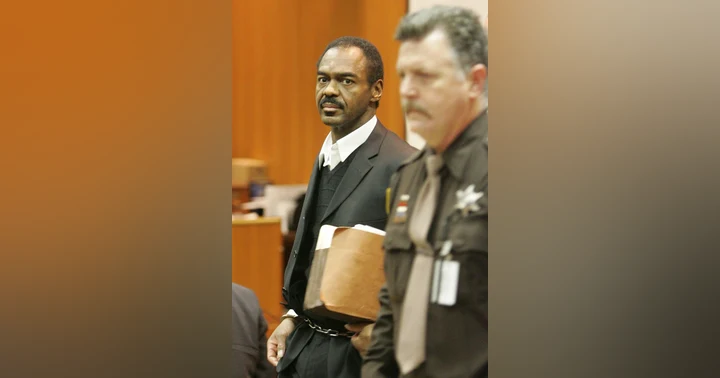
11:48 Carl was found guilty on both charges and sentenced to two life sentences without the possibility of parole. He died of prostate cancer in 2007 at the age of 53. Finally ending a story that had terrorized multiple states for decades. Carl, Eugene Watts, died in prison, finally stopped after decades of violence that could have been prevented at so many different points along the way. His story shows us what happens when warning signs get ignored when systems fail and one person's untreated darkness gets unleashed on the world. Thanks for listening to 10 Minute Murder, Bingeable True Crime Stories.
12:35 My name is Joe, I'm the host and I appreciate you listening today. If you're new, make sure you hit subscribe. Go to the website if you want more information on the podcast. It's 10minuteMurder.com. On the website you're going to find a blog, you're going to find links to all the places you can listen, as well as social media links. Plus on the website you can email me. I like getting emails from you. Let me know what's on your mind. Questions you have about the podcast. Stories you'd like for me to cover. And here's one of those emails. Subject covering big cases. Hey Joe, been listening since nearly the beginning. Your episodes are always concise and respectful. I appreciate that. I was wondering if there's a specific well-known case you intentionally avoided covering. Either because it's overdone or maybe too controversial.
13:20 Thanks for all the great episodes. Mike D from Texas. And Mike, at this point there's not a case that I would avoid covering. I'll cover it all. But for the longest there was one. I avoided it for years because I knew that people were going to get pissed off no matter what I said about it. And that's the West Memphis 3. At this point I've done the case and I did it in a way that I try to make the least amount of people mad. I did one episode leaning toward their guilty, one episode leaning toward their innocent. And you decide. So yeah, that was the lone holdout of me covering episodes. And at this point I don't think there's one that's off limits for me. Again, Mike, thank you for the email and thank you for listening. I'll see you next time.