Spotify

 Apple Podcasts

 Pandora

 Amazon Music

 Podchaser

 Spreaker

 RSS Feed

 Audible

 Castbox

 iHeartRadio

 Castro

 Deezer

 YouTube
The Truth About Ilse Koch and the Human Skin Lampshade Legend

The Truth About Ilse Koch and the Human Skin Lampshade Legend She was called the Bitch of Buchenwald, the Witch, the Beast. Her name became synonymous with Nazi evil, her face plastered across newspapers worldwide. But here's what makes Ilse Koch's...
The Truth About Ilse Koch and the Human Skin Lampshade Legend
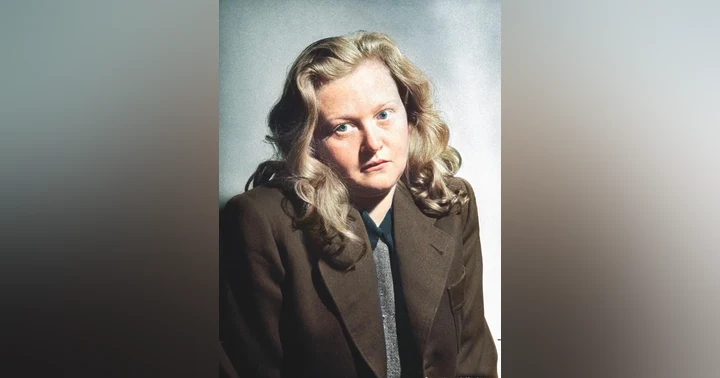
She was called the Bitch of Buchenwald, the Witch, the Beast. Her name became synonymous with Nazi evil, her face plastered across newspapers worldwide. But here's what makes Ilse Koch's story so unsettling: the crime that made her famous might not have been hers at all. We're talking about human skin lampshades, systematic cruelty, and a legal mess that sparked international outrage. This is about how one woman became the perfect villain for a world desperate to make sense of the Holocaust, and how her actual, proven crimes got buried under sensational headlines. This is about truth, myth, and the monsters we need to believe in.
#IlseKoch #Buchenwald #WW2History #WarCrimes #NaziGermany #HolocaustHistory #TrueCrimeHistory
🔔 Subscribe for True Crime Cases multiple times a week
Never miss a story. Subscribe to 10 Minute Murder for bite-sized true crime episodes delivered fresh every week.
📱 Follow for Behind-the-Scenes Content Get exclusive case updates, research photos, and sneak peeks of upcoming episodes:
- Instagram: @10minutemurder on IG
- TikTok: @10minutemurder on TikTok
- Facebook: 10 Minute Murder on FB
- Rate & Review: Leave a 5-star review to help other true crime fans discover the show
- Share: Send this episode to fellow true crime enthusiasts
- Join the Discussion: Tag us in your episode reactions on social media
Become a supporter of this podcast: https://www.spreaker.com/podcast/10-minute-murder-bingeable-true-crime-stories--4603604/support.
0:00 In 1937, a Dresden librarian married an SS colonel and stepped into a world of absolute power. Within years, her name would become synonymous with the most grotesque crimes of World War II. Human skin lampshades, systematic torture, a legend so dark it's hard to separate what actually happened from what the world needed to believe. This is the story of Elsa Cook. [Music] So let's start with who Elsa actually was before she became infamous because that context really matters.
0:57 In 1906, Marguerite Elsa Kohler was born in Dresden, Germany. She wasn't born into Nazi royalty or raised in some dynasty of evil. She was ordinary. She worked as a librarian. That was her life. Then on May 29, 1937, she married Carl Otto Koch, an SS colonel who was already running a concentration camp. And just like that, her entire world changed. She went from stamping library books to living at the top of the Nazi concentration camp hierarchy. When Carl Otto transferred to Buchenwald that same summer, Elsa went with him. And this is where things get dark really fast because even though she never held an official rank as a female guard, she had something arguably more powerful.
1:44 She was the common-dance wife. That gave her this weird, unofficial authority that came with zero oversight. The prisoners and guards started calling her the "common-duse of Buchenwald". That title told you everything you needed to know about how power worked there. She could basically do whatever she wanted because she was sleeping with the man in charge. The lifestyle they maintained was absolutely obscene. We're talking lavish parties at their villa just outside the campgrounds, entertaining guests while thousands of people starved and died literally down the road. Elsa insisted that prisoners address her as a title that translates to "A Gracious Lady".
2:25 And let's think about that for a second. She wanted them to address her as "A Gracious Lady" in a literal concentration camp. She wanted to be seen as high society as aristocracy. She was playing dress-up with absolute power over human lives. And she took that role very seriously in the most horrific way possible. In 1940, she commissioned the construction of an indoor riding arena. This luxury project cost over 250,000 right marks, which is about $100,000 in 1940 money. Multiple prisoners died while building that facility so that she could ride her horse indoors. That's a documented fact. Elsa earned every single one of her nicknames, the Witch of Buchenwald, the Beast, the Bitch of Buchenwald.
3:11 They sound like they were invented by the media, but they weren't. They came from survivors who lived through what she did. Survivor testimony confirmed that she would ride her horse through the campgrounds dressed provocatively, deliberately taunting male prisoners. But here's the sick part. If any prisoner looked at her, even just a glance, he would be immediately beaten. Sometimes killed. She created this impossible situation where she forced her presence on people and then punished them for the involuntary human reaction of seeing her. That's a special kind of sadism. At her trials, later on, witness Ludwig Tobias testified that she kicked out 13 of his teeth.
3:53 Other witnesses confirmed that she directly assaulted inmates on multiple occasions. She also reported prisoners to the SS for beatings, and at least one of those reports resulted in a prisoner's death. That's proven that is in the legal record. So when we talk about Elsa Koch, we're talking about someone who absolutely committed documented atrocities. That part is not up for debate. But the thing that made Elsa Koch internationally famous wasn't the beatings or the riding arena, or even the deaths she directly caused. It was the human skin lampshade. When American forces liberated Buchenwald in April 1945, they found artifacts made from human remains. Lampshades, book covers, pocket knife cases, General Eisenhower ordered photographs to document everything.
4:40 They forced local German townspeople to tour the camp and see what happened there. The images went global. The lampshade itself became the symbol of Nazi depravity that everyone could understand instantly. One lampshade in particular was reportedly made from a human foot and shin bone. And the shade itself showed tattoos and even nipples. A British soldier took a fragment of it, and decades later, scientific testing confirmed it was made of human skin. These artifacts were unfortunately all real. That's historical fact. They were created starting in 1941 by the camp doctor, Dr. Hans Mueller. Witnesses testified that Carl Otto Koch and Dr. Mueller would review "tanned human skins" and selects ones with interesting tattoos for these projects.
5:27 But here's where the story gets legally complicated. The charge that defined Elsa Koch globally was that she personally selected tattooed prisoners and ordered their execution specifically to harvest their skin. That she was the driving force behind these grotesque objects. Two separate courts, the 1947 American military tribunal, and the 1950-1951 West German trial, both found that specific charge to be without proof. Her defense successfully argued that while the artifacts existed and horrible things happened, there wasn't direct evidence linking her to ordering the killings for skin procurement.
6:08 Does that make sense? The lampshades were real, the murders were real, but proving she gave that specific order couldn't be done to the legal standard required for conviction on that specific charge. The public didn't care about that distinction. At all. To everyone following the trials, the lampshade and Elsa Koch were inseparable. She became the face of that horror whether the legal record could prove it or not. Elsa actually faced three separate legal proceedings, and each one reveals something different about justice after the Holocaust. In 1944, before the war even ended, the SS arrested both Koch and her husband. Not for murdering prisoners, my new, for corruption.
6:49 They were stealing from the SS, embezzling money and killing witnesses who knew anything about their theft. The SS court found Carl Otto Guilty and executed him in April 1945, just days before Buchenwald was liberated. Elsa was acquitted due to lack of evidence and released after 16 months. Then, the American forces found her. On June 30, 1945, she was recognized on the street in Ludwig'sburg by a former prisoner and immediately arrested. Her trial in Dachau in 1947 was massive international news. She was the only woman among 31 defendants. The prosecutor called her, quote, "no woman in the usual sense, but a creature from some other tortured world."
7:31 On August 14, 1947, she was convicted and sentenced to life in prison. 22 of her male co-defendants got death sentences. She didn't. And the reason why is genuinely wild. She was seven months pregnant with her fourth child. Nobody knew who the father was. Many people believed she got pregnant deliberately to avoid execution, using an old legal protection for pregnant women to save her own life. In 1949, General Lucius Clay reviewed her case. He was required to follow strict legal standards. And when her lawyers argued that there was insufficient proof for the most serious allegations, particularly the lampshade murders, he agreed.
8:12 He commuted her sentence to four years, including Time Surfed. She was released. The global reaction was explosive. People lost their minds. The public saw this as a complete betrayal of justice. A moral failure of epic proportions. The outrage was so intense that it triggered the U.S. Senate investigation and required President Truman's personal intervention. West German authorities immediately re-arrested her. This time, they charged her with crimes against German citizens, which got around the jurisdictional limits of the American trial. During the next proceedings, she put on quite a show, collapsing dramatically, screaming, "I am guilty. I am a sinner." And smashing furniture.
8:53 Some doctors thought she was genuinely having a breakdown. Others thought she was faking it in order to delay the trial. On January 15, 1951, she was convicted again, and sentenced again to life in prison. This time at Stuck, she appealed to the International Human Rights Commission, rejected in 1952. She petitioned for pardon multiple times, denied every single time. Elsa spent 16 years in a women's prison in West Germany. According to reports, she became increasingly paranoid and delusional, convinced that camp survivors would eventually come for her. On September 1, 1967, at the age of 60, she hanged herself with a bedsheet.
9:34 Her suicide note to her son, Redd, "There is no other way. Death for me is a release." Here's what's so important to understand about her legacy. Elsa Koch absolutely committed horrific crimes. The beatings, the exploitation, the deaths caused by her abuse of power are all documented and proven beyond doubt. But her transformation into the ultimate symbol of female Nazi evil served a purpose for post-war Germany. As the only woman among the Buchenwald defendants, her trials became these intense spectacles. Her conduct, including rumors of affairs, and sexual humiliation of prisoners, was sensationalized through this lens that treated female violence as somehow more unnatural than male violence.
10:19 Scholar Tomas Jardim argues that Koch became a national scapegoat by focusing obsessively on her on the perverse and partially-unproving crimes like the lampshades, post-war German society could avoid confronting the harder truth, that millions of ordinary Germans participated in or enabled Nazi atrocities through boring bureaucratic complicity. Elsa was spectacular evil. She was a monster, and that meant everyone else could distance themselves from the systematic nature of the Holocaust. She became the exception that proved the rule. When reality, she should have been a reminder of how normal people can do unthinkable things when given power and permission.
11:01 The human skin and bone artifacts were real. Her cruelty was real. Her crimes were real. But the legend of Elsa Koch, the bitch of Buchenwald, who ordered prisoners killed for lampshade material, that became bigger than the legal truth. And maybe we needed that legend. Maybe post-war society needed a female face of evil that was so grotesque, so beyond normal comprehension that it could carry the weight of collective guilt. But that doesn't change what actually happened. It doesn't change what we can prove. Elsa remains one of the most hated figures of the Nazi era, called forever between the monster she was, and the myth she became.
11:42 Thanks for listening to 10 Minute Murder, Bingeable True Crime Stories. I'm Joe, I'm the host, and I really appreciate you if you're new listener if you would subscribe wherever you're listening right now. It's pretty simple to do, just pick up your finger and push your button. That's going to solve all your problems when you're looking for the podcast in the future. When you open that app back up and you're like, "What was that? That short podcast that guy's weird?" But the stories are good. 10 Minute, I don't know something. You don't have to go through all that. It's immediately going to be there because you've already hit subscribe.
12:25 So do that now. Help me help you. And after you do that, you can go to my website 10minuteMurder.com. Lots of things to see and do there. You can send me an email. Let me know what stories you'd like for me to cover. And this one, by the way, this one was not a listener-suggested story. After I binge watched all of the monster Ed Geen, I decided to do this one because this character, this person, is in that series. And I say character because they embellish a whole lot. So at this point, you know the truth about who Elsa really was. In the series, you're going to see kind of a little bit of a different character plate. For dramatic reasons, I'm sure. But I thought it was important to let you know who the real person behind that character is.
13:07 So that's why I decided to cover this. But you can email me your suggestions as well. Let's get to one of those emails. Subject finished. Hey Joe, I'm Alana from Colorado and I'm not sure you've gotten this kind of email before. But I just had to come and email you saying that after almost a year, I have finished the whole 10 Minute Murder Podcast stories. I started out with the oldest, then the latest. And I ended up scrolling so much I had to switch to Unplayed. And now I have no more stories until your next post. I just want to say keep up the great work and I'm excited to hear more stories. I've also put on like 10 of my friends as well. Alana from Colorado. And Alana, thank you so much. I do hear that and it surprises me every single time.
13:47 Whenever someone reaches out and says, "I've finished all of them." Part of me is like, "But did you really?" Because it just seemed so unbelievable to me. And I love hearing. Keep it up by the way. Keep emailing and let me know that you finished the whole thing. Because I love reading that. It encourages me to keep doing what I'm doing and putting these things out and researching these creepy cases for you. And for me too, I mean, I wouldn't be doing this podcast if I wasn't interested in true crime stories. All right, that's going to do it. That is your episode for today. Thank you again for listening to 10 Minute Murder. See you next time.