
 Spotify

 Apple Podcasts

 Pandora

 Amazon Music

 Podchaser

 Spreaker

 RSS Feed

 Audible

 Castbox

 iHeartRadio

 Castro

 Deezer

 YouTube
The West Memphis Three: Innocent but Convicted?
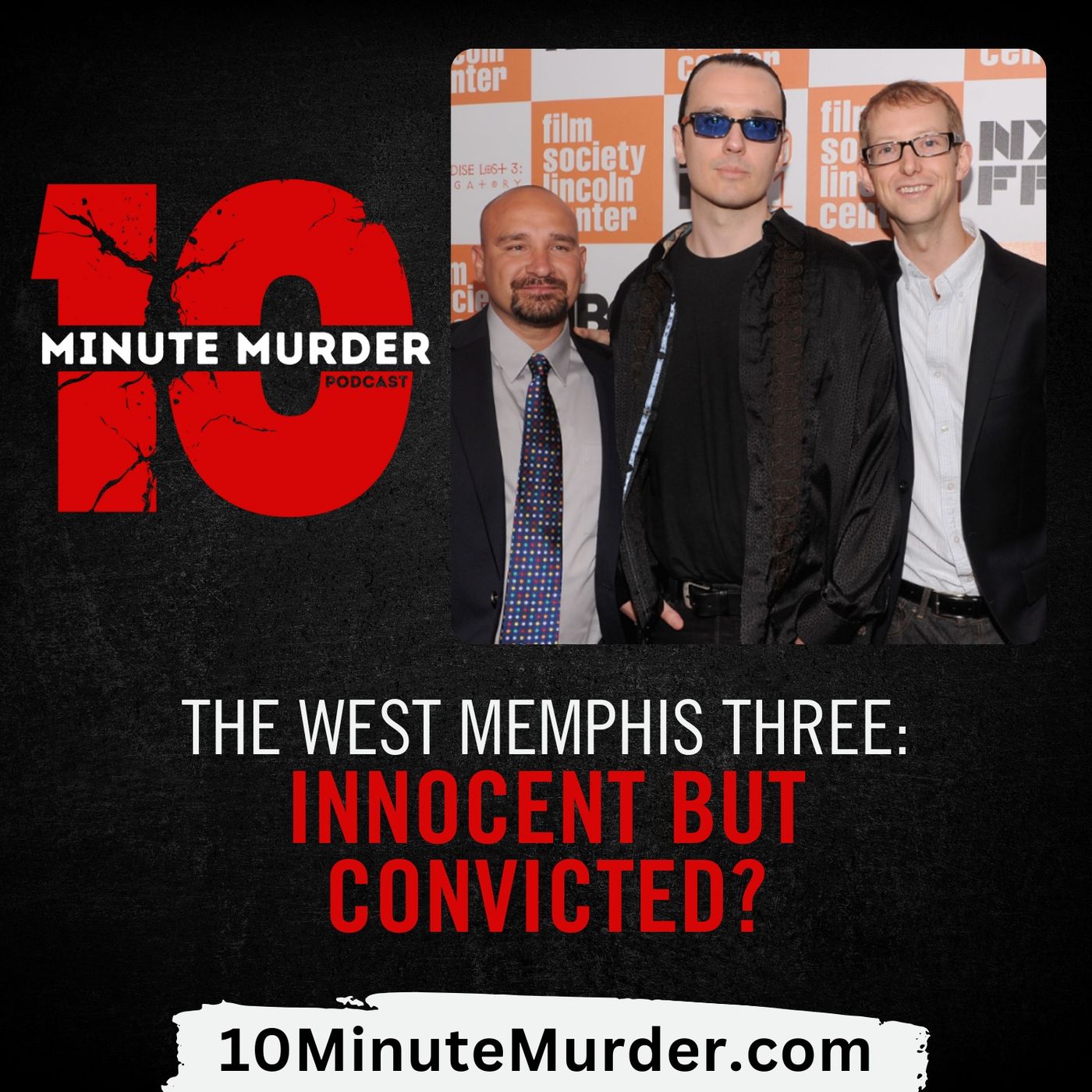
The West Memphis Three: Innocent but Convicted?
Were three teenagers wrongly convicted because they didn’t fit the mold of small-town Arkansas in the 1990s? In this episode, we dissect the case of the West Memphis Three—Damien Echols, Jason Baldwin,...
The West Memphis Three: Innocent but Convicted?
Were three teenagers wrongly convicted because they didn’t fit the mold of small-town Arkansas in the 1990s? In this episode, we dissect the case of the West Memphis Three—Damien Echols, Jason Baldwin, and Jessie Misskelley—teenagers who were labeled murderers not because of evidence, but because they wore black and liked Metallica. With no physical evidence tying them to the crime and a confession riddled with inconsistencies, we explore how fear, Satanic Panic, and confirmation bias turned a tragedy into a legal disaster. From the bungled investigation to the ignored DNA evidence pointing elsewhere, this is a story about how justice went completely off the rails. Join us as we examine the fight for exoneration, the cultural reckoning sparked by Paradise Lost, and why the case remains a haunting reminder of what happens when fear trumps facts.
#InnocenceMatters #WestMemphisThreeInjustice #WrongfulConvictions #SatanicPanic #JusticeForTheInnocent #ParadiseLostDocumentary #TrueCrimeInjustice
Thanks for sticking around for another episode of 10 Minute Murder! I appreciate you more than my morning coffee (and that’s saying something). If you haven’t hit subscribe yet, give it a click, and you’ll never miss a quick dose of true crime goodness. Know someone else who’s as into this as you are? Share the love and let the bingeing begin. Oh, and don’t be shy—find us on social media for behind-the-scenes bits, sneak peeks, and maybe a few things I should probably keep to myself. Have a case suggestion or just want to say hi? Shoot me an email. I’m always up for a chat and love hearing from you!
(BTDubs- If you're into the brief and bingeable vibe, search for and subscribe to my other podcast: 10 Minute Mystery)
10minutemurder.com
email: joe@10minutemurder.com
_______
Follow 10 Minute Murder-
Facebook:
https://facebook.com/10MMpodcast
Instagram:
https://www.instagram.com/10minutemurder/
TikTok:
https://www.tiktok.com/@10minutemurder
Threads:
https://www.threads.net/@10minutemurder
Youtube:
https://youtube.com/channel/UCkJLUCEZlkn9In3AA46RVxw
*******
Become a supporter of this podcast: https://www.spreaker.com/podcast/10-minute-murder--4603604/support.
0:00 In the early 90s, Satanic Panic wasn't just a buzzword. It was a full-blown societal meltdown. And in West Memphis, Arkansas, when three young boys were tragically murdered, that Panic found its target. Enter Damien Eccles, Jason Baldwin, and Jesse Miss Kelly. The West Memphis III. They were teenagers who listened to heavy metal, wore black, and didn't quite fit in with the others. But does being weird make you guilty of murder. This case is a masterclass in what can go wrong when fear and bias overpower facts.
0:43 There were coerce confessions, missing evidence, and rushed to pin the blame on three kids who might not have done it. Today, we're diving into the tangled mess of this investigation from the botched crime scene to the evidence that pointed elsewhere. Was justice served, or did the system get it all wrong? But before we hop into that story, if you like your true crime brief and bingeable, you have found the right podcast. I give you at least two episodes per week, so hit the follow button now. Welcome to 10 Minute Murder. The story of the West Memphis III isn't just the true crime case.
1:26 It's a cautionary tale about how badly things can go when fear and bias overtake reason. What if three teenagers didn't brutally murder three young boys, but were instead convicted because they wore black? They liked Metallica, and they didn't fit into the small town mold in Arkansas, 1993. What if the real horror here isn't about satanic rituals, but an investigation so riddled with errors it could cause a case study on how not to do police work? Okay, let's set the stage. The early 1990s were prime time for the satanic panic. Dungeons and Dragons was supposed to be a gateway to hell. Heavy metal was corrupting America's youth, and your average misunderstood teenager sketching pentagrams in the margins of the notebook might as well be in Lucifer's intern.
2:15 When the bodies of three young boys, Stevie Branch, Christopher Buyers, and Michael Moore were found in Robin Hood Hills, bound, and murdered under disturbing circumstances, it didn't take long for fingers to point towards satanic rituals, and who better to blame than Damien Eccles, Jason Baldwin, and Jesse Muskelli. They were, after all, the weird kids in town. But here's the kicker. Weird isn't a crime. When you start peeling back the layers of the case, it doesn't look like justice. It looks like a train wreck. The confessions are riddled within consistencies, the physical evidence, basically nonexistent, and the entire prosecution leaned harder on the town's fear of the occult than on actual facts.
2:57 So what if this story isn't about guilt at all? What if it's about fear, prejudice, and a desperate need for answers that led to three innocent kids being railroaded? That is the rabbit hole we're diving into today. The murders of Stevie, Christopher, and Michael were horrific. There's no question about that. But the tragedy deepens when you realize just how badly the investigation was bungled from the start. If crime scene management were graded, West Memphis would have earned an F minus. The boys were found in Robin Hood Hills bound with their own shoelaces. The scene was gruesome, but it was also chaotic. And so was the police response. Instead of preserving evidence, the area became an unintentional meeting greet for officers and volunteers.
3:42 They stomped all over potential clues. Fingerprints, fibers, or anything else that might have pointed to the real killer either contaminated or outright destroyed. Then there's the physical evidence, or more accurately, the glaring lack of it. Despite extensive searches, there wasn't a single shred of DNA, fingerprint, or other direct evidence tying Damien Jesse or Jason to the crime scene. Zero. Nothing. The group allegedly staging an elaborate ritual murder, these teenagers must have been criminal geniuses at covering their tracks, except they weren't. They were just three ordinary kids, weird kids maybe, that had nothing to do with it.
4:23 And here's the question no one wanted to ask at the time. What if the police were chasing the wrong lead? Over the years, alternative theories have pointed to other suspects. People with suspicious alibis, actual motives, and even connections to the victims. But in the frenzy of the investigation, those leads were ignored. Law enforcement had already set their sights on Damien, Jason, and Jesse, and they weren't about to let pesky facts get in the way. What's left is a tragedy compounded by a botched investigation. Not only were three boys brutally murdered, but the chance to solve the case was squandered by fear and incompetence. The crime itself is haunting, but so is the wasted opportunity for real justice.
5:04 If this investigation was a movie, it would be one where you'd be shouting at your television for two hours. From the moment law enforcement set their eyes on Damien, this case stopped being about finding the truth and became a masterclass and confirmation bias. Damien wasn't just the suspect. He was tailor-made for the role. His love for heavy metal, black clothing, dark poetry, and the occult made him an easy target in a town gripped by Satanic panic. To the police, Damien wasn't a kid trying to navigate teenage angst. He was a walking advertisement for everything they feared. Once they had him in their sights, it was only a matter of time before Jason Baldwin, his best friend, and Jesse Miskelli, a kid whose bad luck landed him on the wrong place at the wrong time, were swept into the chaos by simple association.
5:55 The lynch pin of the prosecution's case was Jesse Miskelli's confession, a confession that falls apart faster than a cheap umbrella in a storm. Jesse, who had an IQ of 72, likely didn't fully understand what was happening when interrogated for hours without a lawyer or a parent present. By the end of it, he'd given a statement riddled with inconsistencies, including wildly inaccurate timelines, timelines that couldn't possibly have happened. Did it align with the crime scene? Not even close, but it was just close enough for the police to declare victory. Then there was the so-called "evidence," a few fibers that might have matched items from the suspects home.
6:37 Might is doing a lot of heavy lifting there. This was the kind of evidence that could implicate half the town if he squinted hard enough. Meanwhile, glaringly suspicious leads, like Terry Hobbs, the stepfather of one of the victims, were left to collect dust. Years later, DNA evidence linked Hobbs to the crime scene, raising more questions than answers. Back in 1993, those details didn't fit the perfectly packaged theory the police were building, so they were conveniently ignored. What's left is an investigation that feels more like a bad game of "connect the dots" than a genuine pursuit of justice. Instead of piecing together what actually happened, law enforcement doubled down on a narrative that painted three innocent teenagers as monsters, and ignored clues that might have led them to the real killer.
7:25 The investigation into the West Memphis 3 wasn't about solving a crime. It was about finding someone to blame. Once police zeroed in on Damien, facts and logic were bulldozed to fit the narrative, dragging three teenagers down with them. The 1996 documentary Paradise Lost pulled back the curtain on this disaster, showing the world a case fueled by fear, not justice. Viewers couldn't help but ask, was the real crime the murders or the convictions? One, celebrities started to step in. Eddie Vetter threw Pearl Jam's weight behind the fight. Johnny Depp became a vocal advocate, and Natalie Mainz didn't hold back in calling the case what it was. A travesty.
8:06 Public perception then shifted very quickly. What began as a simple "boys and black" or "gilty" narrative crumbled under scrutiny. By the early 2000s, the case had become a national conversation about justice, bias, and how quickly fear can overshadow truth. It started as a local tragedy turned into a cultural reckoning, and the realization that everything about this case was probably wrong. Enter DNA evidence, the gold standard of truth in modern criminal cases. For Damien, Jason and Jesse, it became the ultimate "Get Out of Jail Card" one strand of hair at a time. Here's what some DNA evidence revealed. None of it matched the three boys.
8:48 Not a single hair, fiber, or speck of blood from the crime scene could be linked to the three young men who had spent years behind bars. You'd think this would have been the showstopper, right? But wait, there's more. DNA from another individual did turn up, and it wasn't just from a random passerby. It matched Terry Hobbs, the stepfather of one of the victims. Cue the collective gasp. This bombshell revelation sent shockwaves through the case. People who'd clung to the guilt suddenly had to reconsider. Were the wrong people sitting in prison this entire time. The new evidence didn't just poke holes in the prosecution's narrative. It blew it to pieces, and exposed gaps and inconsistencies that had been papered over in the original trial.
9:33 Ignored in favor of a tidy story fueled by fear in public hysteria. But here's the frustrating part. The legal system doesn't exactly move at the speed of outrage. Returning convictions isn't as simple as saying, oops, ar-bad. Legal roadblocks spring up like weeds, dragging the appeals process out for years. While public support for the West Memphis III surged, the courts remained frustratingly slow and resistant to change. Even in the face of damning new evidence, the system crawled along at its usual glacial pace. For Damian, Jason, and Jesse, DNA evidence, the supposed great equalizer, became yet another hurdle in the case that had been stacked against them from the beginning.
10:16 By 2011, after 18 long years in prison, public opinion had shifted so dramatically that the convictions of the West Memphis III were hanging on by a threat. Enter the Alfred Ply, a legal loophole that allows defendants to plead guilty while also maintaining their innocence. In other words, fine, we'll let you go, but we're not admitting we got this wrong. The Alfred Ply allowed them to walk freely immediately, even though it didn't erase the guilty verdicts. Sure, they wanted full exoneration, but when the choices between staying in prison or going home that day, the decision is pretty simple. After nearly two decades behind bars for a crime they swore they didn't commit, the Alfred Ply was their only real chance at freedom.
11:01 The reactions to their release were mixed. On one side, there was relief. They were finally free to rebuild their lives. On the other, the Alfred Ply left a bitter aftertaste. It wasn't the full exoneration their supporters had been fighting for, and it let the state maintain its narrative of guilt. Even worse, it effectively shut down any chance of further investigation into who really killed Stevie Christopher and Michael. For those who had been following the case for years, the Alfred Ply was bitter sweet. It was a win, but it wasn't justice. Instead of bringing clarity, it left the case in a great area where the West Memphis three were free, but the real killer or killers might still be out there.
11:42 It felt like the story was missing its final chapter, one that might never be written. That is 10 Minute Murder for today. Brief and bingeable true crime. I'm Joe. I'm Joe. Thank you for taking the time to listen. And as I mentioned in the other West Memphis three episodes that I did that is right next to this one, this isn't necessarily how I feel about the case. This is a perspective coming from innocence. And the other episode, if you haven't listened to that one, that one comes from the perspective of guilt because like I mentioned in that one, I don't have a clue if they're guiltier innocence.
12:30 None of us really do know for sure whether they're guiltier. They know for sure whether they are guiltier innocent, but we don't. So I wanted to cover the case, but I also didn't want to slant one way or the other so I decided to slant both ways. It's a case that I've kept track of for literal decades, and I couldn't keep ignoring this case. I wanted to do the story, but I didn't know what perspective to do it from. So I decided to do it from both perspectives. I hope you enjoyed it. And if you enjoy the podcast, if you're an OG listener that doesn't miss an episode, please share this podcast with your friends and family. Let them know about 10 Minute Murder. For more information on everything we do here, you can go to 10minutemerder.com or send me an email, joe@10minutemerder.com.
13:13 And that's going to do it. That is your episode. Thank you so much for listening to 10 Minute Murder. [MUSIC]