
Eight Bodies in Plain Sight: The Poughkeepsie Serial Killer
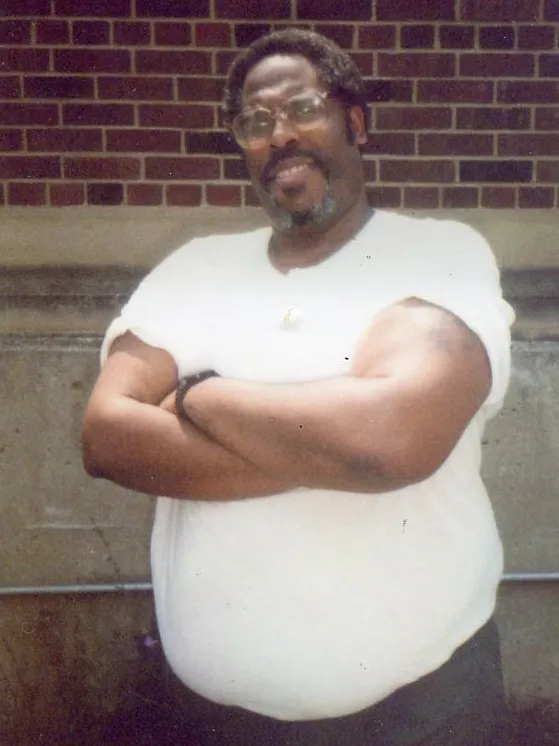
There's a house two blocks from a college campus where a family lived for two years with eight bodies hidden in the attic and the basement, and the excuse for the smell was a dead raccoon. That's just one of the smaller details in this story. Let's get into it.
The City Where This Happened
Poughkeepsie, New York sits about 85 miles north of the city, up along the Hudson River. In the 1990s it was one of those towns caught in the middle of two identities. On one side you had Vassar College, all ivy and old money energy. On the other side you had a Main Street that was struggling, a downtown a lot of small American cities were dealing with back then, empty storefronts, a shrinking tax base, and a visible street-level sex trade that ran through the same few blocks night after night.
That last detail shapes everything that happens in this story. When a city has a population of people working the streets, and that population is treated by police and press as somehow less urgent to protect, you end up with the exact blind spot a predator can live inside for years. And Poughkeepsie already had one predator working those blind spots. A guy named Nathaniel White had killed six people in the city just a few years earlier, between 1991 and 1992. This wasn't even the first serial killer this small city produced in that decade. Two separate serial killers operating in the same relatively small place within a handful of years of each other is a strange thing to think about.
Growing Up Kendall
Kendall Francois was born on July 26th, 1971, right there in Poughkeepsie. His parents were Haitian immigrants, and he was the second of four kids. His dad, McKinley, worked and lived in that house the entire time everything happened. His mom, Paulette, was a nurse at a nearby psychiatric center, helping mentally ill patients find jobs, a caregiver by profession living in the same house as all of this.
Kendall's childhood is the part that trips up a lot of true crime shows that try to tell this story, because there's no origin wound. If you go down the classic checklist people use to explain serial killers, animal cruelty, fire setting, bedwetting into adolescence, he doesn't check a single box. There was no documented abuse, no neglect, no head injuries, and no psychiatric hospitalizations. He got picked on some for being a big kid, which, sure, plenty of kids go through that and don't end up here. Teachers actually remembered him as talkative and diligent, a kid who kept the classroom interesting.
By the time he was fourteen he'd already hit his full adult height and weighed around 250 pounds. He wrestled and played football at Arlington High School, where his size was actually an advantage instead of a liability, and he graduated in 1989. From there he joined the Army, did basic training at Fort Sill in Oklahoma, and got stationed out in Honolulu. Four years in, he was discharged for obesity, having grown to 320 pounds at six foot four. He came back home to Poughkeepsie and enrolled at Dutchess Community College as a liberal arts major.
The Version of Him Other People Saw
This is where it gets uncomfortable, because in hindsight there were signs. They just read as weird and off-putting instead of dangerous, which is honestly how it goes with a lot of these guys. At community college, classmates remembered him as loud and fixated on the women around him, more of an aggressive flirt and a nuisance than anything anyone thought to report. One professor, half joking, asked the class if anyone had ever murdered a person. Kendall raised his hand. People laughed it off. Nobody wrote that down as a red flag at the time, because why would they.
Starting in 1994 he worked at Arlington Middle School, first as a part time custodian and later as a hall and detention monitor. This is also where he picked up the nickname that would follow him into every headline later, "Stinky," because of his body odor, given to him by the middle schoolers he was supposed to be supervising. And he used that small amount of authority in exactly the way you'd expect from someone building toward what came next. Inappropriate jokes with female students. Unwanted hugging. Touching their hair. Assigning extra detention to girls so he could keep them around longer, once even making one write an essay explaining why she was late, just to manufacture time alone with her.
He told people afterward that he left the middle school for a job at the Anderson School, a special education facility for kids with disabilities. That wasn't true. He'd actually been fired from Anderson for reasons that were never disclosed publicly, which leaves an open question that nobody's ever answered about what happened there.
And then outside of all that, he had this completely ordinary parallel life. He played Magic: The Gathering every weekend at a local shop called Dragon's Den. He played chess with people. He'd worked as an au pair for a family at one point and reportedly did nothing wrong in that role at all. Criminologists who studied him later, including one named Casey Jordan who actually corresponded with him directly, landed on a fairly simple read of the guy. Barely above average intelligence, socially awkward, sexually frustrated, and carrying around a real sense that the world owed him something it wasn't giving him. He came across as a big, lonely, entitled man who eventually found a way to take what he felt entitled to.
October 1996
The killing started in October of 1996 with a woman named Wendy Meyers. She was 30 years old, and Francois picked her up as what was, for him, a repeat customer situation. He brought her to the Valley Rest Motel, choked her during sex, and drowned her in a bathtub. She became the first of eight women he would kill over the next two years, all of them connected to the same downtown street economy, all of them women he'd interacted with before, some of them more than once.
Gina Barone was next, killed in his car in November of that same year, her neck broken by the force of the strangulation. Then Catherine Marsh, who everyone called Cathy, killed in late November, and she was pregnant at the time. Her brother, James DeSalvo, would go on to become a teacher at Poughkeepsie High School, staying in the very community where his sister was murdered.
By March of 1997, Kathleen Hurley had disappeared from those same downtown streets. By that November, so had Mary Healy Giaccone. In June of 1998, Sandra Jean French, a mother of three, vanished, her abandoned car eventually found just three blocks from Francois's house. Then in August, Audrey Pugliese, who it turns out had never even been reported missing. Her body was only discovered because it was in the house. And finally, on August 26th, 1998, Catina Newmaster became his eighth and final victim.
There's also a ninth name that belongs in this story even though she was never confirmed as one of his. Michelle Eason went missing in October of 1997. Francois admitted he knew her but always denied killing her, and he was never charged in her case. Her body has never been found, and investigators have actually floated the idea that someone else entirely might be responsible, which means Poughkeepsie may have been sheltering a second predator this whole time, one who's never been identified.
The House Nobody Questioned
99 Fulton Avenue is basically a character in this story. It was a green house on a street that otherwise looked like any other middle class block, close enough to Vassar that you could stand on a neighbor's second floor and look right into the attic window. Inside, it was ankle deep in garbage and rotting food. Maggots were established in the sinks. When investigators finally went in, they needed anti-putrefaction masks just to get through the front door, and the smell coming off the place was strong enough to make people gag just walking by on the sidewalk outside.
Five bodies were eventually found in the attic, some in bags and containers, with reports that skulls had been kept in open kiddie pools up there. Three more bodies were in the crawlspace and basement. Kendall's younger sister, Kierstyn, was living in the house at the time and was actually sleeping on a mattress coated in maggot casings. She was studying for a degree in family studies while all of this was happening around her, which is one of those details that just sits wrong no matter how many times you hear it. Their father, McKinley, spent hours every single evening in those same rooms and, by every account, never had any idea what was under his own roof. Kendall had told the family the smell was a dead raccoon stuck in the attic. And for two years, they apparently believed him.
The System That Kept Missing Him
This part of the story is honestly more disturbing than the murders themselves. Kendall Francois was not some invisible ghost moving unnoticed through Poughkeepsie. Police had responded multiple times to calls about half naked women running from his house, screaming for help from neighbors. Every time, he'd be brought in and then released. In one case, a woman named Lora Gallagher filed assault charges against him, and he received a 15 day sentence, of which he served half.
And then there's Catina Newmaster, his final victim, whose story might be the hardest one to hear in this entire case. Before she was killed, she had actually worn a wire for police on multiple occasions, cooperating with an investigation. She had even stood up in court during one of Francois's earlier assault appearances and pointed directly at him, saying, "That's the killer." According to reporting on the case, police had a pattern of pulling her out of situations and not following up on what she gave them. She became his last murder.
When local police reached out to the FBI about the possibility of a serial killer operating in the area, the Bureau's response tells you something about the limits of profiling in that era. A workable profile wasn't really possible without an actual crime scene to analyze, and Francois had solved that problem for himself by keeping every victim inside his own house instead of leaving them somewhere investigators could study. This was the mid 1990s, right in the middle of the cultural moment when FBI profiling had this almost mythical reputation, largely thanks to movies like Silence of the Lambs. And here's a real case where that whole method just didn't have anything to work with.
He also passed a polygraph test in January of 1998, just months before he was finally caught.
One Morning at a Dunkin' Donuts
The entire case turned on one woman surviving a morning that was supposed to end like all the others. On September 1st, 1998, Francois picked up a woman named Christine Sala at a Dunkin' Donuts on Main Street. She'd been with him before without incident. He brought her back to the house on Fulton Avenue, and when she refused what he wanted, he punched and choked her, telling her he was going to kill her.
Two things happened that saved her life. First, she managed to talk him down, convincing him to drive her back toward Main Street instead. As they pulled into a gas station, she jumped out of the moving car and ran. Second, and this is almost too strange to be real, his sister Kierstyn happened to stick her head into the room right in that critical window and said she needed the car, interrupting him at exactly the moment that gave Sala her chance.
Sala ran to safety and told people what had happened. At that exact moment, two detectives, Skip Mannain and Bob McCready, were parked nearby handing out flyers about Catina Newmaster's disappearance. A bystander named Deborah Lownsdale walked up and told them a woman had just been assaulted a block away. The detectives found Sala, and she confirmed the attack.
When police brought Francois in to talk about what had happened with Sala, he said something that changed the entire direction of the case. He asked to talk to the chief prosecutor handling the missing women. And then he confessed. Over the following hours he laid out the disappearances of eight women in detail. When prosecutor Margie Smith walked out of that interrogation room, she collapsed into an officer's arms and started sobbing.
Three Days to Recover Eight Bodies
Police executed a search warrant on the house shortly after midnight on September 2nd, 1998. It took them three full days to carefully remove all eight bodies. Catina Newmaster was identified first, followed by Gina Barone, Sandra Jean French, Catherine Marsh, Wendy Meyers, Kathleen Hurley, and finally Mary Giaccone. The eighth victim, Audrey Pugliese, had never been reported missing by anyone at all before her body was found in that house.
Court, and a Law That Never Got Used
The legal backdrop to this case is honestly its own strange piece of history. New York hadn't had a death penalty since the mid 1960s. Two governors in a row, Hugh Carey and Mario Cuomo, had vetoed attempts to bring it back for roughly two decades straight. Then in 1994, George Pataki won the governor's race partly by promising to reinstate it, and in March of 1995 he signed a new statute authorizing lethal injection for first degree murder under specific aggravating circumstances, including murders committed during a sexual assault.
Every single one of Francois's killings happened directly under the shadow of this brand new death penalty law. Dutchess County District Attorney William Grady announced in December of 1998 that he intended to seek execution by lethal injection.
Francois pleaded not guilty on September 9th, 1998, and the courtroom erupted, families yelling and crying. Francois reportedly laughed during the proceeding, though his attorney would later say that was nervousness rather than mockery. He was formally charged in October with eight counts of first degree murder, eight counts of second degree murder, and attempted assault for what happened to Sala.
His defense team then made a calculated move. They pushed to enter a guilty plea before the DA could formally file his intent to seek death, which would take execution off the table entirely. The judge initially refused, the defense appealed, and the state's Court of Appeals ruled that Francois was allowed to plead guilty. On June 22nd, 2000, he pleaded guilty in open court to all eight murders. On August 11th, he was sentenced to eight consecutive life terms without parole, plus 25 years for the assault on Sala, and sent to Attica.
The judge said publicly that he believed a death penalty trial would serve no good purpose. That decision split the victims' families right down the middle, some furious the state didn't pursue execution, others relieved not to face years of appeals and a drawn out trial.
This is the part that makes the whole legal saga feel almost pointless in hindsight. In 2004, the New York Court of Appeals struck down the state's death penalty entirely in a case called People versus LaValle, ruling part of the sentencing instruction unconstitutional. Nobody was ever executed under that 1995 law. By 2007 the last remaining death sentence in the state had been commuted. New York hasn't executed anyone since 1963. Francois's case sits right at that strange hinge point, one of the marquee prosecutions under a law that turned out to have almost no lifespan at all.
What He Actually Said About It
Christine Sala got clean from drugs by the time of sentencing, and she stood up in court and told Francois directly that she hoped he'd remember her for the rest of his life, that she was the one who put him away, and that she hoped he'd never be forgiven. Sandra French's mother told him she wished she could watch him die eight times over.
Francois himself showed essentially no remorse for what he'd done. His only stated regret, on record, was that he'd confessed at all. Casey Jordan, the criminologist who corresponded with him, later described his mindset bluntly. He felt no guilt about the killings, and when she asked what he thought he'd done wrong, his answer was that his mistake was confessing, because if he hadn't, none of it ever would have been traced back to him. He said he didn't actually remember committing the murders themselves, only the feelings around them, and even admitted those feelings might just be something he built afterward to justify what he'd done. He believed all of the women needed to die, though he didn't necessarily think it had to be him specifically who did it, just that someone would have.
He also, somewhat unbelievably, told a reporter he'd hoped to marry Christine Sala and start a family with her. Put those two things next to each other, a stated desire for a wife and a family, and the flat admission that killing felt easier to him than getting into a relationship. That's about as clear a window into how his mind worked as we're ever going to get.
The Reporter Who Wrote His Story
A journalist named Claudia Rowe, who lived in Poughkeepsie at the time all this happened, started a long running correspondence with Francois and eventually turned it into a book called The Spider and the Fly. In his letters he described himself as measured in thought but rash in action, and he'd sign off with "God Bless." He told her that if he hadn't confessed, he could have kept going indefinitely and nobody ever would have found anything. Rowe has faced some criticism over the years for how deeply she leaned into that correspondence, with one critic writing that she went looking for a world of violence and came back with a book that ended up being more about herself than him. It's a strange little side story about what it costs a person to get that close to someone like this.
Francois spent his remaining years at Attica, on a wing reserved for well behaved inmates, which came with certain privileges. He was later moved to the Wende Correctional Facility's medical unit, where he lived out about a month before dying on September 11th, 2014, at 43 years old. His official cause of death was an AIDS related illness, specifically a cancerous mass, and his HIV diagnosis, contracted from one of his victims, had been revealed publicly back at his 2000 trial.
James DeSalvo, Kathleen Hurley's brother, is still in Poughkeepsie today, teaching at the high school. Gina Barone's mother, Patricia, once summed up the whole town's helplessness in one line, asking how anyone could blame the city when his own parents didn't even know what was happening under their roof. Catherine Marsh's mother, Marguerite, visited Francois in prison in 2008, and he never apologized to her. She said afterward that was the most disturbing part of the whole visit, that she had really hoped he would.
As for the house itself, a realtor bought it about a year after the bodies were removed, gutted it, renovated it completely, and sold it as a model home. It's still standing today, in much better shape than it ever was during those two years. A resident who lived there afterward has said the house isn't haunted, and that whatever else might be true about the place, the victims themselves don't linger there.
Conclusion
A few things make this case worth revisiting beyond just the shock value of eight bodies in a family home. First, it's one of the clearest examples out there of how a victim population that society treats as disposable can let a killer operate in plain sight for years. Detective Bill Siegrist actually pushed back on criticism at the time by insisting these women were human beings who deserved the same respect as anyone else, while DA Grady tried to explain the bind investigators were in, saying that just because something happens doesn't mean you have probable cause to make an arrest. Both of those things are true at the same time, and that tension is really the emotional center of this whole story.
Second, this case quietly dismantles the myth that serial killers get caught because of brilliant profiling work. Francois was caught because one woman survived and ran to a gas station, and because two detectives happened to be parked nearby handing out flyers at exactly the right moment. That's it. That's the whole break in the case.
And third, there's just no tidy explanation for who he was. No abuse, no trauma, no animal cruelty, no head injury. Just a lonely, frustrated, entitled man who happened to have the physical size to overpower people and a house big enough to hide what he did with them. There's also one correction worth making here, since it comes up a lot. The horror movie The Poughkeepsie Tapes is not based on this case. Francois never recorded anything. The shared city name is just a coincidence that's confused people for years.
That's the story of Kendall Francois, a man his own middle schoolers nicknamed for the way he smelled, who turned out to be a quietly dangerous nobody living right where a small city never thought to look.

Host | Creator
Joe runs 10 Minute Murder because he's been trying to figure out since the '90s why humans are such spectacular disasters, when the Menendez Brothers and O.J. Simpson turned murder trials into must-see TV. While his classmates were watching Saturday morning cartoons, little Joe was watching Court TV and thinking, "What is wrong with people?" Thirty years later, he still doesn't have a good answer, but he's got a podcast about it.
When he's not studying the worst decisions ever made by our species, Joe screams supportive threats at the Buffalo Bills, reads everything he can get his hands on, and goes to stand-up comedy shows to remember that humans can be funny on purpose instead of by accident. Most nights you'll find him on his couch, yelling "You IDIOT" at a murder documentary like the killer can hear him through the screen. He calls it research. His therapist calls it "an interesting coping mechanism."
The Monster of Atwater Village: The Timothy McGhee Case

 Spotify
  Apple Podcasts
  Pandora
  Amazon Music
  Podchaser
  Spreaker
  RSS Feed
  Audible
  Castbox
  iHeartRadio
  Castro
  Deezer
  YouTube