
The Beauty School Killer: What Really Happened in Wenatchee
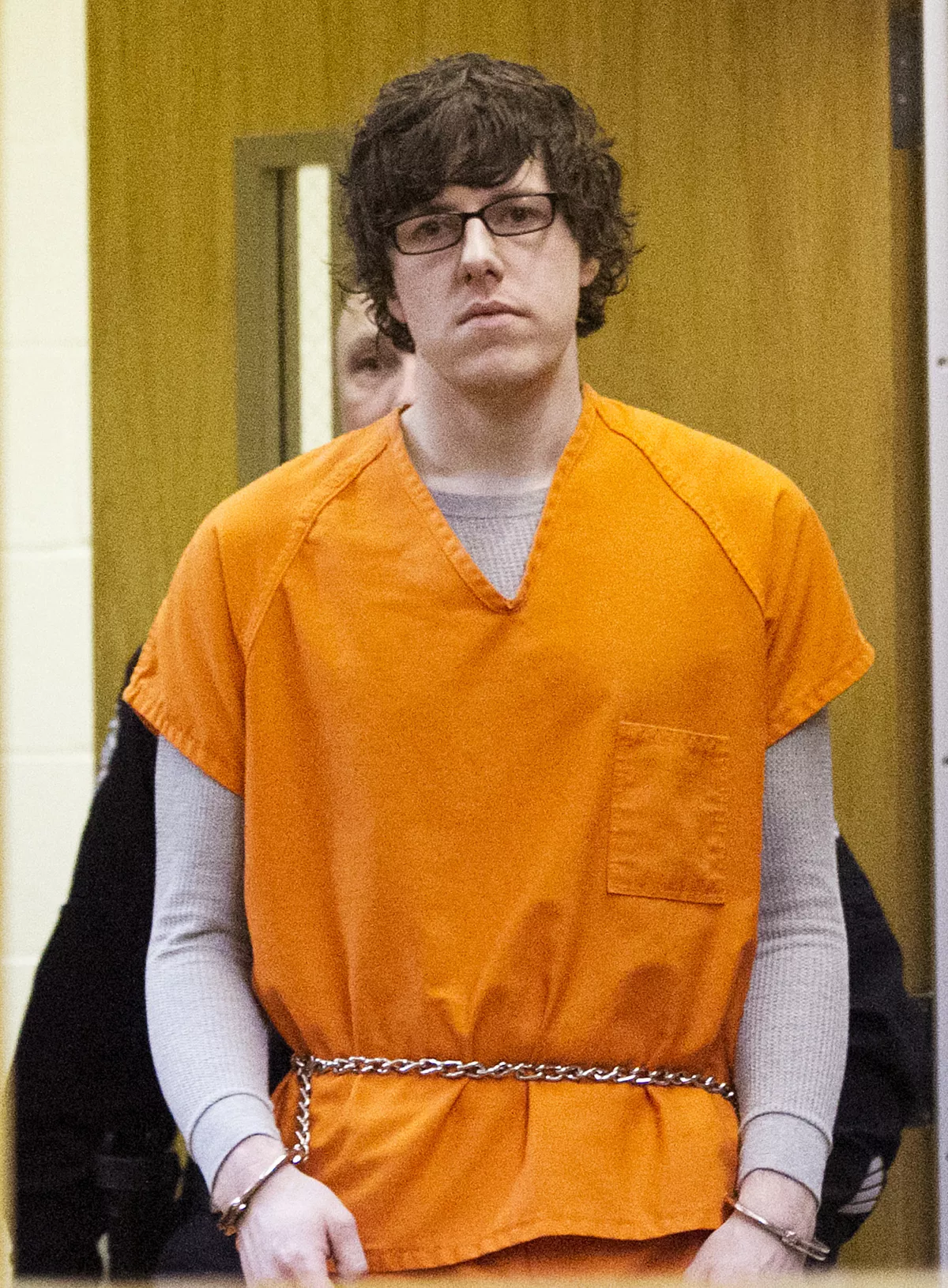
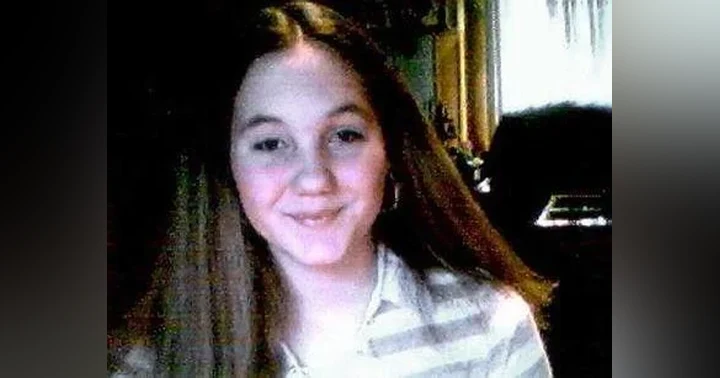
She told her classmates she'd be back in fifteen minutes. She walked out to her car on an ordinary Tuesday afternoon in a town where everybody knew everybody, and she never came back. What investigators found over the next eight months... in an apartment, on a piece of duct tape, and on the forearm of a man who sat next to her in class... is one of the most unsettling true crime stories to come out of Washington State. This is Mackenzie Cowell.
Welcome to Wenatchee: Apple Capital of the World and Home to One of Washington's Most Unsettling Murder Cases
Wenatchee, Washington is tucked into a valley carved out by the Columbia River on the dry eastern side of the Cascades, about 150 miles from Seattle, and it might as well be a different country from Seattle. This is agricultural country, fruit country specifically, and the people there are not shy about it. They call themselves the Apple Capital of the World, which is a level of civic commitment I find admirable. The hillsides are covered in orchards, the economy runs on fruit and the people who grow it, and it is the kind of community where a teenager going missing registers across the whole city within hours, not because of any formal alert system but because that is just how 30,000 people work when everybody is somebody's neighbor.
And then across the Columbia River, in Douglas County, there is Orondo, which is not even a town. It is an unincorporated community of maybe 2,000 people, no traffic light, orchards in every direction, and you mostly drive through it because you are headed somewhere else. That is where Mackenzie Cowell grew up.
Who Mackenzie Cowell Was, Before Any of This
Mackenzie was born on April 1st, 1992, and she was a senior at Wenatchee High School, a dancer on the school's dance team, and the kind of person who danced in hallways between classes because that was just how she moved through the world. She was also studying cosmetology at the Academy of Hair Design in Wenatchee and doing some modeling on the side, and her dad Reid described her schedule as "unreal," which tracks because she was juggling morning high school classes, afternoon beauty school sessions, dance practice, and still coming home for dinner with her father most nights. She was 17 and building something.
Her parents had divorced when she was young but she had warm relationships on both sides, and was especially close to her dad. She had a boyfriend named Joaquin and friends who loved her. The one real friction in her life at that moment was with her mother's boyfriend, Joey Fisher, and the day before she disappeared, on February 8th, 2010, she and Fisher had a serious enough argument that she turned to her mother and said flat out: it's him or me. That ultimatum was still sitting in the air the next morning when she woke up, followed her routine, went to school, and headed to her afternoon session at the hair academy.
February 9, 2010: She Said She Would Be Back in Fifteen Minutes
At around three in the afternoon, Mackenzie asked a classmate at the Academy of Hair Design whether she needed to sign out if she was only going to be gone about fifteen minutes. She was told no. She grabbed her things, walked across the parking lot, got in her car, and drove away. Surveillance cameras caught it. Her classmates assumed she was grabbing a coffee or a snack, a completely normal Tuesday afternoon thing that nobody would think twice about.
The last message she ever sent was a text to Joaquin: "Hey, what's up." After that, nothing.
By 5:40 that evening her father could not reach her, and by eight o'clock she had missed her curfew without calling, which was not something Mackenzie did. Her family started working through her contact list. Later that same night, a homeowner near Mission Ridge in remote Chelan County, about 40 miles from Orondo, called police to report an abandoned car in his driveway. The registration came back to Reid Cowell. Inside were Mackenzie's purse and some clothing. Her phone and debit card were gone. Outside in the dirt, walking away from the car, there was one single set of footprints.
Four Days of Searching, and Then the Columbia River
The search went aerial immediately, with helicopters covering the terrain around Mission Ridge while the community mobilized on the ground and investigators posted a $40,000 reward. On February 13th, a passerby found a body on the bank of the Columbia River near Crescent Bar, a recreational area about 20 miles south of Wenatchee. She was fully clothed, feet partially in the water. It was Mackenzie.
Without going into detail about what the autopsy showed, because that is not what this story is about, what was done to her was brutal and deliberate, and evidence suggested she had been killed somewhere else and brought to that riverbank afterward. The Mackenzie Cowell Homicide Task Force assembled quickly, pulling in four jurisdictions and the FBI. Over the following eight months detectives interviewed more than 800 people, making it the largest coordinated homicide investigation the Wenatchee area had seen in years.
The Informant Who Sent the Investigation Sideways for Months
Investigators started with the people closest to Mackenzie. Her boyfriend Joaquin took a polygraph, was told he failed on one question, and was cleared when his alibi held and no physical evidence connected him to anything. Joey Fisher got the same treatment and the same result.
Then the investigation took a long wrong turn. A woman named Liz Reid, a former drug dealer turned police informant, came forward saying that two men named Sam Cuevas and Emmanuel Cerros had killed Mackenzie, that they thought she was a snitch and murdered her to keep her quiet, and that Reid herself had personally watched a snuff film of the killing. What made investigators take her seriously was that she accurately described the murder weapon before it had been publicly released. She also produced a ring she claimed belonged to Mackenzie.
Months went into chasing this down, and then it all fell apart. Cuevas and Cerros had solid alibis backed by phone records and multiple witnesses. Mackenzie's parents did not recognize the ring. Reid admitted she had never actually seen any snuff film. How she knew that weapon detail remains unexplained to this day.
A Letter from Jail and the Name That Redirected Everything
In August 2010, the real lead arrived in the form of a letter from a man named Theo Keyes, who was sitting in jail on an indecent exposure charge. Keyes wrote that investigators should look at a beauty school classmate of Mackenzie's named Christopher Scott Wilson, 29 years old, who had a documented fixation with death, dead bodies, and serial killers, a tattoo of Hannibal Lecter on his forearm, a history of working at a funeral home, and an active presence on online serial killer forums. When investigators started asking around, classmates confirmed all of it and added that Wilson had once walked up behind a female friend at a party, choked her from behind for no apparent reason, and walked away as if nothing had happened.
The Two Very Different Pictures of Christopher Wilson
Wilson had come to Wenatchee partly to help with his mother's salon. His close friend Danika Steven described him as gentle and bookish, a guitar player who wore black eyeliner and shopped thrift stores, a little alternative in a mostly mainstream town. That version of him was probably real. And also on the record from November 2009, three months before Mackenzie disappeared, he had been charged with second-degree assault for allegedly choking a woman named Catherine Hall. That case fell apart when the victim could not be located before trial, but the charge existed and the behavioral pattern existed right alongside it.
What the Forensics Found in His Apartment and at the River
When detectives searched Wilson's apartment with luminol, a chemical that makes blood residue glow under UV light, the carpet lit up. Testing confirmed it was Mackenzie Cowell's blood. Both her DNA and Wilson's DNA were found on a piece of duct tape recovered near her body at Crescent Bar. Three witnesses placed a man matching his description near where her car had been abandoned. Wilson had left the beauty school shortly after she did on February 9th and was arrested on October 6th, 2010.
His defense attorney was John Henry Browne, who had previously represented Ted Bundy and the Barefoot Bandit Colton Harris-Moore. Browne argued that the blood volume in the apartment was inconsistently small for a killing that violent, that a second unidentified DNA profile appeared on the duct tape, and that Wilson's DNA was not on the murder weapon. His argument was that the blood had been planted, and here is where Wenatchee's own history makes that argument harder to dismiss than it might otherwise be.
The Community's Long Memory and Why That Argument Landed
In 1994 and 1995, a local detective named Robert Perez launched an investigation that ended with 43 adults arrested on nearly 30,000 fabricated charges of child sex abuse. Poor families, Sunday school teachers, a pastor, many without private legal counsel, pressured into guilty pleas for things that never happened. Every conviction was eventually overturned. When Browne stood in a Chelan County courtroom suggesting police had planted evidence, he was not asking people to imagine something implausible. He was asking them to remember something that had actually happened in their own city.
The Plea Deal, the Prison Years, and December 2023
When jury selection began in May 2012, questionnaires showed that between 80 and 85 percent of prospective jurors already believed Wilson was guilty or had knowledge of suppressed evidence. Wenatchee had been living inside this case for two years. On May 23rd, 2012, Wilson accepted a plea of guilty to first-degree manslaughter and kidnapping, with a sentence of just over 14 years plus community custody and a lifetime no-contact order with the Cowell family. He tried to withdraw the plea in 2013, arguing he had taken the deal only because a fair trial was impossible, and both the trial court and the Washington Court of Appeals rejected that. On December 11th, 2023, Christopher Scott Wilson walked out of Monroe Correctional Center at 43 years old, still saying he had not killed Mackenzie Cowell.
What we are left with is a 17-year-old who told her classmates she would be back in fifteen minutes, whose blood was in someone's apartment, whose case never reached a jury, and whose father said she was "just on the verge of being grown up." Reid Cowell has carried that for fifteen years. Mackenzie had dinner plans with him the night she disappeared, and whatever happened between three o'clock on February 9th and the banks of the Columbia River four days later, only one person fully knows, and as of December 2023 that person is living free.

Host | Creator
Joe runs 10 Minute Murder because he's been trying to figure out since the '90s why humans are such spectacular disasters, when the Menendez Brothers and O.J. Simpson turned murder trials into must-see TV. While his classmates were watching Saturday morning cartoons, little Joe was watching Court TV and thinking, "What is wrong with people?" Thirty years later, he still doesn't have a good answer, but he's got a podcast about it.
When he's not studying the worst decisions ever made by our species, Joe screams supportive threats at the Buffalo Bills, reads everything he can get his hands on, and goes to stand-up comedy shows to remember that humans can be funny on purpose instead of by accident. Most nights you'll find him on his couch, yelling "You IDIOT" at a murder documentary like the killer can hear him through the screen. He calls it research. His therapist calls it "an interesting coping mechanism."
The Monster of Atwater Village: The Timothy McGhee Case

 Spotify
  Apple Podcasts
  Pandora
  Amazon Music
  Podchaser
  Spreaker
  RSS Feed
  Audible
  Castbox
  iHeartRadio
  Castro
  Deezer
  YouTube