
The Monster of Atwater Village: The Timothy McGhee Case
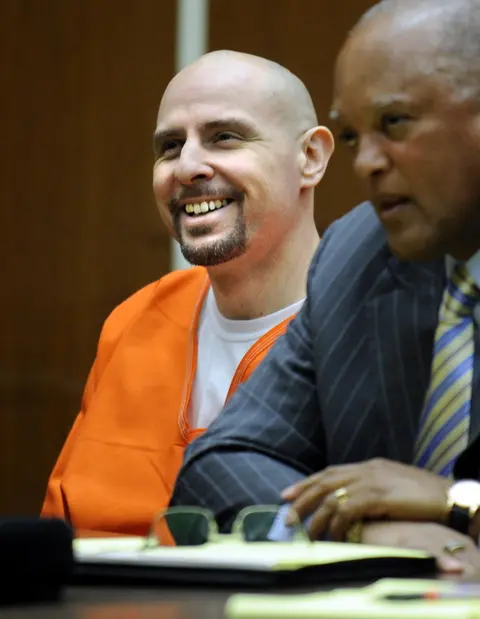
A woman gets pulled over by police near the scene of a shooting in Los Angeles, and hiding in the cargo area of her vehicle is a man who lost his cellphone at that shooting and wants it back very badly. Before any of that, he was a chubby kid in Atwater Village getting picked on by the neighborhood kids.
Timothy McGhee's Childhood in Atwater Village
That kid is Timothy Joseph McGhee, and he was born in Los Angeles in 1973. He grows up in and around Atwater Village, a working-class neighborhood on the LA River next to Glendale, full of big extended families. His dad was white and his mom was Mexican American, and that's about where the solid information on his parents runs out.
His family said years later that he was a heavy, light-skinned kid who got picked on by the neighborhood kids, and sometimes he'd come home from elementary school with dirt all over his clothes and a bloody nose. They also said he helped take care of his mom and his grandma when they got sick.
On the street they called him Huero, which is slang for a light-skinned guy. At some point he ends up in Toonerville, a Mexican American gang that's been in Atwater for generations. Nobody knows when he joined. Their big rivals were Frogtown, across the river, and a gang called the Rascals, and you'd know the other side's nicknames and tattoos.
The Frogtown Tattoo and the Ronald Martin Murder
The first shooting that ends up in court is at a gas station in October 1997. Two guys from the Rascals are outside when somebody opens fire. One of them gets hit in the back and the leg, and he's paralyzed. The other one runs into the minimart, and the shooter keeps firing right through the glass at him.
Four days later that same gun turns up again. A Frogtown guy named Ronald Martin gets shot 27 times.
A former Toonerville member told the jury Timothy admitted being part of it. He said they asked Ronald where he was from, which in that world means what gang you're in, and then they made him lift up his shirt, and there was a Frogtown tattoo, and that's when Timothy and another guy started shooting.
That witness was on meth when he says Timothy told him this, and he testified with immunity. Another witness said this same guy once took credit for the shooting himself. That's a shaky witness.
A Shared Street Name and the Murder of Ryan Gonzalez
The next one is a kid from the Rascals named Ryan Gonzalez. He's 16. In June 2000 he's walking by himself through rival territory.
The driver that day told the jury Timothy had him get off the freeway, and they passed Ryan several times. Then Timothy borrowed the driver's own gun and got out, and now you've got a grown man chasing a teenager down a side street on foot, and the driver said Timothy kept pulling the trigger after Ryan fell.
Police had their own idea about why Ryan. They said he went by the same street name as Timothy. At trial, prosecutors leaned on the territory angle.
The Police Scanner Shootout With the LAPD
About a month later, some Toonerville guys rob somebody, and the police chase their Honda. A former member told the jury Timothy and a few others were listening to the chase on a police scanner, so they grabbed guns and went outside to help their buddies. That's a terrible plan. The patrol car gets shot at from different directions, and a bullet goes through an officer's pant leg. Neither officer is badly hurt.
There's a kid around there named John Perez. He's 17, and he's an LAPD Explorer, which is a program where you're a teenager learning how police work. John is scared of what happens to people who talk, so he keeps what he saw to himself for a long time, and then years later he gets on the stand and tells the jury he saw Timothy on the sidewalk, firing at that police car.
The Dropped Cellphone and the Margie Mendoza Murder
A Toonerville member gets killed one evening in November 2001. Later that night, Duane Natividad is driving with his girlfriend, Margie Mendoza, and a friend, and somebody opens fire on the car.
Margie dies. Duane gets hit and survives.
A woman named Monica Miranda sees one of the shooters, and she notices a tattoo on the back of his head. She holds back the rest from police, because she's scared, same as John.
Christina Duran, a friend of Timothy's, told detectives he got hold of her after the shooting and said he'd been in a gunfight and lost his cellphone, and he was scared that phone could tie him to a murder, so he wanted it back. Police stop her near the scene, and you've got Timothy hiding in the cargo area of her vehicle. Like he’s groceries.
Police did find the phone. It was his.
Christina Duran's Birthday Party
Christina gets taken in, and she gives detectives a recorded statement. They let her go, and within hours there are warrants out for Timothy.
Then there's a birthday party, and Christina goes. Years later, prosecutors argued in front of a jury that Timothy arranged for her to be at that party so some of the guys could confront her about ratting on him to the police over Margie's shooting.
Christina left that party.
She was found dead in her car.
Somebody shot her 5 times in the head at close range.
A neighbor heard a woman screaming to be let go. Then the neighbor heard men's voices, and then gunshots.
Timothy was never convicted of Christina's murder.
The Fugitive T-Shirt and the Arrest in Bullhead City
By now, if you ask the LAPD, Timothy is tied to as many as a dozen killings. Police said one of them was Carlos Velasco, a man Timothy didn't recognize working in Toonerville territory, and they said Timothy ordered him killed for being a stranger. None of those other killings were ever proven in court.
The U.S. Marshals put Timothy on their 15 Most Wanted list, and he turns up in Bullhead City, Arizona, out in the Mojave, where somebody recognizes his picture in a local newspaper and points authorities to an apartment in town. Officers watch the place, and in February 2003 they grab him, and he gives up without a fight.
He had a couple of T-shirts that made fun of the cops. One said, "Fugitive. Can't see me." Another one gave you a tip for running from police, and the tip was throw a donut.
The Men's Central Jail Riot
While he waits for his murder trial, Timothy sits in Men's Central Jail in LA, and prosecutors said he was the shot caller on his row. Deputies pull an inmate out in January 2005, and Timothy starts shouting at the other guys to throw stuff, and they throw apples and oranges and urine and bleach, and then some of them break porcelain sinks into chunks. A chunk of porcelain hits one deputy on the hand. Timothy himself threw a milk carton and an apple at a deputy, and he admitted throwing porcelain.
A jury convicted him on conspiracy and assault charges. He already had 2 strikes. Under California's three strikes law, the riot got him 75 years to life.
Juror No. 5 and the Timothy McGhee Trial
The murder trial happens in 2007, and the witnesses come with baggage. Duane says he has memory problems. John and Monica both get up there and say they saw Timothy.
His lawyers showed the jury that detectives had long conversations with witnesses before they ever turned on a tape recorder, so you'll never know exactly what got said first, and some witnesses said it was the cops who brought up Timothy's name.
After about 10 hours of deliberating, a couple of jurors send the judge a note about Juror No. 5. He thinks the witnesses were coached. The foreperson said he told the room, "I am not changing my mind. I can convince you people to change your minds."
Judge Robert Perry questions the jurors, and some say Juror No. 5 is irrational and doesn't like cops, and some say deliberations are going fine. Juror No. 5 tells the judge it feels like the others are ganging up on him. Judge Perry removes him and puts an alternate in his seat, and they start over.
That new jury convicts Timothy of all 3 murders, plus trying to kill both officers and both survivors from Margie's car. They acquit him on the gas station shooting.
The first penalty jury deadlocks, so you get a whole second penalty trial, and that jury hears about Christina and from Timothy's family. His relatives tell them about the heavy little boy who came home from school with a bloody nose, and the grown man who helped take care of his sick mom and grandma. That jury chooses death. Judge Perry said Timothy treated murder "as some kind of perverse sport, as if he was hunting human game."
Where the Timothy McGhee Case Stands Today
Timothy spent the next 16 years under that death sentence. Then in April 2025, the California Supreme Court threw out his convictions and the death sentence, because the justices all agreed Judge Perry had no solid basis to remove Juror No. 5, whose doubts lined up with problems the defense actually showed in court. He's still in prison on the riot sentence. Prosecutors are allowed to retry him. The DA's office said it was reviewing the ruling, and as of now you can't find any public word on a decision.

Host | Creator
Joe runs 10 Minute Murder because he's been trying to figure out since the '90s why humans are such spectacular disasters, when the Menendez Brothers and O.J. Simpson turned murder trials into must-see TV. While his classmates were watching Saturday morning cartoons, little Joe was watching Court TV and thinking, "What is wrong with people?" Thirty years later, he still doesn't have a good answer, but he's got a podcast about it.
When he's not studying the worst decisions ever made by our species, Joe screams supportive threats at the Buffalo Bills, reads everything he can get his hands on, and goes to stand-up comedy shows to remember that humans can be funny on purpose instead of by accident. Most nights you'll find him on his couch, yelling "You IDIOT" at a murder documentary like the killer can hear him through the screen. He calls it research. His therapist calls it "an interesting coping mechanism."
Modelbehavior63: The Catfishing Murder of Kacie Woody

 Spotify
  Apple Podcasts
  Pandora
  Amazon Music
  Podchaser
  Spreaker
  RSS Feed
  Audible
  Castbox
  iHeartRadio
  Castro
  Deezer
  YouTube