Spotify

 Apple Podcasts

 Pandora

 Amazon Music

 Podchaser

 Spreaker

 RSS Feed

 Audible

 Castbox

 iHeartRadio

 Castro

 Deezer

 YouTube
The Babysitter Who Knew Too Much: Kimberly Cargill Capital Murder

The Babysitter Who Knew Too Much: Kimberly Cargill Capital Murder Kimberly Cargill murdered Cherry Walker in Whitehouse, Texas on June 18, 2010 to prevent the mentally challenged babysitter from testifying at a child custody hearing. The Smith County...
The Babysitter Who Knew Too Much: Kimberly Cargill Capital Murder
Kimberly Cargill murdered Cherry Walker in Whitehouse, Texas on June 18, 2010 to prevent the mentally challenged babysitter from testifying at a child custody hearing. The Smith County investigation revealed Walker died from asphyxiation, her partially burned body discovered on Oscar Burkett Road. Cargill was convicted of capital murder and sentenced to death by lethal injection in 2012 after prosecutors presented forensic evidence including DNA found on Burger King coffee creamers at the crime scene.
This case gets wild because here's a woman who's already lost custody of two of her kids, CPS is breathing down her neck, and the one person who can seal the deal against her in court is this vulnerable woman who just wants to tell the truth. So Cargill makes a decision. And the aftermath? She admits to burning the body, claims it was all a panic move after Walker had a seizure in the car. But then there's this forensic battle that goes all the way to the appeals court about whether Walker was murdered or died from a rare epilepsy condition. The evidence tells one story. Cargill's defense tells another. And sitting in the middle of all this is a pattern of violence that goes back decades.
#TrueCrime #KimberlyCargill #CherryWalker #CapitalMurder #TexasCrime #DeathRow #UnsolvedNo
🔔 Subscribe for True Crime Cases multiple times a week
Never miss a story. Subscribe to 10 Minute Murder for bite-sized true crime episodes delivered fresh every week.
📱 Follow for Behind-the-Scenes Content Get exclusive case updates, research photos, and sneak peeks of upcoming episodes:
- Instagram: @10minutemurder on IG
- Facebook: 10 Minute Murder on FB
- Rate & Review: Leave a 5-star review to help other true crime fans discover the show
- Share: Send this episode to fellow true crime enthusiasts
- Join the Discussion: Tag us in your episode reactions on social media
Become a supporter of this podcast: https://www.spreaker.com/podcast/10-minute-murder-bingeable-true-crime-stories--4603604/support.
0:00 June 18, 2010. Kimberly Cargill is driving down a dark Texas road with a body in her car. In five days, she has to stand in front of a judge and fight for custody of her kids. But the woman who could have walked into that courtroom and destroyed her chances? She's already dead. This is how a custody battle became a capital murder case, and how coffee creamers from Burger King helped solve it. Kimberly Cargill, Mississippi native born 1966.
0:53 Three marriages, four sons, worked as an office clerk and an LVN. On paper, pretty unremarkable. But by June, 2010, when she's 42, the whole facade is crumbling. Child protective services has taken two over younger sons, Zach and Luke. There are abuse allegations, the serious type where the state removes your children and starts building a case. And Cargill, she's not accepting this quietly. In May, there's a voluntary custody agreement. Her own mother gets temporary custody of Luke. Cargill signs off on it. Then one day, she goes to the daycare, picks Luke up and refuses to give him back to her mother. Just decides the agreement doesn't apply to her anymore.
1:35 In the days leading up to June 18, Cargill is on the phone constantly. Laura Gillespie, who worked with one of Cargill's sons on healthcare stuff, testified about these calls. She said Cargill was in a rage, an angry rage about appointments, about the custody situation. Multiple calls where Cargill is berylling. Cherry Walker was 39, mentally challenged, functioning at about the level of a 9 or 10 year old. She needed a caregiver who spent half of every day with her so she could manage her small apartment and basic tasks. She babysat for one of Cargill's sons. And the thing about Cherry, that everyone mentions, she was incapable of lying.
2:16 Literally couldn't do it. Sweet, kind and fundamentally honest. There's this woman, Pratina Young, who supervised Cherry's caregiver. Young had told Cargill at some point she was planning to report her to CPS. She didn't think it was safe to keep a young child with Cherry, and it wasn't good for Cherry either. Cargill responded by mentioning she had friends at the DA's office. Young asked if that was a threat. Cargill told her just go ahead and do whatever she needed to do. June 18, 2010, 10.09 in the morning. A process server finds Cherry Walker and hands over a subpoena. She's required to appear in Smith County District Court on June 23rd, five days away.
3:00 Cherry calls Cargill and tells her she has to testify. Now what gets said in that conversation depends on who you ask. Witnesses later testified that Cargill told Cherry that she could hide out at her house, so she wouldn't have to show up. Cargill said she told Cherry she could hang out at her house. Hideout versus hangout. Completely different implications. But at the end of the day, Cherry Walker is dead. Here's Cargill's story. She takes Cherry out to dinner. Everything's normal. Everything's fine. They're driving home and Cherry suddenly has a seizure in the passenger seat. She stops breathing. Cargill panics. Okay, so let's think about what panic actually looks like.
3:44 You're driving. Someone has a medical emergency. They stop breathing. What do you do? You call 911. You drive to the nearest hospital. You pull over and try CPR. Those are panic responses. What does Cargill do? She drives to County Road 2191, this remote stretch called Oscar Burkett Road in Whitehouse, Texas. She drags Cherry's body out of the car. She pours lighter fluid on the body and clothes. She lights it on fire than she leaves. She testified later that she knew how it would look. She already had this massive motive. If she showed up at the hospital with Cherry's dead body, everyone would think she murdered her.
4:24 So she decided to hide it. Burn the evidence. Get rid of any DNA that could connect her to Cherry's death. Your friend dies of a seizure in your car and your response is to set her on fire on the side of the road. That's the explanation we're supposed to accept. Bobby Lewis is driving down Oscar Burkett Road the next morning. June 19, around 3.30 pm. He sees something on the side of the road, stops to check. It's a body, face down, partially burned. Takes four days to identify Cherry because of the burn damage. But within a month, police arrest Kimberly Cargill and what gets her caught is so ordinary. It's almost funny.
5:04 Coffee Creamers from Burger King. Investigators find a container near Cherry's body. Those little Burger King coffee creamers. They test it. Kimberly Cargill's DNA is all over it. The prosecution's theory makes sense. When Cargill drag Cherry out of her car, Cherry's leg caught the creamers and pulled them out onto the road. This is messy. This is someone panicking and screwing up. And it ties Cargill directly to that exact spot. There's more. June 18, Cargill is at work in East Texas Medical Center in Athens. She's an LVN, supposed to be caring for patients. Her phone record shows 70 calls and texts during her shift.
5:46 A patient complained about not getting pain medication. Her supervisor called her into the office that day. Then that night, phone goes silent. Prosecutors argued she's too busy dealing with Cherry's body to be making phone calls. After June 18, Cargill never calls Cherry again. Cherry is supposed to testify in five days and Cargill never tries to reach her. Your friend died suddenly from a seizure. Wouldn't you be calling? Checking with someone? The silence tells you everything. Oh, and on the day that she dumps the body, Cargill goes to the White House Police Department. She's checking to see if there's a dead body investigation yet. Wants to know if anyone's found Cherry.
6:27 The medical examiner said Cherry died from esphyxiation, particular hemorrhages in her eyes, bleeding in the soft tissues over her chest near the sternum, consistent with being held down or restrained, and something unusual. The tip of Cherry's tongue was hemorrhagic and seared. You see tongue injuries sometimes in strangulation cases. But the medical examiner also admitted there were no ligature marks on Cherry's neck, no obvious bruising around the throat. And when pushed, she said in autopsy, might not reveal evidence of death from a seizure. That admission became the defense's entire foundation. This Cherry did have a documented seizure history going back to 2003.
7:09 Medical records showed where she'd been on well buterin, which can trigger seizures in some people. Defense attorneys asked the medical experts about sudden, unexpected death in epilepsy at trial. The doctor said very rare, less than 10% chance but possible. Some people die, and there's no clear explanation. So the jury had to decide. Did Cargill strangle Cherry to keep her from testifying or did Cherry die from a seizure and Cargill made a catastrophically terrible decision afterward? The jury convicted her of capital murder on May 18, 2012. Then came sentencing. To get the death penalty in Texas, prosecutors have to prove future dangerousness.
7:51 They have to show that this person will keep being violent. Three of Cargill's four sons testified. They said she choked them. Frequently, also kicked them, hit them. They were often afraid for their lives. She changed the locks on their bedroom doors so she could lock them inside for hours. Her own mother testified that Cargill would choke her when she got upset and angry. Her elderly mother choking her. Three ex-husbands testified. One described watching Cargill beat his young son from a previous marriage. So hard, she knocked the boy across the room. That's what made him leave. David, her oldest son, said she choked him in second grade. The pattern matters.
8:32 Choking shows up consistently. It's her method of control. Her sons, her mother, her partners. When confronted during trial, Cargill claimed she was defending herself. Always the victim. Expert witnesses said Cargill showed traits consistent with psychopathy. Superficial emotions, short-lived. She knew right from wrong. She wasn't legally insane. She made choices. The violence escalated over time from abuse to murder. Her sister April testified that Cargill was clever and manipulative. On May 31, 2012, the jury unanimously recommended death. Judge Jack Schene made it official June 7. Death by lethal injection.
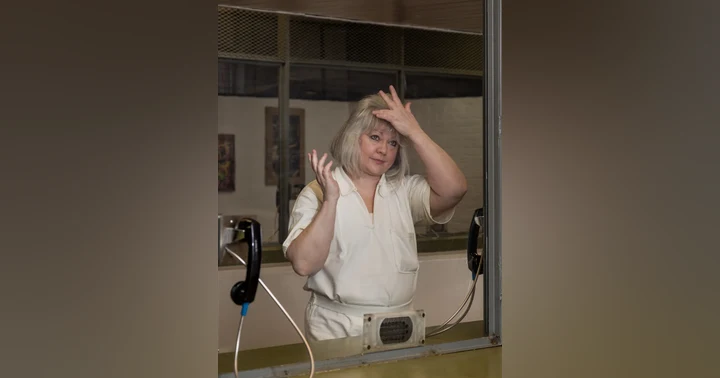
9:13 Kimberly Cargill is on death row at the Mountain View Unit in Gatesville, Texas. She's 58 now. No execution has been set and federal appeals are still available. Cherry Walker was a vulnerable woman doing what the court required. She was subpoenaed. She was going to tell the truth. Five days before that hearing, she was dead. Kimberly Cargill admitted to burning the body and dumping it on a remote road. Whether Cherry died from a seizure or strangulation, Cargill made a deliberate choice afterward. She chose to hide it. She chose to destroy evidence. She chose to let Cherry's family spend Father's Day weekend wondering if that burned body in Oscar Burkett Road was their daughter.
9:55 The jury looked at the motive to silence a witness, the DNA on those coffee creamers, the decades of choking family members as a control tactic, the complete lack of remorse. They decided Cherry Walker was murdered to keep her quiet. That's retaliation. Under Texas law, that's capital murder and that's why Kimberly Cargill is waiting to die. [Music] Thanks for listening to 10 Minute Murder, Bingeable True Crime Stories.
10:40 My name is Joe. That's me, I'm your host and here's an email subject grocery store situation. Hi Joe. Listen to your latest episode while grocery shopping and realize halfway through that I'd been standing in the front of the pasta for 10 minutes. Frozen like an NPC. The people around me probably thought I was having a moment. Thanks for the unintended drama. Lila in Tallahassee, Florida. Lila, that's similar to what I do at the grocery store. But for me, it's not being too into a podcast. It's, I read the labels of everything. Even things that I don't intend to buy, I see something that catches my attention and like, oh, let me check that out. And I pick up the, whatever the product is and I read the label.
11:21 I'll flip it over and read the ingredients and see what's in that thing. Then I'll put it right back on the shelf. Like I just stand there like an, to the outsider might look like a trance where I'm just staring. But the big pro that comes along with that is later on, I'm like, I really want this thing that goes with this thing and then, oh, I know what? That thing I read the label of last week. And if it's a product that I'm going to buy, you can bet I'm going to read every word that's on that label. And I know this makes me, I know this makes me sound kind of weird. I get that. But let me tell you how it started. I think how it started anyway. Before I would just buy things all willered nillard wouldn't look at the label. And then I bought this padtide chicken. I love padtide chicken.
12:02 But this particular padtide chicken had fish sauce in it. I hate fish. And I don't know how you make that. I don't know what goes in it. But when I got that one home and I made it and it smelled up my kitchen to make it smell like fish and it's supposed to be chicken, I read the label. And boom, fish sauce. So since that day I read the labels of everything. Because fish sauce is gross. The end. Alright, if you're new to the podcast, make sure you hit subscribe. Sorry, you got weird there. Make sure you hit subscribe. You can go to the website 10minutemerter.com, send me an email like Lila did. You can also sign up for the monthly, not the monthly. It's a weekly. I do it every Monday. So that makes it weekly. Monday news letter. You can sign up for that. Also read the murder blog.
12:42 All kinds of things. 10minutemerter.com. OG listeners, I love you with my whole heart. Keep sharing this podcast with your friends and family and rating and reviewing the podcast as well. Means the world to me and it helps this show grow so much. And that's going to do it. That's your episode for today. Thank you again for listening to 10 Minute Murder. See you next time. [Music]